
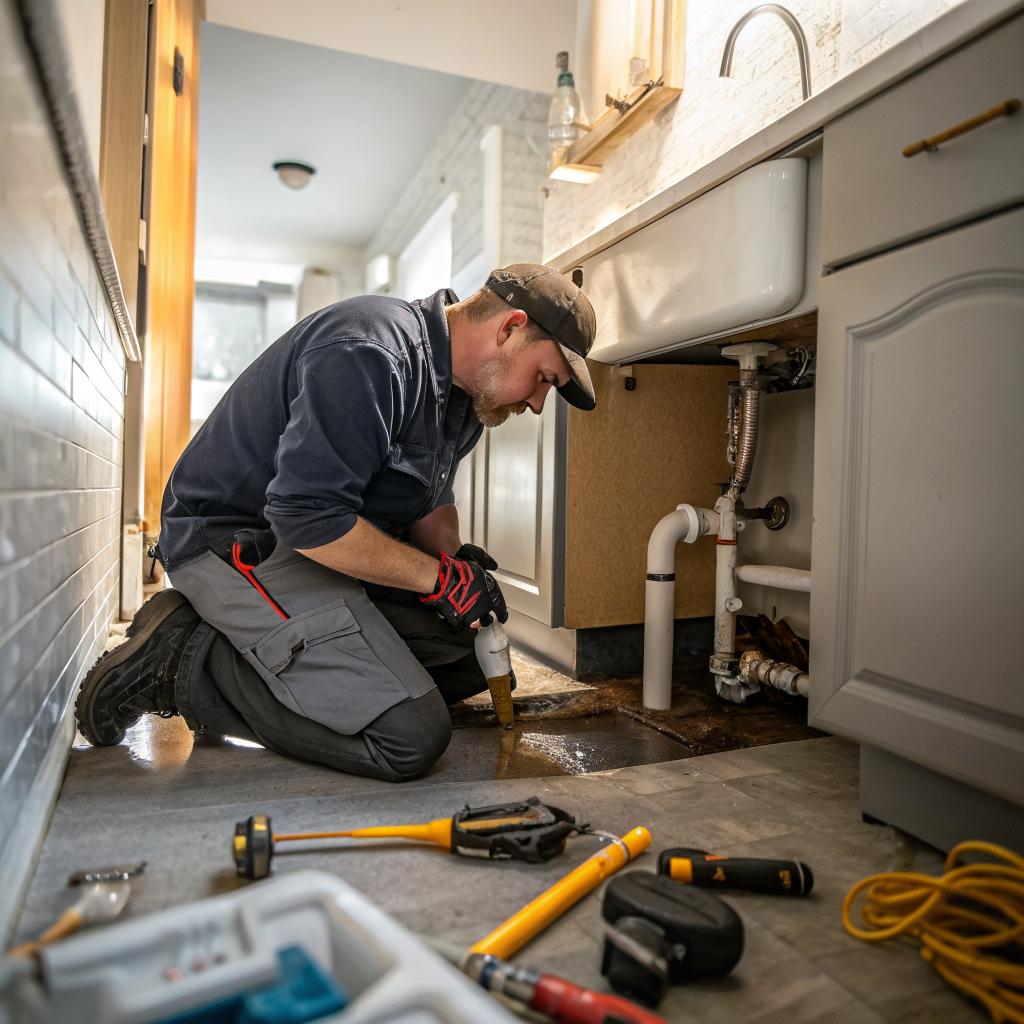
So, you are trying to figure out why every remodel needs an emergency plumber San Fernando on standby. The short answer is that any time you open walls, touch pipes, or change fixtures, you increase the risk of sudden leaks, backups, and water damage, and an emergency plumber can stop problems before they wreck your project and your new floors.
Most remodel plans focus on the fun parts. New flooring, fresh paint, maybe a better layout in the bathroom or kitchen. But water has its own schedule. A small mistake or an old pipe that cracks at the wrong moment can flood a room in minutes. That is why having Drain Solutions Plumbing in your plan is not just nice to have, it is part of keeping your budget and timeline under control.
Here are some things that set the stage:
- Plumbing hides inside walls, ceilings, and under floors, so problems often show up late.
- Remodel work can stress old pipes, valves, and drains that were already weak.
- Water damage spreads fast and tends to ruin flooring, subfloors, and new finishes first.
- City inspections can uncover hidden plumbing problems that must be fixed right away.
- Emergency access to a plumber helps your contractor keep working instead of waiting days.
Why plumbing is the hidden risk in every remodel
In most homes, you do not see the pipes. You see the cabinets, the countertops, the tile, the hardwood. It feels like the remodel is all about those visible pieces.
Then someone opens a wall.
Old galvanized lines, strange DIY connections from the previous owner, a drain with almost no slope, or a tiny pinhole leak that has been soaking a stud for years. I have seen people pull up old vinyl flooring and find soft, dark plywood underneath from a slow leak at a toilet ring. The bathroom looked fine until that moment.
During a remodel, the most expensive surprises usually involve water, not paint or tile.
When you add new flooring, especially products like hardwood, engineered wood, laminate, or luxury vinyl, water is your main enemy. A small leak under a dishwasher or at the base of a toilet can swell boards, curl planks, and stain grout lines. Many flooring warranties exclude damage from plumbing issues.
So while you are comparing flooring samples and paint colors, it really helps to ask one more question:
“Who is my backup plumber if something bursts, leaks, or backs up in the middle of this job?”
How plumbing problems usually show up during remodels
Plumbing trouble rarely happens in a dramatic movie-style pipe explosion. Most of the time, it creeps up as:
- Leaks behind new walls or cabinets
- Slow drains after fixtures are moved
- Low water pressure in new showers or faucets
- Backups after new flooring or fixtures are installed
Remodel work changes how your plumbing system is used. New layouts, added bathrooms, bigger tubs, and more powerful showers all add stress. Plus, demolition shakes things around. Sawing through framing, drilling holes, and moving heavy materials can nudge an old joint or crack a brittle pipe.
Every time you move a plumbing line or add a new fixture, you increase the chance that something unexpected will show up when the water gets turned back on.
And when do you usually notice? When the room is almost finished.
Why flooring and plumbing are more connected than people think
If you are on a flooring and renovation site, you probably think more about underlayment and plank thickness than about pipe diameter. Still, the two are tied together.
Here is a simple way to look at it:
| Flooring type | How plumbing issues affect it | Risk level from leaks |
|---|---|---|
| Solid hardwood | Swells, cups, and can permanently warp with moisture. | High |
| Engineered wood | More stable than solid wood, but still damaged by standing water. | High |
| Laminate | Core can swell and bubble; often not repairable board by board. | High |
| Luxury vinyl plank/tile | Water resistant on top, but subfloor can still rot from below. | Medium |
| Ceramic/porcelain tile | Tile survives, but grout can stain and subfloor can weaken. | Medium |
| Sheet vinyl | Can trap water underneath, hiding leaks until subfloor is damaged. | Medium to high |
Many homeowners think: “I am getting waterproof or water resistant flooring, so I do not have to worry so much.” That is only partly true. The visible floor may handle a spill. It will not protect you from:
- A hidden leak under the subfloor
- A drain line that backs up frequently
- A supply line that bursts inside a wall
Water will always find the weakest point. That is often the area around toilets, tubs, and under sinks. Which, by the way, are usually surrounded by flooring that you just paid a lot of money to replace.
What an emergency plumber actually does during a remodel
When people hear “emergency plumber,” they picture someone coming out at midnight because a pipe burst while everyone was asleep. That happens, yes. During a remodel though, the role is a bit broader.
A good emergency plumber can help with three stages:
1. Pre-remodel checks
Before demolition starts, your contractor or designer might walk the space and talk about layout. This is a good time to have a plumber check:
- Main shutoff valve condition
- Age and material of existing supply lines and drains
- Water pressure levels
- Signs of prior leaks or poor repairs
Some people skip this step to save a little money. Then they discover old corroded pipes right when the tile is halfway installed. An emergency plumber can step in fast at that moment, but it is cheaper to know in advance.
2. During construction
This is when problems tend to show up:
- A pipe gets nicked during demo.
- A fitting starts to drip after water is turned back on.
- A drain line backs up after installation of a new tub or shower.
The remodel crew usually has a schedule. Tile on one day, flooring on another, cabinets after that. Waiting several days for a standard plumbing appointment can stall the whole project. With emergency support, you can get same-day or next-day help and keep moving.
Fast plumbing repairs during a remodel are not just about comfort; they protect your schedule and the fresh materials going into your home.
3. After everything is installed
The remodel is done. Floors are in. Fixtures are shining. This is when small leaks can quietly start. A slow drip in a supply line or a loose drain connection might take a few days to reveal itself.
If you already have a relationship with a plumber who handled emergency calls during the job, you know who to call if:
- You notice a damp spot on new drywall.
- You see a dark patch in a grout line that stays wet.
- A new toilet rocks slightly and starts to stain the base.
How an emergency plumber protects your budget
Many people think an emergency visit always costs more. Sometimes it does. The part that gets missed is how much money a fast response can avoid.
Here is a rough comparison.
| Scenario | Handled quickly | Ignored or delayed |
|---|---|---|
| Small supply line leak behind new vanity | Short plumber visit, tighten/replace part, minor touch-up. | Damaged cabinet, ruined baseboards, possible floor replacement. |
| Drain clog under new bathroom | Cleared during remodel, verify slope and venting. | Backups that stain grout, odors, damage to subfloor over time. |
| Cracked pipe in wall during demolition | Emergency repair same day, work resumes. | Schedule delays, extra days of labor, mold risk if leak is missed. |
Yes, you might pay a bit more for urgent service. But you can easily save thousands on:
- Replacing new flooring
- Removing and reinstalling tile or cabinets
- Extra time for contractors to come back
Think of it like this: if you spend thousands on hardwood or tile, spending a bit to keep water under control is not overkill. It is basic protection.
Common plumbing issues in San Fernando homes during remodels
San Fernando and nearby areas have a mix of older homes and newer builds. Each brings its own set of plumbing quirks.
Older homes
Homes built many decades ago might have:
- Galvanized steel pipes that have corroded inside
- Cast iron or clay sewer lines with cracks or roots
- Old shutoff valves that do not fully close
- Past patchwork fixes instead of proper repairs
During a remodel, when you cut into walls or open floors, these hidden issues come into view. Some can be left alone for a while. Some cannot, especially if they fail when new finishes are already in place.
Newer homes or recent builds
You might think newer homes are safe. Often they are better, but not perfect. Problems can include:
- Poorly glued joints that hold up at first, then weaken
- Incorrect slopes on drain lines that lead to slow drainage
- Water pressure that is a bit too high for long term reliability
Remodeling increases demands. A bigger shower head, an extra bathroom, or a relocated laundry can show you where the system was not as strong as it looked on paper.
Why you should plan plumbing the same way you plan flooring
People put a lot of care into flooring decisions. They check:
- Wear resistance and scratch resistance
- Warranty details
- Underlayment, noise, and comfort
- Moisture ratings for bathrooms and kitchens
Plumbing deserves a similar level of attention. It touches:
- Your daily routines, from showers to laundry
- Your home’s long term durability
- Your resale value, because buyers look closely at bathrooms and kitchens
If you are investing heavily in tile, stone, or custom wood floors, it makes sense to ask:
- Are the nearby pipes and drains in good condition?
- Is the shutoff valve easy to reach if something goes wrong?
- Do we have a plan if there is a leak during installation?
How to work an emergency plumber into your remodel plan
You do not need a complicated process. A simple plan is enough.
Talk to your general contractor
If you are working with a contractor, ask directly:
- “Who handles emergency plumbing issues on your jobs?”
- “Have you worked with the same plumber on past projects?”
- “What happens if we discover a leak after the flooring is installed?”
If the answers feel vague, push a bit. You are not being difficult; you are protecting your investment.
If you are acting as your own project manager
Maybe you are hiring trades directly. In that case:
- Find a plumber who offers emergency service in San Fernando.
- Ask about response times during weekdays, nights, and weekends.
- Keep their number somewhere visible during the remodel.
You may never need that number. But if a pipe bursts at 7 pm while you still have wet thinset or fresh flooring adhesive in the room, you will be glad it is there.
Examples of remodel situations where an emergency plumber helps
To make this more concrete, here are a few real-world style scenarios.
The surprise behind the old shower
An old tiled shower is removed to make way for a modern walk-in. Once the tile and backer board come down, the crew finds:
- A mix of copper and flexible lines joined with an odd fitting
- Darkened framing around the valve from past leaks
- A drain that is slightly off-center from the new design
The remodel cannot move forward until the plumbing is corrected. Waiting a week for a normal appointment would delay tiling and push back the whole schedule. An emergency plumber can come in quickly, replace the bad sections, adjust the drain, and let the tiler continue.
The new kitchen with the old pipes
A kitchen gets all-new cabinets and flooring. Plumbing lines are relocated to fit a new sink and dishwasher position. Everything looks good on the surface.
When water is turned on at full pressure, a joint behind the cabinet drips enough to wet the new plywood and underlayment. No one notices for several hours. By then, the moisture has spread.
A fast emergency visit can:
- Fix the joint
- Check for other weaknesses
- Help dry the area before the flooring swells or warps
If that visit is delayed, you might be dealing with swollen laminate or cupped hardwood very soon.
The bathroom over a finished space
Second-story bathrooms sit above bedrooms, living rooms, or offices. A small leak at a toilet flange or shower drain can drip for days before anyone notices a stain in the ceiling below.
During a remodel, when you are replacing flooring in that bath, an emergency plumber can make sure:
- The flange height matches the new floor height
- The wax ring or alternative seal is installed correctly
- All drain connections are watertight before the final floor goes down
If a problem is found later, it often means cutting into the finished ceiling below or even pulling up some of the new bathroom floor.
What to ask an emergency plumber before your remodel starts
You do not have to be an expert to have a useful conversation. Simple questions work fine.
Here are some good ones:
- “Have you worked on remodels in San Fernando before, not just regular service calls?”
- “How fast can you usually respond if a contractor calls from a job?”
- “Do you handle both supply and drain line issues?”
- “Can you check my main shutoff valve and older pipes before we start?”
- “What does your pricing look like for emergency calls during working hours and after hours?”
If the plumber is used to working with remodels, they will understand that timing can be as valuable as the repair itself.
When a general plumber is not enough
Some homeowners say, “I already have a plumber; I do not need an emergency one.” That might be fine if:
- Your remodel is very small, like new vanity and paint only
- No walls or floors are being opened around plumbing
- Your existing plumber offers fast response during business hours
But if you are:
- Moving fixtures
- Adding a bathroom
- Replacing a tub with a shower
- Installing expensive new flooring in wet areas
Then relying only on a standard scheduled plumber can be risky. A separate emergency plan covers the gaps.
Small prep steps that reduce emergency calls
You cannot prevent every issue, but you can lower the odds.
Here are simple steps that help:
- Replace very old shutoff valves before work starts.
- Inspect visible pipes under sinks and around the water heater for corrosion or stains.
- Have a plumber test water pressure and install a regulator if needed.
- Ask your contractor to pressure-test new water lines before closing walls.
- Run every new fixture for several minutes while checking carefully for drips.
These are not complex or expensive steps, but they can catch problems at a stage when fixes are easy and everything is still open.
What happens if you skip the emergency plumber completely
Some remodels finish with no plumbing problems at all. It happens. But here is what you are accepting if you choose to skip having an emergency contact lined up:
- Longer delays if a pipe fails during the job
- Higher risk that leaks go unnoticed until flooring or subfloors are damaged
- Stress when something goes wrong and you are searching online at 9 pm for help
It is a bit like not having a backup plan for electricity during a big event at your home. You might be fine. If anything goes wrong though, you will wish you had prepared.
Frequently asked questions about emergency plumbers and remodels
Do I really need an emergency plumber if my contractor has a regular one?
Not always, but ask how fast that plumber responds. If the answer is “sometime this week,” you probably want a backup option. Remodels run on timing. Waiting days for a fix can push everything back.
Is emergency plumbing service always more expensive?
Often it costs more than a regular scheduled visit. Still, compare that cost to pulling up new floors, redoing tile, or bringing your contractor back for extra days. In many remodels, a single prevented leak pays for the emergency fee.
Can I just shut the water off myself and wait?
You can, and in a real emergency you should shut off the water quickly. But if the leak affects an area with fresh flooring, cabinets, or drywall, waiting increases the chance of permanent damage. Also, your remodel crew may not be able to continue work until the problem is fixed.
What plumbing areas are most risky during a remodel?
Bathrooms and kitchens come first. Then laundry rooms and any space above finished areas. Places with older piping or previous DIY fixes are also more likely to cause trouble once you start opening things up.
Is this all overkill for a small project?
If you are just repainting or changing light fixtures, yes, this might be over-thinking it. If your project touches plumbing, removes old fixtures, or adds new ones, then having an emergency plumber available is a reasonable and practical step.
So, when you think about your remodel checklist, including new flooring, layouts, and finishes, where does plumbing fit in for you right now?