
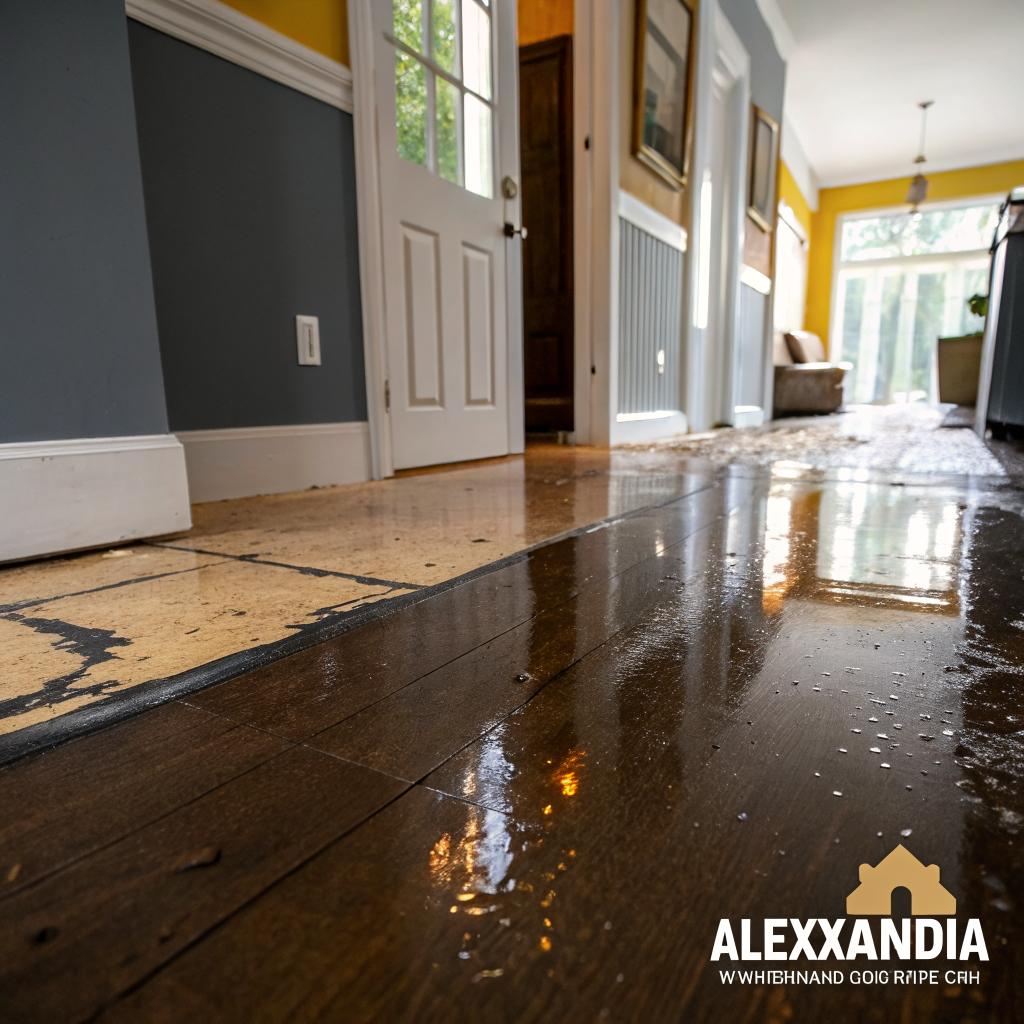
So, you are trying to figure out how to handle water damage repair in Alexandria for your floors and home. The short answer is that you need to stop the water source, dry everything fast, remove damaged materials, treat for mold, and then repair or replace the flooring and affected parts of the house, and for bigger jobs you should call a local service like water damage repair Alexandria before the damage spreads.
Most people wait too long and hope the water will just dry on its own. It usually does not, at least not safely. Moisture sits inside subfloors, walls, and under baseboards. Floors cup or buckle, trim swells, and mold shows up where you cannot see it. If you care about your flooring and long term renovation plans, you need a simple plan you can follow on your own, and also a sense of when to stop and bring professionals in.
Here are a few things you need to know before you start ripping up boards or cutting drywall.
- Dry time is measured in hours, not days. Waiting a day can double the damage.
- Different floors handle water very differently. Tile might survive. Laminate usually does not.
- Hidden moisture is the real problem, especially in subfloors and wall cavities.
- Cleaning is not just about looks. You need to stop bacteria and mold.
- Insurance rules can affect what you remove, keep, or replace.
- Some work is realistic for a homeowner. Some is not.
What kind of water are you dealing with?
Before you touch anything, you need to know what type of water caused the damage. It sounds a bit technical, but it matters for flooring and for your health.
| Water type | Common sources | Risk level | What this means for floors |
|---|---|---|---|
| Clean water | Burst supply line, leaking fridge line, clean rain through a roof leak | Low, if dried in under 24 to 48 hours | Some floors can be saved, especially solid wood and tile |
| Gray water | Dishwasher, washing machine, bath overflows | Medium, has soap, oils, some contaminants | Carpet padding almost always needs replacing, some laminates too |
| Black water | Sewage backup, river flood, standing outdoor water flowing inside | High, unsafe without protection | Most porous flooring and drywall must be removed and thrown out |
If the water is from a sewer line or outside flood, do not treat it as a regular DIY job. In that case, most of the advice here is still useful, but you should not try to save porous materials like carpet, pad, laminate, MDF baseboards, or low grade engineered wood.
First steps in the first hour
Most people feel overwhelmed in that first hour. You probably look at the water, think “this is bad,” then freeze. The best thing is to follow a simple checklist.
1. Stop the source and stay safe
- Turn off the main water valve if a supply line is leaking.
- Shut power off at the breaker if water is near outlets, cords, or appliances.
- Watch for sagging ceilings. If drywall is bulging, that can fall without warning.
- Wear gloves and at least basic protection if you are touching dirty water.
If the water keeps coming, nothing else you do will matter. Stopping the source is always step one, no matter how small the leak looks.
2. Remove standing water
You want to get water off the floor as fast as you can.
Options that usually work:
- Wet/dry vacuum for puddles.
- Towels, old sheets, or mops for smaller spills.
- A squeegee to push water toward a floor drain, if the room has one.
Try not to slide water into wall cavities or under cabinets. That just hides the problem instead of fixing it.
3. Start the drying process quickly
Once you have removed the puddles, you are not done. The floor and walls still hold moisture.
Simple steps you can take right away:
- Open windows if the outside air is not very humid or raining.
- Turn on fans and aim them across the wet area, not straight down.
- Use a dehumidifier in the room to pull water from the air.
- Lift rugs and move furniture out of the wet zones.
If your flooring is important to you, especially real wood or high end tile, that dehumidifier is not optional. It changes how fast the room actually dries.
How water damage affects different flooring types
People often ask, “Can I save this floor?” The real answer depends on the material, how long it stayed wet, and how the floor was installed. Some floors surprise you and recover. Others fail quietly months later.
Solid hardwood floors
Solid wood can react badly at first, but it is one of the most repairable materials if you act fast.
Things you might see:
- Cupping, where the edges of boards lift up.
- Gaps between boards as they swell, then shrink.
- Discoloration in darker patches.
What usually works:
Do not rush to sand cupped hardwood. Many floors flatten out once the moisture content comes back to normal.
Here is a rough path people follow with solid hardwood:
- Dry the surface and run fans and dehumidifiers for several days.
- Check under the floor if you can, from a crawlspace or basement, to see if the subfloor is wet.
- Wait 2 to 4 weeks before making final decisions about sanding or replacing.
- After the wood stabilizes, have a professional measure moisture before refinishing.
If the boards are cracked, cupped heavily, or the subfloor is soft, then sections might need to come out. Still, that is often cheaper than replacing the entire room.
Engineered wood floors
Engineered wood has a thin real wood layer over a plywood or fiber core. It looks high end, but it is less forgiving with water.
Common issues:
- Edges swell and never go back to flat.
- Top layer separates from the core.
- Click together planks open and lose their locks.
If water only touched a small area for a short time, you might save some of it, especially glued down engineered planks. But for larger spills that sat for several hours, the reality is that many engineered floors will need partial or full replacement.
Laminate floors
This is usually the worst match for water. Most laminate has a high density fiberboard core that acts like a sponge. Once water gets into the joints, swelling follows.
Signs you have a real problem:
- Soft, spongy feel underfoot.
- Edges look puffed or fuzzy.
- Surface layer wrinkles or peels at the joints.
If laminate flooring has swelled at the seams, there is almost no honest way to fix it. Plan on replacing those planks, and often the whole run.
You can sometimes remove only the affected boards if the water was localized and you still have extra planks. But hidden moisture under the rest of the floor is a risk, so you want to pull at least a few more pieces to check the underlayment and subfloor.
Vinyl plank and sheet vinyl
Vinyl is more water resistant, but not magic.
For floating vinyl plank:
- Seams can let water through to the underlayment.
- If water sits, mold can grow under the planks.
- Planks can separate as the floor expands and contracts.
In many cases you can:
- Remove the planks in the wet area,
- Dry the subfloor and underlayment,
- Clean everything,
- And then reinstall or replace only those planks.
Sheet vinyl can trap water underneath. If the subfloor feels soft or there is a musty smell, you probably have moisture under the sheet and maybe damaged wood below.
Tile and stone floors
Tile handles clean water well, but it is not always perfect in a big leak.
Risks include:
- Loose grout allowing water to reach the subfloor.
- Cracked tiles from movement in a wet, weakened subfloor.
- Moisture stuck in the mortar bed.
If tile is properly installed over cement board or a concrete slab, you often only need to dry the surface and control humidity. If it is on regular plywood and that plywood gets saturated, parts of the tile field can lift or crack and need replacement.
Carpet and rugs
Carpet reacts differently depending on the type of water.
For clean water:
- You can often save the carpet if you remove the pad, dry the carpet, then install new pad.
- Professional extraction tools work much better than rental shop vacs for thick carpet.
For gray or black water:
- Pad usually must go.
- Carpet often should be removed as well, especially for sewage or flood water.
If you are in doubt and there was any dirty water, it is safer to remove and replace than to live with hidden contamination.
Checking the subfloor, walls, and structure
The part people forget is the part they cannot see. Your floor covering might look fine after drying, but the subfloor and walls could still be wet.
How to check for hidden moisture
Some signs are obvious:
- Musty smells that do not go away.
- Baseboards pulling away from the wall.
- Drywall that feels soft, warped, or stained.
- Subfloor that squeaks more than usual or feels bouncy.
If you want to be more precise, a cheap moisture meter can help. It will not turn you into a specialist, but it can tell you if an area is still much wetter than the rest of the floor.
In many water damage projects, people pull baseboards to see behind them. If the drywall is soaked at the bottom, the material might need to be cut out.
When to cut drywall
This sounds extreme, but it is often the thing that prevents long term mold.
General guidelines many contractors follow:
- For clean water that dried within 24 to 48 hours, you might not need to cut.
- For water that sat longer, drywall that stayed wet more than a day or two usually needs to be removed.
- For sewage or flood water, affected drywall, insulation, and trim are often removed up to at least 12 to 24 inches above the water line.
You do not have to guess the exact height. Some people cut in a straight horizontal line at a convenient level, like 24 inches, to make repair easier.
Subfloors under different floors
Most homes in Alexandria have one of these under the visible flooring:
| Subfloor type | Common under | Water behavior | What often happens |
|---|---|---|---|
| Plywood | Hardwood, laminate, carpet | Soaks up water, can delaminate | Edges swell, may stay weak after drying |
| OSB (oriented strand board) | Many newer homes under most floors | Edges swell more than plywood | Heavy damage near joints if water sits |
| Concrete slab | Tile, vinyl, sometimes wood or laminate | Does not rot, but holds moisture | Longer dry times, risk of flooring failure if reinstalled too soon |
If the subfloor is still wet and soft after drying efforts, you will not get a stable new floor. At that point, cutting out and replacing sections of subfloor is cleaner than trying to brace something that is already failing.
Cleaning and mold prevention
You might feel tempted to just bleach everything and move on. Bleach helps on some hard surfaces, but it does not fix the whole problem and it is rough on your lungs.
For clean or gray water on hard surfaces:
- Wash with a mild detergent and warm water.
- Rinse and dry the area thoroughly.
- Use a disinfectant approved for hard floors, following the label.
For porous materials:
- Carpet and pad often need professional cleaning or replacement.
- Wet insulation in walls almost always needs to be removed.
- Soft, crumbling drywall or trim should be discarded.
Mold is more about time and moisture than about how “dirty” the water looked. If something stayed wet for days, mold spores usually had enough time to start growing.
If you see visible mold on drywall, framing, or the back of baseboards, you will want that material gone or cleaned by someone who knows how to handle it safely. Small spots on non porous surfaces sometimes wipe away with proper cleaners. Large areas inside walls are a different story.
Repairing and replacing floors after water damage
Once everything is dry and clean, you get to the part most people care about the most: how the floor will look and feel when you are done.
Deciding what to keep and what to replace
This is not always obvious. People often try too hard to save materials that are already compromised.
Here is a simple way to think about it:
- If it is soft, crumbling, or clearly swollen, it goes.
- If it smells musty and you cannot clean that smell away, it probably goes.
- If the cost to repair is close to the cost of replacement, replacement tends to be smarter.
Roof and plumbing leaks above nice hardwood can sometimes be fixed by replacing a small patch of flooring and then refinishing the entire room so the color matches.
For inexpensive laminate, patching a small area in the middle of a room often looks bad and does not last. In that case, full replacement might make more sense, especially if you were thinking about updating your floors anyway.
Matching existing flooring
In real life, you rarely find a perfect match if the floor is older. Colors fade, product lines end, and even “same” product from a new batch looks a little different.
You have a few choices:
- Replace flooring only inside a room or clear border, so any slight difference looks intentional.
- Refinish all connected hardwood at the same time, so everything matches after staining and sealing.
- Use transition strips between rooms if you switch materials or colors.
If you are already thinking about a bigger renovation, water damage can be a forced but useful moment to pick better flooring for that space. For example, swapping out old carpet in a basement for vinyl plank that tolerates moisture better.
DIY floor repair vs calling a contractor
You do not have to call a contractor for every little leak. But people often wait too long when they really should.
You might handle it yourself when:
- The water was clean and limited to a small area.
- The floor dried fully within 24 to 48 hours.
- You do not see or smell signs of mold.
- You have some basic tools and feel comfortable removing and reinstalling trim or small areas of flooring.
A contractor or restoration company is usually a better choice when:
- Water came from sewage, a river, or outside flood.
- The entire room or several rooms were covered.
- The water ran down into lower levels, like a ceiling below.
- You see clear structural damage or large areas of mold.
There is also the question of time. Drying systems with strong air movers and commercial dehumidifiers can speed things up a lot. That can save a hardwood floor that might otherwise be lost.
Working with insurance on water damaged floors
This part feels boring, but it affects what you can realistically repair or replace.
Insurance policies usually cover sudden and accidental water damage from things like burst pipes or appliance failures. They often do not cover gradual leaks that were ignored, or local flooding from rivers. Also, they usually cover the damage, not fixing the plumbing that caused it.
Some practical tips:
- Take photos and short videos before you start cleanup.
- Keep receipts for fans, dehumidifiers, and any supplies.
- Do not throw away damaged flooring or baseboards until your adjuster has seen them or confirmed they do not need to.
- Ask directly what they will cover for flooring replacement and where.
If you are already in a renovation mindset, you might choose to pay extra to upgrade flooring while the insurance covers part of the cost to restore the affected area. Just be clear on what they pay for and what is your share.
Preventing future water damage in floors and homes
This is the part people promise themselves they will handle and then forget. You do not need a huge plan, but a few habits can reduce your risk a lot.
Regular checks that help
You might set reminders once or twice a year to:
- Look under sinks and around toilets for drips or stains.
- Check supply lines to washing machines and dishwashers.
- Inspect caulk around tubs, showers, and backsplashes.
- Clean gutters and confirm downspouts push water away from the house.
For older homes, especially those with crawlspaces, a quick look under the house after heavy rain can tell you whether water is pooling or plumbing lines are sweating and dripping.
Flooring choices for moisture prone areas
This is where your interest in home renovation and flooring can actually save you headaches next time.
Some general ideas:
- Bathrooms and laundry rooms tend to do better with tile or quality vinyl, not standard laminate or softwood.
- Basements, especially in wetter areas, usually work better with materials that tolerate some moisture, like LVP (luxury vinyl plank) over a suitable underlayment, or tile if the slab is stable.
- Entryways that see wet shoes and umbrellas need water resistant floors and good mats.
You do not need to turn your home into a waterproof lab, but matching materials to the risk level of each room already lowers the impact of leaks.
Common mistakes people make with water damaged floors
Sometimes it helps to know what not to do.
Here are mistakes that cause trouble later:
- Waiting several days before drying, because “it looked like it was getting better.”
- Covering wet areas with rugs or furniture to hide the damage.
- Painting or sealing wood that still has high moisture content.
- Using household fans without any dehumidification in a closed, humid room.
- Replacing flooring on top of a wet subfloor.
If you trap moisture inside a floor or wall, it usually finds a way out later, and that often means mold or warping where you least expect it.
I have seen people spend a lot of money on beautiful new flooring, only to have it buckle or separate within months because the slab or subfloor never fully dried. Waiting an extra week with proper drying costs less than doing a whole job twice.
Simple step by step plan you can follow
If you want a quick reference you can save or print, this is one way to structure your response when water hits your floors.
Step 1: Safety and source
- Stop the water.
- Shut off electricity if water is near outlets or electrical equipment.
- Identify the water type: clean, gray, or black.
Step 2: Remove water and start drying
- Use a wet/dry vacuum, mops, or towels to remove standing water.
- Move furniture and rugs out of the way.
- Set up fans and a dehumidifier.
- Open windows only if the weather is dry and not too humid.
Step 3: Inspect surfaces and hidden spaces
- Check floors for soft spots, cupping, or swelling.
- Look at baseboards and drywall for staining or warping.
- Check the room below, if there is one, for ceiling damage.
- Use a moisture meter if you have one, especially along edges and corners.
Step 4: Remove damaged materials
- Pull up carpet and pad if they are soaked, especially from dirty water.
- Take off baseboards where the wall was wet.
- Cut and remove wet drywall as needed.
- Remove swollen laminate or badly damaged planks.
Step 5: Complete drying and cleaning
- Keep fans and dehumidifiers running until readings or touch checks feel normal.
- Clean hard surfaces with detergent and approved disinfectants.
- Confirm there is no visible mold starting in corners or hidden spaces.
Step 6: Repair and replace floors and finishes
- Repair or replace subfloor sections if they are weak.
- Install new flooring, matching or updating as you prefer.
- Reinstall or replace baseboards and trim.
- Paint repaired walls and trim so everything blends.
If at any point you feel stuck, or if the damage seems bigger than a small room, it is not a sign of failure to call someone who works on this daily. Sometimes a short visit or quote gives you enough clarity to finish the plan yourself.
Common questions about water damage repair for floors and homes
How long does it take for a water damaged floor to dry?
In many cases, you look at 2 to 7 days for basic drying, with proper fans and dehumidifiers. Hardwood and subfloors can take longer. I know that sounds like a long time, but rushing to cover or refinish while the material is still damp tends to cause worse problems later.
Can I just use fans without a dehumidifier?
You can, but it is not ideal. Fans move air and help evaporation, but the moisture still stays in the room unless there is a way for it to leave. A dehumidifier speeds up the process and reduces the risk of mold. If you live in a very humid area, fans alone often do not bring the moisture down enough.
Is all warped hardwood ruined?
No. Some cupping and minor warping in solid hardwood can flatten out as the wood dries. You usually need patience and accurate moisture checks. Only when boards split, stay severely cupped, or pull away from the subfloor do you move from repair to replacement.
Can I walk on floors while they are drying?
You can, but try to limit heavy traffic, especially on wood or laminate that is still wet and soft. High heels, furniture dragging, or kids jumping on spongy areas can cause more damage than the water alone.
How do I know if I should call a professional?
Ask yourself a few simple questions:
- Was the water contaminated or from sewage?
- Are more than one or two rooms involved?
- Did water enter walls, ceilings, or insulation?
- Do you see mold or smell strong musty odors?
If you answer yes to any of those, a professional inspection is usually a smart move. Even if you still do part of the work yourself after that, at least you are not guessing.