So, you are trying to figure out how roofing companies in Missouri fit into a smart home upgrade plan, especially when you are already thinking about floors, interiors, and general renovation. The short answer is that your roof is one of the main systems that either supports or ruins smart home upgrades, and working with the right roofing companies Missouri can make your home smarter, more comfortable, and cheaper to run.
Your roof shapes everything under it. Heat, moisture, sound, and light all start at the top. That affects your hardwood or vinyl floors, your subfloor, your insulation, your HVAC, and even how reliable your smart devices are. So when you plan a remodel, it is not just “roof first, floors later” or the other way around. It is more of a back and forth between what happens above your head and what happens under your feet.
Here is a quick list of things you need to know before calling a roofer about smart upgrades:
- Your roof is part of your home’s energy system, not just a rain shield.
- Smart tech on the roof can lower energy bills and protect interior finishes and flooring.
- Poor roofing work often shows up as floor damage, mold, and warped baseboards.
- Solar, smart vents, and better insulation all need planning, permits, and sometimes structural checks.
- The best plan links roof choices, insulation, HVAC, and flooring material together.
How your roof affects the rest of your renovation
If you are redoing floors or planning a full interior update, it is easy to look at the roof as a separate project. I think that is a mistake. Moisture from a small roof leak can ruin a new wood floor faster than almost anything. Even what feels like “just a hot upstairs” can change how long flooring and finishes last.
Here is how the roof connects to the rest of your home in very practical ways.
Moisture, leaks, and your floors
Water will always find a way down. If you have a leak in late winter, it may not show up on the ceiling immediately. It might soak insulation, run along framing, and finally land on subfloors or wall bottoms. Then a few months later you start to see:
- Swollen or cupped hardwood planks
- Soft plywood or OSB subfloor under tile
- Curved baseboards or peeling paint
- Musty smell in a room that “should not” be damp
When people skip roof checks before a big flooring project, they often end up paying twice: once for the new floor and again to fix what hidden water ruined.
So if you are excited about new floors, or a full remodel, it is smart to check that your roof is dry, vented, and not near the end of its life. A good roofer will look in the attic and around flashing, not just at shingles.
Heat, comfort, and smart thermostats
Smart thermostats and zoning systems do help with comfort, but they are not magic. If your attic gets very hot in summer, or you have dark shingles plus poor ventilation, your HVAC will run harder than it needs to, and that heat loads the ceiling and then the floors.
You may notice:
- Upstairs floors feel warmer under bare feet
- Wood flooring gaps more in one season than another
- Rooms under the roof are harder to keep at a stable temperature
Good roofing work, insulation, and ventilation support smart tech. If you only change the thermostat but ignore the roof and attic, you are solving the wrong side of the problem.
Noise and how the roof affects daily life
If you live near a busy road or have loud storms, you probably notice that roof structure and materials change sound levels indoors. Thicker decking, underlayment, and attic insulation can reduce outside noise, which makes open floor plans and hard flooring more comfortable to live with.
That is one of the small upgrades people do not always think about: pairing a new roof with sound control so the home feels calm, even with tile or luxury vinyl that reflects sound more than carpet.
Key smart roofing upgrades for Missouri homes
Missouri gets heat, humidity, hail, snow, and strong winds. That mix puts pressure on everything on the roof. When you plan smart home upgrades, you want things that make sense in that climate, not just what looks trendy online.
Here are some roofing related upgrades that actually line up with smart home goals.
Cool roofs and energy performance
A “cool roof” is not a style term. It is about how much sunlight the roof reflects and how much heat it sheds. For Missouri, where summers can be hot and humid, this matters.
Cool roof options usually include:
- Light colored shingles with higher solar reflectance
- Metal roofing with reflective coatings
- Certain single ply systems on low slope areas
These help:
- Reduce attic temperature
- Lower cooling load on your HVAC
- Protect flooring and furniture from heat related expansion and fading
If you are spending money on smart thermostats and better HVAC controls, pairing them with a cooler roof surface means those devices have less work to do, and the savings actually show up faster.
Roof insulation and attic air sealing
Insulation might not feel “smart” in the tech sense, but it has more effect on comfort and bills than many gadgets.
Key areas where roofing contractors and insulation crews often work together:
- Adding blown in insulation on the attic floor
- Air sealing around can lights, plumbing vents, and attic hatches
- Correcting old or blocked soffit vents before adding insulation
Think of this as protecting your interior finishes. A stable temperature and lower humidity swings help:
- Wood floors move less and stay flatter
- Luxury vinyl planks stay locked in place
- Tile grout is under less stress from expansion and contraction
Ventilation and smart vents
Attic ventilation is not only about cooling the attic. It also helps move moisture out before it condenses on framing and insulation. In a place with winter cold and indoor humidity, warm air from living spaces can drift up and condense in the attic. Over time, that supports mold and can damage sheathing.
Some smart home focused upgrades here:
- Smart powered attic fans that respond to temperature and humidity
- Better designed ridge and soffit vent systems
- Checking that bath fans vent outdoors, not into the attic
This is where a roofing contractor and your HVAC contractor should at least talk once, even if briefly. If you add powered attic fans without thinking about HVAC, you can create negative pressure that pulls conditioned air from the house into the attic. That wastes energy and can pull humid air through small gaps, which again affects framing and finishes.
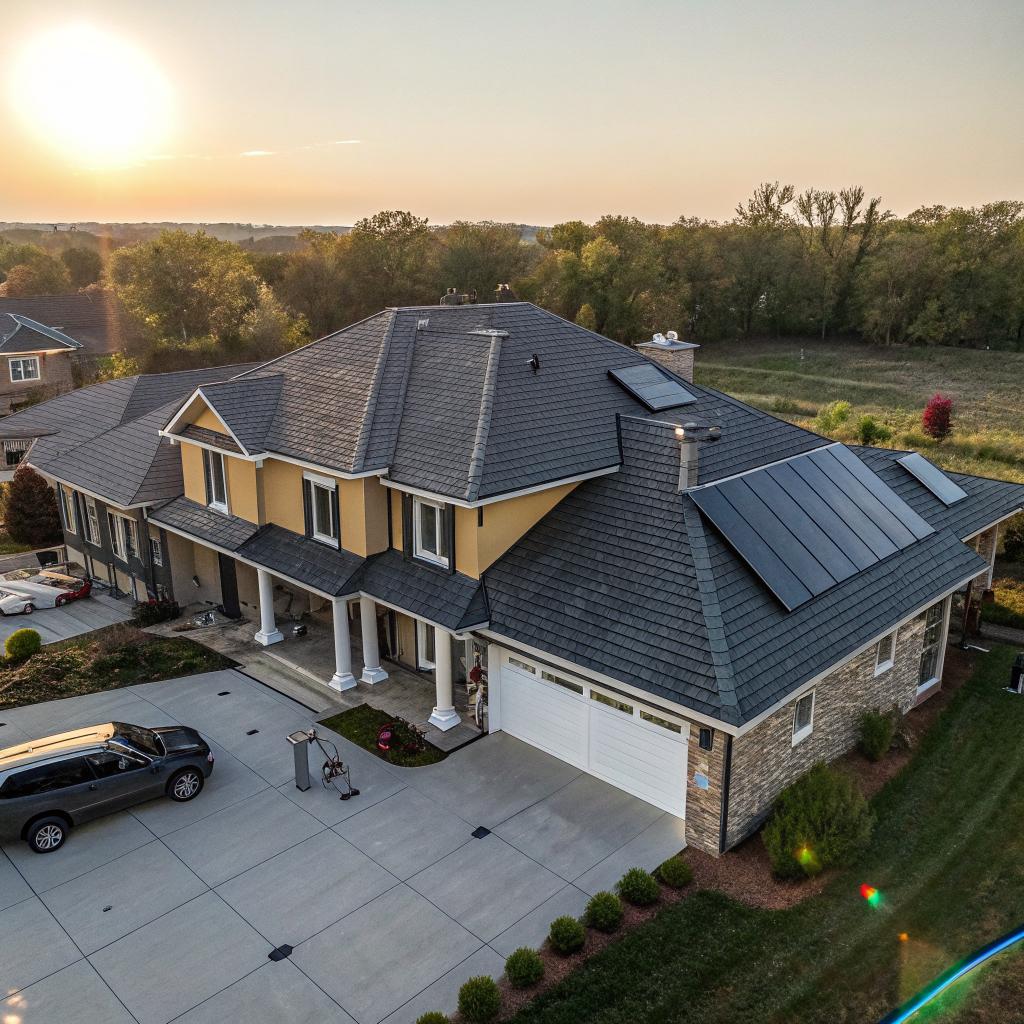
Solar panels and your roof structure
Solar is often the first thing people think of when they say “smart home” and “roof”. It can be a good idea, but you want to approach it in the right order.
If your roof is close to the end of its life, install the new roof before you install solar. Putting panels on an old roof usually means you pay twice for labor when the roof needs replacement.
Key points when mixing solar and roofing:
- Check roof age and condition first
- Ask about structural load and roof framing
- Plan wiring paths so they do not interfere with attic insulation work
- Look at how penetrations will be flashed to avoid leaks
Solar also connects directly to your flooring and interior work because it changes how often your HVAC runs and how much heat builds up in upper rooms. Less load often means more stable indoor conditions, which helps long term durability for everything inside, including floors.
How to plan smart roofing upgrades alongside flooring and interior work
You do not need to do everything at once, but a rough sequence reduces surprises.
Start with inspection and honest assessment
Before you order expensive flooring or smart devices, ask for:
- A roof inspection from a reputable company
- An attic inspection for insulation, air leaks, and moisture
- A quick moisture check where ceilings meet exterior walls
This can be informal. Walk the house with the contractor. Ask questions like:
- “If I redo my floors this year, is there anything up here that could put them at risk?”
- “Where do you see signs of past or minor leaks?”
- “Does the attic feel too hot or too wet for this time of year?”
People sometimes think there needs to be a perfect master plan, but you can keep it simple. Just avoid putting expensive finishes under a roof that is already struggling.
Decide what gets done before flooring
In many homes, these projects should happen before you touch floors:
- Full roof replacement
- Major flashing repairs around chimneys or walls
- Attic insulation and air sealing that might involve walking or working over ceiling areas
- Solar panel installation that needs wiring drops through walls or closets
Anything that involves heavy traffic, ladders, or pulling materials through the house carries some risk to finished floors. You can protect them, of course, but planning the order is still smarter.
Where timing can be flexible
Other upgrades can sometimes wait until after flooring:
- Smart attic fans and vent controls
- Gutter guards and drainage improvements
- Minor shingle repairs
These still matter but are less likely to disturb interior finishes.
Comparing common roofing materials for smart home goals
Different roofing materials have different effects on energy performance, sound, and long term interior comfort. Here is a simple table to compare a few common options you might see in Missouri.
| Roof Material | Typical Lifespan (years) | Heat Reflection | Noise Level in Rain/Hail | Impact on Floors & Interiors |
|---|---|---|---|---|
| Standard asphalt shingles | 15 – 25 | Low to medium | Moderate | More attic heat, can stress HVAC and flooring movement a bit more |
| Cool / reflective shingles | 20 – 30 | Medium to high | Moderate | Lower attic temps, smoother conditions for wood and vinyl floors |
| Metal roofing | 40 – 60+ | High with reflective finish | Can be louder without proper underlayment | Stable indoor temps when paired with insulation, good for long term flooring stability |
| Tile or concrete | 40 – 50+ | Medium | Quieter once installed properly | Higher thermal mass, can smooth out indoor temperature swings |
You do not need to obsess over every number. The main idea is that cooler and better insulated roofs help keep your interior finishes, including floors, in a narrower range of temperature and humidity.
Smart home tech that connects roof, attic, and interior
Smart home gear is often sold as separate items, but some of it ties directly into roofing decisions.
Smart thermostats and zoning
These are common already. To get the most out of them, think about:
- Is the top floor much hotter in summer or colder in winter?
- Does the attic have enough insulation for your climate?
- Is roof color and ventilation helping or fighting your thermostat logic?
If the answer is that the top floor is always at war with the thermostat, your roof and attic might need more attention than your thermostat settings.
Smart moisture sensors and leak detection
You can place small, inexpensive sensors in key spots:
- Under roof penetrations, inside attic near chimneys or vent stacks
- On top of ceiling drywall in areas under valleys or tricky flashing
- Near bathroom vents and around skylights
Early leak detection is not just about saving drywall. Catching small drips before they soak subfloors can save an entire flooring system from replacement.
Some of these sensors tie into your smart home hub and alert your phone. Others are simple standalone units with audible alarms.
Smart shading and daylighting
While it is not strictly “roofing”, skylights and solar tubes change the lighting and heat profile of rooms. Smart blinds or shades on larger skylights can help balance light and heat gain.
This matters for:
- Rooms with wood flooring near direct sunlight
- Spaces with dark colored floors that heat up quickly in the sun
- Open floor plans where glare can spread from one area to another
If you are installing or replacing skylights as part of a roof project, think about the future: do you want smart shades later? Are there power options near those openings?
What to ask roofing companies in Missouri about smart upgrades
Not every roofer will be excited about smart home gear, and that is fine. You do not need them to be tech fans. You just need them to understand how their work supports your overall plan.
Here are some direct questions that can lead to better results:
- “How will this roof choice affect attic temperature in summer?”
- “Do you coordinate with insulation or HVAC contractors when needed?”
- “Have you installed roofs under or around solar arrays before?”
- “What do you see as the biggest risk for leaks in my current layout?”
- “If this was your house and you planned to redo the floors, what would you fix first on the exterior?”
You do not need perfect answers, but you will quickly feel who thinks beyond just shingles. That broader view usually leads to fewer surprises later inside the house.
Red flags when talking to contractors
Some warning signs that a contractor might not be a good match for a smart-upgrade focused project:
- They dismiss attic insulation or ventilation questions as unimportant
- They refuse to go into the attic at all during an inspection
- They will not talk about roof age or expected remaining life, only about “looks fine”
- They ignore your plans for interior work or say “that has nothing to do with the roof”
You do not need drama here. If you feel brushed off when you mention floors, HVAC, or smart devices, that might not be the person to help you plan a more integrated upgrade.
Budgeting and phasing: roof, floors, and smart tech
Money and timing are where theory hits reality. Most people cannot replace the roof, redo all floors, and install top tier smart systems at once. So what is a practical order?
Phase 1: Protect and stabilize
If you see any of these:
- Active leaks or stained ceilings
- Shingles missing, curling, or covered in moss
- Ice dams forming regularly in winter
- Very hot attic combined with poor insulation
Then your first phase should probably focus on:
- Roof repair or replacement
- Attic ventilation fixes
- Base level insulation to meet local code or better
Think of this as getting the house to a point where it is safe to invest in finishes like floors, cabinetry, and built ins.
Phase 2: Comfort and interior surfaces
Once the top of the house is stable and dry, you can look at:
- Flooring upgrades and subfloor repairs if needed
- New trim, paint, and interior doors
- Lighting and some smart switches
Now your investments are not sitting under a questionable roof, so they stand a better chance of aging well.
Phase 3: Optimization and smart systems
After the basics are solid:
- Smart thermostats and zoning
- Smart attic fans and leak sensors
- Solar panels if they fit your budget and roof orientation
At this point, you are mostly fine tuning. The roof protects, the interior looks and feels good, and the smart gear helps everything run more smoothly.
Common mistakes when mixing roofing and smart home projects
Here are pitfalls I see people run into when they try to do “all the smart stuff” at once.
Focusing on gadgets before the building shell
Buying cameras, smart locks, and color changing lights is much more fun than insulation and flashing. I get that. But a weak building shell will always eat budget with higher bills and repairs.
If you are serious about a smart home, flip the order:
- Roof, attic, windows, and doors
- HVAC and ventilation
- Then smart controls, sensors, and entertainment
Ignoring small signs from floors and walls
Your floors can actually warn you about roof related issues:
- Cupping in hardwood near exterior walls
- Loose tiles in an upstairs bathroom
- Gaps opening and closing in baseboards seasonally
These do not always mean roof trouble, but they often point toward moisture or temperature swings that start above. A quick look in the attic or on the roof can save you from blaming the floor installer when the real problem is elsewhere.
Assuming “new” means “smart ready”
A new roof is not always a smarter roof. If someone replaced shingles quickly after a storm but did not touch:
- Ventilation balance
- Flashing details
- Insulation levels
Then many of the underlying problems remain. When you hire for roof work, ask “What will actually change in how this attic behaves, not just how the roof looks from the street?”
How flooring choices react to roof and attic conditions
Since the site you are reading this on focuses on renovation and flooring, it is worth going a bit deeper here. Different flooring types react in different ways to climate and roof related issues.
Solid hardwood floors
Hardwood is sensitive. It moves with humidity and temperature.
Risks from poor roofing or attic setup:
- Seasonal cupping and crowning if moisture comes from above
- Gaps between boards in dry seasons when the home swings from damp to very dry
- Staining at board edges if leaks are slow and long lasting
Stable roof, good attic ventilation, and controlled humidity let hardwood perform much better. So if you dream of wide plank wood floors, give extra care to what is over them.
Engineered wood and luxury vinyl plank (LVP)
These products handle movement better but are still not immune.
A roofing or attic moisture problem can lead to:
- Subfloor swelling, which telegraphs through the finished floor
- Click together systems unlocking in wet areas
- Odors trapped under floating floors if leaks go unnoticed
Here again, moisture detection and roof inspections are your friend. It is frustrating to pull up a “waterproof” floor to find mold on the underlayment because of a slow drip from a roof vent.
Tile and stone
Tile feels permanent, but it relies heavily on a stable substrate.
Roof related issues can cause:
- Hairline cracks from framing movement when moisture content changes
- Loose tiles or hollow sounds where subfloor swelled and then dried
- Discolored grout from moisture wicking up through the substrate
If you are putting tile in an upstairs bathroom or laundry, have someone check what is going on in the space above and around that room. Sometimes a minor roof fix avoids major tile repairs later.
Putting it all together
At this point you might be thinking, “This sounds like a lot. Do I really need to connect roofing, flooring, and smart home planning this tightly?” I think you do, at least at a basic level, because your home does not care about project categories. It just responds to physics: water, heat, and time.
So the core ideas are pretty simple:
If you protect the house from water and extreme heat at the roof level, your smart devices, finishes, and flooring have a better chance of doing their job quietly for years.
You do not have to chase every possible upgrade. Pick the ones that match your budget and your plans:
- Check the roof before you redo the floors
- Use roofing work as a chance to improve ventilation and insulation
- Add simple sensors where leaks would hurt you most
- Think about how light and heat from above will land on your new floors
One common question
Question: “If I can only afford one major project this year, should I put my money into a smart roof upgrade or new floors?”
Answer: If your roof is old, leaking, or causing serious heat and moisture swings, fix the roof first. New floors under a failing roof are at risk, no matter how beautiful they are. If the roof is in good shape and your attic is reasonably insulated and dry, then doing floors first can be fine, and you can add roofing related smart upgrades later.
What is the one thing you can check this week, without any contractor, that tells you the most about whether your roof is helping or hurting your future renovation plans?