
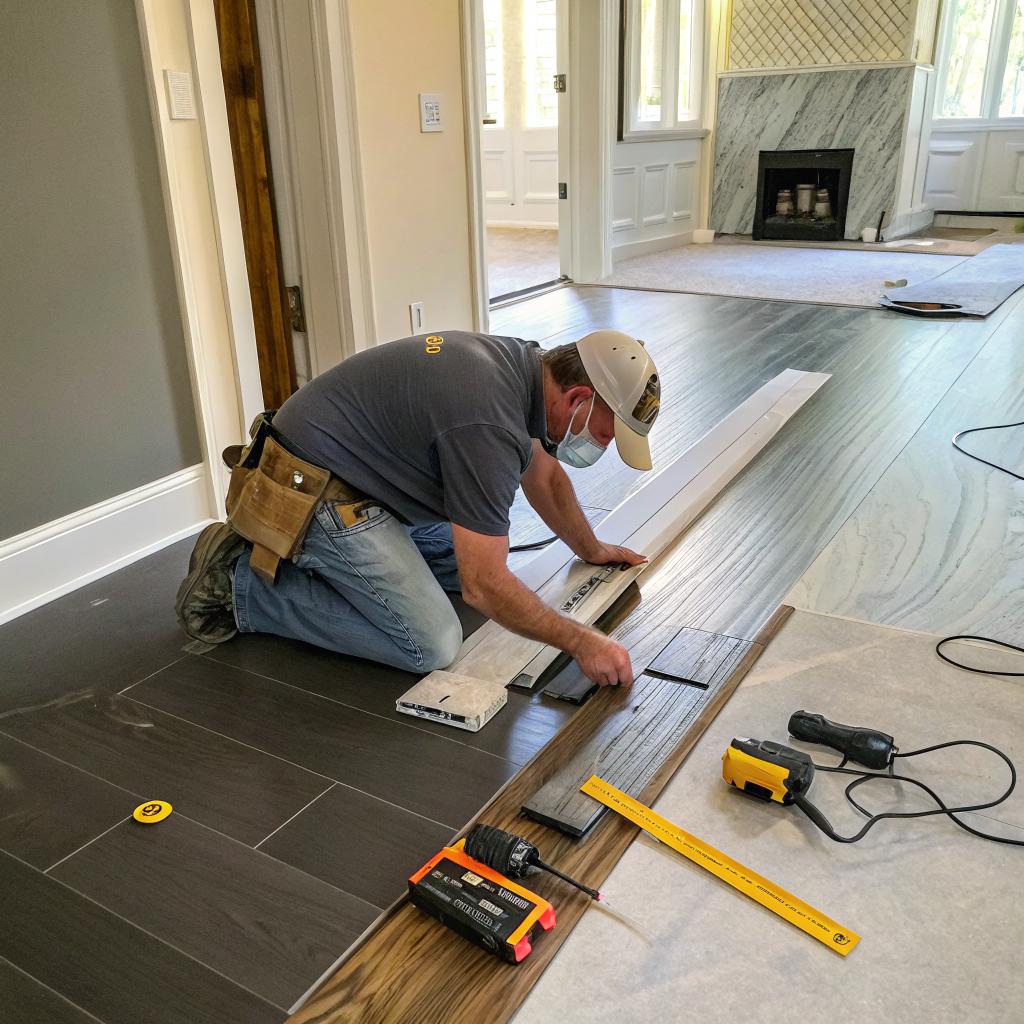
So, you are trying to figure out what flooring fixes a handyman in Lexington KY can handle so your floors look good and stay that way for years. The short answer is that a good local handyman can repair, refresh, or replace many common flooring types in a way that improves the look of your home and also keeps the floors stronger, safer, and easier to live with.
Most people start thinking about floors when something is already wrong. A loose plank, a soft spot near the sink, a chipped tile that keeps catching your sock. Or you move a rug and realize the rest of the floor looks tired. At that point you have two choices: ignore it and hope it does not get worse, or fix it with some kind of plan. That is where a capable handyman Lexington KY can help, especially if you want real-world, durable fixes rather than a quick cover up.
Here are some of the key things to keep in mind while you read the rest of this:
- Most common flooring problems can be repaired without full replacement.
- Moisture control matters more than almost anything else for long term results.
- Prep work is boring, but it is what makes new flooring last.
- Small repairs done early are cheaper than big repairs done late.
- Not every job needs a specialist; some are very well suited for a handyman.
- Good style is not only about color and pattern, but also about how your floors work with daily life.
Why flooring fixes matter more than people think
Your floor is not just something you walk on. It sets the tone of every room, even when you do not notice it. When it looks worn, uneven, or just dated, the whole space feels a bit off.
In a place like Lexington where you get hot, humid summers and chillier winters, floors take a lot of abuse. Mud, salt, pets, kids, furniture drags, and temperature swings. Over time, those little hits add up.
If you want lasting style, you need floors that can take daily use without needing a full redo every few years.
That is why handyman flooring work is so valuable. It fills the gap between basic DIY and high-end full replacement. You can fix issues while they are still small, refresh surfaces, and upgrade problem areas without tearing the house apart.
You might not need a full crew in work boots for a week. Sometimes you just need one person with the right tools, the right materials, and a steady approach.
What a handyman in Lexington can really do with your floors
Handyman services do not all look the same. Some focus on carpentry, others on general home repair. For flooring, here are the kinds of tasks that usually fall right into the handyman skill set.
Common flooring fixes that are worth doing
- Replacing damaged boards or planks in hardwood, laminate, or vinyl plank
- Securing loose floorboards that squeak or flex
- Filling small gaps or chips so dirt and water do not collect
- Repairing cracked or loose tiles in kitchens, baths, and entryways
- Replacing stained or worn carpet in small rooms or stairs
- Recaulking and sealing around tubs, toilets, and sinks near flooring
- Fixing transitions between rooms, like thresholds and reducer strips
- Leveling small dips or high spots that cause tripping or furniture wobble
Some of these sound minor, but they can change how you feel about your home. For example, fixing one squeaky board in a hallway that you walk over 30 times a day is a small job with a big quality of life boost.
Repeating small annoyances, like squeaks or loose tiles, usually bother people more than one big flaw they rarely see.
I have seen people live with a huge scratch under a bed for years, but call for help the same week a tile near the fridge starts rocking.
Matching the fix to the flooring type
Different flooring materials need different repair approaches. Some are forgiving. Some are not. Here is a basic guide so you can see where a handyman fits in and where you might need a specialist.
| Flooring type | Common problems | Handyman friendly fixes | Usually needs a specialist |
|---|---|---|---|
| Solid hardwood | Squeaks, gaps, water stains, scratches | Board replacement, squeak repair, patch staining, minor refinishing | Whole-house sanding and refinishing |
| Engineered wood | Edge swelling, surface chips, lifting planks | Plank replacement, re-gluing, surface touchups | Large area refinishing or structural subfloor work |
| Laminate | Buckling, swelling, chipping | Plank replacement, transitions, undercutting door trim | Major water damage across multiple rooms |
| Vinyl plank / LVP | Gaps, lifting edges, scratches | Plank replacement, reseating click joints, small repairs | Severe glue failure on large glued-down areas |
| Tile | Cracks, loose grout, hollow sounds | Individual tile replacement, regrouting, recaulking | Widespread failure of mortar bed or waterproofing |
| Carpet | Wrinkles, stains, loose edges | Stretching small areas, tack strip repair, small patching | Full house re-stretch and install |
This is not a hard rule, but it gives you a sense of where a handyman can help you save money and time. Many flooring companies prefer bigger projects. A handyman is often the one who will take on the small but meaningful fixes.
Hardwood floors: Repair, refresh, or start over?
Hardwood is one of those floors that can last decades. But it also shows every mistake. So you want to be smart with what you repair and what you leave alone.
Fixing squeaks without tearing up the floor
Squeaks usually happen when wood rubs on wood or on a nail that is slightly loose. This can be from:
- Subfloor movement
- Nails backing out over time
- Seasonal expansion and shrinkage
A handyman can often stop squeaks by:
- Finding the squeak from below in a basement or crawlspace and adding screws
- Using special screws that go through the floor and then break off below the surface
- Adding shims between subfloor and joists where there is a gap
If you can get to the underside of the floor from a basement, the fix is usually faster and cleaner. From above, it takes more care, but it is still possible.
Dealing with water spots and stains
In Lexington, with humid summers and the occasional roof or plumbing leak, water stains on hardwood are pretty common. The question is whether the damage is just on the finish or deeper in the wood.
A handyman can often:
- Lightly sand and blend a small area
- Use oxalic acid on some dark stains to lighten them
- Apply a matching stain and finish in just that area
If the boards are warped, cupped, or soft, then individual board replacement is better. That takes more time, but it lets you keep the rest of the floor.
There is a big difference between “ugly but solid” and “pretty but weak.” Try not to keep a water damaged board only because the color matches.
Laminate and vinyl plank: Fixes for everyday floors
Laminate and vinyl plank are popular in Lexington for good reason. They handle kids, pets, and messy seasons better than older sheet vinyl or cheap carpet. Still, they have their own problems.
Buckling and swelling
If the boards lift or bubble, it is often from:
- Too little expansion gap at the walls
- Water getting under the floor
- Heavy furniture pinning the floor in place
Typical handyman fixes:
- Pulling off baseboards and trimming the edges of the floor for a proper gap
- Replacing boards that have swelled at the seams
- Adding or fixing transitions between rooms so the floor can move
Sometimes people blame the product when the real problem is installation. A calm look at the layout and the gaps often solves things.
Chips, scratches, and dents
No floating floor is perfect. Chairs without pads, dropped tools, pet nails, and gravel stuck in shoes all leave their mark.
Depending on the damage, a handyman might:
- Swap out one damaged plank, working from the nearest wall or transition
- Use color-matched putty or repair kits to fill small chips
- Add felt pads or small glides under furniture to prevent more damage
Sometimes people are surprised how good a repair kit can look when used with patience. You may still see it if you know where to look, but guests rarely notice.
Tile: Cracks, grout, and movement
Tile can look neat and clean for a long time, but it is unforgiving when the surface under it moves. In a city with older houses and some uneven subfloors, this is a real issue.
Cracked tiles: What do they really mean?
One or two cracked tiles near a doorway or under a heavy appliance are often repair jobs. Many cracked tiles plus a hollow sound when you walk around can mean a bigger problem underneath.
A handyman can handle:
- Carefully removing one or a few broken tiles
- Scraping and cleaning old mortar in that small area
- Resetting matching or similar tiles in fresh mortar
- Regrouting the repair zone so it blends in
The trick is having spare tiles. If you still have a box from the original install, you are in good shape. If not, a close match can still work in low-visibility areas.
Loose grout and dirty joints
Grout wears down over time, especially in kitchens and baths. Small cracks and missing chunks do not always look serious, but they let water and dirt get behind and below the tile.
Handyman grout fixes often include:
- Raking out loose grout where it has failed
- Regrouting those areas with a compatible grout
- Applying a penetrating grout sealer after curing
Grout color is another topic. Many homes in Lexington still have light gray or white grout that has darkened in traffic zones. Sometimes a grout recolor product is a practical way to make everything look newer without ripping anything up.
Carpet repairs that do not require full replacement
Carpet is still common in bedrooms, stairs, and basements. It ages in a different way from hard floors. It stretches, wrinkles, and stains.
Wrinkled and loose carpet
Wrinkles are more than a cosmetic issue. They wear faster and can be a trip hazard.
A handyman can often:
- Detach the carpet along a wall
- Use a power stretcher or knee kicker for small rooms
- Reattach the carpet to the tack strips
- Trim excess and tuck it neatly
This works well for single rooms or small areas. Large open spaces might need a dedicated carpet installer, but again, it depends on the scope.
Small stains and damaged spots
For local stains that will not come out, or spots damaged by pets, burns, or heavy wear, patching is an option.
If there is a piece of spare carpet from the original roll, or a piece from a closet that matches, a handyman can:
- Cut out the damaged section in a square or rectangle
- Cut a patch of the same size from matching carpet
- Use carpet tape or adhesive below to join them
- Blend the fibers with brushing and trimming
The seam line might still be faintly visible if you know where to look, but usually it is better than a burned spot or permanent stain.
Subfloor issues: The hidden part that really matters
People often focus on the visible surface, but the layer under the floor is what keeps everything solid. Lexington has a mix of older homes with wood subfloors and some areas with slab foundations. Each has its own problems.
Soft spots and movement
If your floor feels spongy, bouncy, or hollow in specific areas, the issue might be:
- Subfloor delamination from old water damage
- Loose or missing screws or nails
- Joists that have warped over time
Handyman fixes might include:
- Pulling up the top flooring in that small region
- Cutting and replacing a section of subfloor
- Adding blocking or extra screws into the joists
These repairs are less glamorous, but they extend the life of any new or existing floor on top.
Moisture and vapor issues
In humid areas, moisture comes from above and below. Basements and crawlspaces in Kentucky can get damp, which influences the floors above.
Your handyman can:
- Check for signs of moisture on the underside of your subfloor
- Install simple vapor barriers where appropriate
- Seal gaps around plumbing, vents, and other penetrations
For more serious water intrusion, you might need a foundation or waterproofing contractor, but a handyman is often the first one to notice and flag the pattern.
Picking materials that actually last in Lexington conditions
Style is not only about what looks nice in a photo. It is about what looks good while handling your exact home conditions.
Here are some questions to guide your choices:
- Do you have pets that scratch or have accidents?
- Are there kids with toys, crafts, sports gear, and muddy shoes?
- Do you enter the home directly from outside without a mudroom?
- Is the room above a damp basement or near a bathroom or kitchen?
- How much direct sunlight hits the floor each day?
You can pair these questions with general product traits:
| Condition | Better flooring options | Flooring to be cautious with |
|---|---|---|
| Pets with claws | Vinyl plank, harder laminate, textured tile | Soft wood species, high-gloss finishes |
| High moisture (entry, bath nearby) | Vinyl plank, tile, certain waterproof laminates | Standard laminate, carpet against exterior doors |
| Older uneven subfloor | Floating floors with underlayment, carpet | Large format tile without leveling work |
| Strong sunlight | Lighter colors, UV resistant finishes | Very dark wood stains, some vinyl without UV rating |
The goal is not perfection. It is choosing something that gives you a good look and lines up with your daily use. That is what keeps the floor stylish for a long time rather than only the first year.
Where a handyman makes the biggest difference
Sometimes people hesitate to call a handyman because the job feels too small or they worry it will not be worth the visit. In reality, flooring has many small jobs that are exactly right for that kind of service.
Good uses of a handyman for flooring
- One or two damaged planks in a visible area
- Ongoing squeaks in a hallway or bedroom
- Loose or broken transition strips between flooring types
- Finishing details after a DIY install that was mostly done
- Tile or grout repairs around tubs and showers
- Prepping a room for new flooring by removing old material
You might notice a pattern here. Many of these tasks require careful work and some know-how, but they are not big enough to attract larger flooring crews who focus on full installs.
Handyman flooring work sits in that space between “I tried it myself and got stuck” and “I do not need a full remodeling crew here for a week.”
DIY vs hiring: where to draw the line
You are probably capable of more than you think, but not every job is a good first project. Some flooring fixes are fairly forgiving. Others can get expensive if you make a small mistake.
Here is a quick comparison.
| Task | Good for DIY | Better for a handyman |
|---|---|---|
| Replacing a single click vinyl plank near a wall | Yes, with basic tools | Helpful if access is tight or pattern is tricky |
| Stopping a squeak through a finished ceiling below | Often hard | Handyman experience is valuable |
| Applying grout sealer | DIY friendly | Handyman for large or complex layouts |
| Replacing cracked tiles around a shower | Moderate to advanced DIY | Handyman recommended if waterproofing is in question |
| Floating laminate in a simple square room | Reasonable DIY project | Handyman helpful for doors, stairs, and tricky angles |
The real question is not only “Can I do this?” but also “Do I want to spend my weekends learning this from scratch, and what happens if I get halfway and stuck?”
Sometimes hiring out a few key parts of the job is a good middle path. For example, you might remove old carpet yourself and have a handyman handle the new baseboards and floor transitions.
Making style choices with repairs in mind
Style is personal, but some choices are easier to live with. When you think about “lasting style,” that includes how the floor will look and how easy it will be to maintain or repair.
A few practical style tips:
- Choose floors that transition well between rooms, so you do not end up with five different materials on one level.
- Keep patterns and colors that work with several paint shades, not just one very specific trend.
- Use area rugs where you expect heavy wear to protect finishes and hide future repairs.
- Pick finishes that can be blended with touchups instead of ultra-unique one-off looks that you can never match.
For example, a moderately varied wood-look vinyl plank hides scratches and dirt better than a solid single-tone glossy floor. It also makes it easier to swap individual planks later without the repair standing out.
What to ask a handyman before they start flooring work
You do not need a long interview, but a few direct questions can make things clearer for both of you.
Consider asking:
- What similar flooring jobs have you done before?
- Do you see any signs of moisture or structural problems under this floor?
- Are we repairing, or would you recommend replacing a larger area?
- What materials will you use, and who is buying them?
- How will you handle dust, debris, and cleanup?
It is fine if you do not know exactly what you want. Part of their job is to tell you what is realistic, what is overkill, and what is not worth the cost.
You might hear different opinions from different people. That is normal. One handyman might prefer patching and preserving, another might lean toward replacement if they spot too many small issues at once. There is not always a single correct answer.
A quick example of a real-world flooring fix
Imagine a typical Lexington situation: a 1990s house, laminate in the living room, tile in the kitchen, carpet on the stairs and bedrooms.
You notice:
- The laminate near the patio door is starting to swell.
- There is a crack in two tiles near the fridge.
- The carpet on the stairs feels loose.
A practical handyman plan might look like this:
- Inspect the patio door for leaks and damaged weatherstripping.
- Replace several swollen laminate planks and add proper expansion gaps and a better transition strip.
- Remove the cracked tiles, reset new ones, regrout a small area, and check for any movement in the subfloor.
- Restretch the stair carpet, fix or replace tack strips, and secure loose edges at the top and bottom steps.
You do not need to redo the house. You just deal with the weak spots. The floor looks better, feels more solid, and you have stopped small problems from becoming major ones.
Keeping your floors looking good after the fix
Once the work is done, day to day habits make a bigger difference than most people expect. You do not need a detailed care schedule, but a few simple routines help a lot:
- Use doormats at every external entrance and actually clean them regularly.
- Put felt pads under chairs and table legs, and replace them when they wear flat.
- Wipe up spills as soon as you see them, even on water resistant floors.
- Use the right cleaner type for the floor material, not one product for everything.
- Check grout lines and caulk once or twice a year for early signs of cracking.
None of this is dramatic. That is the point. Floors stay stylish when they age slowly and evenly instead of suffering sudden localized damage.
Final thoughts in a simple Q&A
How do I know if my flooring issue is minor or serious?
If the damage is in one small area, and the rest of the floor feels solid, it is usually minor. If you see repeated issues across a wide area, like many tiles cracking or widespread buckling, that points to a larger problem with the subfloor or moisture.
Is it worth repairing an older floor, or should I just replace it?
It depends on the material and your plans. A solid hardwood floor is often worth repairing many times. Very cheap older laminate that has swelled in many places is usually not. Think about how long you plan to stay and whether the floor fits your daily life.
Can a handyman install completely new flooring, or only repair it?
Some handymen are comfortable with full installs for laminate, vinyl plank, or small tile projects. Others focus on repairs and prep. Ask them directly what they are comfortable with and what type of jobs they do most often.
What is the best flooring choice for lasting style in a busy household?
For many busy homes in Lexington, a quality vinyl plank or an engineered wood with a tough finish works well in main areas, with tile in baths and entries, and carpet in bedrooms if you like the softer feel. No single choice is perfect, but combining materials in the right places gives you a long lasting and practical result.
What is one small flooring fix I should stop putting off?
If you have a loose or broken transition between two floors, fix that first. It is a tripping risk, it collects dirt, and it often hides early signs of movement or moisture. That small piece often tells you a lot about the health of the floors on both sides.