
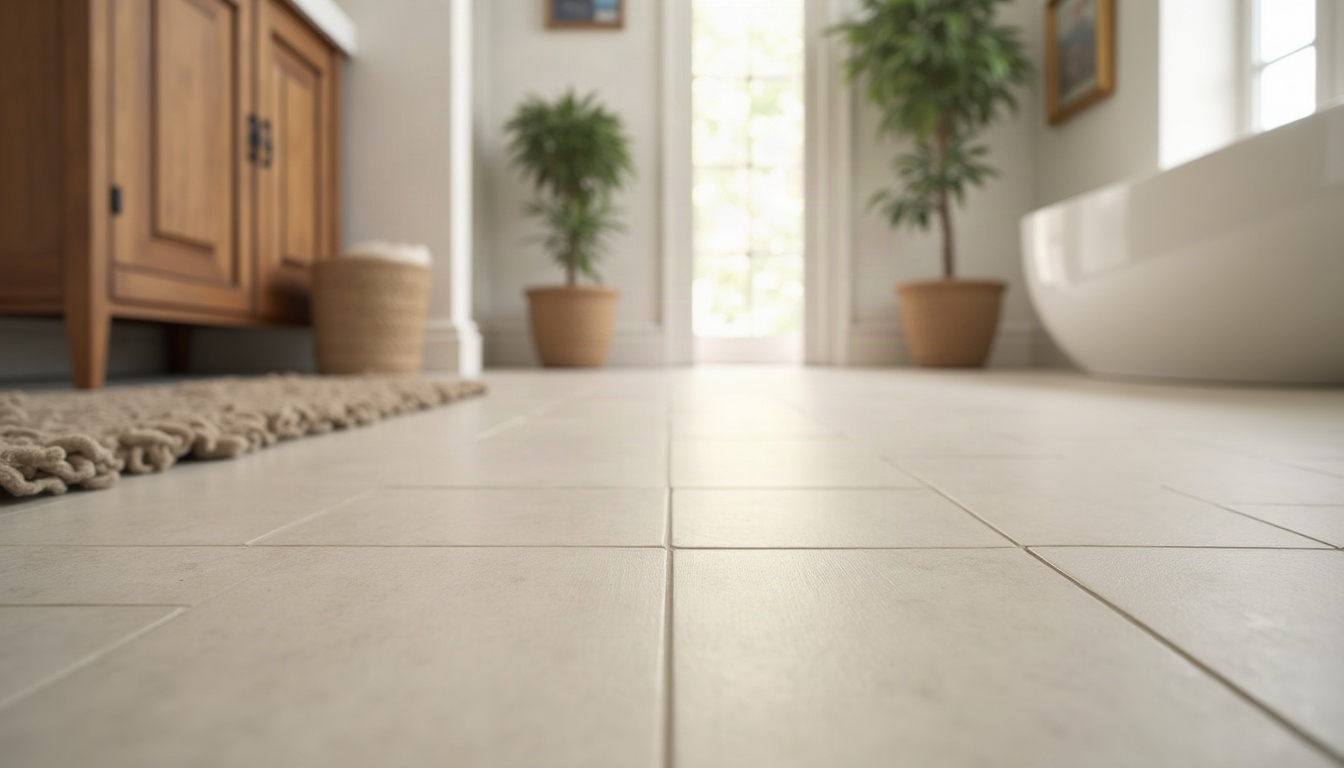
Your feet are cold on the bathroom tile every January, and you’re wondering if heat in the floor fixes that for good. The factor that decides it isn’t the floor. It’s what has to happen behind the walls first. Electric systems usually need their own circuit, and water systems need a heating pro. A local specialist listed under electrician Akron Ohio can tell you whether your panel has room for another circuit before you spend a dollar on tile.
I’m a contractor, not an electrician, so I stay on the floor side. I won’t tell you how to wire anything. Nobody should do that but a licensed pro. What I can tell you is how each system sits in the floor, what it does to your floor choice and where the common mistakes happen. Ohio winters are long and gray, which makes a warm floor easy to want. Wanting it isn’t the same as needing it in every room.
The short answer: electric mats under tile are worth it for a small bathroom or kitchen. Cable suits odd shapes. Water tubing makes sense only when the whole floor is already open.
Spec sheet: three radiant floor heating systems compared for a home remodel.
| Option | Warm-up speed | Floors it suits | Disruption to install | DIY-friendly | Cost band | Best for |
|---|---|---|---|---|---|---|
| Electric mat | Good | Tile and stone; some approved wood and vinyl | Fair | Fair (laying only) | $$ | Bathrooms and kitchens |
| Loose electric cable | Fair | Tile and stone | Fair | Poor | $$ | Odd-shaped rooms |
| Water tubing | Poor | Most floors with maker approval | Poor | Poor | $$$ | Whole floors and new builds |
Ratings are relative to each other. Warm-up speed is how long the surface takes to feel warm after the system turns on. DIY-friendly never includes the wiring or the heating hookup, which are for licensed pros only. Cost bands cover the system and the install, and say nothing about monthly running cost. Your utility rates and how long you leave it on decide that.
Electric mat: the retrofit favorite
A heating mat is a thin wire woven onto a mesh that rolls out over the subfloor. Tile goes right on top, set in a thin layer of mortar. Because the layer is thin, the floor heats up quickly and the room barely loses height.
Best for
Bathrooms, kitchens and entries. Small rooms with a clear floor area suit it best, because mats come in set sizes and you want them to fit the open floor, not the area under cabinets. An insulating underlayment beneath the mat sends more heat up and less down. Ask the tile or mat maker which underlayment it wants.
Tile and stone are the natural match. Wood and vinyl can work over a mat, but only products the maker approves for heated floors, and they usually cap the surface temperature. Vinyl softens when it runs too hot. Wood dries out and opens gaps. If you want anything other than tile, read the flooring maker’s heated-floor rules before you buy the system.
DIY rating: fair for laying the mat, none for the connection. Rolling out a mat is not hard. Connecting it to the house wiring is an electrician’s job.
Watch out for
Three common DIY mistakes show up here. First, nicking the heating wire with a trowel or a cutting tool. Second, skipping the test of the wire before the tile goes down, and finding a break after the mortar sets. A licensed electrician checks the element with a meter before and after it’s covered. Third, running a mat under cabinets or heavy fixed furniture, where heat gets trapped.
Old floors are the other trap. A mat needs a bare, flat subfloor. In an older house, have the existing floor and its adhesive tested by a pro before anyone disturbs it.
Loose electric cable: the custom-fit choice
Cable is the same idea without the mesh. A single heating wire is run back and forth in a pattern you set, then covered in mortar or a self-leveling layer. That gives you freedom around toilets, curved walls and corners that mats can’t follow.
Best for
Odd-shaped rooms and floors with lots of obstacles. The wire spacing comes from the maker’s layout instructions, so a pro sketches the pattern on paper first. The covering layer is thicker than a mat’s, so the floor takes longer to warm up. That’s why cable is better as a steady background warmth than as a quick-start heater.
My DIY rating is poor. The wire has to be spaced evenly and never crossed or touched, and a mistake is buried in mortar.
Watch out for
Height and patience. The floor gets thicker, which can raise the surface above the hallway floor and leave a lip at the door. Plan the transition early. And the covering has to cure before the system runs. The maker’s cure time isn’t a suggestion, and switching on early cracks the layer and the tile above it.
Water tubing: the whole-floor choice
Instead of wire, this system pushes warm water through tubing set in a poured layer or fixed under the subfloor. A heating pro designs it, because the tubing, the pump and the water source all have to work as one system. It’s a heating job first and a flooring job second.
Best for
Open floors in a major remodel, additions and new builds. It makes sense when the whole floor is already torn out, since the extra work is small compared to the rest. It’s also the option that scales best to a whole floor or a whole house. The surface warms slowly and holds heat well, so it suits steady use more than quick bursts.
Watch out for
Cost and commitment. Adding it to a finished floor is disruptive. It needs a plan for the water source, and it’s the slowest of the three to react. A floor that responds slowly also overshoots slowly, so you set it and leave it instead of tweaking it by the hour. Wood floors over any radiant system need a product the maker approves for heated floors. Without that approval, boards can open up or cup.
Which one fits your remodel
- If it’s one bathroom or kitchen, choose an electric mat under tile. It’s fast and thin, and the tile stays level with the next room.
- If the room has curves, built-ins or lots of corners, choose loose cable and accept a thicker floor.
- If you’re tearing the whole floor out or building an addition, choose water tubing and bring in a heating pro early.
- If your panel is crowded or the house is older, talk to an electrician first, because a new circuit may call for a panel upgrade before any floor goes in.
- If you only want warmer feet on winter mornings, choose a rug over tile, or skip the system. Not every floor needs heat.
Before you buy
Most radiant floor trouble starts with a missed phone call, not a bad product. Make these calls and checks in this order.
- Call an electrician first to find out whether your panel has room for another circuit, and what the thermostat and sensor wiring will involve.
- Check the floor covering. Ask its maker in writing whether it’s approved over radiant heat and what surface temperature it tolerates.
- Test the subfloor. It has to be flat, dry and sound. Fix soft spots and leaks before you cover anything, and have old floors tested before they come up.
- Agree on who does what, and in what order. The heating element goes down and gets tested first. The tile setter covers it. A second test follows. The connection to the house wiring is the electrician’s step. Put one person in charge of the schedule, or the trades will wait on each other.
- Plan the thermostat. A floor sensor and a schedule keep the room warm when you need it and the bill down when you don’t.
- Plan the warm-up. After the covering cures, bring the heat up in small steps over several days, using the maker’s schedule. Cranking it to full on day one is a classic way to crack tile.
- Order extra tile or planks for cuts, and keep a few spares. Photograph the layout of the heating wire before you cover it, so no one drives a fastener through it later.
If it were my bathroom, I’d put a mat under porcelain tile, have an electrician connect it and add a floor sensor. Then I’d use the heat on a schedule instead of leaving it on all day. For a kitchen where I’d stand at the counter every morning, I’d do the same. Anything bigger, I’d talk to a heating pro before I bought one box of tile.