
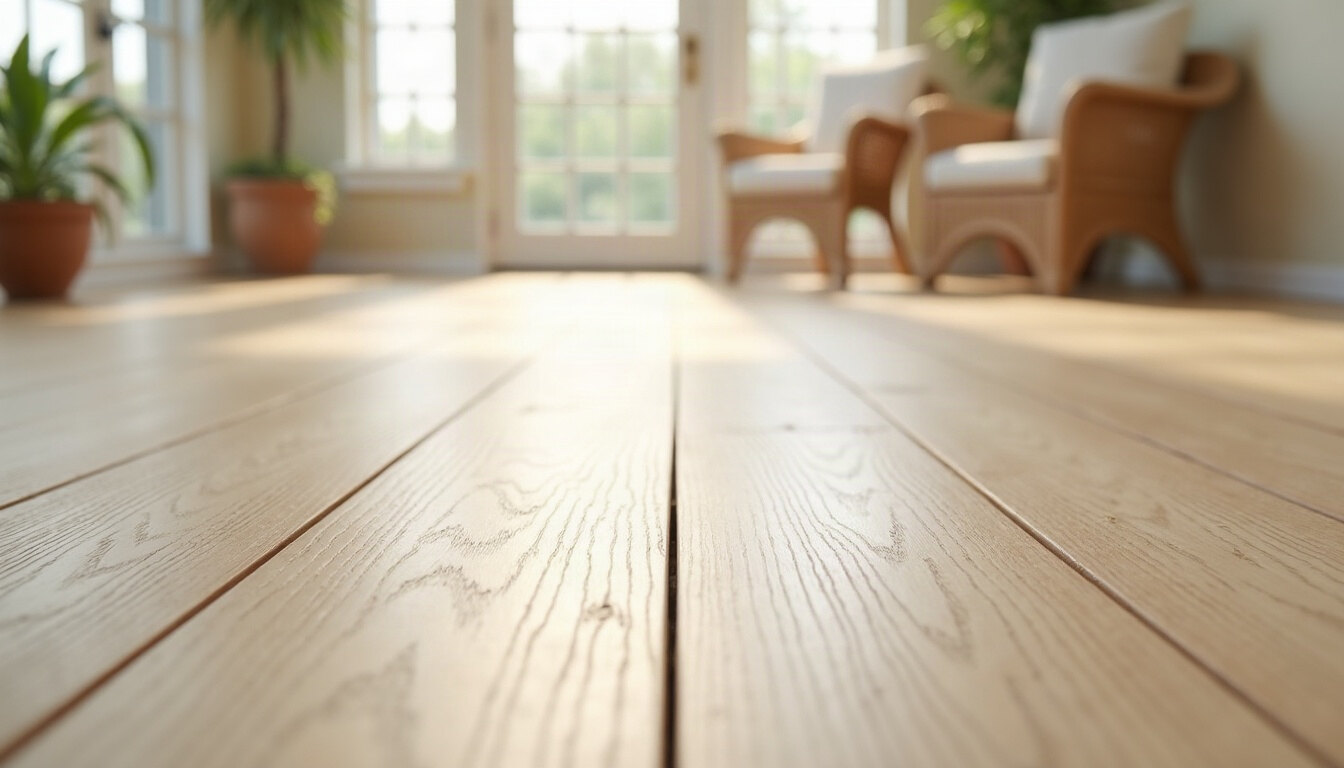
You’ve closed in the lanai or converted the garage, and now you’re standing on bare concrete trying to decide what goes down before the listing photos. In a hot, humid place like Southwest Florida, the floor choice for that room depends less on looks than on whether the space will actually be cooled and dried. Rooms like these rarely have ductwork, which is why the mini split installation Cape Coral owners plan for usually comes up before the flooring order does.
That order of operations matters more than any single material. A buyer walking through a converted room notices two things within seconds: whether it feels like the rest of the house, and whether it smells or feels damp. The floor answers both questions, but only if the air above it is handled first.
The short answer: porcelain tile is the safest call for a converted Florida room, with luxury vinyl plank close behind once the room has steady cooling and dehumidification.
Spec sheet: four floors for a converted lanai, Florida room or garage in a humid climate
| Option | Humidity tolerance | Wear and scratches | Comfort underfoot | DIY-friendly | Cost band | Best for |
|---|---|---|---|---|---|---|
| Porcelain tile | excellent | excellent | fair | poor | $$ | Flips and rentals that need to survive anything |
| Luxury vinyl plank | good | good | good | excellent | $ | Budget flips with a dry, cooled room |
| Engineered wood | fair | fair | excellent | fair | $$$ | A home you’ll live in, with tight climate control |
| Sealed or polished concrete | good | good | poor | poor | $ | Casual rooms, game rooms, modern finishes |
Notice what drives that table: humidity tolerance. On the conversions I’ve watched struggle after closing, the problem was rarely the floor itself. It was a room that sat warm and sticky for most of the day because nobody planned how to cool it, and the floor took the blame.
Porcelain tile: the one that shrugs off the climate
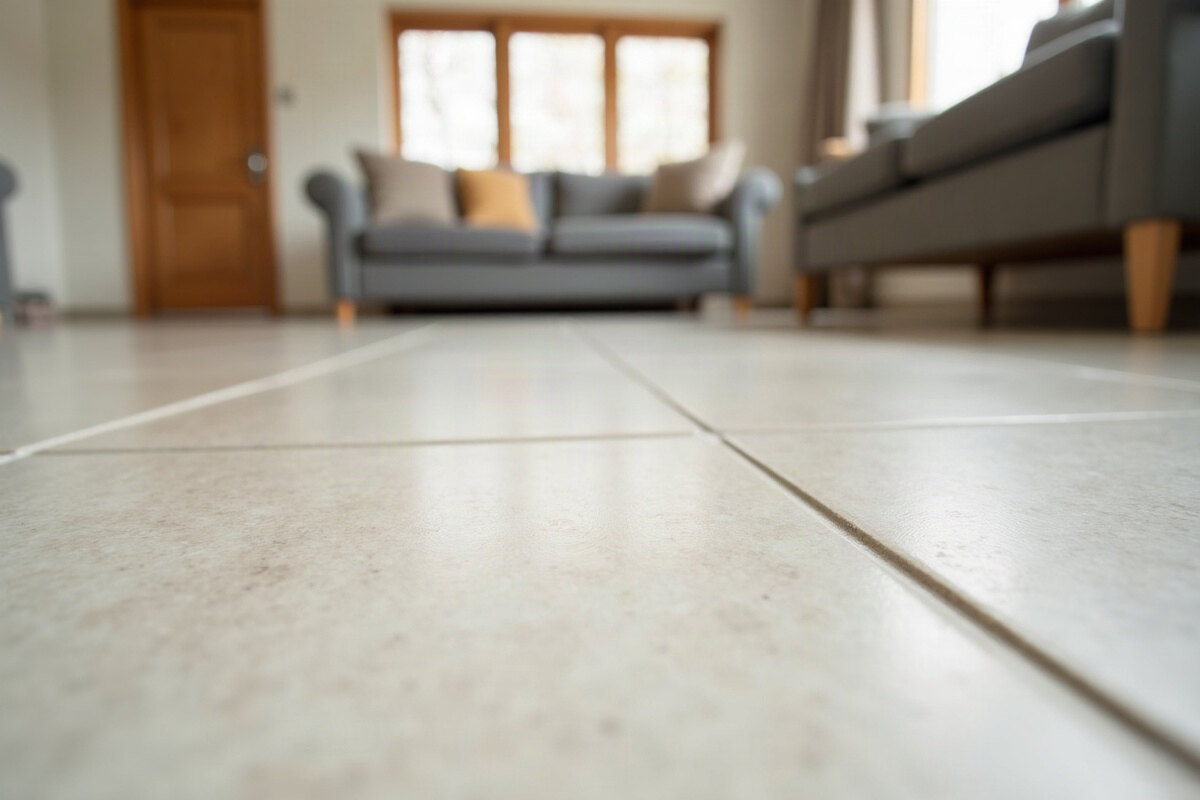
Porcelain is fired dense, so it absorbs very little water. That makes it indifferent to humid air, wet flip-flops coming in from the pool and the occasional storm that blows rain under a door. Large-format porcelain in a wood-look or stone-look finish also reads as a finished interior to buyers, not a patio that got walls.
Best for
Flips and rentals, especially in rooms that open to the pool deck or the yard. It’s also the right pick when you don’t fully control how the next owner will run the air conditioning, because tile doesn’t care. If you’re matching tile that already runs through the main house, continuing it into the new room makes the conversion disappear, which is exactly what you want a buyer to feel.
Watch out for
Tile is hard and cold underfoot, and anything dropped on it breaks. It is also the least forgiving to install over an uneven slab, because high spots crack tiles and low spots leave hollow sounds that a careful buyer will tap with a heel. Grout lines, the joints filled between tiles, need sealing and will darken in a humid room if they’re left bare. This is a job for an installer, not a weekend project.
Luxury vinyl plank: the budget favorite with one condition
Luxury vinyl plank, or LVP, is a layered plank with a printed design under a clear wear layer, the protective top film that takes the scuffs. Rigid-core versions click together and float over the slab, so they go down fast and hide minor imperfections better than tile.
Best for
Budget flips where the room is going to be cooled and dried like the rest of the house. It’s warmer and quieter underfoot than tile, it looks like wood in photos, and buyers generally read it as a modern finish. For a rental, it’s easy to replace a damaged plank or two without redoing the room.
Watch out for
“Water-resistant” describes the plank surface, not the whole floor. Moisture coming up from a slab, or water sitting at the edges, can get under a floating floor and stay there, because the planks trap it against the concrete. In a room that runs warm and humid all day, I’d also be careful about strong sun through big lanai windows, since some vinyl can move or fade with heat. A moisture test on the slab and a proper vapor barrier, a sheet that stops ground moisture rising, are not optional here.
Engineered wood: the nicest feel, the most demands
Engineered wood has a real hardwood top layer bonded to a cross-layered core, which makes it more stable than solid wood. It’s the floor that makes a converted room feel like it was always part of the house, warm and quiet underfoot.
Best for
A home you’re keeping, where you control the thermostat and the room is cooled every day of the year. If the main living areas already have wood, carrying it into the new space gives the whole house one continuous look, and that sense of flow is something buyers do notice on a walk-through.
Watch out for
Wood moves with humidity. Planks swell when the air is damp and shrink when it’s dried, which shows up as cupping (edges higher than the middle) or gaps between boards. That’s why acclimation, letting the boards sit in the room under normal living conditions before installation, matters so much with wood. If the conditioned air in that room is going to be unreliable, or the house might sit empty and closed up while it’s listed, I’d skip wood for a flip.

Sealed or polished concrete: the slab you already have
If the conversion left a decent slab, grinding and sealing it, or polishing it, turns the existing surface into the finished floor. It handles humidity well, cleans easily and suits a modern or casual look.
Best for
Game rooms, home gyms, studios and casual family rooms, especially when the rest of the house leans modern. It’s also a sensible rental choice where you want a surface that’s hard to damage and simple to clean between tenants.
Watch out for
Concrete is hard, echoes and can feel cold and unfinished to some buyers, especially if the rest of the home has softer floors. Old garage slabs often carry stains, cracks and patched areas that a sealer will highlight rather than hide. Rugs help, but they also mean the room photographs as “concrete with rugs,” which isn’t how most buyers picture a bedroom or living space.
Which one fits your converted room
- If you’re flipping and the room opens to a pool or yard, choose porcelain tile.
- If the budget is tight and the room will be cooled and dried like the rest of the house, choose luxury vinyl plank.
- If you’re living there, control the air year-round and want the room to match wood floors elsewhere, choose engineered wood.
- If the slab is in good shape and the house has a modern style, choose sealed or polished concrete.
- If you’re not sure how the room will be cooled yet, choose porcelain tile and sort out the cooling plan before anything else.
Before you buy
The floor is the last layer in a conversion, so most of the work happens before the boxes arrive.
- Settle the cooling first. A room with no ducts needs a plan for both temperature and moisture. Talk to an HVAC company about whether a ductless unit, an extension of the existing system or something else fits the space, and let them size it. That work belongs to a professional, not a flipper with a free weekend.
- Test the slab for moisture. Garage and lanai slabs often sit closer to grade than the main house. Have the moisture checked before choosing anything that floats or glues down, because the result can rule options out.
- Check the slab height and flatness. A step down from the house into the new room is a trip hazard and looks like an afterthought. Leveling compound or a floor build-up may be needed, and it changes the budget for every option. For anything structural or for permits, ask the local building department.
- Order samples and live with them. Put them in the room at different times of day. Big windows on a lanai change how a color reads from morning to afternoon.
- Order extra. Add material for cuts, waste and a box for future repairs. On a rental, that spare box saves you from hunting for a discontinued color later.
- Acclimate what needs it. Wood and some vinyl products should sit in the conditioned room before installation. That only works if the cooling is already running.
If it were my flip, I’d get the room cooling and drying properly first, then run large-format porcelain in a finish that matches the main house. It’s not the cheapest or the warmest option, but it removes the one question I never want a buyer asking on a walk-through: whether that new room will hold up to the climate.