
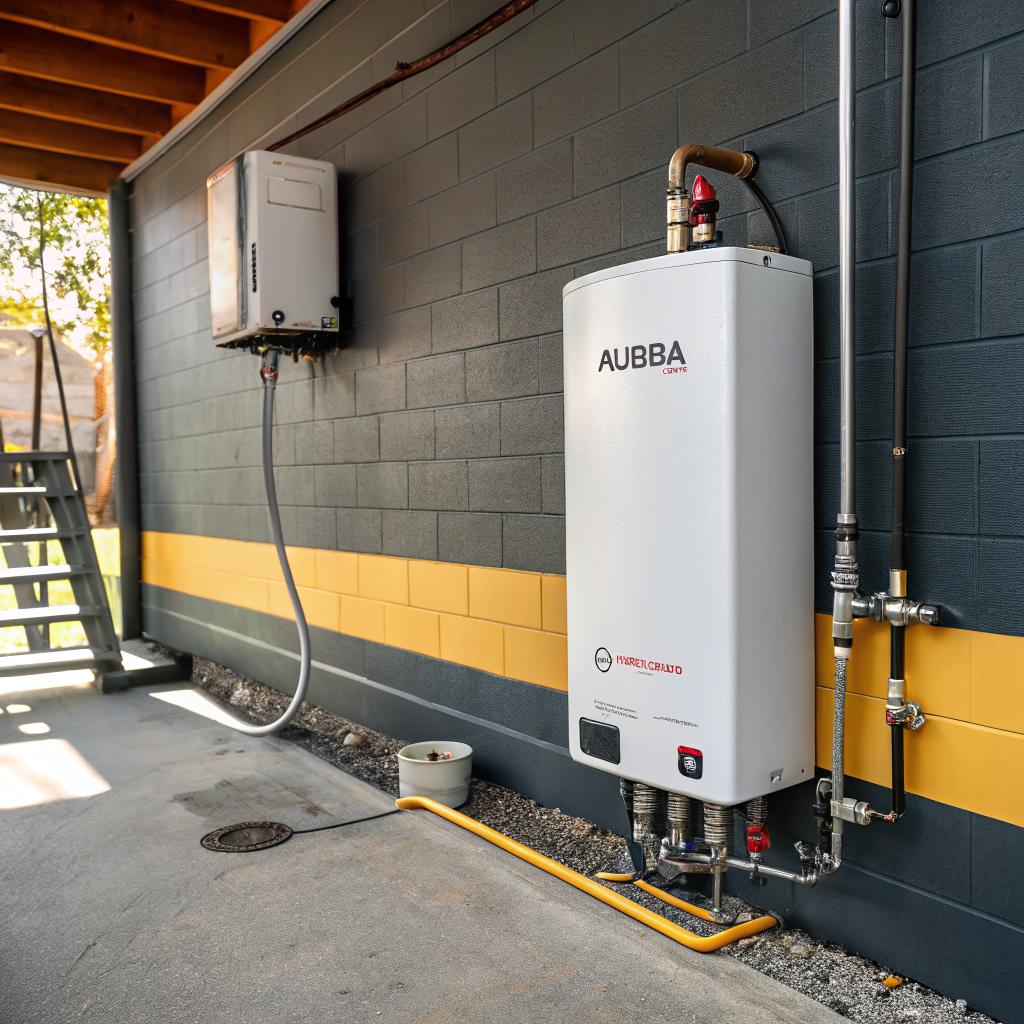
So, you are trying to fix your water heater while you are in the middle of a remodel project in Aurora and you want to avoid delays, extra costs, and torn-up new floors. The short answer is that you need to check the age and condition of the heater, plan around local code and venting first, then decide whether to repair or replace before you close up walls or install new flooring.
Most remodel problems with water heaters do not start with tools, they start with timing. People demo the old space, choose flooring and cabinets, maybe even set a new layout, and only then look at the water heater sitting in the corner. By that point, access is harder, clearances are smaller, and any plumbing changes risk cutting into brand new finishes. If you handle the heater early, coordinate with your layout, and know when repair is realistic and when replacement makes more sense, you avoid those awkward “we have to pull up this new LVP” conversations. And yes, sometimes calling a local pro for Aurora water heater repair is cheaper than fixing mistakes later.
- Figure out if the heater is worth repairing before you design around it
- Check venting, gas, and electrical before closing walls or ceilings
- Protect new flooring from leaks, drips, and sludge during work
- Allow enough clearance for future repairs and replacement
- Plan shutoff times so you are not without hot water longer than needed
- Know local code basics in Aurora and how they affect remodel layouts
- Balance repair cost vs replacement cost, especially on older units
Start with one hard question: repair or replace?
Before you pick grout colors or layout the new kitchen island, decide if this water heater is actually staying.
A lot of homeowners try to save a few hundred dollars by keeping a tired heater during a remodel, then regret it when it fails a year later and the plumber has to work around brand new cabinets or flooring.
Check the age of your water heater
You can get a rough idea of the heater’s age from the label on the tank. There is usually a serial number that includes the manufacture date. If you do not see an obvious date, a quick search with the brand and serial number usually brings up a decoding guide.
As a basic rule of thumb:
| Type | Typical lifespan | Remodel advice |
|---|---|---|
| Standard tank (gas or electric) | 8 to 12 years | Over 10 years old? Strongly consider replacement during remodel. |
| High quality tank | 10 to 15 years | Over 12 years old with issues, replacement is usually smarter. |
| Tankless unit | 15 to 20 years (with maintenance) | If under 10 years and working well, repair is often fine. |
If your tank is already near or past its typical lifespan, patching a leak or replacing a valve during a remodel can be like fixing a worn tire right before a cross‑country road trip. Yes, it might hold, but do you want to bet your new flooring on it?
During a remodel, an older tank that is “good enough for now” often becomes the most expensive part of the project a year or two later.
Look at symptoms, not just age
Age is only one part of the story. Ask yourself:
- Do you run out of hot water faster than you used to?
- Do you hear popping or rumbling from the tank?
- Is the hot water rusty, cloudy, or has a metallic smell?
- Do you see wet spots, rust streaks, or corrosion on the tank or fittings?
- Have you already repaired it more than once in the last 2 years?
Some of these can be handled with a simple repair, like flushing sediment or changing an anode rod. Persistent leaks from the tank body, large amounts of rust, or repeated repairs hint that you are close to the end.
If you are planning to spend thousands on a new kitchen or bathroom, replacing a borderline heater during the project is often less painful than waiting until it fails.
Plan for water heater work before new flooring goes in
This part is easy to overlook, especially when you are excited about tile samples or that new engineered wood you picked.
Water heater repairs involve water, dirt, and sometimes combustion products. None of those are friendly to fresh flooring.
Protect your flooring during repairs
If your new flooring is already installed around the heater, be strict about protection. Ask whoever is doing the water heater work to:
- Lay down thick, non‑slip drop cloths or ram board from the door to the heater
- Use a plastic pan or tray when draining the tank or working with fittings
- Keep a wet/dry vacuum nearby for any spills
I have seen brand new luxury vinyl planks swell at the seams after a “small” drain valve leak during a repair. It only took about 15 minutes of unnoticed dripping.
If the flooring is not installed yet, get the water heater repair or replacement done first, while the subfloor is still exposed and easier to dry or patch.
It feels like a delay in progress, but it often saves time. You can work on other parts of the remodel while the heater is being handled.
Think about access, now and later
Design choices that look clean on a mood board can be a headache for plumbing.
Common remodel choices that hurt future water heater repairs:
- Building tight closets with minimal clearance around the tank
- Running built‑ins or shelving in front of the heater
- Placing the heater in a corner with no room to pull it out
- Raising the surrounding floor height so the heater is in a “pit”
Aurora and local code usually require clearances around water heaters, especially gas models. But even if you are within code, think like the person who has to pull that tank out someday.
Can you:
- Stand in front of it and work on the gas, water, and vent connections?
- Get a dolly in and out without scraping walls or floors?
- Remove and replace the unit without cutting trim or flooring?
A good rule is to leave enough open space to slide the old tank straight out without tilting it over freshly finished floors or cabinets.
It is not pretty when a tank is tipped in a tight space and dirty water splashes on new baseboards and flooring.
Key safety checks before you remodel around a water heater
Even if you are handy, water heaters mix hot water, gas or electricity, and often combustion air. When you remodel around them, you change their environment.
Venting and combustion air for gas heaters
If you have a gas water heater, pay close attention to:
- Venting route and slope
- Clearances from combustibles
- Combustion air openings or louvered doors
Common remodel mistakes:
- Closing off a mechanical room without adding a combustion air grill
- Moving walls so the vent run becomes longer, flatter, or with too many turns
- Boxing in the vent pipe tight against wood or insulation
Gas water heaters need enough air to burn cleanly and a safe path to vent exhaust gases outside. If you shrink a room, add weatherstripping, or build new closets around it, you might starve it of air.
Watch for:
- Yellow flames instead of blue
- Soot around the draft hood or vent pipe
- Backdrafting, where exhaust comes back into the room
Those are not “later” problems. They are “fix this now before finishing walls” problems.
Electrical requirements for electric or hybrid heaters
If you are remodeling and thinking of switching from gas to electric, or adding a heat pump (hybrid) water heater, look at your panel and wiring early.
Electric heaters often need:
- A dedicated circuit
- The correct breaker size
- Proper wire gauge to handle the load
Hybrid units also need space around them to move air. If you pack one into a tiny closet, it may not work well.
Upgrading electrical after cabinets and flooring are done is much more disruptive than doing it while things are open.
Common repair tasks during remodels and how they affect flooring
Not every remodel needs a full water heater swap. Sometimes you just want to fix a few issues while you have trades on site. That can make sense, if you know what to expect.
Flushing sediment from the tank
Remodel projects often kick up dust and debris. While that does not go into the tank, many older heaters already have sediment inside.
Flushing a tank during a remodel is smart because:
- It can quiet popping and rumbling noises
- It can improve hot water output slightly
- It can extend tank life a bit
But it also means you need a safe drain path.
Tips to protect your home:
- Use a good quality hose that will not leak along its length
- Secure the hose end so it does not whip around
- Check the drain valve for drips after closing it, they sometimes do not seal well
If you are about to lay new flooring in the mechanical area or nearby, do this work first. Let everything dry, then inspect for seepage at the feet of the tank and around the drain valve.
Replacing the anode rod
Anode rods help prevent tank corrosion. Swapping one during a remodel is not a bad idea if the tank is not too old.
The part that people forget is ceiling height.
Anode rods are long. If your remodel plan includes a lower ceiling, ductwork, or a soffit above the heater, you may not have enough clearance to pull the old rod or insert a new one.
Ask yourself:
- Is there at least 3 to 4 feet of vertical clearance above the water heater?
- Will that still be true after you add a drop ceiling or duct chase?
If the answer is no, do the anode rod work before that ceiling goes in. Once the space is tight, many plumbers will not even attempt it.
Fixing leaks at valves and fittings
Small leaks are easy to ignore, especially if you are distracted by bigger remodel tasks. A damp spot by the T&P valve or a slow drip at the cold inlet might not bother you on bare concrete.
On new flooring, it is different.
Hidden leaks can:
- Wick under vinyl planks and cause edge curling
- Soak seams in laminate and cause swelling
- Stain grout lines and weaken thinset under tile
If you see any sign of moisture around your heater, handle it before the flooring goes down. That might mean:
- Replacing a corroded nipple or flex connector
- Swapping a faulty T&P valve
- Checking for pinhole leaks in nearby copper lines
Sometimes it is just condensation. Sometimes it is not. With a remodel in progress, it is worth taking a cautious view.
How water heater decisions affect kitchen and bath layouts
Water heaters often sit in utility rooms, garages, basements, or small closets off a hallway. But they still affect how you plan your “pretty” spaces like kitchens and bathrooms.
Hot water distance and wait time
During a remodel, especially when you move a kitchen sink or add a bathroom, the distance from the water heater to fixtures can change.
Longer pipe runs mean:
- More time waiting for hot water
- More water wasted while you wait
- Cooler water at the tap if runs are very long
Before you lock in layouts, ask:
- Where is the water heater relative to the new bathroom or kitchen?
- Are you adding long runs under new flooring that will be hard to access later?
- Is it worth considering a small recirculation line or a point‑of‑use heater?
Once new tile or hardwood goes in, changing these runs becomes much harder.
Framing and flooring under and around the heater
Remodels often involve new framing, sometimes to create a water heater closet, sometimes to divide space.
Your choices here affect both safety and future work.
Think about:
- Subfloor strength under the heater, especially if you moved it
- Use of a drain pan under the tank, connected to a safe drain line
- Choosing flooring that can handle occasional drips in the heater area
A lot of homeowners like to “match” flooring and run the same product under the heater. That is not always the best choice.
For example:
| Flooring around heater | Pros | Risks |
|---|---|---|
| Ceramic / porcelain tile | Handles water, easy to clean, durable | Harder to cut if you need to move pipes later |
| LVP (vinyl plank) | Water resistant surface, easier to remove sections | Edges can lift if water seeps under planks |
| Laminate | Looks good, cost effective | Swells quickly with leaks or condensation |
| Engineered hardwood | Nice appearance, used in many high‑end remodels | Water damage can be expensive, often not repairable in small spots |
Some people choose a more water tolerant material just in the mechanical area, then transition to their main flooring outside the door. It is not always as sleek visually, but it can be more practical.
Timing your water heater work in the remodel schedule
Remodels have a lot of moving parts. Plumbing, framing, electrical, flooring, cabinetry, inspections. The water heater repair or replacement needs a clear spot in that schedule.
Best sequence for the least disruption
Here is a rough order that usually works well:
- Demo and expose existing plumbing runs and the heater area
- Evaluate the water heater and decide repair vs replacement
- Do major plumbing reroutes, vent changes, or electrical upgrades
- Repair or replace the water heater
- Pressure test and check for leaks
- Close up walls and ceilings around the heater
- Install flooring near the heater, then trim
Some homeowners try to push the water heater work to the end because they still want hot water during remodeling. That is understandable, but it can backfire.
A compromise that sometimes works:
- Keep the old heater functional while rough plumbing is done
- Schedule heater repair or replacement right before final finishes in that area
- Plan 1 or 2 days without hot water, and shift showers or dishwashing around that window
You can still be productive on other parts of the house while the heater is off.
Cost questions: when is repair during a remodel worth it?
Money shapes these decisions. There is no way around that.
Compare repair cost to remaining life
A simple mental check:
- Estimate the age of the heater
- Get a rough repair price
- Get a rough replacement price
If a repair on a 10+ year old tank costs, say, 40 to 50 percent of a new heater, and you are already doing construction around it, replacement usually makes more sense.
On the other hand, if your heater is 5 or 6 years old and you just need a new T&P valve or a minor control repair, it can be reasonable to fix it and keep going with your remodel.
Where people get into trouble is spending several hundred dollars on multiple repairs over a couple of years on an old tank, then eventually replacing it anyway. The total ends up being more than a simple planned swap during the remodel.
Factor in access and future labor costs
Remodels change how easy or hard a job will be in the future.
If your new design makes the heater harder to reach, that can:
- Increase labor cost for any future repair
- Increase the chance of damage to nice finishes during work
Sometimes spending a bit more now to position the heater in a more accessible way, or to upgrade to a style that fits the space better, saves money in the long run.
For example:
- Swapping a bulky old tank in a tiny closet for a smaller, more modern unit
- Reworking water lines so shutoffs are easy to reach from the doorway
- Adding a proper drain pan and drain line to protect the new floor
Those are little design choices that do not make good social media photos but matter when you are the one paying the repair bill later.
How to coordinate with your flooring contractor and plumber
Remodels often go sideways when trades do not talk to each other. You can help by asking simple, direct questions and setting expectations.
Questions to ask your plumber
Before flooring goes in:
- Do you need any access in the floor or walls after this point?
- Is the venting correct for this heater and this new room layout?
- Would you recommend repair or replacement, given its age and condition?
- Can we still change the heater location if that makes more sense?
Before they start work after floor install:
- How will you protect the new flooring?
- Will you need to drain the tank completely, and where will that water go?
- Is there any chance of soldering or open flame near finished surfaces?
Sometimes a 5 minute conversation upfront prevents a lot of dust, scratches, and stress.
Questions to ask your flooring installer
Before they start:
- Have all water heater and plumbing changes in this area been done?
- Are you comfortable cutting around the heater if it is staying in place?
- Do we want a different flooring type in the heater area for water resistance?
If the heater is already in its final location, some installers prefer to have it temporarily removed, lay flooring, then have it reset. Others prefer to work around it.
There is no single perfect way, but everyone needs to know the plan.
Common mistakes to avoid during Aurora remodel projects
To make this practical, here are a few mistakes I see repeated during remodels involving water heaters.
1. Designing around a heater that will be replaced soon
You spend weeks perfecting a laundry or mechanical room layout around an old heater, only to learn later that:
- The new model is taller or wider
- The vent or flue connection is in a different place
- Local code now requires a drain pan or seismic straps that take more space
Check replacement model dimensions early. Sometimes simply moving a wall a few inches on paper prevents a major headache later.
2. Ignoring slight smells or discoloration
Remodel smells are common: paint, stains, new materials. Those can mask more serious issues.
If you notice:
- A faint gas smell around a gas heater
- Burnt plastic or wiring smells near an electric heater
- Persistent damp or musty smell in the heater closet
Do not assume it is just “construction smell.” Ask your plumber or electrician to check it before surfaces close up.
3. Skipping permits or inspections on heater work
Remodels are already full of paperwork, so people sometimes skip permits on “small” changes. Water heater work, especially when moving or replacing units, often requires permits and inspections.
Skipping them can:
- Cause problems with future home sales or insurance
- Hide unsafe venting or electrical work behind nice finishes
It may feel like a delay, but scheduling an inspection while walls are still open is usually faster than tearing them open later.
Simple maintenance to pair with your remodel
While you already have tools out and trades on site, it is a good time to add small maintenance tasks that extend heater life. These are not glamorous, but they are practical.
Check and label shutoff valves
Find:
- The cold water shutoff to the heater
- Any isolation valves on recirculation lines (if you have them)
- Main water shutoff to the house
Make sure they:
- Actually turn smoothly
- Fully stop water when turned off
- Are reachable without moving large items or crawling on fresh floors
You can then label them. It feels fussy, but when something leaks at 10 pm on your new floors, labels save time and stress.
Test the T&P valve carefully
The temperature and pressure relief valve is a safety device on tank heaters. Some manufacturers suggest periodic testing, but many homeowners never touch it.
During a remodel, ask a plumber if it makes sense to:
- Test it briefly to see if it operates
- Replace it if it looks corroded or old
Be cautious about doing this yourself right after new flooring is installed, since some T&P valves do not reseal well after testing and can drip. That drip is exactly what you do not want on your new materials.
Quick Q&A to tie remodels and water heater repairs together
Q: I am redoing my basement and the water heater is in the corner. Should I build a closet around it?
Probably, but leave more space than you think you need. Check the heater manual for clearance requirements, and then add a bit extra for human comfort while working. Include a door size that lets a full heater pass through without extreme tilting. And consider an easy‑to‑clean, water tolerant floor just in that closet.
Q: My heater is 9 years old, looks fine, but I am installing new hardwood right up to it. Bad idea?
Not automatically bad, but risky if you do not use a drain pan and have no plan for leaks. Before the hardwood goes in, have the heater inspected, flush it, check valves and fittings, and add a pan with a drain line if possible. If anything looks questionable, replacing it now is often cheaper than repairing water damage later.
Q: Can I move my water heater to free up space for a bigger shower?
Maybe, but moving it is not a small job. You need to consider new vent routes, gas or electrical changes, and added plumbing runs to fixtures. The cost can be justified if your remodel depends on that space, but it should be planned at the start, not mid‑project. Ask for a realistic quote and layout drawing before you commit.
What part of your remodel is giving you the most trouble when you try to work around your water heater?