
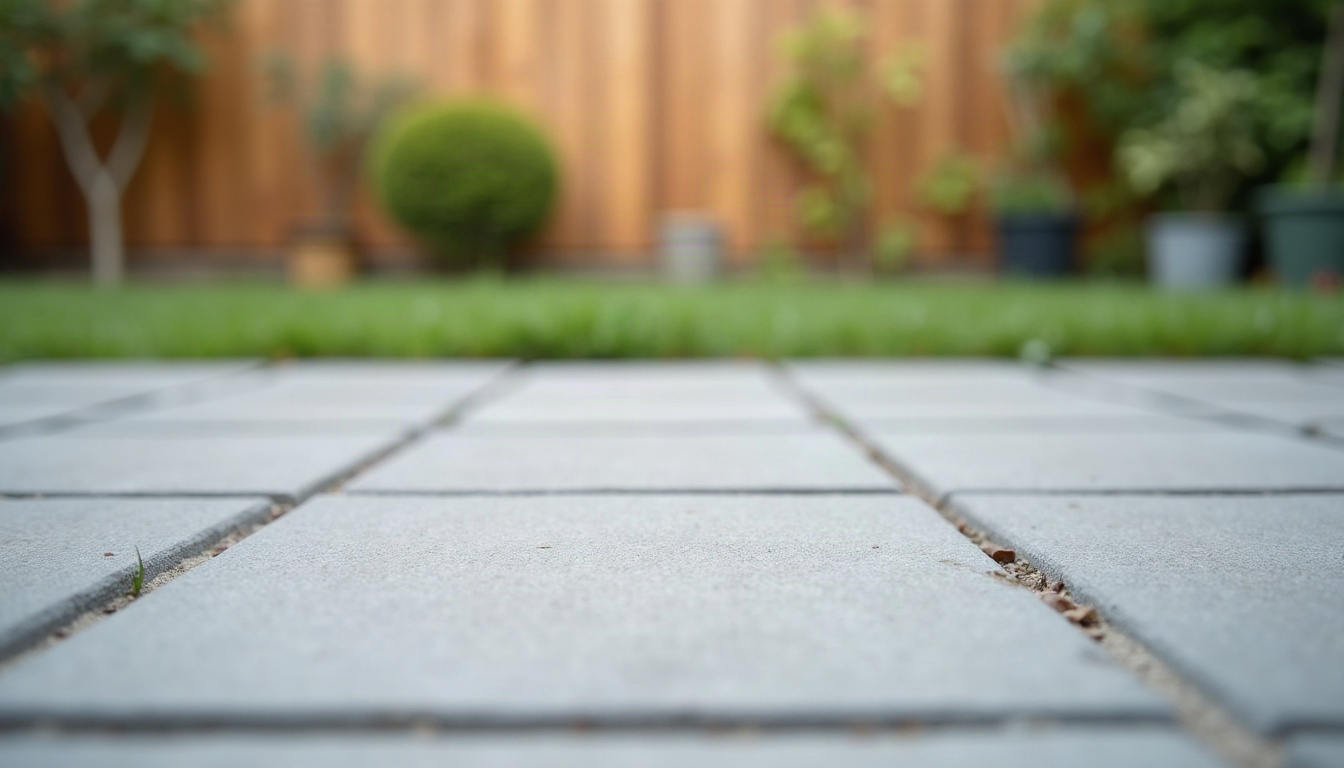
You’re about to fence the yard, and the patio floor inside that fence is still undecided. In a sunny, dry climate with cold winters, one factor beats the rest: how the surface handles direct sun and repeated freezing and thawing. The second factor is the order of work. What should you ask a Highlands Ranch fence company about timing, access and digging before the patio crew ever shows up?
Fence work, whether it’s a new line or a replacement, means digging post holes, hauling out old panels and moving heavy materials across the yard. A finished patio surface is the first thing that work scuffs, stains or cracks. I spend my time on materials, so this article stays on the surface: three ground-level options, how each behaves in this climate, and where the fence work fits. Anything raised off the ground or attached to the house is structural, which makes it a job for a licensed builder, and the local building department can tell you what needs a permit.
The short answer: light-colored porcelain pavers handle sun and winter best, concrete pavers are the sensible budget pick if you seal them, and composite decking is the comfortable choice if you pick a lighter shade and leave room for movement.
Spec sheet: three ground-level patio surfaces compared for a sunny yard with cold winters.
| Option | Wet slip resistance | Heat in direct sun | Freeze-thaw tolerance | Wear and scratches | Cost band | Best for |
|---|---|---|---|---|---|---|
| Composite decking | Good | Fair | Good | Good | $$$ | Low decks and a softer-feeling patio |
| Porcelain pavers | Good | Good | Excellent | Excellent | $$$ | Full-sun patios and bare feet |
| Concrete pavers | Good | Good | Fair | Good | $$ | Larger patios on a budget |
Ratings are relative to each other. Freeze-thaw tolerance means how well a surface copes with water that soaks in, freezes, expands and thaws again. Wet slip resistance depends on the texture of the specific product, so ask the maker for its slip data. Heat depends mostly on color, because dark surfaces of every kind run hotter. Cost bands include the frame or base under the surface, not just the top material.
Composite decking: the soft-feeling choice
Composite boards are made from wood fibers mixed with plastic. Capped boards have a plastic shell around that core, and uncapped boards leave the core exposed, so they stain and fade more. The boards sit on a frame of joists, which leaves a space underneath that has to stay ventilated and dry.
Best for
A low, ground-level deck where you want a surface that feels warmer and gives slightly underfoot. It never needs sealing, and it’s friendlier to dropped toys and bare knees than stone. Because the boards sit on a frame with small gaps between them, rain drains through instead of pooling, so the surface dries faster than a flat slab after a storm. For homes, that’s a real advantage. A café or business patio is a different job, because commercial use calls for the maker’s slip-resistance data and a closer look at how the surface wears under steady traffic.
Watch out for
Heat first. Dark boards in full afternoon sun can get uncomfortable, so choose a lighter shade. Second, expansion. Composite grows and shrinks with temperature, and boards butted too tightly will buckle. The installer has to follow the maker’s gap rules at the ends and sides.
Fences matter here too. Keep a clear gap between the deck edge and a solid fence panel, because a tight edge holds damp leaves and blocks airflow. Metal snow shovels and furniture feet scratch the cap. I also avoid calling composite waterproof. The edges and the frame underneath still take on water, so “water-resistant” is the honest term, and the space below needs airflow and drainage so the frame stays dry.
Porcelain pavers: the cool, stubborn choice
Porcelain pavers are thick tiles made for outdoor laying on a gravel base, on pedestals or over an existing slab. Porcelain absorbs very little water, so little water gets in to freeze. That one property explains most of its performance.
Best for
Sunny patios where people go barefoot. Light and mid-tone colors stay noticeably cooler than dark ones, and the surface doesn’t flex, fade or stain easily. A matte or structured texture gives grip when wet. Choose a product made and rated for exterior use. Polished indoor tile is slick when wet and wasn’t built for freezing weather.
For a home patio, any exterior-rated porcelain with a textured face is enough. A business patio is a separate case, and it needs the maker’s slip data in writing before you order.
Watch out for
Cost, weight and cutting. Pavers are heavy, and cutting porcelain needs a wet saw and a steady hand, so most homeowners hire this out. The base under them is half the job: a poorly compacted base settles, and then the pavers rock and the joints open. Porcelain is also hard on dropped glasses, and a chip shows because the body is a different color from the face.
Drainage belongs in this conversation too. Whatever you lay, the surface should shed water away from the house, not toward it, so ask the installer how the base will be sloped. A flat patio that holds water through a freezing night is the one that heaves.
Concrete pavers: the practical middle
These are precast concrete units laid on compacted gravel and sand, with joint sand brushed in between. They absorb more water than porcelain, so they need a sealer in a freezing climate. Without one, the surface can flake, which installers call spalling. Colors can also fade slowly in strong sun, though the color usually runs through the body of the unit, so a faded paver looks softer, not worn through.
Best for
Larger patios and paths, like the walk from the gate to the patio, where cost per square foot matters. Individual units can be lifted and re-laid, which makes repairs easy. If a fence replacement leaves a trench along the edge, a few pavers can be lifted and set back without redoing the whole surface.
Watch out for
Resealing is a repeating chore, and weeds and ants like open joints. White haze on the surface is usually efflorescence, a mineral deposit that rises with moisture. It’s mostly cosmetic. Skip deicing salt on concrete, because it speeds up surface damage; sand gives traction without the harm.
Which one fits your fenced yard
- If the patio gets full afternoon sun and you go barefoot, choose light-colored porcelain pavers. They stay cooler and ignore winter.
- If you want a surface that feels softer and you’re happy with a low deck, choose composite decking in a lighter shade, with proper gaps.
- If the budget is tight and the patio is big, choose concrete pavers and plan to seal them.
- If the fence is being replaced and the patio stays, choose pavers of either type. Individual units can be lifted for the post work and put back.
- If the patio sits against a solid fence and stays in shade much of the day, choose porcelain pavers, which don’t hold moisture the way boards and frames can.
- If you shovel snow with a metal blade, choose porcelain or concrete pavers over composite, which scratches more easily.
Before you buy
Most patio failures I see trace back to the base, and most fence-related damage traces back to sequence. Both are easy to prevent if you ask in the right order.
- Settle the fence line and gate positions first. A gate swing and a post line decide where the patio can end, and where deliveries and wheelbarrows enter.
- Ask about sequence. New surface goes in after the digging and hauling are done. If the patio already exists, ask how the crew will protect it and who repairs a chipped edge.
- Ask who arranges underground utility marking before anyone digs, and who talks to the local building department about permits.
- Ask who builds the base and how deep it goes. Compacted gravel and sand carry a paver patio, and a skimped base shows up as rocking pavers within a few seasons.
- Order samples and leave them in full sun for an afternoon, then pour water on them and walk on them in socks. Heat and grip show up fast.
- Check the neighborhood rules. Some neighborhoods set rules for fence and patio materials, and it’s cheaper to find out before ordering.
- Order extra for cuts, and keep spare pavers from the same batch, because color varies between production runs.
If it were my yard, I’d finish the fence first, then lay light-colored porcelain pavers on a well-compacted base. If the budget wouldn’t stretch that far, I’d use sealed concrete pavers in a quiet gray and spend the savings on a good base, because that’s where patios fail.