
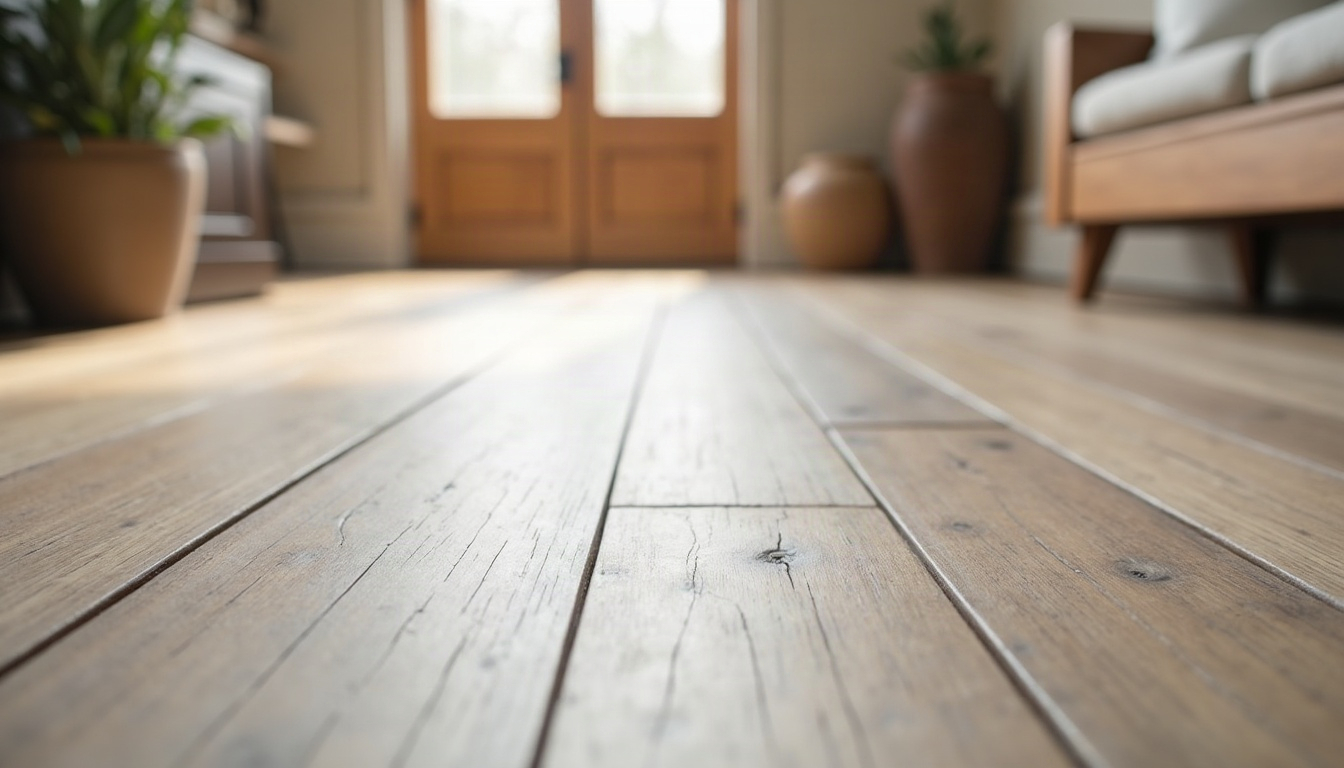
The front entry is the hardest-working patch of floor in a house. Local pages for security storm doors Colorado Springs usually cover the frame, the glass and the lock, and almost none mention the floor just inside, which is where the snowmelt, the grit and the afternoon sun end up. If you’re choosing what goes down in a foyer or mudroom, that floor deserves the same scrutiny as the door.
Water is the obvious enemy, but on the entries I’ve looked at, grit does more damage. Sand and road grit ride in on boots and act like sandpaper on any finish, and in a dry, sunny climate with snowy winters an entry sees all three at once: grit, melt and strong light through the door glass. A storm door in front of the main door is one way to take some of that weather before it reaches the threshold, and the right floor handles the rest.
The short answer: porcelain tile is the safest entry floor. Reclaimed oak and strand-woven bamboo work if you accept a finish you’ll maintain, and cork suits only a dry, protected entry.
Spec sheet: four entry floors compared for snowmelt, grit and sun
| Option | Snowmelt and water | Wear and grit | Sun fade | Sourcing and finish | Cost band | Best for |
|---|---|---|---|---|---|---|
| Porcelain tile | Excellent | Excellent | Excellent | Fired glaze; grout needs sealing or an epoxy type | $$ | Wet, gritty, sunny entries |
| Reclaimed oak | Fair | Good | Fair | Salvaged boards; oil or film finish, ask what was used | $$$ | Dry foyers with a mat zone |
| Strand-woven bamboo | Fair | Good | Fair | Pressed fibers and adhesive; ask what bonds it | $$ | Sunny hallways that stay mostly dry |
| Cork | Fair | Fair | Fair | Harvested bark; the sealed top finish does the work | $$ | Protected entries with a mudroom buffer |
Porcelain tile: the hard-wearing choice
Porcelain is a dense, fired tile that absorbs very little water, which is why it shrugs off snowmelt that would lift the finish on a wood floor. I weigh eco claims honestly, and tile takes a lot of energy to make, but a floor that outlasts several renovations has a better case than one you replace every few years because the entry wore it out.
Best for
Entries that open straight onto the weather. If you shovel the walk and tramp in with wet boots, tile is the floor that doesn’t care. It also ignores strong sun through the door glass, so there is no faded patch just inside the threshold.
Watch out for
Slick surfaces and weak grout. A glossy tile gets slippery under melted snow, so pick a matte or textured finish. Cement grout is porous and picks up dirty slush, so seal it or ask about epoxy grout. Tile also cracks on a floor that flexes, which means the subfloor should be checked before anything is laid. If it feels springy or soft, that is a conversation for a contractor, not a reason to use thicker tile. Tile is also cold underfoot through a snowy winter. A heating mat under it is possible, but wiring is work for a licensed electrician.
Reclaimed oak: the floor with a history
Reclaimed oak is lumber salvaged from older buildings and milled into flooring. Reuse avoids cutting new timber, but the word “reclaimed” on a label tells you little by itself, so ask the supplier where the boards came from, how they were dried and what finish is on them. Finish matters as much as the wood: an oil finish can be touched up in patches but needs more upkeep, while a film finish sits on top and resists water better until it chips. Boards from old buildings can carry old coatings, and old paint is something to have tested and handled by a professional.
Best for
A dry foyer with a deep mat zone, where the character of old boards is the point and the wet stays at the door. A solid wood floor can usually be sanded and recoated when the entry end wears, which is a real advantage over materials you can only replace.
Watch out for
Standing water at the threshold. Wood swells when it stays wet, the finish lifts, and boards near the door can cup. Direct sun through glass will also shift the color of the boards near the door over time. A storm door that stops wind-driven snow from blowing across the sill takes pressure off the finish, but it does not make a wood entry floor wet-proof.
Strand-woven bamboo: dense and plain-spoken
Strand-woven bamboo is made from shredded bamboo fibers bonded with adhesive and pressed into dense planks. It is usually much harder than strip-style bamboo, which is why the construction matters when you compare samples. The adhesive is also where the sourcing question lives, so ask the supplier what binds the planks and what finish sits on top.
Best for
A sunny hallway or foyer that stays mostly dry and where you want an even, quiet grain. It copes with foot traffic well, and you don’t have to worry about knots and color swings the way you do with salvaged boards.
Watch out for
Grit scratches show, particularly on a dark finish, and water that finds a seam can swell the edge of a plank. Bamboo also changes color in strong light, like most wood. Bamboo flooring is often shipped a long way, which is worth knowing if the material’s eco appeal is your reason for choosing it.
Cork: the quiet, warm one
Cork is the bark of the cork oak, harvested without felling the tree, and it grows back. It is soft and slightly springy, so it feels warm and quiet underfoot, and a sealed finish is what protects it. Unsealed cork soaks up water like a coaster.
Best for
A protected entry, such as a vestibule or a mudroom that takes the first wave of wet boots, where you want comfort when you stand to take them off. It suits homes where noise between floors matters, and a sealed cork floor is easy to sweep and damp-mop once the entry mat has done its job.
Watch out for
Dents from furniture feet and heeled shoes, and the finish wearing through where grit gathers. In a doorway that opens directly to the weather, cork is the weakest of the four. I’d keep it one room back from the door.
Which one fits your entry
- If the door opens straight to the weather and you shovel snow, choose porcelain tile with a matte or textured surface.
- If you love wood and the entry has a vestibule or a deep mat zone, choose reclaimed oak with a finish rated for hard wear.
- If you want a hard, even-grained wood look and the entry stays mostly dry, choose strand-woven bamboo.
- If you want warmth and quiet and a mudroom stands between the door and the floor, choose cork.
- If the existing floor is solid wood that is only dull or scratched, choose a refinish before any replacement.
Before you buy
- Ask whether the floor you have can stay. Sanding and recoating a sound wood floor uses far fewer resources than tearing it out, and it often fixes the problem you are looking at.
- Test the samples. Drip water on them, drag a key and a pinch of grit from your doormat across them, and leave one in the sun by the door for a week.
- Ask about adhesives and finishes: what bonds the boards or tiles, what is on top, and how long it should cure before the entry is used. A low-odor finish that has had time to cure is kinder to indoor air, especially in a small closed-up foyer in winter.
- Fix leaks first. A sill or weatherstrip that lets water in will ruin any floor, so have the threshold looked at by a contractor before the new floor goes down.
- Plan the outer layers. A good mat inside and outside does a lot, and a storm door specialist can look at your frame and explain what suits the opening. Weather stopped outside the door is weather the floor never sees.
- Order extra for cuts and keep a few leftover pieces for repairs, and give wood or bamboo time to settle in the room before it is laid.
If it were my own front entry, I’d lay matte porcelain tile through the first few feet and let a wood floor start past a threshold strip. That puts the hardest material where the snowmelt lands and keeps the warmth of wood where the grit has already been left on the mat.