
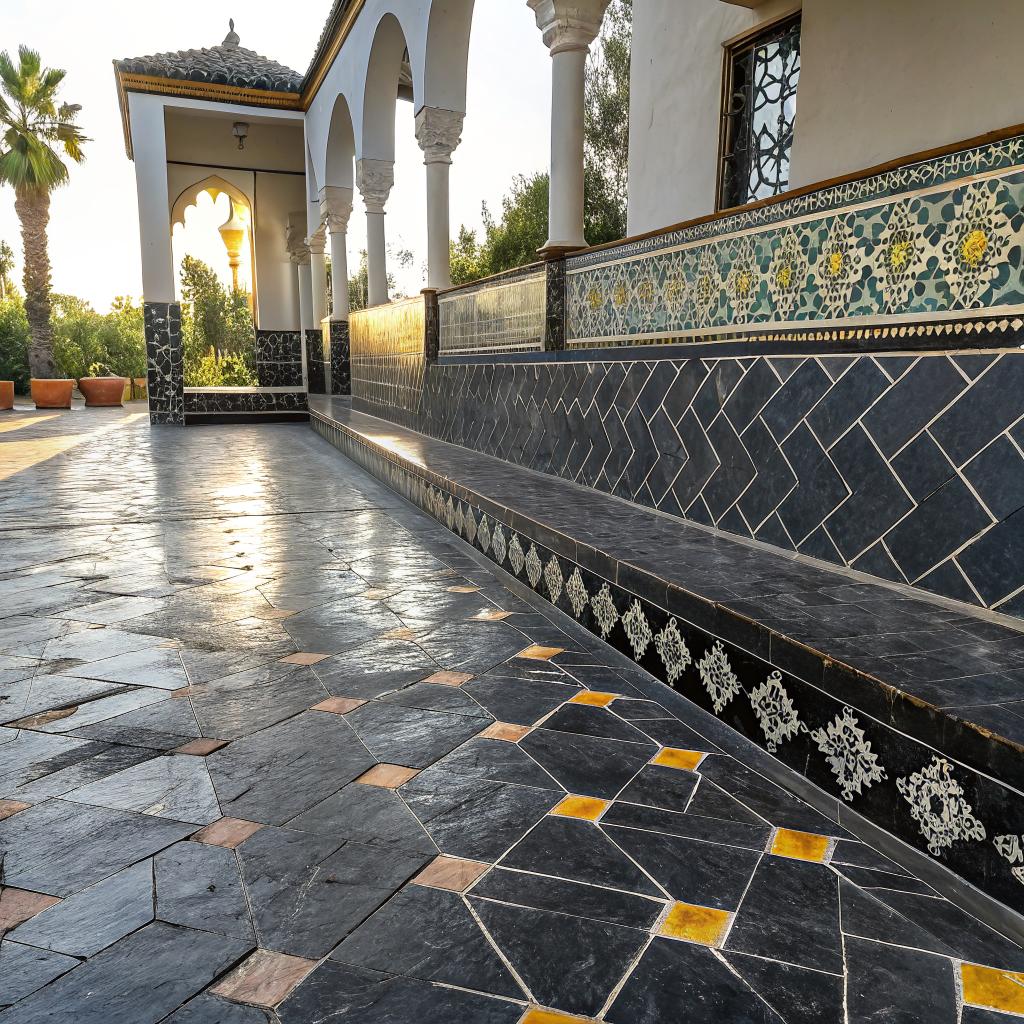
So, you are trying to find black zellige tile ideas to elevate your renovation. The short answer is that black zellige works best in focused areas like backsplashes, showers, and feature floors, where its glossy handmade surface can pick up light and add depth without making the whole room feel closed in.
Black zellige is not just about going dark. It is about contrast, texture, and how light moves across those slightly irregular, glossy tiles. If you plan your layout, grout, and lighting with some care, black zellige can turn a very simple kitchen, bathroom, or hallway into something that feels considered and grown up. It can also go badly wrong if you cover every surface in it with no break, so balance really matters.
For reference, here is a source for black zellige tile if you want to see real product examples while you read.
- Black zellige works best where it can catch the light: backsplashes, showers, fireplace surrounds, and feature walls.
- You need to think about grout color; it changes the entire mood and how much the tile pops.
- Lighting is not optional; black tile without layered light can look flat or gloomy.
- Black zellige floors look amazing, but you must take slip resistance and maintenance into account.
- Mixing black with warm wood, stone, or soft paint colors keeps the room from feeling harsh.
- Small spaces can handle black if you lean on gloss, mirrors, and light, rather than avoiding dark finishes completely.
What makes black zellige different from other dark tiles
Standard black ceramic or porcelain often reads as flat and uniform. Black zellige behaves differently.
Each tile is slightly irregular in shape and depth. The glaze pools, thins, and gathers. Some pieces look almost charcoal, some closer to ink. When you install them together, the surface looks alive. Not wild, but not perfect either.
The main reason people choose black zellige over regular black tile is the way it plays with light: it looks rich in daylight and moody in the evening, without needing a pattern.
This is useful in renovations because you can keep layouts simple and let the material do the work. A plain stacked layout can feel detailed without adding borders or accent strips.
If you are on the fence about going dark at all, it helps to know this: black zellige does not behave like a flat, matte black wall. It is closer to a glossy, uneven surface that shifts throughout the day. That movement is what stops it from feeling dead or heavy.
Planning how much black zellige your room can handle
Before you pick a layout, it helps to ask a few blunt questions:
- How much natural light does the room get?
- Are your ceilings low or high?
- What is on the floor already: light or dark?
- Do you actually like spending time in darker spaces, or do you only like them in photos?
If your space is already dark, you do not have to avoid black, but you need to be quite careful with placement. If your space is bright, you can push the coverage a bit more.
Here is a quick comparison that might help you decide how much black tile to use.
| Room condition | Safe black zellige coverage | Risky coverage |
|---|---|---|
| Small, low natural light | Backsplash, shower niche, half-height wall | All walls and floor in black |
| Medium, moderate natural light | One feature wall or shower + light floor | Ceiling plus all walls in black |
| Large, strong natural light | Full shower, full backsplash, selected floor zones | None really, as long as you use layered lighting |
I tend to push people to choose one main black zellige feature per room, then add smaller echoes somewhere else. For example, a black zellige backsplash plus a matching black niche in the nearby powder room. That feels cohesive without turning everything into a dark box.
Black zellige in kitchens
Kitchens are where many people first think of using black tile. It works well, but not in every way social media suggests.
Black zellige backsplash ideas
You can go very simple here. Rectangular or square tiles, stacked or staggered, already give you more than enough interest because of the glaze and texture.
Some ideas that tend to work:
- Full height behind the range, then standard height elsewhere
- Black zellige behind open shelves, stopping at the shelf line
- A short backsplash that rises higher behind a sink or hob area
Think about how you cook. Black tile hides some stains and splashes, but grease can still show as a sheen, especially under strong task lights.
If you want a black zellige backsplash to stay attractive, you need a good hood, a non-glossy countertop nearby, and a simple cleaning habit rather than special products.
A few practical notes for kitchens:
- Use a grout that is close to the tile color if you cook often; it will be more forgiving.
- Seal the grout properly and expect to wipe down after heavy cooking days.
- Finish the top edge neatly, either with trim pieces or a clean paint line.
Pairing black zellige with cabinets and counters
If you pair black zellige with white or cream cabinets, you get a high contrast look that feels sharp. If you pair it with wood, you get a warmer, more grounded look.
A few combinations that work well:
- Black zellige + oak or walnut cabinets + light, quiet countertop (no busy veining)
- Black zellige + pale painted cabinets (off white, warm gray) + black granite or quartz
- Black zellige + deep green or navy cabinets + light floor to stop the room from sinking
What I would avoid is pairing black zellige with very glossy black cabinets and a very shiny black countertop. It can feel heavy and a bit like a showroom that forgot about comfort. You want some element to soften things, whether that is wood, woven chairs, or a softer wall color.
Grout choices in a kitchen setting
Grout color sounds like a detail, but it changes everything:
- Black or near black grout: the tile grid almost disappears, the surface looks smooth, and maintenance is easier.
- Mid gray grout: tile edges stand out gently, you see some pattern, but stains are still mostly hidden.
- Light grout: the tile pattern is clear and graphic, but stains from food and steam will show more.
If you like the look of light grout, you need to be honest with yourself about cleaning. If you hate scrubbing grout lines, stick to darker shades.
Black zellige in bathrooms
Bathrooms are probably the best place to use black zellige if you love a moody, spa-like feel. The steam, the mirrors, the change between morning and evening light all suit that shifting glaze.
Black zellige showers
Covering a full shower in black zellige can look very high end. It can also feel like a cave if you do not add enough lighting or if your bathroom is already dark.
Here is how to make it work:
- Add at least one dedicated light over or near the shower, not just a ceiling light across the room.
- Choose clear glass for the enclosure rather than frosted or heavy framed doors.
- Use a lighter floor tile, even if you keep the walls black.
- Repeat black in a few details outside the shower so it does not feel like a random dark box.
In a small bathroom, a fully black shower can actually make the space feel larger, because the dark walls visually recede while the rest of the room stays bright.
You might be skeptical about that, which is fair. But the trick is contrast. A bright floor and a lighter vanity pull the eye outward, so the shower feels like depth rather than a wall of darkness.
Half-height black walls and mixed bathrooms
If a full black bathroom feels like too much, you can go for half-height tiling. For example:
- Black zellige from floor to about 1.2 meters, then paint above in a warm light tone
- A black tiled band in the vanity area only, with white or stone tiles elsewhere
- Black zellige basin splashback and shower niche but white or cream tile in the rest of the shower
This gives you the look and texture but keeps the room from feeling enclosed.
In older homes, I have seen black zellige work nicely with original features like window trim or traditional radiators, because the tile looks handcrafted. It does not clash with period details as much as some very flat modern tiles do.
Floors, slip resistance, and comfort
Black zellige on floors is more of a design move and less of a standard choice. It can be very striking in:
- Walk-in showers with a gentle slope
- Powder rooms where you want a surprising floor
- Entry zones of a bathroom or wet room
For floors, you want to talk to your supplier or installer about:
- Slip rating or how the surface behaves when wet
- Layout, because smaller tiles with more grout joints give better grip
- Maintenance, since hard water spots can show on very dark glossy floors
If you live in a region with hard water, expect to squeegee or towel dry the floor in a walk-in shower if you want to avoid marks. Not a big deal for some people, very annoying for others. Better to know ahead of time than regret it.
Black zellige floors outside the bathroom
Now to the more daring idea: using black zellige on floors in living spaces, entries, or kitchens.
Entryways and mudrooms
An entry with black zellige floor tile looks grown up and practical at first glance. It hides some dirt, works with many wall colors, and gives you a strong starting point for the rest of the home.
There are a few catches:
- Dust and light dirt show more on very dark glossy tiles than on mid tone tiles.
- Scratches are less of a concern on zellige than on some softer finishes, but you still want good mats.
- Grout lines can track in dirt, so darker grout and good sealing help a lot.
I have seen black zellige used in small porch areas with white walls and simple wooden benches. It looks calm rather than heavy, because everything around it is light and plain.
Kitchen floors and dining zones
Using black zellige on a full kitchen floor is bold. Some people love it. Some regret it. The risk is streaks from mopping and footprints in certain light.
If you really want black underfoot, a better compromise is to tile:
- A defined cooking zone, framed by a different tile or wood floor
- The island area, where stools sit, as a kind of mat
- A connecting hallway between kitchen and garden, then switch to a lighter floor elsewhere
This way you get that glossy, reflective dark surface without turning the entire floor into a maintenance job.
Playing with pattern, layout, and scale
Black zellige is already rich in texture, but you can push it further with layout.
Layouts that suit black zellige
Common layouts are:
- Stacked vertical or horizontal for a clean, modern look
- Traditional staggered brick pattern for a more relaxed look
- Herringbone or chevron for floors or accent panels
Because the tiles are not perfectly uniform, a stacked pattern can show those small imperfections in a good way. It looks honest rather than strict.
If you go for herringbone with black zellige, be ready for more cutting and more visual movement. It can be great behind a bar or on a feature wall, but it is not always needed in small spaces.
When in doubt, let the glaze be the star and keep the layout simple; you can save the complex patterns for a border or a small niche if you still feel like you need them.
Mixing black zellige with other colors
You do not need to go monochrome. Black pairs well with:
- Warm whites and creams for a soft contrast
- Sandy or beige tiles for a coastal but grounded feel
- Muted greens or blues for a slightly more layered, traditional look
One nice approach is to keep black only where you need depth. For example, black in the lower half of the wall, then a softer color above. Or black in the shower, white around the vanity, and a warm neutral paint on the ceiling.
This mix also helps if you worry your renovation might age fast. Neutral partners help the black feel less like a trend and more like a permanent, considered choice.
Lighting: the real key to making black zellige work
Without decent lighting, black zellige can look flat. With good lighting, it will be the part everyone comments on.
You want three types of light if possible:
- Ambient light from ceiling fixtures or general sources
- Task light, especially over worktops or bathroom mirrors
- Accent light that grazes the tile surface and shows the texture
Accent lighting is where the tiles really come alive. This might be:
- LED strips under cabinets, aimed at the backsplash
- Wall lights near a tiled fireplace or feature wall
- A recessed light over the shower wall
If you are renovating, plan electrical points at the same time as tile layout. People often leave this late, then end up with shadowy corners on their most expensive surfaces.
Maintenance, cleaning, and realistic expectations
People sometimes imagine dark tile will hide everything. It does not. It hides some things and reveals others.
Here is a quick comparison of what tends to show more on black zellige:
| On black zellige | More visible | Less visible |
|---|---|---|
| Kitchen backsplash | Grease sheen, thick soap marks | Light splashes, some food stains |
| Bathroom walls | Hard water spots, dried shampoo drips | General shadowy marks and light splashes |
| Floors | Dust, dried water spots, light footprints | Random crumbs, darker dirt |
Most of this is common sense: glossy dark surfaces show a different kind of mess than matte light ones. If you already clean fairly often, it will not feel like a huge change.
Basic care tips:
- Use gentle cleaners rather than harsh abrasives to protect the glaze and grout.
- Ventilate bathrooms well to reduce water marking on dark surfaces.
- Dry off very wet areas if you know your water leaves strong mineral deposits.
For many homeowners, the tradeoff is worth it. You get a deep, reflective surface that transforms how the room feels. The cost is a slightly more visible layer of water drops or fingerprints, which you manage with small habits.
Balancing black zellige with the rest of your renovation
One trap people fall into is treating each room as a separate style experiment. That can make black tile in one area feel unrelated to the rest of the home.
A better route is to pick a loose palette for the whole renovation and let black be one of the repeating notes. For example:
- Black zellige backsplash in the kitchen
- Black framed interior doors or handles
- A small black tiled niche in the main bathroom
- Black accents on light fixtures or furniture
Nothing has to match perfectly. You just want enough overlap that the black zellige feels like part of a wider story rather than a random mood you had in one room.
It helps to walk through your home physically and imagine sightlines. Will you see the black tiles from another room? If so, what else is in that view? That single change can make your renovation feel much more thought through.
Common questions about using black zellige tile
Will black zellige make my room feel smaller?
Sometimes it can, but not always. Dark colors absorb light, which can feel cozy or cramped depending on how you handle it.
If you keep floors or ceilings light, add good lighting, and use reflective surfaces like mirrors or glass, the room can feel quite comfortable. A black tiled shower in a white bathroom, for example, often feels larger because your eye reads the dark area as depth.
If you cover every surface in black with limited light, then yes, it can feel smaller and heavier.
Is black zellige a passing trend?
Black itself is not new or trendy; it has shown up in tile for decades. What feels more current right now is the combination of black with handcrafted finishes and simple layouts.
If you keep the rest of your choices calm and avoid pairing black with very trendy colors or shapes everywhere, it should age reasonably well. A plain black tile wall behind a white sink stays more timeless than a wall full of bold, multi-colored patterns.
Can I use black zellige in a rental or small apartment?
You can, but I would keep it to selective areas. A backsplash, a small bathroom wall, or an entry zone is usually enough.
Think about resale or future tenants. Most people can live with a black backsplash if the rest of the kitchen is neutral. A full black bathroom with no natural light may put some people off. You do not need to design your home entirely for others, but it is reasonable to weigh this if you plan to move within a few years.
Is black zellige harder to install than regular tile?
Handmade tiles like zellige ask more from the installer. The tiles are not perfectly equal, so layout and spacing take more time and skill.
You want someone who has worked with this type of tile before. If your contractor treats it like standard machine-made tile, you may end up with awkward lips or uneven joints.
It is worth asking to see previous projects or photos. Good installation is part of what makes black zellige look intentional rather than messy.
What if I am still unsure whether black tile is right for me?
Order samples. Put them against your actual cabinets, paint, and light throughout the day. Splash water on them. Hold them under your kitchen spotlights and bathroom lighting.
Ask yourself a basic question: do you like how they look when they are less than perfect, with a bit of dust or water marks? If the answer is yes, you will probably enjoy living with them. If you only like them in perfectly staged light, then a lighter or softer color might be a better fit.
What part of your home are you thinking about giving over to black zellige first, and what is the one thing that worries you most about that choice?