
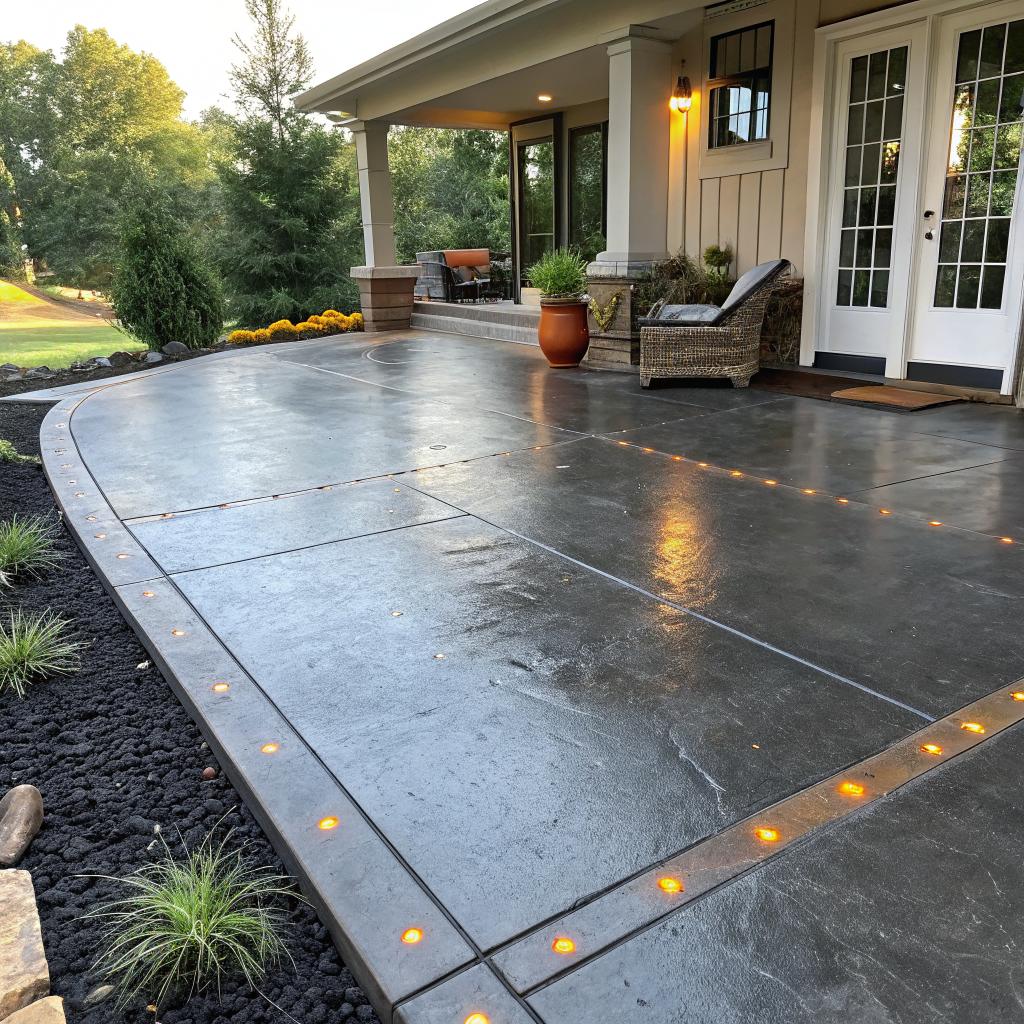
So, you are trying to find concrete Franklin TN patio ideas for stylish outdoor floors that actually look good and work for real life, not just for photos. The direct answer is this: focus on a solid concrete base, then use finishes like stamped, stained, exposed aggregate, or scored concrete, and match them with the way you already use your outdoor space.
You are not just picking a floor. You are deciding how people walk, sit, and relax around your home. A patio is a big surface that you will see every day from the inside too, through your windows. That is why it needs to look right with your house, drain well, feel good underfoot, and hold up to Franklin weather. Concrete is popular here because it handles the heat, some freeze/thaw cycles, and regular use better than a lot of other patio surfaces, if it is installed correctly.
- Concrete patios can look plain or high‑end depending on the finish and color you choose.
- Good prep and drainage matter more than the pattern or color.
- Stamped and stained concrete can mimic stone or wood without the maintenance.
- Exposed aggregate and broom finishes give better slip resistance around pools.
- Expansion joints, thickness, and proper reinforcement help avoid future cracks.
- Think about furniture layout, grills, and walkways early, before you pour anything.
- In Franklin, sun exposure and shade from trees will affect how colors age and where you get mildew.
If you want someone local to help, you can talk to concrete Franklin TN installers who work with these finishes every week, but it is still good to know what you want before you call.
Why concrete works so well for Franklin patios
Concrete is not glamorous by default. On its own, it is a gray slab. But that is not a bad starting point.
Here is why it tends to work well for patios in the Franklin and greater Nashville area:
- It handles our hot summers and occasional freezing winters better than tile or some pavers.
- It creates a solid, flat, stable surface for grills, furniture, and outdoor kitchens.
- It ties neatly into existing driveways or walkways, so your outdoor areas feel connected.
- With the right sealer, it sheds spills, pollen, and leaf stains fairly well.
- Finish options are wider than most people think: colors, textures, scoring, insets.
For most homes, the value is not in choosing a rare material. It is in getting the layout, slope, and finish right so the patio feels comfortable and lasts a long time.
If you are handy, you might be tempted to treat concrete like a simple DIY project. For a tiny pad, maybe. For a main patio, especially with steps or complex shapes, hiring someone who pours concrete every day is usually cheaper long term than fixing a bad slab.
Planning your Franklin patio before you pick a finish
Most people jump straight to patterns and colors. That is fun, but it is a bit backwards.
Start with how you actually use your backyard
Ask yourself:
- Do you grill a lot, or is the patio more for quiet seating?
- Do you want space for a dining table, lounge chairs, or both?
- Will kids play there, or is it more for adults?
- Is this near a pool or hot tub, so slip resistance matters more?
If you often host family dinners, you will need more square footage than if you only want a small coffee spot off the bedroom. I have seen patios that looked great, but had no room for chairs to slide back from the table without hitting a step. Simple planning solves that.
As a rough guide:
- Small bistro or coffee patio: 8 x 10 feet can work.
- Dining for 4 to 6 people: think at least 12 x 14 feet.
- Dining plus lounge area: 16 x 20 feet or more, depending on furniture.
Pay attention to sun, shade, and privacy
Walk out to the planned patio area at different times of day and notice:
- Where the sun hits hard in the afternoon.
- Where trees cast shade, and how that shifts.
- What your neighbors can see from their deck or windows.
In Franklin summers, a large unshaded slab can get very hot. If most of your space is in full sun, think about:
- A pergola anchored into the concrete.
- A covered area tied into the house.
- At least some section that stays shaded for part of the day.
Try to plan one “cool” zone and one “warm” zone on your patio, so you have options on a bright July afternoon or a chilly April morning.
Shade also affects stains and mildew. Areas that stay damp under trees will need more cleaning and might benefit from a more textured finish.
Layout, traffic flow, and tie‑ins to the house
Think of the way people will walk:
- From the back door to the grill.
- From the driveway around the side yard.
- From the patio to the yard or pool.
Concrete gives you a chance to blend all that:
- Extend a strip of patio as a walkway along the side of the house.
- Create a wide landing outside the back door with one or two shallow steps.
- Use control joints to visually “frame” zones for dining or seating.
You want to avoid awkward single steps in random spots, or narrow paths where chairs end up blocking walkways. It sounds obvious, but in renovation, it is easy to focus on the slab and forget the routes.
Common Franklin concrete patio finishes and how they feel
Now to the part most people care about: how the patio looks under your feet.
1. Broom finished concrete
This is the standard, most basic finish. After the concrete is floated smooth, the installer drags a broom across it to create light grooves.
Pros:
- Good traction, even when wet.
- Simple to clean with a hose and brush.
- Usually the least expensive finish option.
Cons:
- Plain look, which some people find a bit boring.
- Not as “high end” as stamped or stained finishes.
This works well if you prefer a clean, simple, modern look. You can still tint the concrete a warm gray or tan so it does not feel like a driveway.
2. Stamped concrete that mimics stone, brick, or wood
Stamped concrete is popular for patios in Franklin because it can imitate other materials while staying one solid slab.
Common stamp patterns:
- Flagstone or random stone
- Ashlar slate
- Brick herringbone or running bond
- Wood plank texture
You can add color in two ways:
- Integral color mixed into the concrete before the pour.
- Color hardener spread on top and worked into the surface.
Then a release powder gives you darker accents in the low spots, which creates a more natural stone effect.
Pros:
- High visual impact without real stone costs.
- Fewer joints to weed than pavers or brick.
- Lots of color and pattern choices.
Cons:
- Needs resealing every few years to keep the color strong.
- More slippery when sealed, unless you add a grit additive.
- Repairs can be tricky to match if only one area cracks.
If your home has brick or stone accents, you can echo those tones in the stamped patio so everything feels connected.
3. Stained or dyed concrete for rich color
Stains and dyes go on top of a cured slab. They work well on both new and existing patios, which is useful if you already have a plain gray patio that you want to upgrade.
Basic options:
- Acid stains: react with the concrete and create variegated, stone‑like color.
- Water‑based stains or dyes: more solid color and wider palette.
You can keep things subtle with warm gray or tan, or go deeper with charcoal, russet, or dark walnut tones.
Pros:
- Upgrades an existing patio without tearing it out.
- Flexible color choices, including layered effects.
- Can pair nicely with saw‑cut scoring or borders.
Cons:
- Surface must be cleaned very well first.
- Color is permanent, so test spots matter.
- Needs periodic resealing, especially in sunny spots.
Stained concrete can work with almost any style, from traditional to modern, if you keep the color calm and avoid wild mixes.
4. Exposed aggregate for texture and grip
For an exposed aggregate finish, installers pour regular concrete but with decorative stone in the mix. After the surface sets slightly, they wash away some of the top paste so the stones show through.
Pros:
- Great slip resistance, which is good for pool areas.
- Interesting color and texture without paint or stain.
- Handles abuse from chairs and heavy use well.
Cons:
- A bit rough on bare feet, depending on the stone size.
- Harder to shovel cleanly in winter because of the bumps.
You can pick aggregate with warm browns, soft grays, or mixed tones to match your house.
5. Smooth troweled concrete for a modern look
A steel trowel finish can give you a very sleek, almost indoor look. It is not ideal for steep slopes or wet areas, but for a covered patio or clean modern design, it can work.
Pros:
- Simple, minimal appearance.
- Pairs well with modern furniture and big glass doors.
Cons:
- More slippery when wet.
- Shows stains and surface flaws more easily.
If you go this route, adding a light sandblast, microtexture, or a matte sealer with grit can help with traction.
Comparing popular Franklin patio finish options
Here is a simplified table to compare the main approaches:
| Finish type | Look | Traction when wet | Typical maintenance | Relative cost |
|---|---|---|---|---|
| Broom finish | Simple, clean | Good | Clean as needed, seal occasionally | Low |
| Stamped concrete | Stone, brick, or wood look | Medium (better with grit sealer) | Reseal every few years, gentle cleaning | Medium to high |
| Stained / dyed | Rich color, varied | Depends on base texture | Reseal to protect color | Medium |
| Exposed aggregate | Textured, pebbled | Very good | Seal every few years, rinse debris | Medium |
| Smooth troweled | Modern, sleek | Lower, unless treated | Keep clean, reseal if stained | Medium |
Adding style with simple concrete design details
You do not have to go wild with pattern or color to get a stylish patio. Little details often make the difference.
Saw cuts and scoring patterns
Control joints are needed to help control cracking, but they can double as design lines. An installer can cut them in patterns like:
- Grid or square pattern
- Diagonal layout for more visual interest
- Border lines that frame the main area
You can go a step further and score extra shallow lines for a tile look, then stain the “tiles” in slightly varied tones.
Borders and insets
A simple way to dress up a patio is to create a border that is different from the main field. For example:
- Main area broom finished, with a stamped stone border.
- Main stamped pattern, with a smooth or lightly textured band along the edge.
- Field in one color, border in a darker complementary tone.
Often, a 12 to 24 inch border around the patio does more for the look than using a busy pattern everywhere.
You can also plan a different texture or color in small zones, like under a fire pit or in a “rug” area under a dining table.
Steps, seat walls, and levels
If your yard slopes, consider using the patio to create gentle levels:
- A main level outside the back door.
- One or two steps down to a fire pit or lounge zone.
- Concrete seat walls that also act as retaining walls.
Seat walls can be poured concrete with a different finish, or they can be concrete block with stone veneer that sits on the patio slab. Either way, they provide extra seating without more furniture.
Matching your patio to your home and flooring
Since this is going on a site for people who care about home renovation and flooring, it helps to think about the patio almost like another “room” floor.
Think about what is just inside the door
Look at the flooring right inside the door that leads to your patio:
- Is it hardwood, tile, vinyl plank, or something else?
- What is the color temperature: warm, cool, neutral?
- Is it rustic, smooth, patterned, or plain?
If you have warm oak or hickory floors, a tan or light brown stained concrete can echo that warmth outside. If you have cool gray tile, a cooler gray broom finish or slate‑toned stamp might feel more natural.
You do not need an exact match, but you want the transition to feel calm, not jarring.
Blending with your exterior finishes
Look at:
- Brick color
- Siding color
- Trim and window frames
- Roof tone
Pick patio colors that pick up one or two of those shades. For example:
- Red or brown brick home: go with warm tan, soft brown, or muted terracotta stain.
- White or light gray siding: light to medium gray concrete with subtle variation.
- Dark roof, light walls: a mid‑tone patio that sits between those values so your eye flows.
If you already did a lot with interior flooring colors, it often helps to keep the patio calm and neutral.
Franklin climate and how it changes what you pick
Concrete behaves differently depending on where you live. For Franklin, there are a few practical things to think through.
Heat, freeze, and movement
Concrete will expand in our hot summers and contract in winter. You cannot stop that, but you can control the way it shows.
Key details:
- Proper base: compacted gravel to drain water and support the slab.
- Thickness: most patios are at least 4 inches thick, more near heavy loads.
- Reinforcement: rebar or wire mesh to hold things together if cracks form.
- Control joints: planned cuts that invite cracks to follow those lines.
Cracks can still show, but they are usually much less noticeable if everything above is handled well.
Drainage and puddles
A pretty patio with water standing near the house wall is not worth much. Make sure:
- The slab slopes away from the house at about 1/8 to 1/4 inch per foot.
- Water has a clear path to run into the yard or a drain.
- You think about downspouts and where they discharge.
If you have clay soil, which is common in Middle Tennessee, good base prep is even more important. Clay swells and shrinks with moisture, which can move the slab.
Sun, shade, and mold
In shaded, damp corners, any surface can grow mildew or algae. Textured concrete like exposed aggregate or rough broom finish will need occasional cleaning there. In full sun, dark colors absorb more heat and can fade faster.
So you might want to:
- Choose medium colors instead of very dark for full sun areas.
- Use a quality sealer suited to outdoor use and UV exposure.
- Plan for a simple maintenance routine once or twice a year.
Concrete vs pavers, stone, or wood decks
Many homeowners wrestle with the choice between concrete and other patio materials. There is no single right answer, but you can be direct about the trade‑offs.
Concrete vs pavers
Pavers:
- Individual units like brick or concrete blocks.
- Nice for repairs because you can lift and reset small sections.
- Can shift or settle if the base is not perfect.
- Weeds often grow in joints unless you maintain them.
Concrete:
- One large slab, no joints for weeds other than control cuts.
- Better for rolling furniture, carts, or grills.
- Cracks are the main concern, so base and joints are key.
For many Franklin backyards, a well poured concrete patio with some visual detail is a good middle ground between cost and look.
Concrete vs natural stone
Natural stone looks great, but:
- It is much heavier, so base preparation is more intense.
- Costs are higher for both material and installation.
- Stone thickness can vary, so keeping a flat surface takes skill.
Stamped concrete gives you some of that stone look, without the same budget. It is not the same thing, but for many people, the look is close enough.
Concrete vs wood or composite decks
Decks are usually better if the back door is high off the ground. If the door is close to grade, concrete often makes more sense.
Deck pros:
- Warmer under bare feet in winter.
- Easier to change or extend later.
Deck cons:
- Wood needs frequent sealing and can rot.
- Composite gets very hot in full sun.
- More bounce and movement than a slab.
Many homes in Franklin even mix both: a small deck with steps down to a concrete patio.
Simple maintenance for a long‑lasting patio
Concrete is low maintenance compared to wood, but it is not zero maintenance.
Routine cleaning
A few habits can keep your patio looking good:
- Rinse off pollen and leaves from time to time.
- Use a mild detergent and a soft brush for spills or stains.
- Be gentle with pressure washers; high pressure too close can etch the surface.
For stains like grease from a grill, a degreaser and some patience usually work. Do not let them sit for months.
Sealing schedule
Sealants do a few things:
- Protect stain or color.
- Help repel water and some spills.
- Sometimes add gloss or deepen color.
In Franklin, many installers recommend resealing every 2 to 4 years, depending on:
- Sun exposure
- Traffic level
- Type of sealer used
Glossy sealers can highlight color but may be a bit slippery. Matte or satin sealers feel more natural and usually give better traction.
Watching for issues early
Look out for:
- Hairline cracks getting wider.
- Areas where water starts to pool.
- Flaking or peeling spots near edges or steps.
Small cracks are often just cosmetic. If you see bigger movement, you might have soil or drainage problems nearby that need attention. Ignoring them usually makes things harder later.
Realistic Franklin patio design ideas by style
Here are some concrete patio setups that tend to work well in this area. None of these are perfect blueprints, but they can help you picture your own space.
Classic brick home with a flexible family patio
If you have a red brick or mixed brick home:
- Use a stamped pattern that mimics large stone, in warm gray with soft brown release color.
- Add a simple smooth border in a slightly darker tone to frame the space.
- Include one or two broad steps down to the yard, with the same pattern.
Furniture:
- Dining table near the door for easy access to the kitchen.
- Lounge chairs or a small sectional at the far side.
- Plan a dedicated spot for the grill, with room to move around it.
This type of patio feels right at home in many Franklin neighborhoods without trying too hard.
Modern farmhouse with open concrete and simple lines
If your house leans modern or modern farmhouse:
- Go with a smooth or very light broom finish in a warm gray.
- Use saw‑cut joints in a large grid pattern, maybe 4 x 4 or 5 x 5 feet squares.
- Add a modest perimeter band in the same color but with a different texture.
Pair with:
- Black or dark metal furniture.
- Wood accents in planters or benches.
- Simple container plants instead of busy flower beds everywhere.
This approach keeps the focus on clean lines and makes your flooring inside and outside feel connected.
Poolside patio with safety in mind
For backyards with a pool:
- Choose exposed aggregate or a heavy broom finish for better grip.
- Stay away from dark colors near the pool edge, since they get hot.
- Add curves or rounded corners where children run, to soften impact points.
Here, I think function should win over ornament. Beautiful is fine, but slipping is not.
Questions people usually ask about concrete patios in Franklin
How long does a concrete patio in Franklin usually last?
With decent installation and basic care, a patio slab can last several decades. Surface finishes like stains and sealers might need touch‑ups every few years, but the slab itself should stay sound much longer, unless there is a serious soil or drainage problem.
Will my patio crack no matter what I do?
Concrete almost always forms small cracks at some point. The goal is to control where and how they appear. Good base prep, proper thickness, reinforcement, and well planned joints usually keep cracks narrow and less visible. Most of the time, they are more of a cosmetic thing than a structural failure.
Is stamped concrete slippery?
It can be a bit slick if you use a glossy sealer and no grit. Many installers now add a fine grit to the final sealer coat to improve traction. You can also choose patterns with more texture and avoid very smooth seal coats, especially next to pools or hot tubs.
Can I change the color later if I do not like it?
You can often adjust the look with stains or tinted sealers on top of an existing slab. That said, you cannot easily “erase” very dark colors or go from a deep brown to a light gray. If you are unsure, pick a mid tone and live with it for a season before making big changes.
How do I know what size patio I really need?
One simple method is to lay out furniture on the grass where you want the patio. Use boards, ropes, or spray paint to mark a rough outline. Walk around it. See where it feels cramped. Adjust the boundaries until you can pull out chairs, walk behind them, and still move a grill. Those marks give you a better sense of real size than numbers alone.
Is concrete always the best choice for my backyard?
Not always. If your back door is several feet above grade and you do not want a lot of fill dirt and retaining walls, a deck can be smarter. If you love the look of natural stone and have the budget for it, stone might fit your taste better. Concrete is a strong all‑round option for many Franklin yards, but it is not the only one.
What is one simple thing I should get right before anything else?
If you remember nothing else, focus on layout and drainage. A perfectly stamped, beautifully colored patio that sends water toward your house or feels cramped around your table will bother you more than a plain slab that drains well and gives you room to breathe.
What kind of patio do you picture yourself using on a random Tuesday evening, not just when guests come over?