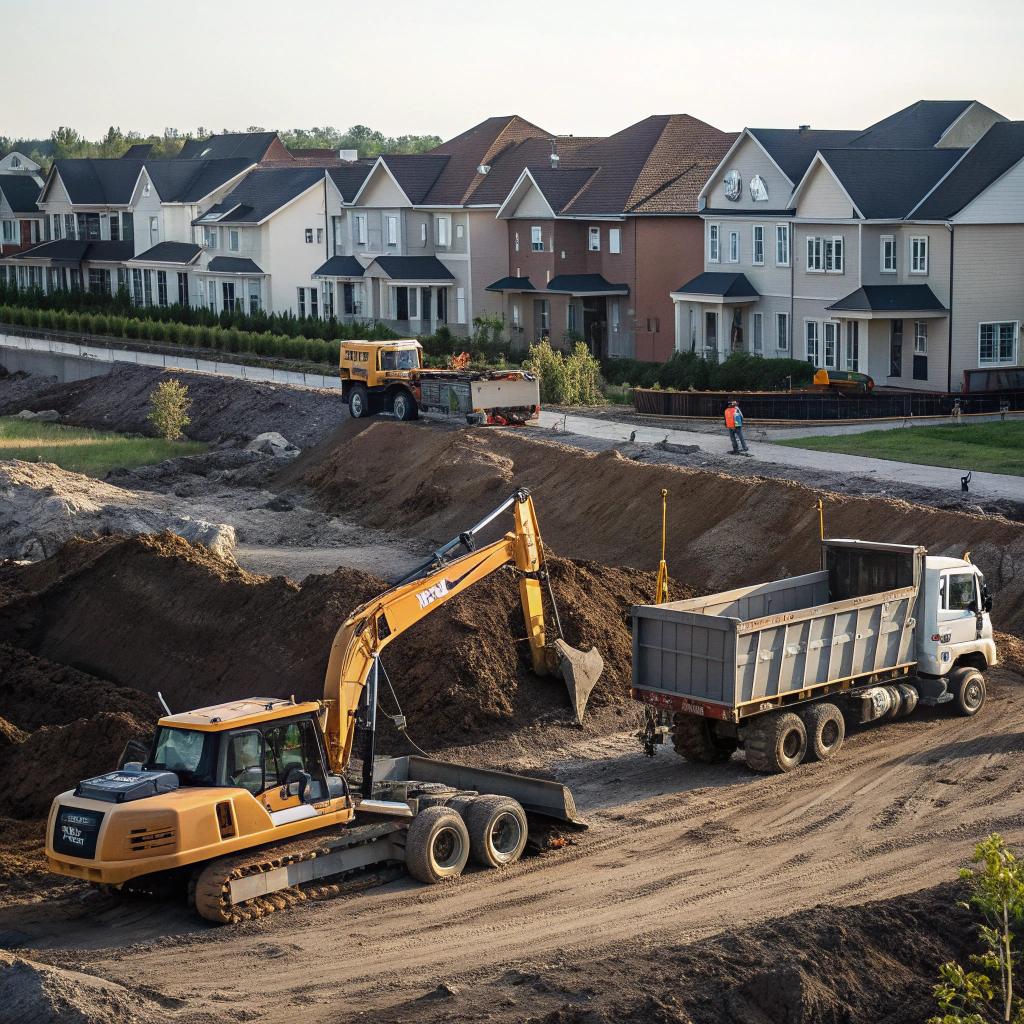
So, you are trying to figure out why a regular homeowner should care about commercial excavation companies at all. The direct answer is simple: because the quality of the digging, grading, and groundwork on or near your property will affect your house, your renovations, and sometimes even your floors for years.
Most people only think about excavation when they see a big construction site or a new shopping center going up. It feels like a “big builder” problem, not a personal one. But a lot of the issues homeowners face later on, like cracked basement floors, doors that stop closing properly, water pooling near the foundation, or sagging patios, start with the ground itself. The hidden work. The dirt, rock, and water under everything.
If the ground under your home or additions is not handled correctly, every finish on top of it, from hardwood floors to tile to concrete, is at risk.
So yes, if you care about renovation, flooring, and long term value, you should at least understand what commercial excavation companies do, when you might actually need one on a residential project, and how their work connects to the parts of the house you see every day.
Here are some things you need to know before we go deeper:
- Excavation affects drainage, which affects your foundation, basement, and flooring stability.
- Commercial excavation companies are not just for malls and warehouses. Many of them handle complex residential work too.
- The dirt work under a renovation can cost less than the visible finishes, but mistakes there are harder and more expensive to fix.
- Good excavation can prevent uneven floors, moisture problems, and concrete cracks later.
- You do not always need a giant excavator in your yard, but you should know when your contractor should call one in.
How excavation connects to your floors and renovations
If you are reading a home renovation or flooring blog, you are probably more interested in hardwood vs vinyl, or tile layout, than in soil compaction numbers. That is normal. But the two are linked.
Every floor in your house depends on the structure below it. The structure depends on the foundation. The foundation depends on the soil and how that soil was shaped, compacted, and drained.
Bad excavation tends to show up later as cracks, slopes, squeaks, and moisture problems, not always as an obvious hole in the yard.
Here are some common home projects where excavation quality directly affects your flooring and overall renovation:
1. Basement finishing or lowering
Many people want to turn a basement into real living space. Maybe you want:
- New luxury vinyl on the floor
- Tile in a basement bathroom
- Heated concrete floors
If you need more headroom, the contractor may suggest lowering the basement floor. That means digging. This is real excavation work, even if it happens inside.
If the excavation is too deep, uneven, or not properly compacted, you can end up with:
- Slab cracks that show through tile
- Floor surfaces that slope toward one side
- Water finding the lowest point, often into finished living space
A commercial excavation crew that is used to precision cuts and tight spaces can actually be safer here than a handyman with a rented jackhammer.
2. Additions and new rooms
Add a sunroom, a new kitchen wing, or a main-floor bedroom and you are also adding new loads on the soil. The excavation for the new foundation or footings matters.
Poor excavation can cause:
- Settling where the old and new parts of the house meet
- Cracks where new flooring crosses from old structure to new
- Doors in the new addition going out of square over time
If the new space will have tile, stone, or any rigid flooring, you want movement in the structure to be as small as possible, or those materials will crack.
3. Slab-on-grade garages, shops, and patios
New garages, workshops, or large concrete patios often sit on a slab poured on compacted soil. The soil work is excavation. If it is not done well, you can see:
- Heaving from frost in cold climates
- Low spots where water pools on the slab
- Cracks that mirror soft spots in the subgrade
If you later finish that garage into a living space, or install epoxy or tile on the slab, those flaws matter even more.
4. Drainage work that protects subfloors and basement floors
Water is a quiet enemy of flooring. It rots subfloors, swells wood, loosens tile, and encourages mold under carpet or vinyl.
Good excavation affects:
- How water flows away from your foundation
- Where downspout extensions should run
- Whether you need a French drain or swale
If your lot is graded poorly, you can spend thousands on beautiful flooring and then watch it warp or stain because moisture is creeping in through the slab or basement walls.
Commercial excavation companies that deal with big sites tend to take drainage and grading seriously. That mindset can help your house too.
What commercial excavation companies actually do
Many homeowners picture only the big machines and the deep pits. The work is a bit more varied than that.
Here is a rough breakdown of tasks that are relevant to you:
| Task | What it means | How it touches a home project |
|---|---|---|
| Site clearing | Removing trees, stumps, old slabs, and debris | Makes room for additions, driveways, and new patios |
| Cut and fill | Cutting high areas and filling low ones to create level ground | Provides a stable, level base for slabs, decks, and new rooms |
| Trenching | Digging narrow, long holes for pipes, cables, and drains | Needed for water lines, sewer lines, French drains, and radiant heat lines |
| Foundation excavation | Digging for footings, basements, or crawlspaces | Directly influences foundation stability and future floor movement |
| Grading | Shaping the surface so water flows a certain way | Keeps water away from walls and slabs, protects flooring from moisture |
| Backfilling and compaction | Putting soil back and packing it to reduce future settling | Reduces cracks in concrete, sidewalks, and driveways around the home |
| Demolition and removal | Tearing out old structures and hauling debris | Cleans up old patios, sheds, or garages so new work starts on solid ground |
A good commercial excavation company will also coordinate with surveyors, plumbers, concrete crews, and sometimes flooring installers, because everyone works off the same base level and slopes.
Why “commercial” experience matters for homeowners
You might be thinking: “Fine, but a small residential contractor can dig a hole too. Why should I care if a company typically works on commercial projects?”
It is a fair question. Sometimes a smaller local outfit is all you need. But there are reasons to pay attention to commercial experience.
1. Commercial projects demand tighter controls
On commercial sites, there are usually:
- Engineers who specify soil compaction levels
- Inspectors checking trench safety and slopes
- Strict rules about elevations and drainage paths
That environment pushes companies to pay attention to details that many small residential jobs skip. If you bring that mindset onto your property, your project tends to benefit.
2. More variety in soils and conditions
Commercial excavators often deal with:
- Soft or marshy sites that need undercutting
- Rocky areas that require special equipment
- Urban lots with tight access and many buried utilities
So when your house sits on a sloped lot with clay soil and a high water table, they have likely seen it before. That experience can save you time, and sometimes prevent a serious mistake.
3. Better equipment and crew depth
A company that works on commercial jobs usually has more than one machine and operator. That can help you in simple ways:
- Shorter downtime if a machine breaks
- Better size match for the actual job, from mini excavators to larger units
- Access to compaction equipment, not just a shovel and a plate tamper
I have seen small residential projects dragged out for weeks because the only backhoe was busy on another job or something broke. That delay affects your whole renovation schedule, from concrete pours to flooring installation.
How this all ties into flooring projects
Since the site you are reading this on focuses on renovation and flooring, let us connect the dots more directly.
Here are some flooring related scenarios where excavation decisions matter more than people think.
New concrete slab for finished space
Say you want to:
- Convert part of your yard into a detached studio
- Turn an old carport into an enclosed room
- Build a home gym on a new slab
You might be dreaming about epoxy coatings, rubber gym flooring, or polished concrete. All good ideas. But if the subgrade under the slab is not properly excavated and compacted, you might see:
- Visible cracks right through your finished surface
- Slope that you can feel while walking, which is annoying on hard flooring
- Moisture seeping through, which can affect adhesives and finishes
A commercial excavation company is more likely to follow engineered specs for depth, base material, and compaction. That sounds technical. On your side, it just means your fancy floor has a better chance of staying flat.
Radiant heated floors
Hydronic radiant systems often run through concrete or under subfloors. The pipes and insulation have to sit at certain depths, with consistent coverage.
Uneven excavation below a slab can create thicker and thinner areas of concrete, which can cause:
- Hot and cold spots on the floor
- Stress cracks in thinner sections
It is not that a basic crew cannot dig out for radiant heat. They can. But a team used to precise trenching and grade control has a better chance of getting everything to match the plan.
Moisture sensitive flooring over concrete
Floors like hardwood, some laminates, and certain vinyl products can all be very sensitive to moisture coming through concrete. You can apply tests and vapor barriers, but if the original excavation did not manage groundwater and drainage, the slab might always be a bit damp.
This goes back to:
- How the site was graded so water moves away
- Whether there is a proper gravel base under the slab
- What kind of perimeter drains, if any, were installed
These are all decisions made long before a flooring contractor arrives. Commercial excavation companies that routinely work on large slabs and basements are already familiar with these moisture issues, because they hear about them later when tenants complain.
When a homeowner actually needs a commercial excavation company
You do not need heavy commercial help to plant a small tree or set a fence post. The tricky part is spotting the line where a shovel, or a very basic contractor, is not enough.
Here are some cases where it is reasonable to at least ask about commercial-level excavation help:
1. Deep or structural work
Examples:
- Digging for a new basement under an existing house
- Lowering a basement floor for extra headroom
- Excavating for large additions with full height foundations
These jobs affect the structure of your home. They also raise safety issues like trench collapse and undermining existing footings. A commercial excavation crew is usually more familiar with shoring, benching, and working around structures without causing damage.
2. Sites with poor access or steep slopes
If your home is on a hill, or the only way to reach the work area is through a narrow side yard, you need operators who are used to getting machines in and out without tearing up everything.
Steep or awkward sites combine risk and skill. This is where better operators can be worth the cost.
3. Big drainage corrections
If you are having real water problems:
- Basement leaks on one side whenever it rains
- Standing water against the foundation
- Neighboring lots draining toward your home
Fixing this usually means more than adding one short gutter extension. It can involve regrading parts of the yard, installing swales or French drains, and sometimes reworking driveways or sidewalks.
Commercial excavation companies that work on parking lots and building pads understand how small changes in slope control where water ends up. That experience is directly useful for these fixes.
4. Work near utilities or in crowded yards
Whenever you are digging near:
- Gas lines
- Water or sewer mains
- Buried power or communication cables
You need a team that takes utility locating seriously and has the right equipment. On commercial jobs this is normal. On some small residential jobs, people cut corners, which is risky.
And in tight backyards where you want to protect existing patios, walkways, or landscaping, you want an operator who can handle a mini excavator or skid steer with some finesse.
Why this matters even if your home is already built
You might think: “My house is done. The foundation is there. I just want to redo my floors and maybe remodel a bathroom. Why worry about excavation?”
Part of the answer is future proofing. Even if your main structure will not change, you might later decide to:
- Add a ground level bedroom or accessible bathroom
- Build a covered outdoor living area with a solid floor
- Finish your basement properly, including new flooring
In each case, excavation and grading choices will either support those goals or limit them. It is easier to think about soil, slopes, and drainage now than to fix them after you have expensive finishes in place.
Another part of the answer is that some floor problems you already see could be symptoms of older excavation or grading mistakes:
- Tile cracks in one area but not others
- Laminate or engineered wood cupping near exterior walls
- Uneven steps between old rooms and newer additions
These often trace back to movement in the structure from settling soil, or from water not being controlled correctly. You might not need a huge excavation project to fix them, but you may need someone who understands site work, not just interior finishes.
How to tell if an excavation company is “commercial grade”
The phrase “commercial excavation companies” sounds nice, but how do you actually spot one that has experience you can use, especially when you are just a homeowner?
Here are some questions and signs.
Ask about project types and size
You can ask:
- What is the largest job you have handled?
- Do you work on both residential and commercial projects?
- Have you done basements, additions, or drainage fixes for houses like mine?
You do not need a company that only builds highways, but it helps if they have tackled projects with plans, inspections, and real stakes.
Check how they talk about soil and drainage
Listen for practical points such as:
- Soil type on your lot, and how that affects compaction
- Expected water flow after grading
- Ideas for protecting existing structures and surfaces
If all you hear is “we dig the hole, the rest is up to the concrete guy,” that is a small red flag for a complex project.
Look for coordination with other trades
Ask how they usually work with:
- Foundation contractors
- Plumbers and electricians for trenching
- Concrete finishers
On a renovation that will lead to new flooring, it is nice if the excavator respects the layout and elevation needs for the finished space. For example, they should understand why a few extra inches of slab height or slope can affect door thresholds and transitions between different floor types.
For some homeowners, looking at companies that normally work on larger projects can give more confidence that these details will be managed. One example of this kind of provider is commercial excavation companies that handle a mix of demolition, site work, and grading on bigger builds and then bring the same discipline to residential jobs.
Budget tradeoffs: where to spend, where to save
People often put most of their budget into visible finishes. Beautiful flooring, stone counters, stylish fixtures. It is understandable. You see those every day.
But there is a quiet tradeoff here.
If you have to choose between:
- Saving on excavation and site work, and
- Saving on a finish, like going one tier down on flooring
I would argue that cutting cost on the visible finish is often safer. You can upgrade flooring later more easily than you can fix a slab that is settling or a yard that sends water toward your foundation.
To be fair, not all projects require a high end excavation company. For simple, shallow work on stable soil, a small crew can be just fine. The tricky part is knowing when the risk is higher.
Ask yourself:
- Is this work affecting my foundation or basement?
- Will concrete or tile be installed directly on top of this area?
- Is water already a concern in or around my home?
- Is there any slope or soil type that complicates the job?
If you answer “yes” to several of those, it is worth at least getting a bid from a company that does commercial work.
Questions to ask before excavation starts
Once you have a possible excavation contractor, commercial or not, here are questions that keep your future floors and renovations in mind.
About elevations and flatness
- What finished elevation are you digging to, and how will you check it?
- How accurate can you hold the level for the slab area?
- How do you handle transitions where the new work meets the existing house?
These answers should mention using a laser level, checking benchmarks, or something along those lines, not just eyeballing it.
About compaction
- What will the subgrade be made of under any slabs?
- How will you compact the soil or base layer?
- Have you had issues with settling on past projects?
If they talk about passing a plate compactor a few times and walking away, that might be fine for light duty. For anything that will carry walls and floors, you want more confidence.
About drainage and water control
- After this work, where will rainwater on my lot go?
- Will you create any low spots that could collect water?
- Should we plan for drains, swales, or other water management?
Their answers should involve actual slopes and paths, not just “away from the house” with no detail.
About protecting existing surfaces
If you already have a finished driveway, patio, or interior floors near the work:
- How will you protect the existing concrete or pavers from damage?
- What is your plan for keeping mud from tracking into the house?
- If something is damaged, how do you handle repairs?
These may sound basic, but they tell you something about how careful the crew will be.
Common fears homeowners have about excavation
Many people feel nervous when heavy equipment shows up near their house. That is not unreasonable. Here are some common worries, with a balanced view.
“They will damage my foundation”
If a machine is used improperly, it can stress nearby structures. But with a careful crew, particularly one used to working around existing buildings, this risk is manageable.
Reasonable precautions:
- Staying a safe distance from foundation walls when possible
- Using smaller equipment near the house
- Shoring or stepping trenches so soil does not collapse against walls
This is another area where commercial experience helps, because they are used to following engineered limits.
“They will wreck my yard and leave a mess”
Excavation is messy by nature. There will be dirt piles and ruts. But the lasting impact depends on how they plan access routes and cleanup.
Ask early about:
- Topsoil stripping and replacement
- Rough grading after work is done
- What they will and will not restore, such as lawns and plants
You might need to budget separately for final landscaping, which is normal. Just do not assume that everything goes back to perfect grass without planning.
“It will be too expensive for me”
It can be expensive. Heavy equipment, fuel, skilled operators, and disposal costs all add up. But leaving excavation to the lowest bidder, when the work affects your foundation and flooring, can also lead to expensive failures.
One practical approach is:
- Get at least two quotes, including one from a company with commercial experience
- Ask each to explain what is included: compaction, grading, cleanup, haul-off
- Ask your foundation or concrete contractor which quote gives a better base for their work
Sometimes the difference in price reflects a real difference in scope, not just margin.
Where flooring and excavation teams should coordinate
There is a gap between “dirt work” and “finished floors” in many projects. Each tradesperson focuses on their piece. You, as the homeowner, can quietly help connect them.
Here are spots where that connection matters.
Finished floor height
Flooring installers care about:
- Flush transitions between rooms
- Door clearance above finished floors
- Step heights that feel comfortable
Excavation and concrete teams decide base levels that feed into all of these. For example, if a new slab is set too high, you can end up with a strange step up into a room, which is awkward for flooring transitions.
You can ask your builder or general contractor to share the intended finished floor height with the excavation company, not just the bottom of footing depth.
Control joints and crack patterns
Concrete slabs are usually cut or tooled to control where cracks will happen. Flooring installers like to know where those joints are, especially with rigid floors.
Some of this happens after excavation, during the pour. But a flat, uniform subgrade from proper excavation helps those joints work as planned, which is good for tile layouts and similar finishes.
Moisture testing readiness
Before certain flooring goes down on concrete, moisture tests are done. If drainage and slab base were poorly handled, those tests tend to fail, which delays flooring.
You can ask the excavation contractor, before work starts, how they plan to keep water away from the new slab or basement walls. That conversation might sound far removed from flooring, but it can prevent headaches later.
Simple checklist for homeowners planning excavation-linked projects
Here is a brief checklist you can keep handy. It is not perfect, but it gives you a starting point.
- Identify whether your project affects foundations, basements, or major slabs.
- Note any existing water issues in or around your home.
- Look at your lot: flat, sloped, rocky, or tight access?
- Decide what type of flooring you want in the new or affected area.
- Ask potential excavation contractors about similar jobs they have done.
- Discuss elevations, compaction, and drainage, not just “digging.”
- Make sure your concrete/foundation contractor and excavator are on the same page about final levels.
- Plan for some yard repair or landscaping afterward.
A quick Q&A to wrap this up
Q: I am only changing my floors inside. Do I really need to think about excavation?
A: Maybe not. If your structure is sound and you have no moisture or cracking issues, you can often just work with a flooring contractor. But if you already see signs of movement or water, it is worth asking whether the problem starts outside or below, where excavation and drainage come into play.
Q: Is a commercial excavation company always better than a smaller residential one?
A: Not always. For small, simple jobs on stable ground, a local residential-focused crew might be perfectly fine and possibly cheaper. Where commercial experience starts to matter is in deeper, more complex, or water sensitive work that touches your foundation, basement, or large slabs.
Q: How early should I involve an excavation contractor in my renovation plans?
A: Earlier than most people think. As soon as you know you will be adding space, changing a basement, or pouring new slabs, you can start getting input from an excavator. Their feedback on soil, access, and drainage can shape the rest of the plan, including how your future floors will sit and perform.
If you step back and look at the whole picture, the ground under your house sets the stage for everything you renovate above it. Once you see that connection, caring about commercial excavation companies stops feeling like overkill and starts to look like a simple way to protect the home, and the floors, you are investing in.