So, you are trying to figure out how to transform your floors with expert Knoxville concrete and whether it is really worth it for your home. Yes, it is worth it, as long as you plan the project properly, pick the right finish, and work with a contractor who actually understands decorative and structural concrete, not just basic flatwork.
Most people look at concrete and think of gray garage slabs or old sidewalks. That is fair, but a bit outdated. Concrete flooring today can look warm, polished, stylish, or industrial on purpose, not by accident. It can imitate stone or tile, or just look like really clean, modern concrete. Indoors or outdoors. If you are already into home renovation and flooring, concrete can sit next to hardwood, tile, or luxury vinyl without feeling cheap or temporary.
Before we get into details, let me answer the practical side of your question.
Concrete can be a long-term flooring option that handles daily abuse better than many popular materials, but only if the base, mix, finish, and sealing are planned together.
Here is the short version of what you need to know before you start:
- Concrete floors are strong but still need good prep and sealing.
- Knoxville has weather swings, so temperature and moisture control matter.
- Decorative finishes like staining, polishing, and overlays can make concrete look high-end.
- Your contractor choice matters more than the product itself.
- Maintenance is simple, but not zero.
- Concrete is great for basements, garages, patios, and sometimes main living areas.
- Budget comes from thickness, finish type, and how much repair work is needed first.
If that all sounds reasonable so far, let us go deeper.
How concrete fits into a modern home renovation
When people renovate, they often jump straight to hardwood, tile, luxury vinyl plank, or carpet. Concrete is usually hidden under everything. It is the thing you cover, not the thing you see. At least that is how many people think about it.
In reality, your concrete slab is already one of the most stable “floors” you have. You can either cover it or turn it into the finished surface.
There are three main ways concrete shows up in a home renovation:
- As a brand new slab or extension, like a new patio, garage, or room addition.
- As an exposed interior floor where the existing slab is finished instead of covered.
- As a base for overlays or resurfacing on an old or damaged surface.
If you are in the Knoxville area, there is extra pressure from humidity, summer heat, and occasional freeze-thaw cycles in winter. This affects how concrete is poured, cured, and sealed. That is where expert help really matters, more than some fancy product.
By the way, if you want a sense of what local specialists do, you can look at Knoxville concrete services and the styles they install around the city. That will usually tell you what works in this climate and what only looks good on Pinterest.
Concrete floors vs other flooring types
You might be comparing concrete to the usual suspects. Instead of just listing pros and cons, it helps to see how concrete behaves in real daily use.
| Floor type | Strength & wear | Water resistance | Comfort | Maintenance | Best areas |
|---|---|---|---|---|---|
| Concrete (sealed/polished) | Very strong; resists dents, scratches | High, if properly sealed | Firm, can feel cool | Low; sweeping and mopping | Basements, garages, kitchens, patios |
| Hardwood | Good, but can dent and scratch | Low; swells with water | Warm, comfortable | Moderate; refinishing sometimes needed | Living rooms, bedrooms |
| Tile | Good; can crack on bad subfloor | High on surface, grout can stain | Hard, cold | Moderate; grout cleaning | Bathrooms, kitchens |
| Luxury vinyl plank (LVP) | Good; can scratch | High for most products | Softer underfoot | Low; basic cleaning | Most indoor spaces |
| Carpet | Poor; wears down in traffic paths | Low; absorbs spills | Soft and warm | High; vacuuming and deep cleaning | Bedrooms, some living rooms |
Concrete wins if you care about long-term strength, water resistance, and low maintenance. It can lose a bit on comfort and warmth, unless you plan around that.
If you like the idea of “install it and forget it” for 10 to 20 years, concrete is close to that, but you still need to reseal and clean it regularly.
So the question becomes less “Is concrete good?” and more “Where in my home does concrete make sense as the finished floor?”
Where concrete floors work best in a Knoxville home
Let us go room by room and space by space.
Garage floors
This is the classic one. If you are renovating your home, the garage often ends up last on the list, but it deserves attention.
Concrete is still the best choice for garage floors, but raw, unsealed concrete stains and dusts. Oil leaks, tire marks, and that old white powder that appears on the surface over time are common.
For a garage, an expert concrete contractor will focus on:
- Proper slope for drainage.
- Good control joints to handle minor movement.
- Surface prep and sealing or a coating system, like epoxy or polyaspartic.
If you skip the sealing step, you will have a strong slab that still looks tired after a couple of years. That is the part many people regret.
Basements
Basements in Knoxville can be tricky. There can be moisture issues, even in homes that feel “dry” most of the time.
Concrete is great here if:
- The slab is checked for moisture vapor before applying finishes.
- Any cracks are repaired with proper products, not just patching cement from a big box store.
- You pick a finish that can breathe a little, like a penetrating sealer or stain, rather than trapping moisture under a thick coating that is not compatible.
The nice thing is that you can stain and seal an existing slab and turn a plain basement into a usable living space or office without a big stack of extra flooring materials.
Kitchens and living areas
Here it becomes more personal. Some people like the look and feel of concrete in a kitchen or open-plan living area. Others find it too hard underfoot.
Things to think about:
- Do you stand and cook for long stretches? If yes, you might want rugs or mats.
- Do you have children who fall a lot? Concrete is less forgiving than carpet.
- Do you like a clean, minimal, somewhat industrial look? Concrete fits that style well.
I have seen homes where concrete runs through the whole first floor, with large area rugs in seating zones. It feels unified and easy to clean, but it is not “soft”. Some people love that clean feeling, some do not. It is not a wrong or right choice, just preference.
Outdoor spaces and hardscape areas
Patios, walkways, and pool decks are where concrete really shines. If you are already thinking about hardscapes, concrete works as a base or as the final surface.
For outdoor areas in Knoxville, the key concerns are:
- Slip resistance when wet.
- Heat on bare feet in summer.
- Cracking from soil movement or freeze-thaw cycles.
Finishes like broomed surfaces, stamped textures, or exposed aggregate can add grip. Color choices affect how hot the surface feels in the sun. Joints and proper base prep help manage cracking. A good contractor should talk about all of these, not just pattern and color.
Types of concrete floor finishes you can choose
Concrete on its own is just a base. What makes it feel “finished” is the surface treatment. Here are the most common finishes and where they fit.
Polished concrete
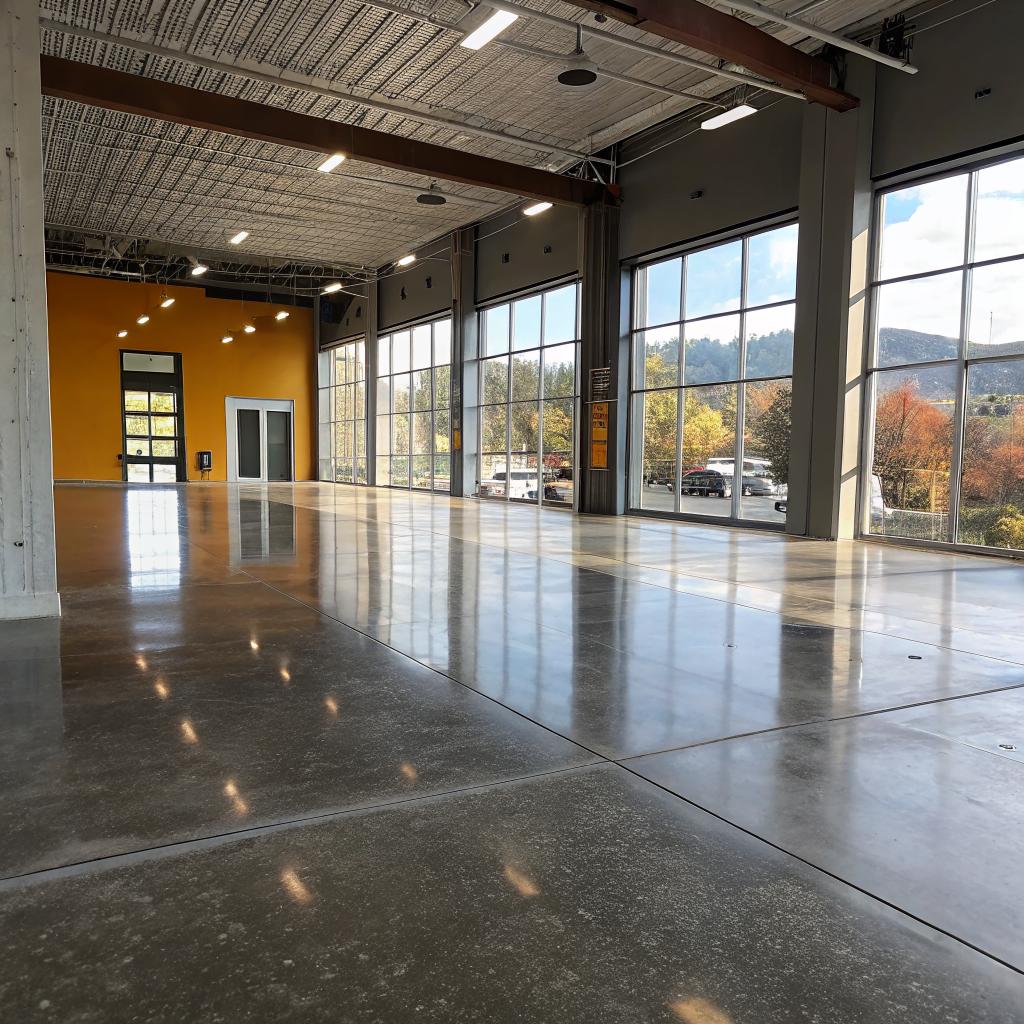
Polished concrete is where the surface is ground and honed with special machines, then polished to various sheens from matte to high gloss. Often densifiers are applied to harden the surface further.
Good for:
- Modern interiors.
- Basements and living areas where you want a clean, smooth look.
- Spaces that need easy cleaning.
Things to keep in mind:
- Existing slabs with many cracks or low spots need more prep, which costs more.
- Very high gloss surfaces can show dust and footprints more easily.
- You still want a guard or sealer to help with stain resistance.
Stained or dyed concrete
Concrete stains or dyes change the color of the slab while still showing some natural variation. Acid stains react with the concrete and give a mottled, stone-like look. Water-based stains and dyes give more control over color.
Good for:
- Basements, dens, or game rooms where you want character.
- Patios and outdoor spaces that need color.
- Homes where you like a slightly rustic or varied look.
Stain alone does not protect the surface. You still need a clear sealer on top.
Stamped concrete
Stamped concrete uses patterns pressed into fresh concrete to mimic stone, brick, slate, and more. It is common for patios, pool decks, and walkways.
Good for:
- Outdoor entertaining areas.
- Driveways and front walks where you want more interest than plain gray.
Stamped work relies heavily on the skill of the crew. Poor stamping or rushed coloring can look fake. Proper sealing and resealing every few years keep it from fading and wearing down.
Overlays and resurfacing
Sometimes your existing concrete is rough, cracked, or stained, but still structurally sound. In that case, a thin overlay can cover the old surface and give a fresh look.
Overlays can be:
- Textured for outdoor slip resistance.
- Smooth and stained for interior floors.
- Stamped with patterns, similar to new stamped concrete.
This is where expertise really matters, because bonding to old concrete is more sensitive than pouring new concrete on a fresh base.
If your current slab is badly broken, lifting, or sinking, no overlay will magically fix that; the base needs repair first.
How Knoxville weather affects concrete floors
Knoxville has humid summers, some chilly winter periods, and a fair amount of rain across the year. Concrete reacts to moisture and temperature swings more than people realize.
Here are a few local factors that matter:
- Moisture vapor from below: Slabs on grade can let water vapor slowly pass through. That affects adhesives, coatings, and some finishes.
- Freeze-thaw cycles: Outdoor slabs need proper air entrainment, drainage, and sealing so water does not soak in and expand during cold snaps.
- UV exposure: Some sealers and coatings break down faster under strong sun. Wrong product choice leads to peeling or chalking.
This is why you cannot just pick any sealer from a shelf and expect it to last. What works inside a dry Texas garage might not behave the same on a Knoxville patio that sees rain and morning condensation.
Planning a concrete floor project step by step
If you are serious about transforming your floors with concrete, it helps to walk through the whole process in your head first. That way, you can ask better questions and avoid rushed decisions.
1. Decide where you want concrete to be the finished surface
Start by walking through your home and yard and asking:
- Which areas see the most dirt, water, or heavy use?
- Which areas are you willing to have a firmer, cooler floor?
- Where would a smooth, low maintenance surface help your daily life?
Concrete often makes sense in:
- Garages
- Basements
- Laundry or mudrooms
- Entryways
- Outdoor patios and walkways
Sometimes people go all in and use it in living rooms, kitchens, or even bedrooms. There is nothing wrong with that if you like the look and feel.
2. Check the current state of your slabs
You do not need to be an expert to do a basic inspection. Here is what to look for:
- Hairline cracks vs wide, uneven cracks.
- Areas that sound hollow when tapped, which can mean poor bonding or voids below.
- Low spots where water pools after cleaning or rain (for outdoor areas).
- Existing coatings or paints that are peeling.
- Moisture signs like efflorescence (white powdery residue).
You can even tape a clear plastic sheet tightly to a section of concrete and leave it for 24 hours. If you see moisture buildup underneath, you know vapor is present. A contractor should still use proper testing equipment, but this gives you a hint.
3. Set your budget and priorities
Concrete itself can be affordable, but fancy finishes and heavy prep work add cost. Think about what matters most:
- Do you care more about long life, or about a very specific look?
- Is this a space you will see every day, or is it more of a utility area?
- Are you okay with some natural variation, or do you want a uniform appearance?
Decorative work like polishing or multi-color staining usually sits above basic tile or LVP costs but below high-end hardwood. Overlays and stamped work can be similar to mid-range pavers and stone.
4. Find and evaluate concrete contractors
This is where many projects rise or fall.
When you talk to Knoxville concrete contractors, do not just ask “How much per square foot?” Ask questions like:
- What finish do you recommend for my specific space and why?
- How will you handle moisture testing and crack repair?
- What sealer or coating will you use, and how long should it last before re-coating?
- Can I see local projects you completed that are at least two years old?
- How will you protect the rest of my home during grinding, dust, or curing?
If someone only talks about color charts and “it will look great” but does not discuss prep, moisture, or traffic, that is a red flag.
A good concrete contractor will spend more time talking about what can go wrong and how they prevent it than about how amazing it will look.
5. Plan the timing
Concrete work is messy. Grinding, pouring, or resurfacing indoors means you will have dust, noise, and areas you cannot walk on for a while.
Think about:
- Do you need to move furniture out of the space?
- Can you avoid using the room for several days to allow curing?
- Is there a season that works better for you, given Knoxville weather and your schedule?
Outdoor work in mid-summer heat or in freezing conditions is tricky. Contractors often aim for moderate temperatures whenever possible.
Design choices: color, texture, and sheen
Now the more creative part. Concrete does not have to be plain gray. You have several levers to pull: color, level of shine, and texture.
Color options
You can add color in different ways:
- Integral color: Pigment mixed into the wet concrete. Good for new pours.
- Stains: Acid or water-based stains applied to cured concrete for a variegated look.
- Dyes: Often used with polished concrete for more uniform, rich tones.
- Tinted sealers: Clear sealer with pigment, useful for subtle color shifts.
Lighter colors help keep outdoor surfaces cooler under sun. Darker floors inside can feel grounded but show dust more.
Texture and slip resistance
For indoor applications, a smoother surface is common, especially with polished or finely troweled finishes.
For outdoor or wet areas:
- Broom finishes add fine lines across the surface for grip.
- Stamped textures add pattern and traction.
- Exposed aggregate brings small stones to the surface, which add texture.
Tell your contractor if anyone in the home has mobility issues. Slippery floors can be a problem, particularly around entries and ramps.
Sheen level
You can choose from:
- Matte or low sheen
- Semi-gloss
- High gloss
High gloss can look dramatic but will show every speck of dust in bright light. Many homeowners settle on a mid-range sheen as a compromise between looks and practicality.
Maintenance of concrete floors
People often hear “concrete” and think “zero maintenance.” That is not quite true. It is lower maintenance than many floors, but not care-free.
Here is a simple view of ongoing care.
| Task | How often | Notes |
|---|---|---|
| Dust mop or sweep | Weekly or as needed | Removes grit that can scratch sealers or polished surfaces. |
| Damp mop | Every 1 to 4 weeks | Use pH neutral cleaner, not harsh chemicals. |
| Spot clean spills | As they happen | Prevents staining, especially on lighter floors. |
| Reseal surface | Every 2 to 5 years, depending on use | Outdoor and high-traffic areas need it more often. |
| Inspect for cracks | Yearly | Hairline cracks are normal; larger ones may need repair. |
If that sounds like a lot, compare it to carpet cleaning, grout scrubbing, or hardwood refinishing. Concrete looks simpler, and in practice, it usually is.
Common mistakes to avoid with concrete floors
There are a few patterns that keep coming up in home projects.
Skipping proper prep
Concrete is like skin. If it is dirty, oily, or loose on the surface, anything you put on top will fail. Peeling coatings and uneven staining are almost always prep issues.
Make sure your contractor:
- Removes old coatings mechanically when needed, not just by lightly sanding.
- Repairs cracks with materials designed to move slightly, not stiff patch that will just crack again.
- Tests for moisture before applying coatings, especially in basements and ground-level slabs.
Choosing the wrong sealer
There are many types of sealers: acrylics, polyurethanes, epoxies, penetrating sealers, and more. Each has pros and cons.
For example:
- High build acrylic sealers are popular on stamped patios but can be slippery if not handled right.
- Epoxy coatings can be great in garages but do not handle UV exposure well on driveways.
- Penetrating sealers help protect outdoor slabs without changing the look much.
If a contractor cannot explain why a certain product suits your exact space, that is a problem.
Expecting perfection on old concrete
Old slabs often have patches, past repairs, or color differences. Even with overlays or stains, some character remains. That is not always bad, but you should be prepared for a slightly imperfect, “lived in” look.
If you want a nearly flawless floor, new concrete or thicker overlay systems might be needed, which changes cost and scope.
Concrete and the bigger picture of your renovation
Concrete floors rarely exist in isolation. They interact with:
- Doors and thresholds
- Cabinets and built-ins
- Existing trim and baseboards
- Other floor coverings like wood or tile
You need to think about transitions. For example:
- Will the finished concrete height match adjacent flooring, or create a lip?
- Do you need transition strips between concrete and wood or tile?
- Will baseboards be removed and reinstalled to cover new edges cleanly?
This is where coordination between your concrete contractor and your general contractor or designer helps. If they do not talk to each other, you might end up with awkward steps or mismatched heights.
When concrete is not the best choice
You asked how to transform your floors with concrete, but sometimes the honest answer is that concrete is not the right path.
I would question a concrete floor if:
- You want a very soft, warm feel in bedrooms or nurseries.
- Your existing slabs have serious structural issues that make repair too costly.
- You strongly dislike any visible cracks or variation in color.
- You are not willing to move out of the space at all while work happens and cures.
In those cases, using concrete as a base and installing another floor on top, like engineered wood or LVP, might fit better.
Concrete floors and resale value
People often ask if concrete floors help or hurt resale value. There is no single answer. It depends on the buyer and how well the floor fits the house.
Generally:
- Well finished concrete in garages, basements, and outdoor spaces is a plus.
- Polished or stained concrete in main living areas appeals to some buyers and not others.
- Badly stained, cracked, or flaking concrete hurts value, like any damaged floor would.
If your home style is modern, industrial, or minimal, concrete can fit naturally and even feel premium. In a traditional, cozy, heavily furnished home, buyers might expect more wood or carpet.
Quick Q&A: Common questions about Knoxville concrete floors
Q: Will concrete floors make my house colder?
A: Concrete floors do feel cooler to the touch than carpet or wood. They also hold the room temperature more than react to it. In Knoxville, that can feel nice in summer and a bit chilly in winter. Rugs, radiant floor heating, and smart use of sunlight help balance this.
Q: Do concrete floors always crack?
A: Almost all concrete develops some cracking. The goal is to manage where and how it happens. Contractors use control joints, proper reinforcement, and good curing practices to keep cracks small and predictable. Hairline cracks are common and usually just cosmetic.
Q: Can I put new flooring on top of concrete later if I change my mind?
A: In most cases, yes. You can install wood, tile, or LVP on a concrete slab. You might need extra prep to remove sealers, level the surface, or add underlayment. It is easier if you tell your contractor now that a future change is possible, so they can avoid products that make later bonding harder.
Q: Are concrete floors slippery?
A: They can be if finished incorrectly, especially when wet. Indoor polished floors can have slip-resistant treatments. Outdoor areas should have textured finishes. A good contractor balances appearance with traction, based on where the floor is and how you plan to use it.
Q: How long does it take to install or refinish concrete floors?
A: That depends on the size of the space, the type of finish, and the condition of the existing slab. A typical residential project can range from a couple of days for basic sealing up to a week or more for full grinding, polishing, repairs, and multiple coats. Curing time adds a bit, since you should not move heavy furniture back right away.
Q: Is concrete really a “one and done” flooring choice?
A: Concrete can last for decades, but it is not completely maintenance free. You still need to clean it and refresh sealers or guards over time. The base slab, if properly installed, should outlast many other floor coverings by a wide margin.
If you walk around your home right now and look at every concrete surface, what do you actually want those spaces to feel like in ten years: something you keep covering again and again, or a finished surface that simply does its job in the background?