
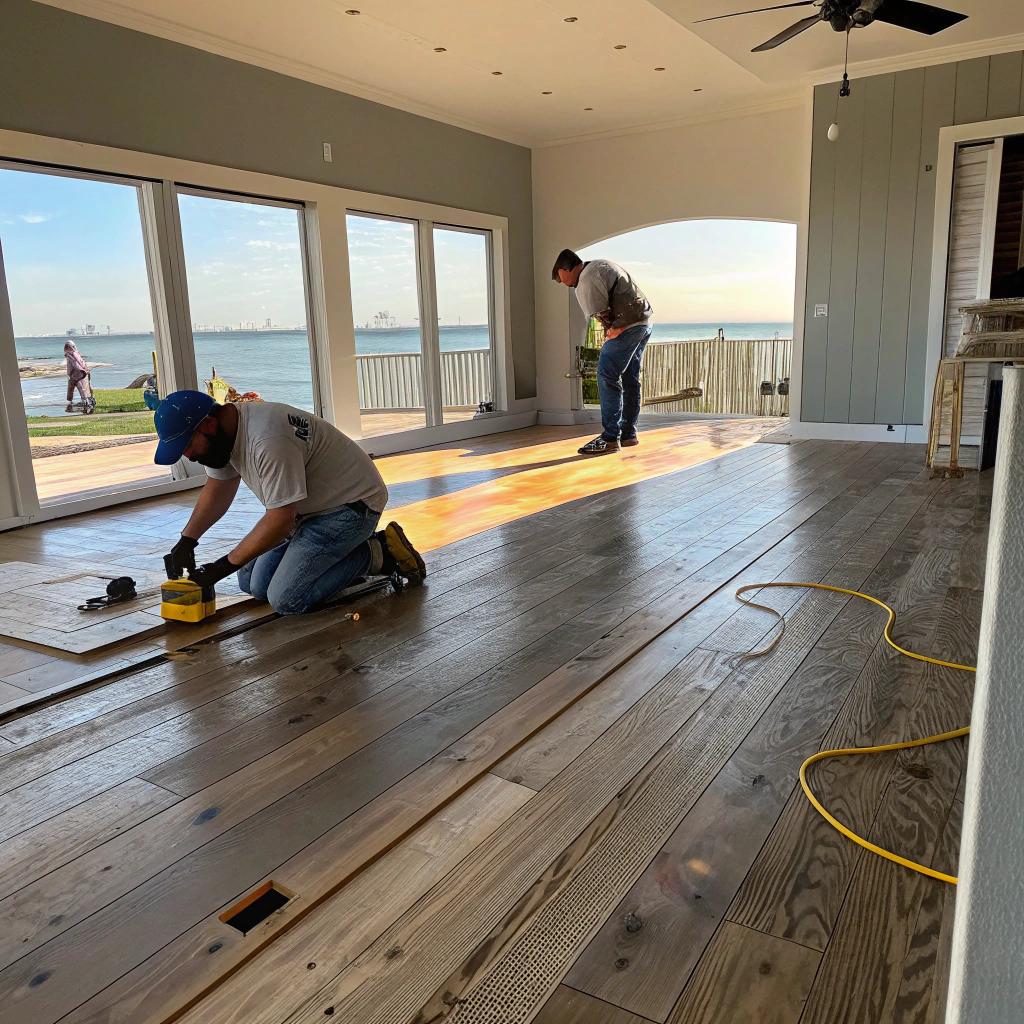
So, you are trying to find the top remodeling company in Rockport, Texas for dream floors. The short answer is that you need a local contractor with real flooring experience, clear pricing, and strong reviews, such as a focused remodeling company Rockport Texas that handles full home projects, not just surface-level cosmetic work.
Most people think choosing a flooring contractor is just about who has nice photos on a website. In reality, picking the right company shapes how your home feels every day, how long your floors last, and how much stress you deal with during the project. Rockport has humidity, shifting soil, and salt in the air, which means you cannot just pick anyone who says they know flooring. You need someone who understands how homes in this area behave over time.
Here are some quick things you need to know before you sign a contract with any flooring or remodeling crew.
- Check if they handle full home or structural work, not only cosmetic flooring installs.
- Ask who will be in your home each day and how they protect surrounding rooms.
- Compare flooring types based on humidity, pets, and long term maintenance, not just price.
- Get everything in writing: scope of work, brands, subfloor prep, and cleanup.
- Look for clear local reviews that mention Rockport, not just general Texas jobs.
- Make sure they talk about subfloor and moisture control, not just the pretty surface.
- Ask for real start and finish timelines, and what happens if the schedule slips.
If a contractor spends more time talking about what your floor will look like than how they will build what sits under it, you probably need to keep looking.
What “dream floors” actually means for a Rockport home
People say “dream floors” all the time. It sounds nice, but it is a bit vague. Once you live with new flooring for a year, you learn fast what really matters.
Most homeowners in Rockport who are happy with their floors usually end up with something that checks four boxes:
- It feels solid underfoot, with no hollow sound.
- It stands up to moisture, sandy shoes, and pets.
- It fits the style of the home and does not fight with existing trim or cabinets.
- It is easy to clean and does not show every footprint or water spot.
That sounds simple, but every one of those points is tied to decisions your remodeling company makes before a single plank or tile goes down.
Dream floors are not just the material you pick; they are the result of planning, subfloor work, and honest conversations about how you actually live.
How your lifestyle shapes the right flooring choice
Before you even talk to contractors, it helps to be honest with yourself about daily life in your home. When I talk with people about flooring, the same questions come up:
- Do you have pets that track in sand or water?
- Do you host guests often?
- Do kids or grandkids run in and out from outside?
- Do you cook a lot or prefer eating out?
- Is anyone in the home sensitive to dust or odors?
A retired couple that mostly stays indoors and takes off shoes at the door has very different flooring needs from a family of five with a dog that loves the beach.
If your contractor does not ask about these kinds of things, they are guessing. You do not want guesswork under your feet.
Types of flooring that work well in Rockport
Not every floor handles Rockport conditions the same. The local climate is humid, sometimes salty, and often messy if you spend time outdoors. Below is a general comparison to give you a clearer picture.
| Floor Type | Good For | Watch Out For | Maintenance Level |
|---|---|---|---|
| Luxury Vinyl Plank (LVP) | Busy homes, rentals, pets, coastal humidity | Very cheap products can warp or fade fast | Low, regular sweeping and mopping |
| Porcelain or Ceramic Tile | Kitchens, baths, entryways, high moisture | Hard underfoot, grout needs cleaning, can be slippery | Moderate, grout sealing and cleaning |
| Engineered Wood | Living rooms, dining rooms, bedrooms | Still can be damaged by standing water or leaks | Moderate, needs careful cleaning products |
| Solid Hardwood | Low traffic, more controlled interior climate | Not ideal for high humidity or moisture swings | Higher, might need refinishing over time |
| Stained Concrete | Modern look, ground-level slabs, beach homes | Very firm underfoot, can feel cold without rugs | Low to moderate, sealing every few years |
An experienced Rockport remodeling company will walk you through this kind of tradeoff. If someone tells you “this is the best floor for everyone”, you can guess they just want to sell what they are used to installing.
How local conditions change flooring choices
In Rockport, you have a few extra factors:
- Moisture from the Gulf and general humidity.
- Sand, salt, and grit from outside.
- Occasional heavy rain that can affect entry areas and low spots.
- Shifts in foundations that can crack poorly installed tile or rigid materials.
This is why you want a contractor who has worked on Rockport homes for years, not someone who mainly works far inland and treats coastal projects the same way.
A good local remodeler will talk about moisture barriers, expansion gaps, and movement joints before they talk about color names.
What makes a remodeling company “top” for flooring, not just average
There are plenty of contractors who can physically install a floor. That is not the hard part. The real difference comes from how they plan, how they communicate, and how they handle problems.
Here are some areas that tend to separate a top flooring-focused remodeler from the rest.
1. They start with the subfloor and structure
If your subfloor is weak, uneven, or damp, no high end flooring will save you. A serious Rockport contractor will:
- Inspect for sagging or bouncing in wood framed floors.
- Check for cracks or high/low spots in slab foundations.
- Test or at least look for moisture issues in concrete.
- Recommend leveling, new underlayment, or repairs before flooring goes in.
You might feel annoyed when they suggest extra prep work that adds cost. I understand that. But this is the part that keeps your floors from lifting, squeaking, or cracking later.
2. Clear, written plan instead of vague promises
Top companies write things down. Not because they love paperwork, but because memory is unreliable when projects stretch over weeks.
You should see in your quote or contract:
- Exact flooring product names, thicknesses, and finishes.
- Where transitions go between flooring types.
- How they will handle thresholds at doors.
- What will be done with baseboards and trim.
- Who moves and resets furniture and appliances.
If the only document you receive is a single number and a one line description, you have almost no protection if something changes or quality drops.
3. Respect for your home during the job
Flooring work is messy. There is dust, adhesives, cutting, and people walking in and out. You can feel the difference between a crew that treats your home carefully and one that sees it as just another job site.
You want answers to questions like:
- How do they control dust when they cut or grind?
- Do they cover vents, doorways, and nearby furniture?
- Where do they store materials at night?
- How often do they clean up during the day?
If a company shrugs and says “it will be a bit dusty, that is just how it is”, I would be cautious. Some dust is unavoidable, but there are clear ways to control most of it.
4. Realistic timeline and honest scheduling
Every project sounds fast when it is sold. Reality is often different. What I look for is not a promise of perfection, but a contractor who is honest when things change.
Ask:
- How many jobs they will run at the same time as yours.
- Whether the same crew will be with you from start to finish.
- How they will tell you if a shipment is delayed or a problem shows up.
Top companies do not disappear for three days without a word. They pick up the phone, explain, and adjust with you.
Balancing flooring with a wider home remodel
If you are redoing floors in more than one room, there is a good chance you are also thinking about the kitchen, bathrooms, or maybe some walls. This is where picking a general remodeling company, not just a flooring installer, starts to make sense.
A contractor that handles full home projects can:
- Plan flooring heights with cabinet and countertop changes.
- Coordinate plumbing or electrical changes before the floor closes things off.
- Make sure door swings, trim, and thresholds all work with the new floors.
Sometimes people try to save money by doing floors one year, then the kitchen the next, and the bathroom later. That can work, but if it is not planned as a whole, you end up with strange transitions or having to tear up new flooring to run new lines.
Common mistakes when you do flooring before a bigger remodel
I have seen this pattern often:
- Homeowner installs new floors in the living room.
- One or two years later, they remodel the kitchen.
- The kitchen layout changes, and now parts of the new floor must be cut or patched.
Or:
- Bathrooms get new floors without checking old plumbing.
- A leak shows up six months later.
- The contractor has to open up the floor to fix pipes, and the tiles never match again.
A solid full home remodeler will try to prevent these chains of headaches. They will tell you when it is smarter to hold off or to phase the work differently, which might sound annoying in the moment, but helps in the long run.
How to talk with a potential Rockport flooring contractor
Most homeowners are not used to asking contractors detailed questions. It can feel awkward or like you are accusing them of something. You are not. You are just trying to understand how they work.
Here are some questions you can print out or keep on your phone when you meet or talk.
Questions about experience and local knowledge
- How many projects have you done in Rockport in the last two years?
- Do you work on both slab and pier-and-beam homes?
- Have you handled homes near the water with moisture issues before?
- What is your process if you find hidden damage under old flooring?
Listen less to the sales pitch and more to the details they share. People who do this work often will have clear, simple answers, not vague talking points.
Questions about process and communication
- Who will be my main contact during the job?
- How do you handle change orders if I decide to adjust something partway through?
- How often will I get updates on progress?
- What time do you usually arrive and leave each day?
If they cannot tell you how they handled communication on past projects, they may not have a consistent system.
Questions about materials and warranties
- What brands of flooring do you trust for Rockport humidity?
- Do you recommend glue-down, floating, or nail-down for my space, and why?
- What warranty do the manufacturers offer, and what warranty do you offer on your labor?
- What cleaning products do you recommend and which ones should I avoid?
The answer to that last question can tell you whether they actually understand how these products age over time.
What a real “dream floor” project feels like from start to finish
It might help to walk through what a well run flooring remodel usually looks like. The details change, but the broad steps are similar.
1. Walkthrough and planning
You and the contractor walk the space together. They:
- Measure each room, including closets and small areas.
- Check current flooring, subfloor, and any cracks or soft spots.
- Ask about pets, allergies, and how you use each room.
- Talk about transitions between rooms and flooring types.
You talk about style, color, and budget, but they also tell you what will or will not work long term. This first step should feel like a conversation, not just a sales pitch.
2. Written proposal and scope
You receive a written proposal that covers:
- Exact materials, including underlayment or leveling compounds.
- Square footage covered and any waste factor for cuts.
- Labor for demo, installation, trim, and cleanup.
- Timeline for start and finish.
- Payment schedule tied to milestones, not just dates.
This is your chance to ask more questions. If the contractor becomes impatient when you ask for clarity, that is a warning sign.
3. Prep work and protection
Before new floors go in, a careful crew:
- Moves or helps move furniture as agreed.
- Sets up plastic barriers where needed.
- Covers vents and sensitive surfaces.
- Removes old flooring with attention to nails, staples, and old adhesives.
This is often the loudest and dustiest part, but it sets the stage for everything else.
4. Subfloor repair and leveling
This is where many cheaper contractors cut corners. A better company will:
- Fix squeaks and reinforce weak areas in wood floors.
- Grind down high spots in concrete and fill low spots.
- Install the right underlayment for sound and moisture control.
You might not see most of this after the job is done, but you feel it under your feet every day.
5. Layout and installation
Good installers plan layout carefully before cutting. They look at:
- Where the main sight lines in the room are.
- How planks or tiles line up with major features like islands or fireplaces.
- How to avoid skinny, awkward cuts along walls.
The goal is a floor that looks intentional, not something that happens to fit the space.
6. Finishing touches
This is where a lot of the “dream” feeling comes from:
- Baseboards and shoe molding reinstalled or replaced.
- Transitions fitted neatly between different flooring types.
- Caulking and paint touch ups where needed.
- Thorough cleanup so you are not finding dust everywhere for weeks.
You should not feel rushed through this step. If anything looks off, this is the moment to speak up.
Budgeting honestly for dream floors in Rockport
Money always comes into the conversation. It has to. One mistake people make is only comparing price per square foot of the visible flooring and ignoring everything else.
When you compare quotes, separate your thinking into three buckets:
| Bucket | What It Covers | Why It Matters |
|---|---|---|
| Surface Material | Planks, tiles, trim, transitions | Affects look, texture, and resale appeal |
| Structure & Prep | Demo, leveling, underlayment, repairs | Keeps floors from failing or feeling cheap over time |
| Craft & Service | Labor, project management, cleanup, communication | Shapes your day to day experience during the remodel |
Cutting cost in the “structure & prep” bucket is where most regrets show up. Spending a bit less on the visible material is often safer than skipping proper prep.
If your budget is tight, it is usually better to choose a modest but durable floor installed well than a premium floor sitting on sloppy prep.
How to avoid surprise costs
To be fair, some surprises are hard to predict, like hidden rot or unseen slab cracks. Still, you can reduce shock by asking your contractor to include a section in the contract that explains:
- Common hidden problems they see in Rockport homes.
- How they will price those repairs if they show up.
- When they will stop and ask you before moving forward.
You might not avoid every change, but at least you will know how they will be handled.
Signs a Rockport remodeling company is a good fit for your floors
To pull this together, here are some plain signs that you are likely dealing with a solid flooring oriented remodeler:
- They ask about how you live, not just what color you want.
- They talk about subfloor, humidity, and transitions early in the conversation.
- They give you a detailed written scope with line items.
- They show photos or references from other Rockport homes, not only stock images.
- They give you realistic timelines and explain their schedule.
- They answer questions directly, even when the answer is “that will add cost” or “that is not a good idea here”.
And, yes, they should be comfortable telling you “no” sometimes. If you ask for solid hardwood in a spot that regularly gets damp, you want a contractor who pushes back and explains why that is a risk, not one who just smiles and takes your money.
Common questions Rockport homeowners ask about dream floors
Q: Is it worth hiring a full remodeling company just for flooring?
A: If you only plan to replace carpet in one bedroom, maybe not. A smaller flooring-only crew might be fine. But if you are touching multiple rooms, changing layouts, or planning future kitchen or bath work, a full remodeler that understands structure, plumbing, and electrical usually does a better job coordinating everything. It can prevent you from redoing work later.
Q: How long will my flooring project take?
A: For a typical Rockport home with a few main areas, most projects fall somewhere between a few days and a couple of weeks. It depends on:
- How much demo and subfloor repair is needed.
- Whether you live in the home during the work.
- How many rooms and flooring types are involved.
If someone promises a huge full home flooring job in one or two days, I would question what they are skipping to move that fast.
Q: Can I stay in my home while my floors are being redone?
A: Many people do, but it can be tiring. There will be noise, dust, and rooms you cannot walk through for parts of the day. A good contractor will phase work so you always have a way to move around, or at least give you a clear plan. If you have kids, pets, or work from home, talk carefully through how each day of the project will look.
Q: What flooring holds up best near the coast?
A: For most Rockport homes, higher quality luxury vinyl plank and porcelain tile hold up very well. Engineered wood can also work if humidity is controlled and someone keeps an eye on leaks or spills. Solid hardwood is less forgiving with moisture. Concrete with a good finish is strong too but can feel hard and cold without rugs. The best choice is the one that balances durability, comfort, and your daily habits.
Q: How do I know if a quote is reasonable?
A: Get at least two or three detailed quotes with clear line items. Look at more than the final number. Compare:
- What each contractor includes for prep and repairs.
- The quality and brand of materials.
- Labor warranties and how long they stand behind their work.
The lowest price often removes something you wish had stayed in. The highest price is not always the best either. The most helpful contractor is usually the one who explains every piece of the cost so you feel comfortable saying “yes” or “no” to each part.
If you had to pick one starting point for dream floors in Rockport, it would be this: find a remodeling company that cares as much about what you cannot see under the floor as what you can see on top. That mindset, more than any single product, is what turns a flooring project into something you are still happy with ten years from now.