
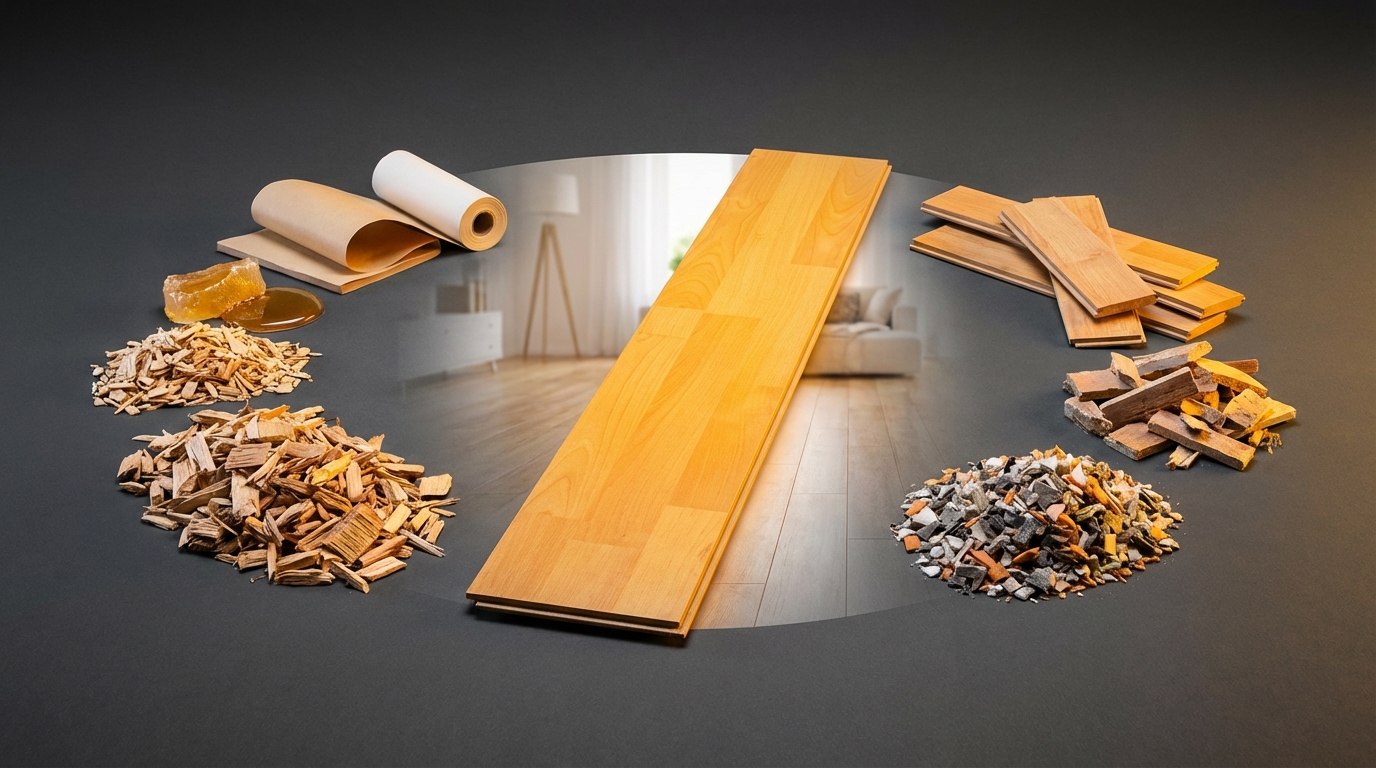
So, you are trying to figure out the lifecycle of laminate and whether it is actually recyclable or just marketing spin.
Short answer: most laminate, today, is not truly recyclable in regular systems, but parts of it can sometimes be recovered, and better options are slowly emerging.
You are right to question it. Laminate shows up in flooring, furniture, countertops, packaging, and even tech products. It looks modern. It feels modern. But what happens when you rip it out or throw it away is a different story. The tech behind laminate is clever, yet that same tech makes end‑of‑life a real headache.
- Most common laminate flooring and furniture panels go to landfill or incineration.
- Laminate is usually a mix of materials fused together, which makes recycling hard.
- A few industrial recyclers can process some laminate, but access is limited.
- Laminate on packaging and labels is a big problem for recycling lines.
- Tech is improving, but you still need to plan for reuse or longer life, not recycling.
Now let us walk through the lifecycle, what is technically possible, what actually happens, and what you can do in real life.
—
What laminate actually is (the tech under the surface)
So, you are asking about recycling, but the core issue is how laminate is built.
Laminate is not one material. It is a sandwich.
Common types of laminate you interact with
- Laminate flooring: those “wood look” planks in many homes and offices.
- Laminate furniture: IKEA‑style desks, shelves, cabinets with a printed surface.
- Laminate countertops: kitchen and office surfaces, often branded products.
- Plastic/foil laminates on packaging: pouches, coffee bags, labels, cartons.
- Technical laminates: electronic laminates, PCB laminates, insulation panels.
At a high level, you have:
- A core (wood fiber, paper, plastic, or composite).
- A print layer (the design you see: wood grain, stone look, color).
- A protective layer (melamine, resin, or plastic film for durability).
- Sometimes an extra backing layer for balance or moisture resistance.
These are not just stacked loosely. They are fused under heat and pressure. That fusion is what gives laminate its durability and also what makes separation later very hard.
> The same technology that makes laminate durable is the reason it rarely fits cleanly into standard recycling streams.
Typical material mix by product
| Product Type | Main Core Material | Surface Layer | Recycling Difficulty |
|---|---|---|---|
| Laminate flooring | HDF or MDF (wood fiber + resin) | Melamine resin + decorative paper | High |
| Laminate furniture panels | Particleboard or MDF | Melamine/laminate film | High |
| Laminate countertops | Particleboard or plywood | High‑pressure laminate sheet (HPL) | High |
| Flexible packaging (pouches, etc.) | Plastic films, sometimes with paper or foil | Printed plastic layers | Very high |
| Tech laminates (PCBs etc.) | Fiberglass + epoxy, copper | Protective films, coatings | Very high |
So before the first piece of laminate is even installed, the recyclability problem is already baked in.
—
The lifecycle of laminate: from raw material to waste
Let us walk through the full lifecycle and look at the impact at each step.
1. Raw materials and manufacturing
Most common laminate surfaces in homes and offices are based on:
- Wood fiber from softwood or hardwood, turned into particleboard, MDF, or HDF.
- Resins like urea‑formaldehyde or melamine‑formaldehyde.
- Paper for the decorative layer.
- Plastics and coatings for protection or bonding.
You have some positives here:
- Wood fiber often includes sawmill by‑products and low‑grade timber.
- Panels can use material that would otherwise be left unused.
But there is also a catch:
- The resins make the wood composite a “thermoset” material. Once cured, it does not melt.
- Paper and plastic layers are fully fused to the core. They do not just peel off cleanly later.
> Many people assume “wood based” means recyclable. With laminate panels, that is rarely true in consumer systems.
2. Use phase: where laminate shines
This is the stage where laminate performs well, which is why it is so common.
You get:
- High wear resistance compared with basic painted wood or vinyl film.
- Good stain and scratch resistance for daily use.
- Stable dimensions in indoor conditions.
A durable floor or worktop that lasts 15 to 25 years can be better than one that needs replacement every 5 years, even if end‑of‑life is not perfect. Lifespan is one of your biggest levers for impact.
For example:
- A cheap floor that fails in 7 years and goes to landfill twice in 14 years can have a bigger impact than a better laminate or wood floor that lasts 20+ years.
- Commercial office desks that stay in service for 15 years across multiple tenants avoid new production cycles.
The problem is that design decisions at this stage rarely include clear end‑of‑life planning. The focus is cost, look, and maybe warranty.
3. End of use: what usually happens
So, what happens when you renovate, move, or the product just fails?
For most people:
- Laminate flooring: ripped out, sometimes broken up, then tossed in mixed construction waste.
- Laminate furniture: taken to bulky waste, a local recycling park, or left for collection.
- Laminate countertops: removed during kitchen refit, often cut to pieces, sent as mixed waste.
- Laminated packaging: thrown in general trash or sometimes mis-sorted into paper or plastics.
In many regions, mixed construction waste goes to:
- Landfill, where wood and resins sit for years.
- Incineration with energy recovery, which at least gives heat or power but still requires handling of emissions.
From a recycling perspective, that is often the end of the line.
—
Is laminate recyclable from a technical point of view?
So, is it technically recyclable? In some contexts, yes. In regular household systems, not really.
Why laminate is hard to recycle
There are four main blockers:
- Material mixing: multiple layers of wood, resins, paper, plastics, even metal foil.
- Thermoset resins: cured resins do not melt and re‑form like many plastics.
- Contamination: glues, glides, screws, finishes embedded in furniture pieces.
- Economics: the effort to separate and process does not always pay off in recovered material value.
> In recycling, “technically possible” does not mean “actually done at scale where you live.”
A lab can often break down materials with solvents, heat, or grinding. That does not mean your local recycling center can do it at cost, safely, for tons of mixed waste every day.
Laminate flooring and furniture: what is possible?
Some industrial recycling routes exist:
- Mechanical shredding: panels are shredded and processed into:
- Energy pellets or fuel for industrial boilers.
- Filler material for other composites or boards.
- Panel recycling: in a few regions, manufacturers take back offcuts and very clean demolition panels, then reprocess the wood fibers into new boards.
- Downcycling: the recovered fibers often have lower strength and are used in less demanding products such as acoustic boards.
These processes usually handle clean, sorted industrial waste:
- Factory offcuts from panel cutting.
- Demolition waste from big projects where material is sorted at source.
Household laminate flooring pulled up from your living room usually does not enter these specialized streams, unless your region has very strong construction recycling rules and infrastructure.
Laminate countertops
Kitchen and office worktops are tricky:
- The core is thick and heavy, which makes transport costly.
- They have cutouts, sink sealants, metal connectors, and sometimes tiles or backsplashes attached.
A few things that can happen:
- Reuse: someone reuses the entire countertop elsewhere after recutting it.
- Downcycling: pieces are cut and used as workbenches, garage surfaces, or packing tables.
- Energy recovery: broken up and used as fuel in specialized plants.
True material recycling into new laminate boards is rare at consumer scale.
Laminated packaging and labels
This is one area where you see clear conflict between packaging tech and recycling systems.
Common examples:
- Stand‑up pouches for snacks or pet food: layers of plastics, sometimes aluminum and paper.
- Glossy laminated labels on bottles and jars: thin plastic film over paper.
- Drink cartons using laminated layers of paper, plastic, and sometimes foil.
Problems:
- Multi‑layer films are hard to separate into clean material streams.
- Labels with laminate on paper contaminate paper recycling, because the film does not dissolve in the pulping process.
Some progress is happening:
- Mono‑material pouches using a single plastic family so they can go in specific plastic streams.
- Improved carton recycling plants that recover paper fibers and part of the plastic/aluminum mix for other uses.
Still, many laminated packages end in landfill or incineration.
Tech laminates: electronics and PCBs
Here we reach the most complex laminates.
Printed circuit boards (PCBs) combine:
- Fiberglass reinforced epoxy laminates.
- Copper traces and sometimes other metals.
- Mask layers and solder coatings.
Specialized e‑waste recyclers recover:
- Metals like copper, gold, silver, and palladium through shredding and separation.
- Some energy content from non‑metal fractions in controlled facilities.
The fiberglass/epoxy base itself is almost never turned back into fresh PCB laminate. It is usually downcycled, if processed at all.
> From a design perspective, many tech laminates are built for signal quality and stability, not for easy material recovery.
—
What big recyclers and municipalities actually accept
So, what will your local recycling station or collection service usually do with laminate?
Common rules you will see
In many regions:
- Laminate flooring: accepted as “bulky waste” or “construction waste”, not with paper or plastics.
- Laminate furniture: accepted in bulky waste, sometimes sent to wood fractions but still not recycled into new wood products.
- Countertops: often need to go to a specific construction waste bin.
- Laminated paper and packaging: often requested in general waste, not paper recycling.
You can often check your local rules by searching for:
- “laminate flooring recycling + your city”
- “bulky waste laminate + your region”
Look for clear “yes / no” lists from city waste providers.
Why you must not put laminate in paper or wood bins
Putting laminate panels or laminated paper in the wrong bins has real effects:
- In paper mills, plastic film from lamination clogs screens, reduces fiber quality, and increases sludge.
- In clean wood recycling, resins and coatings change combustion behavior and create extra emissions.
> One wrong material type in the wrong batch can cause whole loads to be downgraded or rejected.
Strict sorting rules are not just bureaucracy; they reflect real process limits.
—
Comparing laminate to other materials
You might be trying to decide whether laminate is “better” or “worse” than other options. The answer depends on what you compare and which stage you focus on.
Laminate vs solid wood flooring
| Aspect | Laminate Flooring | Solid / Engineered Wood |
|---|---|---|
| Material makeup | Wood fiber core + paper + resins | Mostly wood, finishing oils or lacquers |
| Average lifespan | 10 to 20 years (depending on quality, traffic) | 20 to 50+ years (can be sanded and refinished) |
| Refinishing | No, usually replaced when worn | Yes, multiple times for thick surfaces |
| Recycling options | Limited, mostly energy recovery | Better potential: reuse, recycling as clean wood |
| Upfront cost | Usually lower | Usually higher |
If your priority is end‑of‑life and you can afford it, a good quality wood floor that can be refinished and reused often has a better long‑term profile.
Laminate furniture vs solid wood furniture
Laminate furniture (like mainstream flat‑pack) thrives on:
- Lower material cost.
- Consistent surfaces.
- Fast mass production.
Solid wood furniture supports:
- Refinishing and repair.
- Longer lifecycles, including resale and antique markets.
- Easier recycling as clean wood, if designed thoughtfully.
For a desk that will be used hard for many years, a well‑built solid wood piece may give you more life and more options at end‑of‑use than a thin‑laminate panel product.
—
Where tech is moving: better laminates and recycling systems
You might be wondering if new tech will “fix” laminate recycling. Progress is mixed.
Designing laminates with recycling in mind
Several directions stand out:
- Mono‑material laminates: keeping all layers within one material family, like all‑polyolefin packaging films.
- Detachable layers: surfaces that can be removed mechanically from panels to recover cleaner cores.
- Lower‑impact resins: research into bio‑based resins and binders that break down more easily or emit less during energy recovery.
These ideas often clash with existing production lines and cost constraints, though. Moving the whole industry is slow.
Recycling technology improvements
On the recycling side:
- Advanced sorting: optical sorting and AI‑based robots that can recognize panel types and sort more precisely.
- Improved wood panel recycling plants: facilities that shred laminate and recover fibers for new boards with better quality control.
- Chemical recycling research: experiments to break down composite materials into new feedstocks, but these are still not mainstream for household laminate waste.
> If you rely only on future tech saving current products, you will be disappointed. Better design choices today still matter more.
—
What you can actually do with laminate you already have
So, you have laminate in your home or office. It is coming out. What now?
1. Prioritize reuse over recycling
Recycling is not the only path. Reuse often gives a better outcome, with less effort.
Ideas:
- Sell or donate whole flooring lots: if planks are in good condition and removed carefully, someone can reuse them in a spare room, garage, or rental space.
- Repurpose panels: cut old worktops or furniture panels into shelves, workshop tables, or backing boards.
- Use leftovers on projects: offcuts can work as temporary surfaces, underlayment for tools, or protective sheets.
These simple moves keep material in use and avoid new production for small jobs.
2. Separate hardware and mixed materials where possible
When you cannot reuse, break items down a bit before disposal:
- Remove metal fasteners, handles, and hinges. Put those with metal recycling.
- Strip off big plastic trim pieces so they can go into plastic streams, if accepted.
- Keep laminate, pure wood, drywall, and metal in separate piles if your local center collects them separately.
This pre‑sorting can make a difference at a site that has some ability to separate wood vs mixed waste.
3. Ask your waste provider about specific streams
Do not guess. Ask.
Questions for your local provider:
- “Do you treat laminate flooring as wood waste or mixed construction waste?”
- “Do you have a separate stream for wooden furniture panels?”
- “Should laminated packaging go in general waste or plastics?”
If they have a dedicated wood or wood‑like fraction, ask whether laminate products are allowed there. Some sites accept them because they send all wood‑based materials to specialized panel recyclers or controlled combustion.
4. Avoid contamination of clean streams
If there is one rule to respect, it is this:
> Do not place laminated products in “clean” paper or clean wood recycling streams unless your local rules explicitly allow it.
This includes:
- Laminated posters or thick printed boards.
- Business cards or marketing materials with heavy plastic lamination.
- Wood‑look panels with shiny plastic surfaces.
When in doubt, put laminated paper in general waste, not paper recycling. That protects the quality of the main fiber stream.
—
How to choose better products going forward
You might be planning a renovation, office fit‑out, or product line and want to make smarter choices now, knowing what you know about laminate.
Key questions to ask suppliers
When talking with flooring, furniture, or packaging suppliers, ask:
- “What is the core material in this product?”
- “Which layers are bonded to the surface design?”
- “Can this product be refurbished or resurfaced, or only replaced?”
- “Do you offer a take‑back or recycling service for offcuts and end‑of‑life items?”
If a supplier has a clear, specific answer (not just “yes, it is eco‑friendly”), that is a good sign. You want to hear about exact materials and actual programs.
Choosing between laminate and alternatives
You do not have to reject laminate in all cases. You can be selective.
- High‑wear, short‑term spaces: for trade shows, short leases, or test pop‑ups, look at reusable modular systems or rental programs rather than cheap laminate that lands in the bin.
- Long‑term spaces: invest in materials with proven long lifespans, like quality wood floors, engineered wood, or thicker, repairable surfaces.
- Office desks and cabinets: consider products designed for disassembly, with separate tops and bases that can be upgraded or replaced independently.
- Packaging: prefer mono‑material options that match your local recycling streams over glossy laminated mixes that look nice but block recycling.
Short life plus non‑recyclable materials is the worst combination. Long life plus limited recycling can still be acceptable, if you plan for extended use and hand‑me‑down paths.
—
Realistic answers to common laminate recycling questions
Let us hit some specific questions to keep this practical.
Can you recycle laminate flooring through curbside recycling?
In almost all cases, no.
Curbside recycling is built for standard bins: paper, cardboard, plastics, metals, maybe glass. Long planks and mixed composites are not built into that system.
You risk:
- Damaging collection trucks.
- Disrupting sorting machinery at the material recovery facility.
Use bulky waste collection or take items directly to a recycling park.
Can laminate go in “wood only” skips or containers?
Sometimes, but not always.
Some sites:
- Accept laminate as “wood‑like” waste because they send it to a facility that can handle laminates.
- Reject laminate and ask for it in mixed construction skips because of resins and coatings.
This is very location‑specific. Always check the on‑site signage or ask staff.
Is laminated paper ever recyclable?
Occasionally, under very specific conditions:
- Some light “lamination” is really a thin coating that paper mills can handle, within limits.
- Heavy plastic lamination (like ID cards, menus, or thick marketing flyers) usually is not welcome in paper streams.
Many printers now offer alternatives like varnish or aqueous coatings that give some protection without full lamination. Ask for those where possible.
Are there take‑back schemes for laminate?
A few manufacturers and retailers offer:
- Collection of offcuts and unused floor packs.
- Programs for large commercial projects where they know material types and can manage logistics.
Consumer‑level take‑back for old, installed laminate flooring is rare, but growing interest is there. It is worth asking brands if they have any pilots or partners in your area.
—
A simple way to think about laminate’s lifecycle
If you want a mental model for laminate, use this:
Laminate is great at staying intact while you use it and stubborn at breaking apart when you are done.
That leads to a practical rule:
- If you pick laminate, commit to using it for a long time.
- Design your space so you will not need to rip it out every few years.
- When it finally comes out, focus on reuse or proper bulky waste handling, not on wishful recycling.
One small, practical tip:
When you install any laminate (floor, furniture, or counter), keep a short note or label in your home file or digital notes with the brand, product name, and year of installation. That tiny detail can help later if your city or the manufacturer starts a targeted take‑back or recycling program for that product line.