
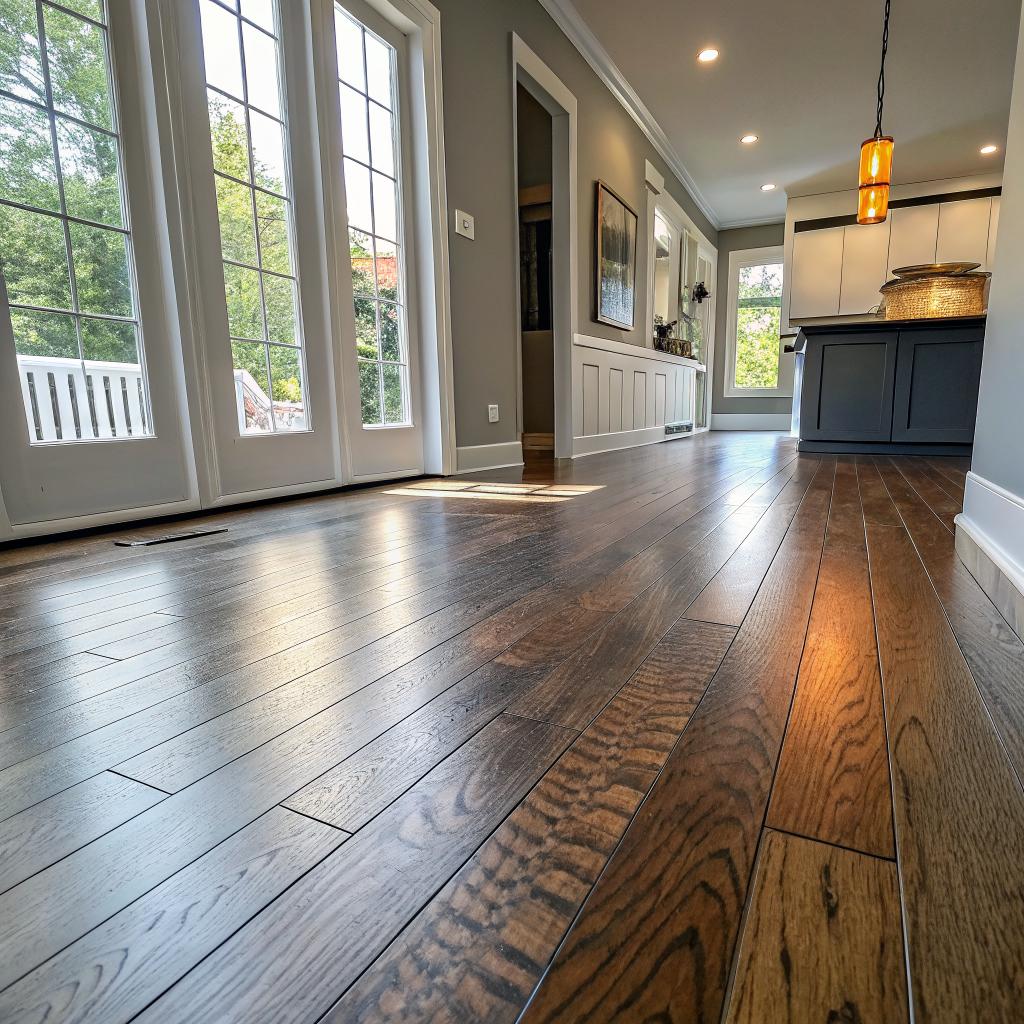
So, you are trying to protect your new floors from plumbing leaks and mishaps. The short answer is that you protect them by controlling water at the source, using the right safeguards under and around fixtures, and scheduling regular plumbing checks before even a small drip has a chance to spread across your flooring.
Most people think about floor care in terms of cleaning products, pads under furniture, maybe a no-shoes rule. That helps, but if a supply line pops behind your fridge or a toilet seal fails, the finish on your new floors will not matter. Water moves fast, and it always looks for the lowest spot. That is usually your flooring. So the real floor protection plan starts with your plumbing system, not your mop.
Here are some things you need to know before we dig into details:
- Water damage usually starts as a small, slow problem, not a dramatic pipe burst.
- Most of the worst floor damage comes from fixtures on the main floor and upstairs, not the basement.
- Simple upgrades like shutoff valves, drip trays, and supply line changes can save thousands in flooring repairs.
- Plumbing and flooring should be planned together during a remodel, not treated as separate projects.
- Routine inspections matter more than expensive materials when it comes to long term protection.
If you already installed your floors, you are not too late. You just have to work a bit smarter and accept that some parts of the plan will be preventive and a little boring. That is fine. Boring is better than ripping up warped boards or swollen planks.
Why new floors are at extra risk from plumbing problems
New flooring gives people a sense of safety. It looks perfect, so it feels tough. In reality, fresh floors are often more at risk for two reasons:
- You notice damage more easily because everything is still clean and unmarked.
- The transitions, caulking, and seals around plumbing fixtures might still be settling.
If you just finished a renovation, there may have been plumbing changes. New dishwasher line, moved laundry, new bathroom layout, that kind of thing. Any new connection is a possible weak spot.
I remember a friend who had a beautiful new engineered wood floor installed in a kitchen. The plumber did great work, but the fridge supply line fitting did not get one last snug turn after pressure testing. Nobody noticed. For about three weeks, a very small drip soaked the subfloor. By the time they saw a tiny bump in the finish, about 20 square feet were ruined.
That type of leak is more common than the dramatic ceiling collapse. Slow, quiet, and hidden until it touches your visible flooring.
If water reaches the visible floor surface, it has almost always been traveling out of sight for longer than you think.
So the focus should be on the places where plumbing and flooring meet:
- Kitchens: fridge, sink, dishwasher, ice maker, instant hot water taps
- Bathrooms: toilet, sink, tub, shower, bidet, floor drains
- Laundry: washer, utility sink, floor drains
- Mechanical areas: water heater, boiler, softener, filtration system
Those zones control the fate of your flooring, especially if you used wood, laminate, or any water-sensitive material.
How different flooring types react to water
Not all floors fail in the same way when plumbing goes wrong. Knowing how your floor behaves will change how serious you need to be in each area.
| Floor type | Short splash | Slow leak | Major flood | Typical result |
|---|---|---|---|---|
| Solid hardwood | Usually fine if wiped quickly | Boards cup or crown, finish turns dull | Severe warping, may never fully flatten | Often needs board replacement or full refinish |
| Engineered wood | Usually fine if dried quickly | Edges swell, veneer may lift | Layers separate, permanent damage | Sections often must be replaced |
| Laminate | Edges chip or bubble if water seeps into gaps | Core swells, boards buckle | Widespread buckling and gaps | Usually total replacement in affected area |
| Luxury vinyl plank/tile (LVP/LVT) | Normally fine | Subfloor may grow mold if moisture trapped | Can float or lift; may need to be removed to dry subfloor | Floor may survive, but subfloor repairs may be needed |
| Tile (ceramic/porcelain) | No problem for the tile itself | Water penetrates grout, affects subfloor | Subfloor swelling can crack tiles | Tile ok, but substrate and grout might need repair |
| Sheet vinyl | Usually ok | Water can run under the sheet unnoticed | Moisture trapped under large areas | Mold or odor under flooring, edges may curl |
So even with “water friendly” floor types like tile or vinyl, you still care about plumbing control. The surface may look fine, while the layers below quietly fall apart.
Your floor does not need to look ruined to be ruined. The hidden layers often fail first.
Simple plumbing checks right after a flooring project
If your remodel just wrapped up, this is the best time to do a few very direct checks. You do not need a toolkit full of fancy gadgets. You mainly need your hands, eyes, and a bit of patience.
1. Test every shutoff valve slowly
Go fixture by fixture:
- Sink supply valves under every bathroom and kitchen sink
- Toilet shutoff valves
- Washer shutoff valves
- Fridge or ice maker valves
- Dishwasher shutoff (often under the kitchen sink)
Turn each valve off, then back on. Do it slowly. While you do this, feel the connection points with your fingers.
You are checking for:
- Loose packing nuts that weep slightly when moved
- Cracked old valves that were not replaced during the remodel
- Any sign of green or white mineral buildup
A valve that leaks a few drops when you touch it is not “fine”. It is a warning.
If a valve leaks when you move it, it will probably leak on its own sooner than you think.
If you run into any valve that does not fully shut off, make a note. That is a repair to schedule, not something to ignore. Bathroom and kitchen floors near those valves are at risk.
2. Look under every sink with a flashlight
Yes, you can just use your phone. Take a few seconds on each cabinet:
- Check the bottom panel for swelling or stains.
- Look at P-traps and joints for any crusty buildup.
- Run the faucet for 30 seconds, then look again.
Cabinet bottom damage often appears before the floor itself shows anything. That is your early warning layer.
3. Watch the toilet base closely
New floors often mean the toilet was pulled and reset. That means a new wax ring or seal. If the height of the flange and the height of the new floor do not agree, the seal can be risky.
After a few regular flushes:
- Check for any dampness where the toilet meets the floor.
- Look for discoloration in the grout or caulk line around the base.
- Make sure the toilet does not rock even a little bit when you sit or push gently.
If there is movement, the wax ring is under stress. You might not see leaks yet, but they are likely coming, and they rarely stay just at the bathroom area. They can move under tub platforms and into adjacent rooms.
Spartan-style habits that protect floors long term
I know “Spartan” sounds a bit dramatic, but the idea is simple: simple rules, followed consistently, beat big renovations later. You do not need to be a plumbing expert for this.
Install metal braided supply lines and replace the old ones
If your new floors are near any of these:
- Toilets
- Bathroom sinks
- Kitchen sinks
- Laundry washers
- Fridges with ice makers
Then the flexible lines feeding them are some of the weakest links in the house. Older rubber or plastic lines harden and split. That is one of the main sources of surprise water damage.
Ask your plumber, or do it yourself carefully, to switch them to good quality stainless steel braided lines. They are not perfect, but they are far better.
As a rule of thumb:
- Recheck these lines every year when you change smoke detector batteries.
- Replace them about every 5 to 7 years, even if they “look fine”.
Once you install new flooring, that 20 or 30 dollar set of lines becomes as valuable as a decent insurance policy.
Add drip trays and pans where it makes sense
In some homes, people think drip pans look cheap. I disagree. If your washer, water heater, or a filtration system sits above finished flooring, a quality pan with a drain or alarm makes a lot of sense.
Think about:
- Washer in a second floor laundry room
- Water heater on a platform with finished space below
- Condensate lines dropping water near wood framed floors
You can also use smaller plastic trays under fridge connections or under P-traps in sink cabinets. These are not fancy. They just collect the first little leak, so you see it before it reaches the floor.
Use water alarms near your most fragile flooring
Battery water alarms are simple. They sit on the floor, and they scream if their contacts get wet. You can place them:
- Behind the toilet, close to the wall
- Under the sink, right under the P-trap
- Behind the washer
- Near the fridge line
They are cheap, loud, and honestly a bit annoying, which is what you want in an emergency. Tested once a year, they can be the reason a 5 minute mop session replaces a 5 thousand dollar floor repair.
Planning plumbing and flooring together during a remodel
If you are still in the planning phase, this is where you have the most control. Many people just hand flooring plans to the plumber and hope for the best. I think that is a mistake.
Here are some simple ways to match plumbing work to new floors in a smarter way.
Raise or adjust flanges and drains before flooring goes in
Toilet flanges should sit at the correct height in relation to the finished floor. Not too low, not sunken, not buried in layers of wax. If the plumber just “makes it work” with extra wax rings because the floor came up a bit, you might be fine for a while, but it is not ideal.
Best timing:
- Subfloor repaired and solid.
- Plumber sets the flange and checks drain positions.
- Flooring installer knows the exact finished thickness and works to that level.
Similar thinking applies around:
- Shower curbs
- Linear drains
- Floor slopes in walk in showers
Water should confidently go to a drain, not wander across your beautiful tiles, searching for grout lines to soak into.
Use the right subfloor prep for the floor and the water risk
Not every subfloor is equal. If you are laying hardwood near a kitchen sink or fridge, ask your contractor about:
- High quality plywood, not cheap OSB near wet areas
- Moisture resistant underlayment membranes in bathrooms
- Proper backer board under tile around tubs and showers
If the flooring installer says “we always do it this way”, that may be fine, but you can still ask a follow up question: “How does that handle plumbing leaks or splashes?”
Floor pros sometimes focus on leveling and appearance. Plumbers focus on function and code. You are the one who has to care about how both interact.
Pick materials according to room, not just style
You might love the look of real wood, and I get that. But putting natural hardwood in a kids bathroom that sees daily tub splashes and toothpaste blobs is asking for stress.
Rough rule:
- Highest water risk rooms: bathrooms, laundry, entry from garage, kitchen sink zone
- Lower water risk: bedrooms, living rooms, offices, hallways away from bathrooms
Use that to guide:
- Tile or high grade vinyl in bathrooms and laundry
- Engineered wood instead of solid in kitchens, if you want a wood look
- Real hardwood in dry rooms where leaks are rare
You do not need to follow this perfectly, but ignoring it entirely can make plumbing issues much more painful.
Daily and weekly habits that quietly protect your floors
You do not need a big check list, but a few habits help a lot.
Watch for “tiny” signs of moisture
When you clean or walk around the house, keep a low level of awareness for:
- Soft spots or spongy areas in wood or laminate
- Grout lines near fixtures that stay dark longer than others
- Slight musty smell near cabinets, vanities, or laundry
- Caulk that has pulled away from tubs, showers, or bases
Most people notice something small months before a big problem, but they tell themselves it is nothing. That delay can turn a hundred dollar plumbing fix into a huge flooring job.
Do a quick monthly “water walk”
Pick a day, maybe the first weekend each month. Take ten minutes:
- Look under every sink with a light.
- Check around each toilet base.
- Stand in front of the washer while it fills and starts a cycle.
- Look behind the fridge if you can, at least twice a year.
If that sounds repetitive, it is. But new floors raise the stakes, so a simple habit is worth it.
Teach the household emergency patterns
This part gets ignored, but it matters. Every adult, and even older kids, should know:
- Where the main water shutoff is.
- How to turn individual fixture valves.
- What a water alarm sounds like.
When a supply line fails, you have minutes before water finds its way through transitions, under baseboards, and between planks. Quick shutoff can be the difference between some fans and dehumidifiers, or full replacement of flooring.
How a pro plumber can protect your floors before there is a problem
Some floor friendly work really requires a plumber who knows what they are looking at. If you are in an area covered by a local company like Spartan Plumbing, you can schedule a preventive visit and say very clearly: “My priority is protecting my new floors from water damage.”
That sets a clear goal. A good plumber will then look at details through that lens.
Here are some projects that make sense when floors are new or about to be installed.
Install or upgrade a main water shutoff and maybe smart valves
If your main shuts off easily, that is already a win. If it is stuck or very old, replacement is worth serious thought. Some owners also choose:
- Automatic shutoff valves with moisture sensors.
- Whole house leak detection tied to Wi Fi systems.
These tools do not remove the need for good habits, but they can cut off water quickly if something goes wrong while you are away from home.
Add isolation valves for key areas
Sometimes, the best floor protection is the ability to isolate one area fast. For example:
- A valve that feeds just the laundry room.
- A separate valve for the kitchen sink, dishwasher, and fridge line zone.
- Zones for upstairs bathrooms.
That way you can stop water to the trouble spot without shutting down the whole house. It also encourages faster reaction, because you are not disrupting every other room.
Check old drain lines near critical floors
Water supply lines are not the only threat. Old drain lines under tubs, showers, and kitchen sinks can seep gently for years.
Ask for:
- A camera inspection for suspect branches if your home is older.
- Replacement of corroded traps and tailpieces.
- Updated drain connections for dishwashers and disposers.
A slow drain leak above a wood floor or in a wall cavity can be worse than a noticeable, quick burst. It quietly ruins subfloor and framing, then suddenly shows up as a floor that no longer sits tight.
Room by room plumbing tips focused on floor safety
Every room has its own patterns. Instead of treating them all the same, look at each zone and what usually goes wrong there.
Kitchen
Biggest threats:
- Sink supply lines and faucet connections
- Dishwasher leaks
- Fridge ice maker lines
- RO or filtered water systems under the sink
Helpful habits and upgrades:
- Place a water alarm at the back of the sink cabinet.
- Use a shallow plastic mat or tray under cleaners and bottles you store there.
- Ask your plumber to use a rigid copper or braided stainless line for the fridge, not cheap plastic.
- Run the dishwasher when you are awake, not overnight or when you leave the house.
If you have wood or laminate in the kitchen, be extra firm about wiping up splashes, especially near the dishwasher. Edges there take a lot of abuse, and once they swell, they rarely go back to perfect.
Bathroom
Biggest threats:
- Toilet seal failure
- Overflows from clogged toilets
- Leaks around tub or shower doors and curtains
- Sink and vanity drain leaks
Protective steps:
- Use high quality caulk at tub and shower joints, checked once per year.
- Place floor mats near the tub that allow air to dry the floor, not mats that trap water underneath.
- Consider a one piece shower base instead of tiled floor if you worry about grout maintenance.
- Use a good quality wax ring or wax free seal when toilets are set, at the right flange height.
If your bathroom has wood or laminate, I will be blunt: treat water splashes like little emergencies. That floor was not made for daily soaking.
Laundry
Biggest threats:
- Washer hose failure
- Drain clogs causing backup at the standpipe
- Leaky utility sink connections
Protection ideas:
- Metal braided hoses only, replaced every 5 to 7 years.
- A solid drain pan under the washer, tied to a floor drain if possible.
- Shutoff valves that are easy to reach, and can be turned off between long trips.
- A water alarm behind or under the washer.
Try to avoid stacking boxes or storage that hides the floor around the washer completely. Hidden spots tend to be where slow leaks grow.
Water heater and mechanical areas
Biggest threats:
- Tank leaks near the end of life
- Relief valve discharges
- Condensate from high efficiency systems
Protection steps:
- Use a drain pan under water heaters that sits on or above finished floors.
- Make sure the tank drain and TPR valve have a safe, visible discharge path.
- Check condensate pumps and lines yearly to be sure they are not clogged.
If your mechanical room is near finished living space, leaks there can migrate under walls, so a water alarm and visible drain connections help a lot.
How to react fast when a leak does reach your floors
No matter how careful you are, you might someday step on a damp plank or see a puddle where it should not be. What you do in the next hour matters.
Step 1: Stop the water
This sounds obvious, but people often start mopping while the leak is still active. Instead:
- Find and close the nearest shutoff valve for that fixture.
- If that fails or you cannot find it quickly, close the main water valve to the house.
- Open a faucet on a lower level to relieve pressure if needed.
Floor protection starts with limiting how much water arrives, not just how fast you can dry it.
Step 2: Protect sensitive flooring edges and seams
Pay attention to:
- Where two flooring materials meet, such as tile to wood transitions.
- Baseboard bottoms along the wet area.
- Door thresholds.
Use towels to create small barriers at these lines. Even a folded towel along a transition can slow the spread while you work on the main puddle.
Step 3: Dry aggressively, not casually
If you have fans or a dehumidifier, use them. Even for small spills, especially on wood or laminate:
- Move rugs and mats so air reaches the floor.
- Wipe in the direction of seams so you do not push water into joints.
- Keep ventilation going for hours, not just until it looks dry.
Watch the area over the next few days. If gaps appear, boards cup, or you notice odor, call someone familiar with water damage and flooring. Early help can sometimes save the boards rather than replace them.
Flooring choices that forgive more plumbing mistakes
Sometimes, the honest choice is to pick floors that forgive small errors. Not every home needs this, but in some cases it is smart:
- Busy families with kids splashing and leaving wet towels around.
- Rental units where you cannot control habits as well.
- Homes with very old plumbing where upgrades are slow and staged.
More forgiving materials near plumbing:
- Porcelain or ceramic tile with good grout and sealant care.
- High quality LVP/LVT rated for wet areas.
- Sheet vinyl in laundry and utility rooms.
Less forgiving near plumbing:
- Solid hardwood.
- Cheap laminate with thin wear layers.
- Soft wood species finished with thin coatings.
You can still combine these nicely. Tile in bathrooms and laundry, engineered or hardwood in halls and bedrooms. The key is thinking about where plumbing lives and how often that room actually sees water on the floor.
Common myths that put new floors at risk
Some ideas sound reasonable but are not quite right when your goal is floor protection.
“My floors are waterproof, so I do not need to worry”
Many modern products claim to be “waterproof”. Usually they mean the material itself does not swell easily. What the box does not always highlight:
- The joints can still let water through to the subfloor.
- Water can still travel under the material from a wall or threshold.
- Mold and mildew can still grow below a “waterproof” surface.
So yes, waterproof materials are helpful, but they are not a free pass to ignore plumbing care.
“Small drips are fine as long as I wipe them up”
If a faucet, valve, or trap drips at all, that means something is worn, loose, or cracked. You might catch the visible water, but:
- Water can be running behind or around what you see.
- Drips often get worse, not better, over time.
- Each drip is a chance for water to migrate into tiny cracks and gaps.
Treat every repeated drip as a repair request, even if the floor looks dry.
“My contractor checked everything after the remodel, so I am set”
Contractors test systems at the time of installation under short term conditions. They do not see what happens:
- After months of thermal expansion and contraction.
- When valves are bumped, cabinets loaded, or appliances moved.
- Once the family lives hard in the space.
You still need your own routine checks. Think of the contractor test as “it works today”, not a permanent guarantee.
Putting it all together without overcomplicating your life
If this all sounds like a lot, it is really just a set of habits and a few one time upgrades.
Here is a simple way to think about it:
- Before and right after new floors: get valves, supply lines, and drains checked, and fix anything even slightly questionable.
- Every month: quick water walk, looking under sinks and around toilets and machines.
- Every few years: replace flexible supply lines and review aging fixtures near your nicest flooring.
- During any remodel: make plumbing and flooring decisions together, not as separate topics.
You do not need to obsess over every pipe in the house. Focus on the ones that live above, below, or next to your new floors.
Common questions about plumbing and new floors
Question: If I can only do one upgrade to protect my floors, what should it be?
Answer: Replace all old flexible supply lines near finished flooring with high quality braided stainless lines, and make sure each has a working shutoff valve. Many of the worst floods start with those small hoses.
Question: How often should I have a plumber inspect things if my floors are new?
Answer: A full plumbing check every few years is usually enough for a typical home, but if your house is older or you already had leaks in the past, every one to two years near high risk rooms is sensible. Combine it with any other work you are doing to save trips.
Question: If water gets under my laminate or wood, can fans alone fix it?
Answer: Fans help, but if water reached the subfloor or soaked the cores, you might need to pull boards to dry underneath. Leaving trapped moisture can cause warping, mold, and odor later. A floor or restoration pro can tell you quickly if removal is needed.
Question: Is tile always the safest choice around plumbing?
Answer: Tile is very strong at the surface, but it depends on grout and what is under it. Poorly waterproofed bases or bad slope to drains can still put subfloor and framing at risk. Tile helps, but it does not replace good plumbing and proper prep work.
What part of your home worries you most when you think about a possible plumbing leak on your new floors?