
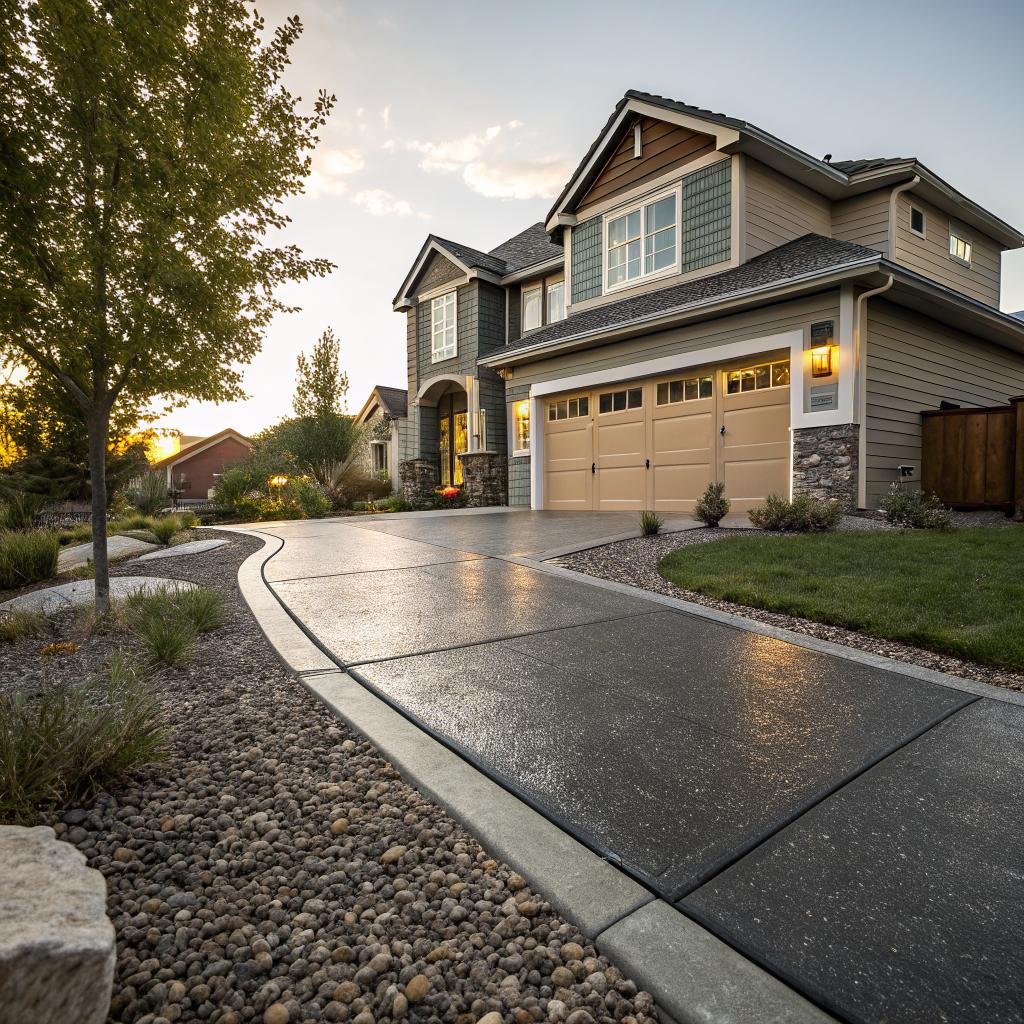
So, you are trying to figure out how smart home curb appeal starts with asphalt in Denver and how that connects to your renovation and flooring plans. The short answer is that your driveway and front approach are the “first floor” of your property, and if the asphalt is rough, cracked, or badly laid out, your expensive smart gadgets and new interior floors will never feel quite right.
Your driveway and front walk set the tone before anyone reaches the front door. They also decide how people move, where they park, how deliveries arrive, and how safe those steps from the car to the house feel in winter. If you are investing in smart locks, cameras, or high-end flooring, it makes a lot of sense to think about the surface that leads to them. In Denver, where freeze and thaw cycles are rough on surfaces, good asphalt is not just a visual upgrade. It is a practical system that supports everything else you are doing to your home.
- Your driveway and front approach are part of your home’s “flooring” experience.
- Good asphalt layout helps your smart home features work better.
- Denver’s climate is hard on pavement, so materials and prep matter a lot.
- Maintenance is cheaper than full replacement if you start early enough.
- Lighting, drainage, and snow management should be planned with the asphalt, not after.
- What you do outside can raise or drag down the value of the flooring work you do inside.
If you just wanted the quick version, that is it. The rest of this is for you if you like to think through details and avoid expensive mistakes.
How asphalt connects to smart home curb appeal
Let me start with a blunt thought. A cracked, patchy driveway makes a $4,000 smart front door feel like an app taped to a tired house.
That sounds harsh, but it is often true.
When people talk about curb appeal, they usually jump to paint, plants, lights, and maybe a new door. Those matter. But the largest “surface” that visitors see and actually use is usually the driveway and the walk up to the house.
If you live in Denver, or anywhere with similar winters, asphalt is one of the more practical ways to handle that surface. Concrete can look sharp, but when it cracks wide because of freeze and thaw, fixing it is not fun. Asphalt has its own problems, but it can be resurfaced and repaired more easily if the base is solid.
So when you hear “smart home curb appeal,” it is not only about tech. It is about how every step from the street to your front door feels logical, clean, and safe, and how your tech fits into that flow.
Your driveway is the first “room” people experience, long before they see your new hardwood or tile.
If you think of it this way, asphalt is not just pavement. It is the exterior equivalent of your floors.
Why Denver homes lean on asphalt
Let us talk about Denver for a bit. Dry air, strong sun, wide temperature swings, and those winter freeze cycles. You probably know some of this already if you live there, but it affects how you should think about your driveway.
Climate stress on surfaces
Asphalt has some flex. It expands and contracts more gently than a big concrete slab. That does not mean it never cracks, but small cracks are easier to seal, and you can resurface instead of tearing everything out.
What wears asphalt down in Denver:
- Freeze and thaw cycles that push water into tiny gaps
- UV exposure that makes the surface dry and brittle
- Snow melt chemicals and snowplow scraping
- Heavy vehicles sitting in the same spots
A lot of this sounds like a boring maintenance problem. But if you think about curb appeal and smart home features, it is also a design problem.
Linking to your renovation and flooring projects
If you are planning interior floors, you probably think about:
- Traffic patterns
- Durability and cleaning
- Transitions between rooms
- Risk of water near entries
The same ideas apply outside.
Where do people step when they exit their car? Where do delivery drivers stop? Is there a clear, dry path from asphalt to front door, and is your smart lock or video doorbell placed in a way that matches that path?
If people have to walk through mud or cracked patches to reach your smart door, your design is working against itself.
This is where thinking about asphalt early, not as an afterthought, helps you avoid weird compromises later.
Designing your driveway like a “floor plan”
It may sound odd, but a driveway can have a layout problem, just like a badly designed kitchen.
Try answering a few questions:
- Where do you want cars to stop so doors open onto clean, level ground?
- Do you have kids or older relatives who need a shorter or flatter path?
- Where does water currently collect after rain or snowmelt?
- Where will your exterior lights and cameras have clear views?
Different driveway layouts and curb appeal
Here is a simple table that compares a few common driveway types and how they affect curb appeal and practical use.
| Driveway type | Look/curb appeal | Practical notes for smart homes |
|---|---|---|
| Straight single-lane | Simple, clean, draws the eye straight to the house | Easy to light and cover with cameras, but tight if you have multiple cars |
| Widened pad near garage | Makes the front feel more open, good for families | Gives more room for safe entry/exit, better for motion sensors and smart lighting |
| Curved driveway | Softer look, can feel more “high end” | Needs more thought on light placement and camera angles, can hide dark spots |
| Driveway with parking bay | Looks organized, avoids front-yard chaos | Nice for guests and deliveries, easy to guide people to a smart entry path |
If you are already mapping out new flooring inside, it can help to sketch your driveway and front walk on the same sheet. Let the outside flow echo the inside.
The link between asphalt and indoor flooring
Here is where many people underestimate the connection.
If your asphalt is rutted or slopes oddly, people walk around puddles and snow piles. That usually means they track more water, salt, and grit across your threshold and onto your floors.
Over time, that can scratch hardwood, stain tile grout, and wear out carpets near the entrance.
Good asphalt and a logical front path protect your flooring almost as much as a good entry rug.
Some simple examples:
- If your driveway is slightly crowned and drains away from the door, less water reaches your threshold.
- If you have a small landing area in front of the door with flat, stable asphalt, people can pause, wipe shoes, and manage bags.
- If there is a clear visual path from asphalt to porch lighting, guests are less likely to drag dirt across your grass or garden.
If you are installing new interior flooring, think about timing. It often makes sense to deal with asphalt and exterior grading before you put in floors that cost a lot more to fix.
Bringing smart tech into the driveway
Smart home talk often stays inside. Locks, thermostats, cameras, sensors. But your driveway is part of that system too.
Lighting and motion
Motion-based lighting is one of the easiest smart upgrades. It also makes asphalt look better at night.
Here is how your driveway surface affects it:
- Flat, clean asphalt reflects light more evenly, so you need fewer fixtures.
- Well-defined edges help you aim lights properly, so you avoid glare into windows.
- Clear car paths help you place motion sensors where they pick up cars and people, not swaying bushes.
If you plan smart lighting, talk through fixture placement at the same time as asphalt layout. Running conduit or wiring later over a finished driveway is just not fun.
Cameras and video systems
Good camera placement is not only about angles. It is about what people actually do when they arrive.
Think through:
- Where people park most often
- Where packages are most likely to be dropped
- Which path is safest in winter
If you expect packages at the front door, it might be useful to have a wider, smooth asphalt pad leading to one clear entry path. That gives your camera a predictable area to monitor.
If your driveway design is random, your cameras will have a harder job.
Smart garages and gates
If you are adding a smart garage door opener or even a gate, the height and slope of your asphalt matter a lot. A bad approach angle can cause:
- Cars scraping on the transition
- Water pooling under the door line
- Sensors failing because of movement or misalignment
Get the grade and transition right at the asphalt stage, then layer the tech on top.
Why asphalt quality matters more than it looks
You might be tempted to think “as long as it is black and smooth the day it is installed, I am fine.” I do not agree with that, especially not in Denver.
Several pieces affect long term curb appeal and how your driveway feels when you walk or drive on it.
Base preparation
Good asphalt starts down in the base. If the base is thin or poorly compacted, you get:
- Depressions where vehicles sit
- Cracks that follow weak spots
- Frost heave problems in winter
You do not see the base, so this is where a lot of shortcuts hide. If a price seems too low, it often means time or material in the base is missing.
Thickness and compaction
Two ideas matter here:
- How thick the asphalt layer is
- How well it was compacted while hot
If it is too thin or not well compacted, the surface loses its shape faster. That shows up as ruts, cracks, and areas where water stands.
For curb appeal, that means your driveway ages fast and drags the look of your house down, even if you upgraded everything else.
Edges and joints
Edges are where asphalt ends and grass, mulch, or concrete starts. Joints are where new asphalt meets old or meets a sidewalk, garage slab, or street.
These spots are where:
- Water sneaks in
- Cracks form first
- Weeds try to take over
Clean, straight edges with proper support look better and hold up longer. The difference is very visible when you stand back and look at the house from the street.
Maintenance planning: repair vs replace
Most homeowners wait too long on driveway work. They see a few cracks, maybe a stain or a rough spot, and they ignore it until the surface looks tired. By then, patching looks patchy, and the only real fix is full replacement.
I think it helps to think of asphalt like wood flooring. Sanding and refinishing at the right time keeps it looking good. Let it go too long, and you are talking board replacement.
When repair is still a good choice
Repair work can handle:
- Small to medium cracks that are still mostly tight
- Localized potholes or broken edges
- Early surface wear from sun and traffic
If the base is still solid, repairing and then sealcoating can buy you many more years and keep curb appeal high without a full tear out.
When replacement makes more sense
You might need to start fresh if you see:
- Large areas of “alligator” cracking that look like a web
- Obvious sinking or rising sections
- Drainage failures that send water toward your house
- Multiple layers of old patching that look messy
Full replacement is not cheap, so it is understandable to resist it. But if the base is failing, patching is like sticking tape on a broken tile floor. You are not really fixing the problem, and the look will never fully satisfy you.
Sealcoating as part of your curb appeal routine
You might already know about sealcoating, but many people see it as optional, like waxing a car. I would put it closer to regular cleaning and resealing for hardwood.
Sealcoating:
- Protects against UV damage and water
- Gives a uniform dark color that boosts curb appeal
- Makes sweeping and snow removal smoother
It does not fix structural problems, though. If the asphalt underneath is weak, you need repair first.
For a home focused on renovation and finishes, sealcoating can be that little exterior step that makes everything look “finished” at the same level as your remodeled interior.
Connecting asphalt to walkways and entries
The transition from asphalt to your porch or front steps matters for both look and safety.
Trip points and level changes
A small lip at the transition is enough to cause a stumble, especially in low light or for older visitors. If you are already paying for a smart lock or a new front door, it makes sense to make sure the ground under that area is:
- Level and solid
- Not crumbling or cracked
- Set up to shed water away from the door
If you are redoing your porch flooring or front steps, plan the asphalt height and shape at the same time. You do not want to fix one only to discover the other now feels off.
Material pairings
Asphalt is not the only surface you see from the street. You might have:
- Concrete walks or steps
- Pavers near the front door
- Stone or tile on a porch
These can look great with asphalt if the lines are clean and the transitions are thought through.
Some simple ideas:
- Keep joint lines straight and deliberate where materials meet.
- Avoid tiny slivers of one material between others.
- Use consistent border widths to make the design look intentional.
This is similar to how you manage tile-to-wood or wood-to-carpet transitions inside.
Asphalt and drainage: protecting your home and floors
Poor drainage is one of the most expensive “hidden” problems around a house. It affects:
- Foundation health
- Basement moisture
- Indoor flooring near exterior walls
Your asphalt driveway can either help push water away or send it toward your house.
A simple check:
- After a decent rain, walk your driveway and look for where water stands.
- Watch how water moves near the garage and entry steps.
- Look in the basement or lower-level floors for any moisture signs in those areas.
If you see problems, a thoughtful asphalt project can correct the slope, add drains, and protect both curb appeal and interior investments.
How to talk to a contractor about smart curb appeal
You may not be doing the asphalt work yourself. That is fine, but how you talk to a contractor shapes the result.
I am going to be a bit blunt again here. If you only say “I want a new driveway,” you are likely to get the most generic version of that.
Try talking about:
- How you use the space daily
- Where you expect guests to park and walk
- What smart features you already have or plan to add
- Any interior renovations you are timing with this work
Ask specific questions:
- How will the new driveway slope affect drainage around my house?
- What are you doing to prepare the base, and how thick will it be?
- How thick will the asphalt layer be in traffic areas?
- How will you handle the transition to my garage slab and front walk?
If you are in Denver, working with someone familiar with local conditions is pretty helpful. For example, a team like asphalt Denver knows how freeze and thaw affect driveways and how to plan around that. That does not mean they are the only option, but local experience with your soil and climate is worth something.
Common mistakes homeowners make with asphalt and curb appeal
Let me run through a few things I see or hear about more often than I would like.
1. Waiting too long to fix small problems
Hairline cracks can be sealed. Small potholes can be patched neatly. Once damage spreads, any fix looks rougher and costs more.
If you would not ignore a leak on your hardwood floor, do not ignore cracks in your driveway.
2. Focusing only on color and smoothness on day one
Brand new asphalt almost always looks good. The real questions are:
- Will it hold its shape next winter?
- Will water drain where it should?
- Will it still complement your house in five years?
Ask about base prep, thickness, and methods, not just price and schedule.
3. Ignoring the connection to entry flooring
If you are putting in new floors near the front door, protect that investment by checking:
- Do people track grit in because of rough asphalt?
- Is there a low spot that always sends water toward the threshold?
- Do you need a better landing area outside?
A bit of exterior grading and asphalt work now can save a lot of repair later.
4. Treating lighting and cameras as an afterthought
It is very common to install asphalt, then later try to add tech, only to find you wish you had:
- A conduit under the driveway for wires
- An extra flat area for a light post or camera
- Better alignment between parking spots and camera views
Talking through this early lets you set up a cleaner, more stable system.
Practical steps if you are planning a project right now
If you are serious about smart home upgrades and curb appeal, here is a simple order that tends to work well.
Step 1: Walk the site with fresh eyes
Walk from street to door at different times:
- Daytime when the sun is bright
- At dusk when many people arrive home
- After rain or snow when problems show
Notice:
- Where you step without thinking
- Where water stands
- Any spots that feel tight, awkward, or unsafe
Step 2: Decide on your “flow” before materials
Sketch a simple layout of:
- Car positions
- Walking paths
- Entry points
Only after that, think about thickness, edging, and finishes for the asphalt.
Step 3: Coordinate with interior work
If you are replacing floors, doors, or front steps:
- Talk to both your flooring contractor and your asphalt contractor.
- Share drawings and photos so each knows what the other is doing.
- Plan heights and transitions together.
This avoids weird lips at doorways or mismatched levels that can feel cheap.
Step 4: Plan maintenance from the start
Instead of waiting until something looks bad, set a simple schedule:
- Yearly inspection for cracks and drainage issues
- Crack sealing as soon as small gaps show
- Sealcoating on a fixed cycle, based on local advice
This rhythm keeps the driveway looking good and supports the overall feel of your smart, updated home.
Questions homeowners often ask about asphalt and curb appeal
Q: Is asphalt always better than concrete for curb appeal in Denver?
A: No, not always. Concrete can look sharp and can be colored or stamped. It suits some designs well. Asphalt tends to handle freeze and thaw with fewer dramatic cracks and is easier to repair and refresh visually. For many regular homes, asphalt gives a good balance of look, practical function, and repair options. If you want complex patterns, concrete or pavers might fit better, but you need to weigh future repair hassle.
Q: How often should I reseal my asphalt driveway to keep it looking good?
A: That depends on weather, traffic, and quality of the first job, but many Denver homeowners end up near the 2 to 4 year range. Too often can build up thick, flaky layers, so chasing a constant “wet black” look is not always wise. Better to focus on actual surface condition: fading, minor wear, and small cracks are signs it is time to reseal or at least inspect closely.
Q: Can I handle small asphalt repairs myself to save money?
A: For tiny cracks and surface holes, yes, some DIY products help slow down damage. Just be honest about your skill and the scope. If the base is failing or you see patterns of cracking across large areas, home patch kits are a bandage at best. In those cases, a proper repair or replacement plan is usually cheaper long term and looks better from the street.
Q: If I only have budget for one thing this year, should I focus on interior floors or the driveway?
A: It depends on your priorities and existing condition. If the driveway is safe, drains reasonably well, and only looks a bit tired, you might get more daily joy from new interior floors. If the driveway has major cracks, puddles near the house, or clear trip risks, I would personally fix that first. It protects the structure, supports future smart tech, and keeps people safe on your property. Then polish the inside.
Q: How much does a good driveway really affect resale value?
A: Exact numbers are hard to pin down, but real estate agents often say the driveway and front walk shape first impressions more than many owners think. A house with updated interiors and a rough driveway tends to feel “half done” to buyers. It may not ruin a sale, but it can pull offers down or make buyers look for problems. A clean, well-laid asphalt driveway sends a quiet signal that the home has been cared for, inside and out.