
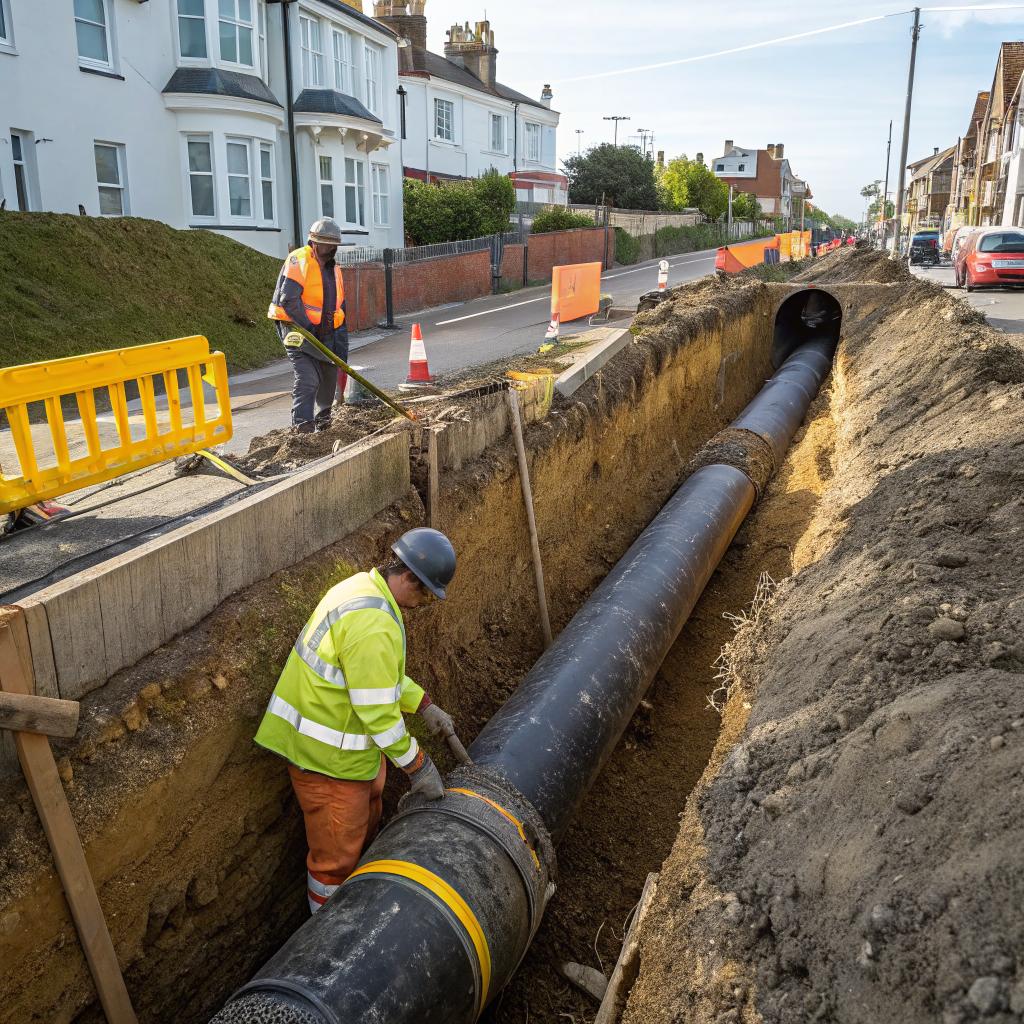
So, you are trying to handle sewer line installation in Brighton as part of a remodel and want to avoid wrecking your new floors and finishes. The short answer is: involve a local sewer pro early, plan the pipe route before any flooring work, confirm depths and permits with the city, and do all heavy underground and inspection work before you care about tile, hardwood, or that new basement layout.
You are basically trying to tie together two worlds that do not like each other very much: dirty underground plumbing and clean finished interiors. If the sewer work is not planned with the remodel, you can end up breaking new concrete, lifting new floors, and fighting with inspectors when you should be installing cabinets. If you plan it as part of the build sequence, you can protect your finishes, keep the budget under control, and still get the layout you want.
Here are a few things you need to know before you touch a single drain or flooring plank:
- Brighton has local rules and depths for sewer and septic; do not guess.
- All underground work should come before flooring and most framing changes.
- Slope and pipe size are not flexible “preferences”. They are math and code.
- Every new bathroom or laundry affects venting and cleanout locations.
- Existing concrete slabs often hide bad or shallow pipes that do not match your plans.
- Camera inspections and sketches save more money than they cost.
- Think about future access and repairs, not just what looks good right now.
Getting clear on the scope before you start ripping floors
So, what are you actually doing? Are you:
- Adding a bathroom in a basement or extension
- Moving a kitchen sink or island
- Converting a garage or unfinished area to living space
- Upgrading an old cast iron or clay pipe system
Each of these hits the sewer differently.
Adding a basement bathroom usually means breaking concrete, trenching, and tying into an existing main under the slab or near a foundation wall. Moving a kitchen sink affects venting and can force you to rework branch lines through walls where you might already be planning drywall and flooring changes.
Before you fall in love with a flooring layout, you want to know where the pipe can actually run. I know that sounds obvious, but on a lot of remodels people start with flooring samples, wall colors, and Pinterest boards, then they learn the main sewer exits the house in the one spot they wanted to keep untouched.
Why sewer planning matters for flooring and interior work
If you get the sewer wrong, you pay for the same square footage twice. First when you install flooring, second when you tear it out to fix the grade or replace a broken section.
Plan sewer line work as if your new floors are the most fragile thing in your house, because once they are in, any trench will feel like a disaster.
Think through this chain:
- Trenches in slabs change floor height.
- Floor height changes stair riser heights and trim alignment.
- Stair and trim changes affect code compliance and visual lines in the space.
So sewer work is not just about drains. It hits layout, transitions between rooms, and sometimes door and cabinet placement.
Understanding how sewer lines usually run in Brighton homes
Brighton has a mix of:
- Older homes on septic systems with longer private sewer runs
- Homes on municipal sewer with a shorter connection to the street
The basic pattern is similar though:
Main building drain and lateral
Inside the house you have:
- A vertical stack or series of stacks that collect waste from upper floors
- A main horizontal building drain under the slab or in the crawlspace
- A building sewer that exits the foundation and connects to either a septic tank or city sewer
For remodelers, the critical questions are:
- Where does the main line exit the house?
- What is its depth at the foundation?
- What material is it made of?
- Is there a main cleanout, and where?
Before you draw any new bathroom layout, you should know exactly where the main sewer line runs and at what depth.
One practical way to get help with that mapping is to contact a local contractor who regularly handles Sewer line installation Brighton projects. You only need one link in your notes or bookmarks, but you need very clear information in your head.
Common pipe materials you will see in Brighton remodels
Here is a simple table that helps you quickly judge the kind of work you might be facing when you open up a floor or trench.
| Material | Age range | Typical issues | Remodel notes |
|---|---|---|---|
| Cast iron | 1950s to 1980s | Rust, scale, internal roughness, cracking | Often worth replacing when floor is open; heavy to cut |
| Clay | Older exteriors | Root intrusion, offsets at joints, collapse | Exterior laterals often replaced during major remodels |
| Orangeburg | Mid 1900s, some areas | Deformation, collapse, blistering | Usually a candidate for full replacement |
| ABS or PVC | Newer installs | Poor glue joints, sagging if unsupported | Generally kept, but layout may change |
Once you know what you are dealing with, you can decide whether to connect into the existing main or replace a longer section while access is easy.
Sequencing: when sewer work should happen in a remodel
Remodels get messy when trades fight over timing. With sewer and flooring, the sequence really matters.
Basic order that keeps you out of trouble
- Design and layout decisions, at least on paper
- Camera inspection of existing lines
- Permits and approvals
- Concrete cutting or trenching
- Rough sewer installation and venting
- Inspection and leak tests
- Backfill and slab repair
- Subfloor or underlayment preparation
- Finish flooring
Notice flooring is last. Too many projects try to overlap these steps to save time, then a failed inspection leads to opened slabs and cracked tiles.
If a sewer line is still exposed, your floors are not ready yet, no matter how much the schedule is pushing you.
I know schedules are tight, and sometimes a client wants visible progress fast, but once tile or engineered wood is glued down, every change turns into a larger problem.
Planning new bathrooms without ruining the structure
Many Brighton remodels revolve around new bathrooms in basements or extensions. That is where sewer planning and flooring choices collide the most.
Basement bathrooms: below grade complications
Basement bathrooms usually have two options:
- Gravity drain into a main line that is deep enough
- Upflush or pump system that lifts waste to a higher main
If the main line is not deep enough, you cannot magically make water flow uphill. People sometimes try to nudge the slope more than code allows or cut deeper into a footing area. Both are bad ideas.
Some questions before you commit to that dream basement bathroom:
- How deep is the existing main at the tie in point?
- Can you get a proper slope from the new fixtures to that point?
- Will you need a sewage ejector pump?
- Can you live with the maintenance of a pump and pit?
This affects flooring because:
- Trenches in concrete will need patching, and those patches can telegraph through rigid flooring like tile.
- Raised platforms to achieve slope or hide pipes change how stairs, doors, and trim connect.
If you know you will have a pump basin, you might choose a more forgiving flooring in that area, such as LVP with good moisture resistance, rather than solid hardwood.
Above grade bathrooms and moving fixtures
Moving a toilet a small distance sounds simple. It often is not. Toilets have larger drain connections and strict venting needs.
A few practical reminders:
- Toilet drain lines usually stay 3 inch or larger.
- Long runs from a toilet to a stack may need rethinking of vent connections.
- Adding a shower or tub might overload an old branch line sized for fewer fixtures.
All of this affects where your walls go, and those walls carry tile backer board, heated floor wires, and more. So again, the sewer layout should be part of the first sketch, not an afterthought.
Working under existing slabs and around finished spaces
Cutting slabs and finished floors is noisy, dusty, and easy to underestimate. If you are already in a finished home, you need a plan that protects what you want to keep.
Minimizing demolitions in floors
Some tips that help:
- Use camera inspections to pinpoint exact problem points before cutting.
- Run new lines in soffits or chases in ceilings where possible.
- Group new fixtures near existing plumbing to reduce trench length.
- Plan straight trench lines so you cut less concrete.
When you patch a slab, think about:
- Compression and compaction of fill under the concrete.
- Thickness of the new slab to avoid future cracking.
- Where flooring seams and transitions will fall.
On a few jobs, I saw people patch a slab carefully, then lay tile so a grout line sat right on the joint between old and new concrete. That joint eventually cracked. Shifting the layout by a few inches during planning would have helped.
Choosing flooring with sewer access in mind
Some remodelers and homeowners want everything buried forever. No visible access covers, no cleanouts in floors. That looks nice on day one, but it can cause headaches.
You might ask yourself:
- Can you place cleanouts in closets or behind removable panels instead of under glued flooring?
- In a basement with possible sewer backups, is a fully glued hardwood really worth the risk?
- Would a click together floating floor make repairs simpler?
LVP, laminate, or floating engineered wood are often more forgiving in spaces that might one day need access. Tile is durable, but if you have a cleanout hidden underneath, you will hate yourself later.
Key technical points remodelers should not ignore
You do not have to be a master plumber, but some basics help you spot problems before they are buried.
Slope and pipe sizing
Drain slope is not a guess. Too flat, and waste sits and builds up. Too steep, and water outruns solids. Both cause clogs.
Typical residential main drains:
- 3 inch drains often at about 1/4 inch per foot
- 4 inch drains can be at about 1/8 inch per foot, sometimes more depending on local code
You also have to mind the number of fixtures on each line. Overloading a branch line might not fail on day one, but once hair, grease, and scale build up, you will see slow drains.
When you are planning flooring over these areas, remember that more slope means more depth difference between start and end of a run. That can change how high the slab patch sits and how your final floor thickness ends up.
Vent lines and what they mean for walls and ceilings
Vents let air into the system so traps do not siphon. They also allow sewer gases to escape through the roof instead of into the house.
For remodelers:
- New fixtures often need new vent connections, not just tie ins to drains.
- Those vent pipes want vertical space in walls or chases.
- Bulkheads or dropped ceilings around vent runs will affect lighting and aesthetics.
If you ignore venting in design, you will later be forced to live with strange soffits or boxed out corners that fight with your planned flooring patterns and lighting layout.
Coordinating with flooring installers and other trades
Sewer work sits at the bottom of the house, flooring is on top. That does not mean those trades can ignore each other.
What your flooring installer needs to know about sewer work
Before a flooring installer gives a final quote or starts laying anything, they should know:
- Where slab patches are and how long they have cured.
- Where moisture is higher due to fresh concrete or underground lines.
- Whether any access points or cleanouts need to remain reachable.
On your side as the remodeler, you might plan:
- Extra leveling in areas where trenches were filled.
- Moisture testing, especially on basement slabs after sewer work.
- Sound and crack isolation membranes where you worry about movement.
You do not want a new hardwood floor cupping because the slab patch is still releasing moisture from sewer line backfill weeks earlier.
Communicating with plumbers and inspectors
Sometimes you will feel like the plumber and the inspector are making your life harder with all the requirements. But if you tell them up front that:
- You have premium flooring going in soon.
- You cannot have a second round of slab cutting after inspections.
- You want camera verification or pressure tests done early.
they can plan their work accordingly.
Ask direct questions:
- “Is there any chance we will need to open this floor again after your inspection?”
- “Are you comfortable signing off on this layout before we patch the slab?”
You might not get perfect certainty every time, but you avoid a lot of guessing.
Budgeting: where sewer costs hit a remodel
Sewer work can be a quiet budget killer if you do not plan for it.
Common cost areas many people forget
- Camera inspection and locating services
- Concrete cutting and disposal, not just pipe work
- Backfill materials and compaction
- Slab patching and finishing so flooring sits flat
- Pump systems, if gravity drain is not possible
- Landscaping repairs where exterior laterals are replaced
It helps to think of sewer and flooring together in the budget. If you know you will be patching a large slab section, maybe plan for a self leveling compound or an underlayment upgrade in that area.
Common mistakes remodelers make with sewer lines
You asked for tips, so here are problems I see repeated over and over.
Designing the floor plan before understanding the pipes
People draw bathrooms over structural beams, shallow lines, or areas where venting is a nightmare. Then they try to bend the plumbing to fit, which leads to pumps, narrow chases, or compromised slopes.
A simple rule:
Rough in plumbing locations should guide the bathroom design, not the other way around.
That does not mean you cannot move things, but you should only do it with a clear picture of what it costs under the floor.
Trusting old pipes just because they “have not leaked yet”
Old cast iron or clay that has survived this long is not proof that it will happily support a new bathroom and finished basement. In many cases, once you add more fixtures, the increased usage and pressure show the weaknesses.
If you already have the floor open, replacing a marginal section of pipe is often cheaper now than repairing water damaged flooring later.
Ignoring cleanout placement
Cleanouts are not glamorous, but they are what save your new flooring when a line backs up.
Think about:
- Can the main line be cleaned without dragging cables across high end flooring?
- Are there cleanouts at reasonable intervals for longer lateral runs?
- Can you access them without opening walls or removing cabinets?
A strategically placed cleanout in a closet or utility room can be the difference between a simple service call and a messy repair.
Exterior sewer work and how it ties back to interiors
You might think exterior lateral replacement does not affect your remodel interior much, but it does.
Depth and entry point at the house
If the exterior line is too shallow, basement bathrooms might not work by gravity. If the exit point at the foundation is poor, you could be forced into strange inside pipe slopes.
When doing a larger remodel, it sometimes makes sense to:
- Lower or reposition the exit point for better interior layout.
- Replace an old lateral when you already have machines and trenches on site.
You do not always have to, but at least check the condition and depth before putting thousands into interior finishes tied to that line.
Practical checklist before you pour, patch, or lay floors
Here is a quick run through you can use on your projects.
Before sewer work starts
- Confirm whether the property is on septic or city sewer.
- Locate main stack, main building drain, and exit point.
- Run a camera if the line age or condition is unknown.
- Decide whether any old sections should be replaced while access is available.
- Rough in bathroom and kitchen layouts with plumbing in mind, not just aesthetics.
During sewer installation
- Check pipe materials and sizes match the plan.
- Confirm slopes with an actual level, not just an eye test.
- Photograph pipe runs before backfilling for future reference.
- Mark cleanout locations clearly on the floor or nearby walls.
Before flooring installation
- Allow concrete patches enough time to cure.
- Do moisture tests where needed, especially basements.
- Verify all plumbing inspections are passed and documented.
- Walk the floor and feel for dips or humps over trenches.
- Review flooring layout so key seams and joints avoid slab patch cracks.
Questions remodelers often ask about sewer line installation in Brighton
Can I design a bathroom anywhere I want if I am willing to pay enough?
You can put a bathroom almost anywhere, but that does not always mean you should. If the only way to make it work is with a complicated pump system, long runs, and strange slopes, it may cause ongoing maintenance issues. Sometimes shifting a bathroom by a few feet to sit near a main stack is a smarter long term move.
Is a sewer ejector pump a bad thing for a finished basement?
Not always. Pumps are common for below grade bathrooms. What matters is:
- Correct sizing for the number of fixtures
- Proper venting and discharge line routing
- Access to the basin for service
If the homeowner understands it needs occasional maintenance and you plan flooring that allows reasonable access, a pump can be a practical solution.
How soon after sewer work can I install new floors?
This depends on the size of patches and conditions, but as a rule, give new concrete enough time to cure and dry. Many flooring products have specific moisture limits. Rushing this step can lead to cupping, adhesive failure, or cracked tiles. If you are under pressure, at least test moisture and be honest with the homeowner about any risks.
Is it worth replacing old sewer lines if they are not failing yet?
If you are already opening floors and walls, and the pipe material is known to age poorly, it often is. Paying a bit more now can prevent you from cutting through new tile or hardwood later. It is not about replacing everything blindly, but about being realistic about the pipe’s age, material, and access costs once the remodel is finished.
How do I explain these sewer issues to a client who only cares about the new floors and fixtures?
Plain language usually works best. You can say something like: “If we skip this sewer work now, we might save money in the short term, but if the line fails later we will have to cut through your new floors to repair it.” Most homeowners understand that tradeoff when you put it in those terms.