
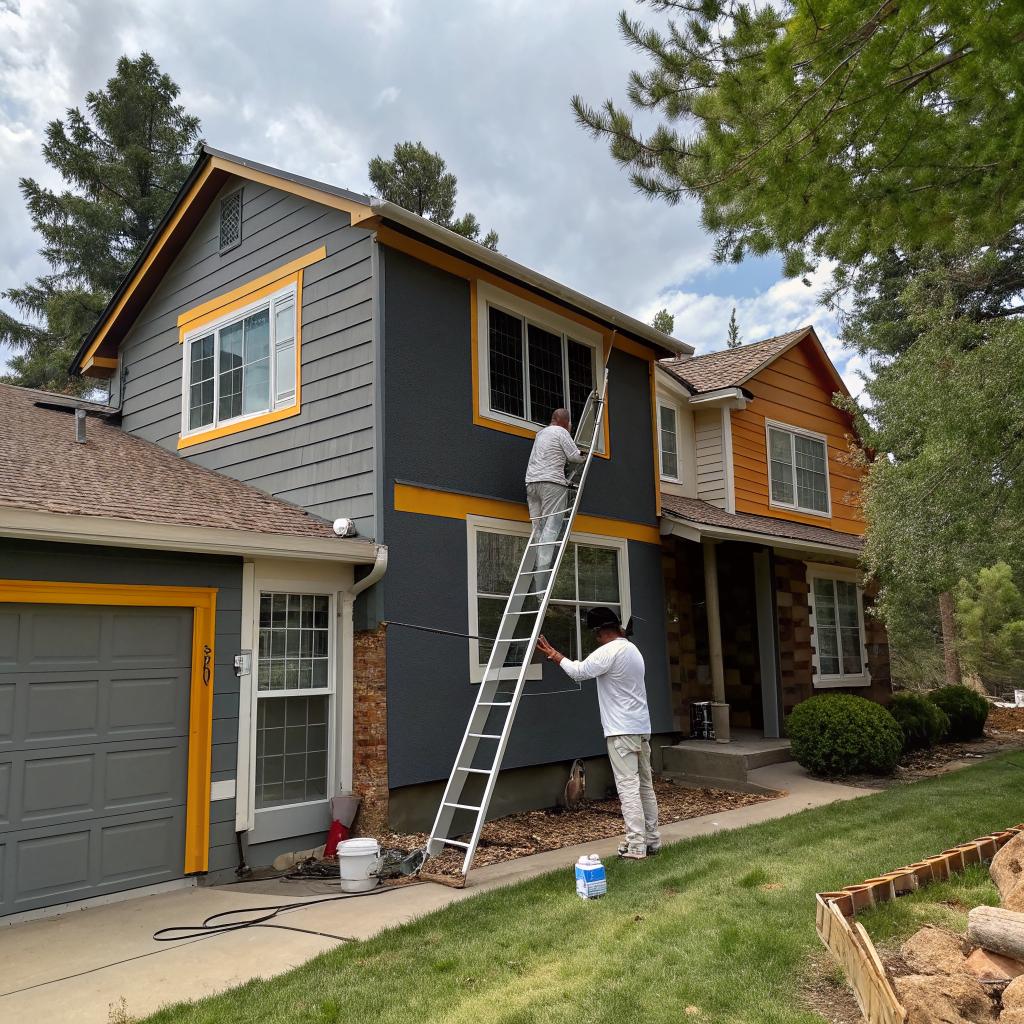
So, you are planning a remodel and trying to figure out residential painting in Colorado Springs for your home. The short answer is that you need to pick the right paint system for our dry, high-altitude climate, prepare your surfaces properly, and plan the work around your flooring and other renovation steps so nothing gets ruined or has to be redone.
Most people think painting is the easy part of a remodel. Roll on some color at the end and call it done. In reality, painting tends to expose every shortcut that happened before it. Uneven drywall, rushed trim work, gaps at baseboards, flooring dust stuck in the finish, or exterior caulk that cracked after the first cold night. If you plan the painting right from the start, the whole remodel feels cleaner, brighter, and more intentional. If you plan it badly, you spend months staring at flaws and touch-ups.
Here are the key things you need to know before you start picking colors or calling painters.
- Paint interacts with flooring, light, and layout more than you think.
- Colorado Springs climate is rough on exterior paint: strong sun, fast temperature swings, and low humidity.
- Interior projects often go better when painting is done before new floors go in, not after.
- Surface prep usually matters more than the brand on the can.
- Sheen and color depth affect how your floors, cabinets, and furniture look.
- Good scheduling with other trades saves money and avoids damage.
- For big remodels, hiring experienced residential painting Colorado Springs pros is usually more cost effective than DIY mistakes.
How painting fits into a remodel timeline
So where should painting fall in your remodel schedule? This is the part that surprises people.
Broadly, you want:
Painting should happen after the messy structural and drywall work, but before your final flooring and trim touch ups.
Here is a simple sequence that works for most homes.
Typical interior remodel order
- Demo and rough framing
- Electrical and plumbing rough-in
- Insulation and drywall (hang, tape, mud, sand)
- Prime walls and ceilings
- Install cabinets and main trim
- Apply first coat of wall and ceiling paint
- Install most flooring (wood, LVP, tile, carpet pad)
- Touch up walls, paint baseboards and remaining trim
- Final paint corrections after punch list
People argue about whether floors or paint should come first. I think it depends on the type of flooring and the condition of the house, but here is a straightforward guide:
| Flooring Type | When to Paint | Why |
|---|---|---|
| Hardwood (site finished) | Walls before sanding/finishing; touch ups after | Dust from sanding can ruin fresh paint, but you want most color up before final floor finish. |
| LVP / Laminate | Most painting before, final trim after | These floors go in fast, so you want 90% of the painting done to avoid overspray and drips. |
| Tile | Prime before, finish coats after tile is set and grouted | Tile saws and thinset are messy and can damage low wall areas. |
| Carpet | Paint everything before carpet install | You want an empty room for cutting in baseboards without worrying about drops on carpet. |
If you already installed the floors and now you are painting, you are not doomed. It just means you need more protection, more tape, and more patience. It takes longer and usually costs more if you are hiring someone.
Interior painting in Colorado Springs remodels
Interior painting sounds simple, but a remodel adds some layers. Old texture, new drywall patches, different sheens touching, and lighting changes from new fixtures can make a room feel uneven if you are not careful.
Choosing the right interior paint finish
The big decision inside is sheen. That is the level of shine on the surface. People obsess over color and then ignore sheen, which is backwards. Sheen changes how your flooring and surfaces look.
Simple breakdown:
- Flat / matte for ceilings and low-traffic walls
- Eggshell for main living spaces
- Satin for bathrooms, kitchens, and kids rooms
- Semi-gloss for trim, doors, and sometimes cabinets
Now connect that to your flooring:
| Flooring Look | Wall Sheen Match | Notes |
|---|---|---|
| Matte wood or wire-brushed LVP | Eggshell or matte walls | Gives a softer, modern feel; hides small wall flaws. |
| Glossy tile or polished concrete | Eggshell or satin walls | Balances the shine so the room does not feel cold. |
| Patterned carpet | Eggshell walls, semi-gloss trim | Lets the carpet be the visual interest, walls stay quiet. |
If you have very textured walls from an older build, higher sheen will show every bump. In that case, going flatter on the walls and reserving shine for trim can make a big difference.
If you are torn between two sheens, for most Colorado Springs homes an eggshell wall and semi-gloss trim combo is the safest starting point.
Color choices that work with Colorado Springs light
Colorado has strong natural light and a lot of sunny days. Colors often look brighter and cooler in our climate than they do on a paint chip inside a store.
A couple of things I have seen go wrong:
- Gray that looks clean on a sample turns blue on sunlit walls.
- Cream can go yellow with warm LED bulbs and wood floors.
- Very dark accent walls show dust and drywall errors fast.
To keep it practical:
- Test at least 2 or 3 colors on the actual wall, near the floor and near the ceiling.
- Look at them in morning light, midday, and evening, with lights on and off.
- Check how the color reads next to your flooring sample, not just on its own.
If your remodel includes new flooring, try to pick the floor color and undertone first. Then match wall colors around that. Floor is harder to change later.
For example:
- Cool-toned gray LVP pairs better with soft whites or greige with slight blue or green undertones.
- Warm oak or hickory floors work better with warmer whites, light beiges, or greige with a hint of brown.
If all of this feels like overthinking, you are not wrong, but color does not live in a vacuum. It sits next to wood, tile, cabinets, and counters. Those surfaces push colors cooler or warmer.
Interior prep during a remodel
In a remodel, the prep is rarely clean. You might have:
- Old nail holes and wall anchors
- New drywall patches where walls moved
- Settling cracks near windows or doors
- Yellowing from previous smokers or kitchen grease
Good prep usually looks like this:
- Clean greasy or dirty walls, especially near kitchens and where hands touch a lot.
- Fill holes and cracks with the right compound, not just caulk.
- Sand patched areas smooth so they blend with existing texture.
- Spot prime or full prime if stains, new drywall, or big color changes are involved.
- Caulk gaps at trim, baseboards, and around window casing.
Do not skip primer just because the paint has “paint and primer in one” printed on the can. That line is marketing, not magic.
Use a true primer on new drywall, bare wood trim, heavy stains, or when you are switching from very dark to very light colors.
Exterior painting in Colorado Springs for remodel projects
Exterior painting around a remodel is a bit different in Colorado Springs than in some other cities. Our climate is dry, UV is intense, and temperatures jump around. Paint has a harder job here.
Weather timing and temperature
Outdoor painting here is mostly a late spring through early fall project. You have to watch:
- Daytime temperature range
- Night lows
- Chance of rain or hail
- Strong afternoon winds
Most exterior paints like a surface temperature between about 50°F and 90°F. If nights drop too low, paint can cure slowly or even fail. If the sun is blasting a south wall, the surface can be much hotter than the air.
A basic rule that works surprisingly well:
- Start on the side of the house that is in shade in the morning.
- Follow the shade around the house during the day.
If your remodel schedule is tight and you are trying to paint in shoulder seasons, just accept that the crew might need shorter days and more flexibility. Rushing exterior painting in cold or very hot direct sun tends to shorten the life of the finish.
Picking exterior paint for altitude and UV
Because of the stronger sun in Colorado Springs, fade and chalking are common. Dark colors look great, but they require more maintenance here than in some other regions.
When you pick paint for outside walls and trim, pay attention to:
- UV resistance rating and fade warranty
- Resin quality, not just brand name
- Recommended mil thickness (how heavy the coat should be)
With siding types:
| Siding Type | Paint Approach | Notes |
|---|---|---|
| Fiber cement | High quality acrylic, careful caulking | Holds paint well if kept clean and caulked. |
| Wood siding | Thorough scraping, primer, flexible topcoat | More sensitive to moisture and sun cycles. |
| Stucco | Elastomeric or acrylic masonry coating | Helps bridge small hairline cracks and breathes. |
| Metal (garage doors, railings) | Degrease, scuff sand, specialty metal primer | Bad prep here peels fast in sun and snow. |
You do not always need the thickest or priciest paint, but going with the cheapest exterior product in this climate is usually a waste.
Exterior color and curb appeal during a remodel
Many remodels start inside, then edge outside: new windows, updated doors, maybe a new roof. At that point the old exterior color starts to look tired.
If you are updating flooring, kitchens, and baths to a more modern look, old heavy colors like deep beige, yellowed tan, or faded sage can fight against the new interior style.
Try thinking of the house as one connected space:
- Entry flooring and front door color should not clash.
- Exterior trim color should relate to interior trim, even if not identical.
- Roof color and body color need to get along, especially in snow.
For Colorado Springs specifically, a lot of homes sit against natural tones: rock, pines, and open sky. Medium body colors with lighter trim tend to age better than super bright whites or extreme dark charcoal on every surface.
If you want a darker, modern look, sometimes it is better to keep the body color moderate and push the darker tone to accents like doors and shutters. That way, when fading happens, it is easier and cheaper to adjust later.
Coordinating paint with flooring and trim
Since this is going on a site for people into flooring and renovation, it makes sense to pause and focus on the interaction between paint, floors, and trim. This is where projects often feel either high end or a bit disjointed.
Baseboards and casing
Trim bridges floor and wall. The color and sheen of baseboards can either clean up that transition or make it feel chopped.
Standard practice that works in many homes:
- White or off-white trim in semi-gloss or high satin
- Wall color in eggshell or matte
The question is how white. Stark bright white looks sharp with cool, gray floors and modern cabinets. With warm wood or traditional tile, a softer white often feels better.
A quick way to sanity check trim color:
- Hold your trim sample between your floor sample and your wall color sample.
- If either side looks yellow or dirty all of a sudden, adjust the white.
Sometimes people want colored trim, not white. It can look good, but it demands more thought. Dark trim with dark floors can make ceilings feel lower. Light trim with very dark floors tends to frame the floor, which is not always the goal.
Transitions between rooms
In many remodels, flooring now runs continuous through multiple rooms. LVP or hardwood in open plans is common. That means your paint transitions are more visible.
You have a few options:
- One main wall color throughout, accent only where needed.
- Subtle shift between public areas and bedrooms.
- Separate colors by level, like main floor vs basement.
If the flooring is continuous, I think using one primary neutral for most common spaces usually looks cleaner. Accent colors can live in:
- Powder rooms
- Bedrooms
- Behind built-ins or fireplace walls
Try not to change wall colors at random corners without a clear break in the architecture. It can cheapen the look, no matter how nice the floor is.
DIY vs hiring painters during a remodel
This part is where I am not going to agree with the normal advice you see online. You often read, “Just DIY the painting, it is easy and will save you a lot of money.” Sometimes that is true. In a simple room, maybe. In a full remodel with new floors, new trim, and exterior work in a tough climate, that advice can be wrong.
Here is a more honest comparison.
When DIY makes sense
DIY painting can work well when:
- You are repainting a few rooms without major drywall repairs.
- You are not changing colors dramatically.
- You have basic skills and decent tools already.
- You have time between other remodel tasks.
Good DIY zones:
- Bedrooms
- Home offices
- Ceilings in small rooms (if you do not mind sore shoulders)
Costs add up though. Rollers, extension poles, brushes, caulk, tape, plastic, and patching supplies all cost money. If you buy mid-level paint and make mistakes, a “cheap” job can quickly approach what a pro would have charged, just with more frustration.
When hiring painters is smarter
For remodels in Colorado Springs, it often makes sense to hire painters for:
- Whole house interiors, especially with vaulted ceilings
- Exteriors exposed to full sun and weather
- Fine finish work like cabinets, built-ins, and doors
- Tight timelines where paint has to fit between other trades
A few reasons:
- Pros understand how our climate affects dry times and product choice.
- They know how to shield new floors, windows, and fixtures properly.
- They can stage work around flooring installers and carpenters.
If your remodel budget is stretched, you might split it:
- Hire pros for exterior and main living spaces.
- DIY closets, garage, and maybe secondary bedrooms.
That mix keeps the most visible and climate-sensitive surfaces in experienced hands, but still lets you save on simpler spaces.
Common mistakes in remodel painting
Some problems appear again and again in remodel projects, especially when different trades overlap.
Painting too early
Painting before drywall dust is fully under control or before final carpentry is finished usually ends with:
- Dust stuck in paint
- Damage from tools or ladders leaning on fresh walls
- Trim gaps that were not caulked before final coats
If you want to move fast, you can still prime earlier, then hold off on finish coats until the loud, messy work is done.
Ignoring moisture and temperature on exteriors
On outside jobs, people sometimes paint:
- Right after a rain when surfaces are still damp
- Late in the afternoon when temps will drop too low overnight
- In direct hot sun on dark colors
These conditions can lead to peeling, bubbling, or uneven sheen. It might look fine the first week and then fail early.
Not respecting cure time
Paint dry time and cure time are not the same. Paint might be dry to the touch in a few hours but still soft underneath. If you push furniture, roll appliances, or tape newly painted walls too soon, you can cause impressions or peel.
Interior surfaces:
- Dry to touch: usually a few hours.
- Recoat: around 4 hours depending on product and room conditions.
- Full cure: often 2 to 4 weeks.
You do not need to baby the walls for a month, but try to:
- Avoid aggressive scrubbing early on.
- Use delicate tape if you must tape near fresh paint.
- Lift and carry furniture instead of sliding it along walls or baseboards.
Budgeting for painting during a remodel
Paint costs can surprise people, especially when you add labor and prep. A rough sense of where the money goes helps you plan.
Where the painting budget usually goes
Here is a simple breakdown of what tends to eat up the painting budget:
| Category | Percentage of Cost (Approx.) | What Affects It |
|---|---|---|
| Labor | 50% – 70% | Size, height, condition of walls, number of colors, detail work. |
| Paint & Materials | 20% – 40% | Product level, brand, primer needs, number of coats. |
| Prep & Repairs | 10% – 30% | Old damage, settling cracks, water stains, caulking needs. |
People try to shave costs by buying cheaper paint. That rarely works out. A better move is to:
- Keep the number of colors limited.
- Simplify accent walls.
- Do small prep tasks yourself, like removing outlet covers.
If you hire painters, getting a clear, written scope helps. It should outline:
- Which rooms and surfaces are included.
- What level of prep is covered.
- How many coats will be applied.
- Who moves furniture and protects floors.
If a quote is much lower than others, often it is because prep is vague or coverage is light. Saving a few hundred dollars upfront to live with flashing, missed spots, or fast fading is not great value.
Practical planning tips for Colorado Springs remodels
To pull this together, it helps to think in terms of a plan you can actually follow at home, instead of just general advice.
Step 1: Decide interior style and floor direction first
Before you pick paint, ask:
- Are you going cooler and more modern, or warmer and traditional.
- Is your main flooring going to be wood, LVP, tile, or carpet.
- Do you want consistent flooring across spaces or room by room changes.
Once that is clear, collect:
- Flooring samples.
- Cabinet samples or at least photos of similar finishes.
- Counter or tile samples if you have them.
Bring paint chips next to those, not on their own. You may find that colors you liked in isolation fight your actual materials.
Step 2: Group rooms by use and light
Instead of picking a unique color for every room, try grouping:
- Open main areas under one main neutral.
- Hallways and stairwells under that same neutral for flow.
- Bedrooms as a second tier, still related in tone but with more freedom.
- Bathrooms and laundry rooms as accent or contrast opportunities.
Look at which rooms get strong sun from the south or west. Cooler colors can feel harsh in those rooms if you overdo it.
Step 3: Plan exterior around remodel milestones
If your remodel includes exterior changes like new windows, siding repair, or roof replacement, try to line up exterior painting after those major items, not before.
General order outside:
- Roof work and gutter changes
- Siding repair or replacement
- Window and door replacements
- Exterior caulking and minor repairs
- Full exterior painting
Painting before new windows or siding are in place usually leads to damaged or mismatched areas that need repainting.
Step 4: Protect new floors and fixtures
If floors are already in or must be installed early, protection becomes a serious part of the plan.
Use:
- Builder paper or Ram Board for hard surfaces.
- Plastic sheeting and careful tape on windows and fixtures.
- Drop cloths that actually get washed or shaken out, not reused forever.
Ask yourself before any paint day: “What happens if a full tray of paint spills right now?” If that scenario scares you because the protection is thin, upgrade the protection first.
Good floor and surface protection usually costs far less than repairing a single serious spill or overspray mistake.
Step 5: Keep a paint log
Many homeowners skip this and regret it. During a remodel, lots of colors, sheens, and product lines can end up in the house. If you do not track them, touch ups a year later are much harder.
Keep a simple record:
- Brand, product line, color name, and code.
- Sheen level and where it was used.
- Approximate date it was applied.
Tape a printed list inside a utility closet or store it as a note on your phone. It feels like extra work now but saves headaches later when you need a small repair and want the finish to match.
Some quick questions homeowners often ask
How long should a good exterior paint job last in Colorado Springs?
On a well-prepped house with quality paint, you can often expect around 7 to 10 years before full repaint, sometimes longer on shaded sides and shorter on strong sun sides. Dark colors may show fading sooner. South and west exposures usually need more frequent attention than north sides.
Is it worth paying more for paint during a remodel?
Usually yes, within reason. The labor, whether your own or a painters, is a bigger part of the cost than the paint itself. If a better product adds a few hundred dollars to the overall budget but gives better coverage and longer life, that is often a solid tradeoff. You do not need the priciest can, but going above builder-grade is nice.
Can I keep my old trim color and just repaint the walls?
You can, but it might date the remodel if the trim is a creamy or yellowed white and you are moving toward modern finishes and cooler floors. Repainting trim is more work than walls, so I understand the hesitation, but fresh, consistent trim color can make old floors look newer and tie the remodel together.
If you had to pick one thing in your remodel for paint to “carry,” would you rather it be the walls, the trim, or the exterior?