
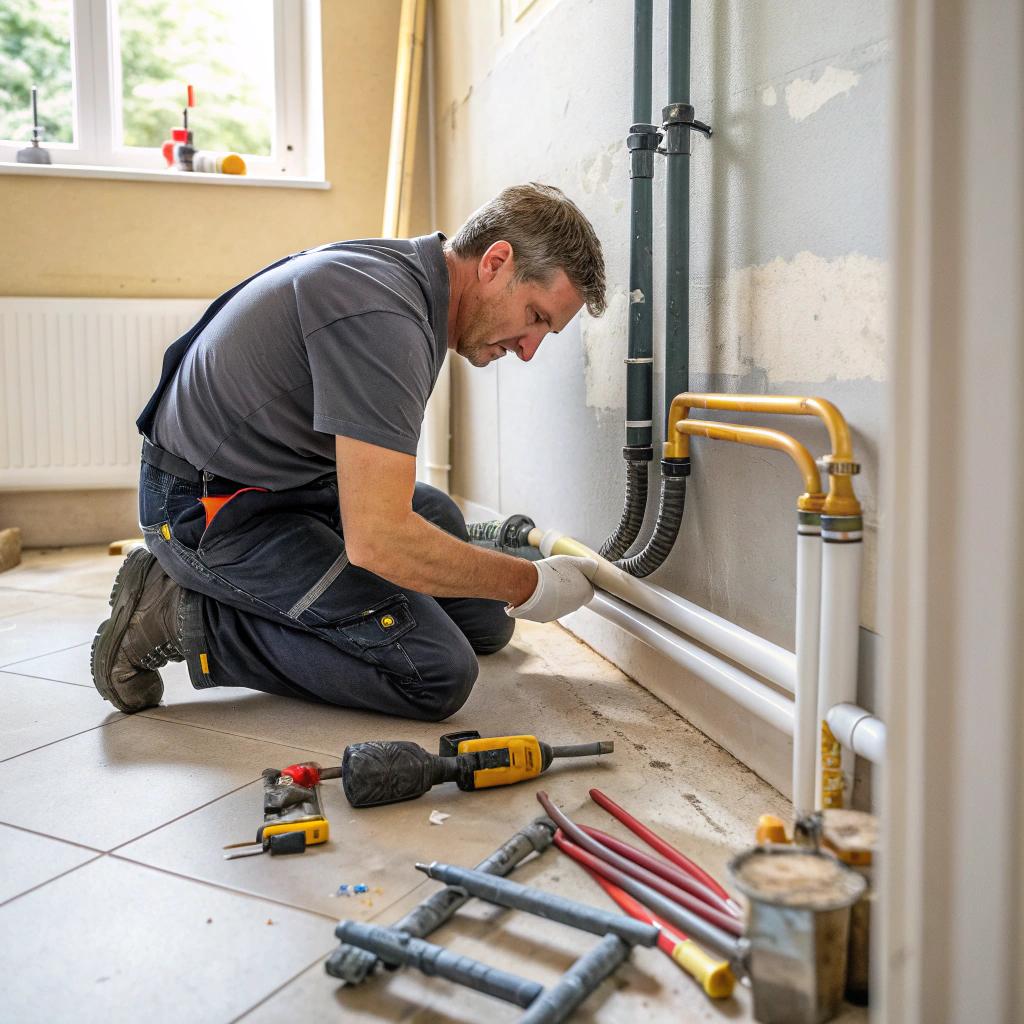
So, you are planning a home remodel and want some solid plumbing installation tips that you can actually use. The short answer is: plan your plumbing layout early, coordinate it with your flooring and walls, use the right materials for your local codes, and do not skip pressure testing or shutoff valves.
Most plumbing problems in remodels come from two things: poor planning and rushing. People pick tile and cabinets first, then try to squeeze pipes in later. Or they assume the old plumbing is “fine” and build around it. Months later, they find a leak under new hardwood or tile, and repairs mean tearing up finished work. If you plan the plumbing layout at the same time as your new floor plan and finishes, you avoid a lot of those headaches. That is really the key idea running through everything here.
- Know which walls and floors will carry pipes and drains before framing closes.
- Pick fixtures early so rough-in dimensions are correct.
- Match pipes and fittings to your local plumbing code.
- Protect floors from water during and after install.
- Pressure test and leak test everything before closing walls or laying final flooring.
- Use shutoff valves generously so future repairs do not wreck your remodel.
- Decide clearly what you can do yourself and what needs a licensed pro.
If you are hiring a pro for plumbing installation, you still need to understand the basics so you can ask better questions and avoid paying for work twice.
Start with your layout, not with the fixtures
Many people start with Pinterest photos of bathrooms and kitchens. That is fine, but pipes and drains do not care about mood boards.
You should start with three simple drawings, even if they are rough:
- A floor plan that shows where sinks, toilets, tubs, showers, and appliances will sit.
- A plumbing diagram that shows supply lines (hot and cold) and drains/vents.
- A flooring plan that shows where tile, vinyl, wood, or other material will go.
You do not need fancy software. Graph paper and a tape measure work. The point is to see how everything lines up.
“Your plumbing layout should exist before you order expensive flooring, cabinets, or custom vanities.”
Think about:
- Where the main water line enters the home.
- Where the main drain and vent stack are located.
- How far new bathrooms or kitchens are from existing plumbing.
- Where floor drains already exist or might be helpful.
Shorter runs for drains and supplies usually mean fewer problems. Long horizontal drain runs under a brand new floor can be tricky, and if the slope is off, you may fight clogs later.
How plumbing affects flooring choices
Since this is going on a site focused on home renovation and flooring, let us connect the dots clearly.
Plumbing and flooring interact in a few key ways:
- Moisture exposure under and around fixtures.
- Floor height where pipes or drains pass through.
- Access panels for valves or cleanouts.
Some quick examples:
- Putting real hardwood in a bathroom with an older toilet or poorly vented shower is risky. Even small leaks swell boards.
- A curbless shower looks nice, but it needs correct slope and waterproofing under the tile, not just on top of it.
- Washer and dryer in a second-floor laundry? A floor drain and waterproof membrane under the flooring can save your ceiling someday.
“When you plan plumbing, think about how a small leak would behave on your chosen floor surface.”
Ask yourself: if this fixture leaks, will water sit, run to a drain, or crawl under the flooring into other rooms?
Decide what to keep, what to move, and what to replace
During a remodel, you have three main choices for each plumbing item:
- Keep it where it is and just update finishes.
- Move it a short distance and re-route pipes.
- Remove it completely and run new lines.
Moving plumbing can be pricey. Moving a toilet across the room might require reframing, moving the drain stack, and patching subfloor. Shifting a vanity 12 inches is usually easier.
Here is a simple table to help compare decisions:
| Change | Typical impact on cost | Impact on flooring |
|---|---|---|
| New vanity, same location | Low | Minor cuts at supply and drain lines |
| Move vanity 1 to 2 feet | Medium | Patch subfloor and adjust floor covering |
| Move toilet to new wall | High | Open subfloor, adjust joists, new flange, re-tile or re-floor |
| Convert tub to shower | Medium to high | New drain location, sloped floor, new waterproofing and tile |
| Add second-floor laundry | High | Reinforce floor, add drain and waterproof layer |
You do not need to avoid moving anything, but think about hidden costs to your flooring budget. Sometimes it is smarter to choose a slightly different fixture that works with the existing layout.
Know your local code and material options
I know this part feels dry, but it is where a lot of remodels go wrong. Every area has plumbing codes. If the work does not match them, you might fail inspection, void insurance coverage, or both.
Typical residential materials today:
- PEX for water supply lines
- Copper for some supply lines and near water heaters
- PVC or ABS for drains and vents
- Brass and stainless steel fittings in key spots
PEX is common because it is flexible and easy to run around framing and flooring. But not all fittings and brands mix well. Copper still has its place, especially near hot appliances and where code requires it.
“Do not assume what you see on a YouTube video is legal in your city. Your inspector might see things differently.”
Before you start pulling up floors or cutting into walls:
- Check whether you need a permit.
- Look up basic code requirements for pipe sizes and venting.
- Confirm if your area allows PEX everywhere or if there are exceptions.
If this sounds boring, remember that passing inspection the first time keeps your schedule and your flooring install on track.
Plan fixture rough-ins carefully
The term “rough-in” just means where pipes end inside the wall or floor before fixtures go in. If rough-in measurements are wrong by even half an inch, you can end up with:
- A toilet that does not fit because the flange is too close to the wall.
- A vanity where the drain hits a drawer box.
- A tub spout that sits in a grout line instead of in tile.
You should always have the fixtures on site or at least have the manufacturer specs printed before rough-in. Do not trust memory or vague dimensions from a store display.
Key rough-in checks:
- Toilet rough-in distance from finished wall, not from the stud.
- Shower valve height based on your family, not just a random number.
- Vanity supply lines and drain height to clear drawers and shelves.
- Washer box height above the final floor level, not the subfloor.
This is where flooring again plays a role. Your finished floor height might rise if you add new tile over an old subfloor or use thicker underlayment. That can throw off toilets, dishwashers, and even refrigerator water lines.
Account for flooring thickness and transitions
Different flooring types have different thickness:
| Flooring type | Typical thickness | Plumbing impact |
|---|---|---|
| Vinyl plank | 4 to 8 mm | Minor height change, toilets may still need a flange spacer |
| Ceramic or porcelain tile | 8 to 12 mm plus thinset | Noticeable height change, toilets and drains must be adjusted |
| Engineered wood | 10 to 15 mm | Need solid subfloor and moisture control near plumbing |
| Laminate | 8 to 12 mm plus underlayment | Moisture sensitive at joints near sinks or dishwashers |
Before the plumber sets toilet flanges or shower pans, you need to know:
- What flooring will be under them.
- How thick the entire flooring system will be, including underlayment and thinset.
- Where transitions to other rooms will fall.
A common mistake is setting the toilet flange flush with subfloor, then later adding thick tile. This can lead to leaks at the wax ring unless you use flange extenders or rebuild the connection.
Water supply layout: loops, manifolds, and shutoffs
Water supply lines are where you can build in convenience for the future. A well planned system saves walls and floors if anything breaks.
Some ideas to consider:
- Add a home run manifold system with PEX, so each fixture has its own line and shutoff.
- Add shutoff valves at every toilet, sink, and appliance.
- Add a main shutoff valve in an easy to reach spot, not behind a stack of storage.
- Add a secondary shutoff for high risk zones like upstairs bathrooms and laundry rooms.
You may think this is overkill, but imagine a small leak in an upstairs shower. With a shutoff in a nearby closet, you can isolate that shower and keep using the rest of the house. You will also avoid tearing out floors in rooms that are not even part of the current project.
Protecting your new floors from supply line leaks
Some simple, low drama steps:
- Use braided stainless steel supply lines for toilets and sinks, not cheap plastic ones.
- Install water hammer arrestors when needed to reduce stress on connections.
- Consider leak detectors in spots that have had problems in the past.
- Keep flexible lines routed so they do not rub on sharp cabinet edges.
Water has a way of finding the weakest point. Most of the time, that point is near a fitting or an old connection. Do not skimp here and then spend thousands on new flooring.
Drain and vent planning: quiet, slope, and access
Drains and vents are harder to change later, especially if they run through finished floors or concrete.
Three main things matter:
- Correct slope so waste flows and does not sit still.
- Proper venting so fixtures do not gulp air and make noise.
- Cleanout access in case of clogs.
If you have ever heard gurgling sounds in a sink when a nearby toilet flushes, that often points to venting problems.
For remodels that add new bathrooms or kitchen islands:
- Ask how the new fixture will be vented.
- Ask where the new cleanouts will be located.
- Make sure nobody buries cleanouts under new tile or hardwood.
“A hidden cleanout today can mean cutting up expensive flooring tomorrow when you need a drain cleared.”
Try to keep cleanouts:
- Behind removable access panels.
- In closets or storage spaces.
- In exterior walls where your local code allows it.
Sequencing: when plumbing should happen in your remodel
The order of work affects everything, including how many times your floors get cut or patched.
A basic sequence that works in most homes:
- Demolition and removal of old fixtures, cabinets, and damaged flooring.
- Rough plumbing: new lines, drains, vents, and test caps.
- Rough electrical and framing adjustments.
- Inspection of rough work.
- Subfloor repairs and leveling.
- Install shower pans and waterproofing where needed.
- Tile or other moisture resistant flooring in wet areas.
- Cabinets and vanities set in place.
- Plumbing trim: set toilets, sinks, faucets, shower trim.
- Final caulking and sealing around fixtures.
You might be tempted to install all flooring first, then bring in plumbers. That often leads to more risk. Heavy tubs or showers can crack or chip finished tile if set late. Plumbers also need room to cut, glue, and solder without worrying about scratching everything around them.
Ask your contractor or plumber where they want the flooring line to be when they arrive, and coordinate from there.
Waterproofing and underlayment around plumbing
If plumbing and flooring intersect anywhere heavily used, you should think beyond just tile or vinyl. The layers you do not see matter more.
Typical layers under a tiled bathroom floor, for example:
- Joists
- Subfloor (plywood or OSB)
- Cement board or similar underlayment
- Waterproof membrane or liquid membrane
- Thinset mortar
- Tile
Where plumbing passes through these layers, each cut is a potential leak path. Some practical steps:
- Seal around pipe penetrations with the right gaskets or sealant.
- Flash or dam areas behind tub and shower valves.
- Use waterproof backer and membranes behind shower walls.
- Do not rely only on grout or caulk as your “waterproofing.” Those are surface finishes, not barriers.
For laundry rooms or kitchens where you want more protection:
- Add a waterproof sheet underlayment that runs up the wall a little.
- Pitch the floor slightly toward a drain if possible.
- Seal transitions at doors so water is less likely to run into hallways.
These details may feel overkill now, but a washing machine hose can release a lot of water in just a few minutes.
Testing: do not skip this part
This is where many DIY remodels cut corners, and it comes back to haunt them. Every new line should be tested before covering it.
Two basic kinds of tests:
- Pressure test for supply lines to check for leaks under pressure.
- Drain and vent test using water or air to check for leaks and blockages.
Work with your plumber or inspector to make sure:
- All test caps and plugs are installed.
- Pipes are pressured up and hold that pressure for the full test period.
- Any leaks are fixed fully, not just tightened a bit until they “seem” fine.
Only after everything passes should you:
- Close walls.
- Install permanent flooring.
- Set expensive fixtures.
If someone tells you testing is not needed because “we do this all the time,” be cautious. Good tradespeople test as a habit. It also protects them, not just you.
Remodel plumbing and your future self
One helpful way to think is: “What will my future self thank me for when something eventually needs repair?”
Because something will. No system is perfect. Seals age, washers fail, things freeze or clog.
Some long term choices that help:
- Access panels behind tubs and showers instead of solid drywall everywhere.
- Shutoff valves grouped logically, labeled, and easy to reach.
- Cleanouts at smart locations.
- Photos of walls and floors before you close them, so you know where pipes run later.
Take photos from several angles, with a tape measure visible where possible. Store them in a folder titled “House plumbing before drywall.” It sounds obsessive, but it can save hours when you need to find a line under tile or hardwood someday.
Where DIY makes sense and where it does not
You asked for tips, not a lecture, so I will be honest here. Some tasks are friendly to careful DIY, others are not.
Reasonable DIY tasks for many people:
- Replacing faucets and shower heads.
- Installing new shutoff valves if you can work safely.
- Hooking up sinks and dishwashers once rough-in is done.
- Setting a toilet on an existing, solid flange with good instructions.
Jobs better left to licensed pros, especially in a remodel:
- Moving drains and vent stacks.
- Working on main supply lines or main shutoffs.
- Plumbing inside shared walls on multi-story homes.
- Gas line work for water heaters, boilers, or ranges.
If a mistake could flood a floor full of new hardwood or tile, burn your house, or fail code inspection, it is usually worth professional help. It is not about skill only; it is also about insurance and liability.
Plumbing and flooring in kitchens, bathrooms, and laundries
Let us look at each of the common remodel spaces, since that is where plumbing and flooring most often meet.
Bathroom remodel tips tied to flooring
Bathrooms see the most water. Your flooring choices and plumbing details should reflect that.
Some targeted tips:
- Use tile, waterproof vinyl, or similar floors that can tolerate standing water.
- Seal around the toilet base after you are sure there are no leaks.
- Caulk tub and shower edges where they meet walls and floors, but leave small gaps where local code requires for weep paths.
- Make sure shower doors or curtains actually direct water back into the pan, not onto the floor.
If you are doing a tiled shower:
- Confirm the shower pan is properly pitched.
- Do a flood test of the pan before tiling the walls.
- Do not poke random holes in waterproofing for shelves or grab bars without the right anchors and sealants.
Tiled floors look great but are unforgiving about slope and leveling. Water should not pool around toilets or in corners. Use a long level to check low spots before the tile installer starts.
Kitchen remodel tips tied to flooring
In kitchens, the main leak risks are:
- Dishwasher connections.
- Sink drains and garbage disposals.
- Refrigerator water lines.
Some simple habits that help:
- Install a small plastic or metal pan under the dishwasher if space allows.
- Check every compression fitting and run the dishwasher while you are still on site.
- Keep refrigerator lines short, with as few connections hidden under floors or behind walls as possible.
Think about how your flooring holds up to spills and steam:
- Water resistant vinyl or tile near sinks is usually safer than real wood.
- If you want wood through the whole space, be very serious about mat placement and sealing.
Cutouts through flooring for pipes should be neat, not oversized holes covered by escutcheons. A tidy cut prevents pests and drafts and just looks better.
Laundry room remodel tips tied to flooring
Laundry rooms often get the least design attention but cause some of the worst water damage.
Ideas that help:
- Add a floor drain if your local code allows and your plumbing layout can support it.
- Use waterproof flooring and run it under the washer and dryer, not just up to the edges.
- Install a pan under the washing machine that routes to a drain.
- Use stainless braided hoses, not old rubber ones, and replace them every several years.
Where laundry sits above finished rooms, I would argue some form of waterproof layer under the flooring is smart, even if it is not perfect. You at least buy time in a leak.
Small details that make a big difference
By now you may feel that every detail matters, and that is kind of true. But some small, cheap items have an outsized impact on your remodel.
Here are a few that often get ignored:
- Quality caulk that matches your grout and is rated for wet areas.
- Good shutoff valves that do not seize up after one year.
- Quiet close toilet fill valves to reduce water hammer.
- Insulation around hot water pipes to reduce energy waste and condensation drops on floors.
Also, do not rush the final step: cleaning and sealing. After all the work:
- Wipe down all visible plumbing connections and check for moisture after use.
- Run every fixture for several minutes, watching for drips below and around floors.
- Have towels or sensors in place for the first week while you use the system normally.
You might feel paranoid doing this, but catching a slow drip early is far better than noticing swelling flooring months later.
Common mistakes to avoid in remodel plumbing
To keep this practical, here is a quick list of things that often cause trouble:
- Setting toilet flanges too low relative to finished flooring.
- Burying valves or cleanouts behind permanent finishes with no access.
- Running unprotected pipes too close to the finished floor, where nails or screws can hit them.
- Ignoring manufacturer installation specs for tubs, shower pans, or wall hung toilets.
- Skipping permits and then having to open finished work for inspection later.
None of these errors are “creative” or helpful. They just cost time and money.
Q & A: A realistic way to wrap this up
Q: If I am on a tight budget, what should I prioritize with plumbing during a remodel?
A: Put your money where damage would hurt the most. That usually means:
- Quality shutoff valves.
- Correct drain layout and venting.
- Proper waterproofing under bathroom and laundry floors.
- Reliable connections on dishwashers, toilets, and refrigerators.
Fancy fixtures can come later. Tearing up new tile or hardwood to fix a hidden leak costs far more than a nicer faucet.
Q: Can I install flooring first and deal with plumbing after?
A: Usually that is a bad plan. Rough plumbing should go in before final flooring so the plumber can work without worrying about scratching or cracking anything. Some finish work, like caulking or setting toilets, happens after flooring, but the main pipes and drains should be set and tested first.
Q: How do I know if my plumber is thinking about my new floors, not just the pipes?
A: Ask direct questions:
- “Where will the cleanouts be, and how will we access them after the floors are finished?”
- “What is the final height of the toilet flange relative to the finished tile?”
- “Can you walk me through where pipes pass under or through the new flooring?”
If the answers are clear and practical, you are in good shape. If you get vague responses or a shrug, you may want someone who pays more attention to how plumbing and finished spaces work together.
What part of your remodel are you most worried about: the bathroom, the kitchen, or the laundry area?