
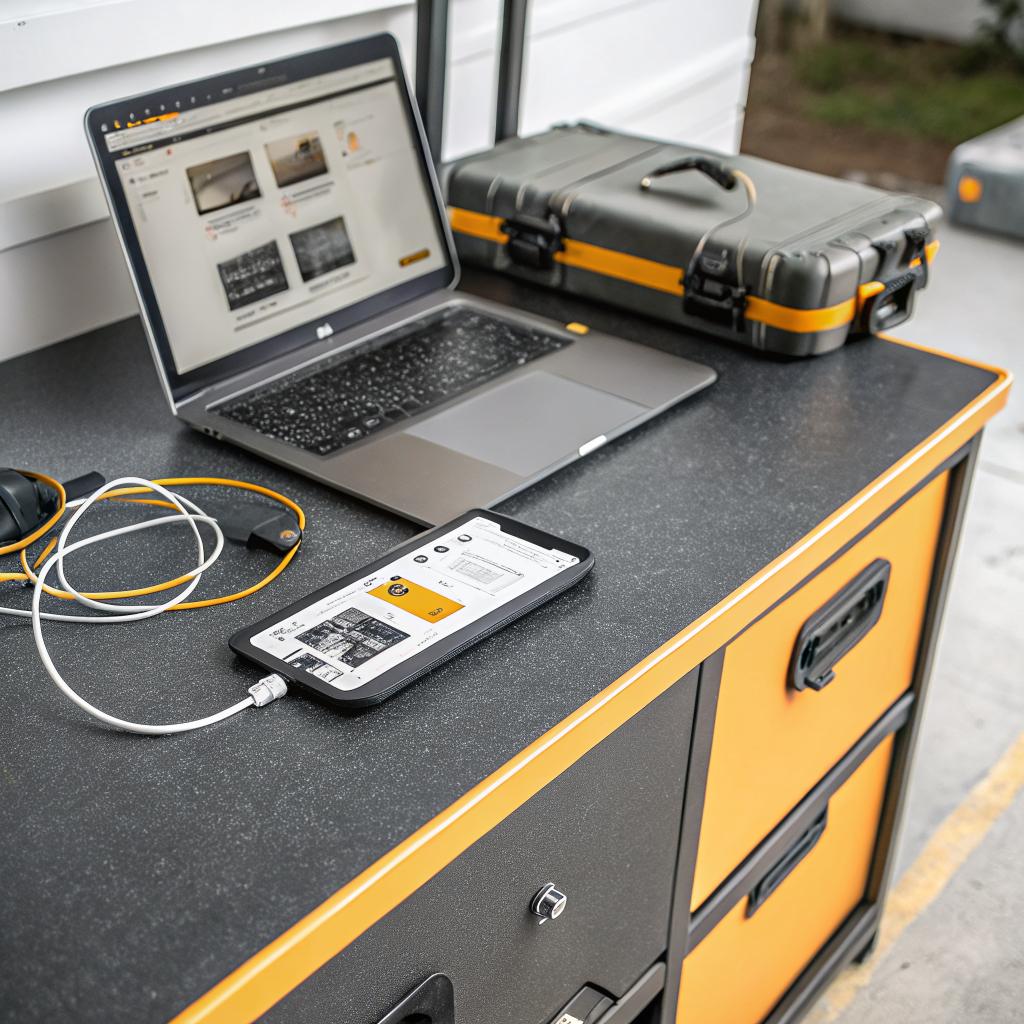
So, you are trying to use mobile forensics to protect your home renovation crew and your projects. The short answer is that you can use mobile forensics to screen, monitor, and investigate crew members when there are real concerns about safety, theft, or fraud, but you need clear policies, consent, and usually help from a professional.
You are not crazy for thinking about this. Phones sit in everyone’s pocket on a job site. They hold messages, photos, site notes, client contacts, even floor plan screenshots. That same phone can also hold proof of stolen materials, side jobs using your supplies, or harassment inside a group chat. So mobile forensics can become one more tool to keep your crew safer, protect your budget, and guard your reputation with homeowners who are letting your people into their living rooms, kitchens, and bedrooms.
Here are some things you need to know before you go down this path.
- Mobile forensics is not just “phone spying” but a structured way to recover and analyze data from devices.
- You need written policies and real consent if you are touching personal phones, or you risk legal trouble.
- Work-issued phones are much easier to handle from a legal and practical point of view.
- The goal should be safety, fraud prevention, and documentation, not curiosity or control.
- Bringing in a professional who handles mobile forensics is usually better than trying to do it yourself.
Why mobile forensics even belongs in a home renovation conversation
If you run a flooring or renovation crew, your world is usually sawdust, moisture tests, subfloor prep, schedules, and getting paid. Phones feel like a distraction. Still, they touch every part of your work.
Your project manager texts the homeowner photos of plank samples. Your lead installer gets instructions by text while driving between jobs. Someone takes “before” and “after” photos for social media. A helper shares the gate code in a group chat. Another tech uses GPS for every trip.
So the phone is not just a gadget. It is:
- A communication log of who said what, and when.
- A location trail of who was where during work hours.
- A camera that can catch poor work or great work.
- A storage place for client data, contracts, and job notes.
That is also why things can go wrong:
- Someone shares the homeowner’s alarm code with a friend.
- A crew member texts a client after hours in a way that crosses a line.
- A worker uses photos of the client’s kitchen online without permission.
- There is a dispute about who approved a flooring change and when.
Mobile forensics becomes useful when you need hard proof about what happened with a phone during a job, not just opinions or “he said, she said.”
You probably will not use it every week. It is more like a fire extinguisher. You are glad it exists when something serious happens.
What mobile forensics actually is in simple terms
Mobile forensics is a structured way of collecting, saving, and examining data from phones and tablets so that the information is reliable, traceable, and often usable in legal or insurance settings.
It usually involves:
- Creating a full copy or image of the phone’s storage.
- Recovering visible and deleted data such as texts, call logs, photos, videos, app data, and sometimes location history.
- Keeping a clear chain of custody showing who handled the device and how.
- Producing a report that can explain the findings in plain language.
In a renovation setting, this might touch:
- Texts about schedule changes.
- Photos of job progress or property damage.
- Messaging app chats among the crew (where harassment or side deals might show up).
- GPS data related to time on site or side trips.
Think of mobile forensics as a way to rewind the phone’s history around a job and see what it can honestly tell you about your crew and your project.
It sounds intense, and in some ways it is. But you do not have to use every piece of it. Sometimes you just need simple confirmation, such as “Did anyone send that photo of the client’s bedroom outside the team chat?”
When a renovation or flooring crew might need mobile forensics
You probably do not want to bring a forensic examiner into every scratched plank argument. That would be overkill. But there are repeat problem areas where phones sit right at the center.
1. Employee theft and missing materials
Theft in renovation work can be subtle. Boxes of engineered wood vanish. High end tile disappears. Extra adhesive or underlayment ends up installed in a side job.
Mobile forensics can help in cases like:
- A crew member is suspected of sharing garage codes and schedules with someone outside the team.
- There are text messages arranging side work using your materials and your truck.
- Photos show your pallets or tools in a personal project before they are “officially” written off.
You might uncover:
| Type of clue | Example on a crew phone |
|---|---|
| Text messages | “I grabbed 4 boxes of that oak from the Henderson job, I will bring them to your brother’s place Saturday.” |
| Photos | Pallets of your labeled material in a garage that is not on any work order. |
| Location data | Truck parked at a side job location multiple evenings in a row, using your fuel and time. |
| App chats | Group messages planning “cash jobs” during company hours. |
You might find nothing, which is still useful. It can clear someone’s name when accusations start flying.
2. Safety, harassment, and crew culture
Renovation crews often work in cramped spaces. There is stress, noise, dust, and deadlines. That pressure can feed harsh jokes or bullying, sometimes pointed at apprentices or younger workers.
You might worry about:
- Group chats where crew members mock a client behind their back.
- Messages that pressure a worker to ignore PPE rules or site safety.
- Harassment of a female crew member through messages or photos.
Phones sometimes hold the proof that a “joke” has crossed the line into behavior that can damage your business or create real harm on site.
Addressing culture starts long before forensics comes in, but when someone files a complaint, a forensic review of work devices can show patterns you would never see in a simple meeting.
3. Client disputes and legal risk
You already know about change orders, signatures, and written estimates. But many homeowners and even some project managers still rely on text messages to agree on changes, like:
- “Sure, go ahead and run the plank into the hallway, no transition needed.”
- “Yes, you can remove the old tile even if it damages the baseboard. I will paint it later.”
Later, when there is a dispute about cost or scope, those texts suddenly matter.
Mobile forensics can:
- Recover deleted messages about approval of a specific flooring pattern or material upgrade.
- Show the exact time and date of a message about access, complaints, or delays.
- Connect photos to timestamps so you can prove work was done or damage existed before your crew started.
You might never bring this into a courtroom, but having trusted, organized data can help you settle complaints, protect reviews, and keep your name clean.
4. Protecting your reputation with homeowners
Homeowners let your crew into private spaces: bedrooms with personal items, kids rooms, home offices, safes, and medicine cabinets. That is a big act of trust.
Imagine these scenarios:
- A crew member secretly films or photographs something private in a client’s home.
- Someone posts a recognizable shot of a client’s living room on social media, without asking.
- A client accuses your workers of taking photos of expensive belongings.
If you only rely on conversation, you are stuck picking sides. If you can examine a work phone and show:
- There are only standard job progress photos.
- Nothing was posted online from that device.
- Or, in a worse case, there are clear violations of your policy.
Then you are not guessing. You are acting on evidence.
Company phones vs personal phones
This is where many small contractors get tripped up. You cannot just grab an employee’s personal phone and start exploring, even if you pay them cash and know them well.
Why company phones are easier to handle
If you provide work phones, you can:
- Set a clear policy that the phone and the data on it are company property.
- Limit which apps are installed and require certain security settings.
- Use mobile device management tools to lock, wipe, or track the phone.
- Get written consent that you may inspect or analyze the phone if there is serious suspicion.
With that structure, using mobile forensics on a work phone is much more straightforward. You still need to be fair and follow privacy laws, but the line is clearer.
The gray area with personal phones
When your crew uses their own phones for:
- Texting clients.
- Sharing job photos.
- Discussing schedules.
You end up mixing company business with private life.
Pulling a full forensic image of that personal phone touches:
- Private chats with friends and partners.
- Banking and health apps.
- Photos that have nothing to do with work.
This is where you need to slow down and get legal advice before you act. In many places, you must have clear, informed consent, and there are tight rules about how far an employer can go.
Policies you should have before you ever call a forensic examiner
If you are thinking about mobile forensics to protect your crew and jobs, you probably also need stronger written policies. Without them, any later investigation can look random or biased.
Some useful policy areas:
1. Device ownership and use
You can keep this short, but it should cover:
- Whether the crew will use company phones, personal phones, or a mix.
- What kind of work communication is allowed on personal phones.
- Who pays for data and what happens if a phone is lost on a job.
2. Privacy and consent
You do not have to use legal jargon, but you should be very clear about:
- When and how a company phone might be inspected.
- What happens with personal phones in an investigation.
- That any review of a personal phone requires written consent.
You can still respect privacy while protecting your business. The two are not always in conflict, though it might feel like that sometimes.
3. Photo and video rules inside client homes
This matters a lot in renovation and flooring. You could set rules like:
- Photos and videos are only allowed for job purposes.
- Shots should avoid personal items as much as possible.
- Any image used on social media must hide identifying details and have client permission.
- No one is allowed to share photos from the job on personal accounts without approval.
Clear rules about photos in private homes protect your crew as much as your clients, because everyone knows where the line is.
4. Reporting and complaints process
If a worker feels harassed in a group chat, or a homeowner claims someone took private photos, your policy should say:
- Who they can contact.
- How an investigation will proceed.
- What their rights are during that process.
If your crew knows there is a fair process, they are more likely to bring problems to you before a lawyer or the police get involved.
What a mobile forensics process usually looks like
Every case is a bit different, and I think this is where many owners underestimate the time and care involved. You do not just “check the phone quickly.”
A typical path looks like:
Step 1: Define the scope
You decide:
- What question you need to answer.
- Which devices are relevant.
- What time period matters.
For example:
- “We need to know whether any crew member sent the client’s alarm code outside the job chat in the last two weeks.”
The scope should be clear enough that you are not rummaging without a plan.
Step 2: Secure the device
To avoid data changes, you should:
- Collect the device quickly after the issue arises.
- Turn off network access if advised, so nothing syncs or deletes.
- Log who handled the device, when, and where it was stored.
If you do not know how to do this, you can simply power it off and store it safely until a professional steps in.
Step 3: Forensic imaging
A forensic examiner uses tools to make a copy of the device storage. They try to:
- Get as complete a copy as possible without changing the original data.
- Preserve deleted data where possible.
- Verify the integrity of the copy.
This matters if the results ever end up in court or in an insurance claim, but it is also good practice even for internal use.
Step 4: Analysis
Now they look for the answers to your questions. Depending on your case, they might:
- Search messages for certain keywords, like “garage code” or “side job.”
- Match photos with timestamps and locations.
- Compile call logs around a specific date.
- Review app data such as chat histories.
You do not need every detail. You need enough to make a fair decision for your crew and your client.
Step 5: Reporting and action
You get a report in human language, often with:
- A summary of what was found.
- Relevant screenshots or excerpts.
- Technical details if needed.
From there, you decide:
- Do you need to fire or discipline anyone?
- Do you owe a client an apology or fix?
- Do you need to change your policies or training?
Concrete examples tied to flooring and renovation work
Sometimes this all sounds abstract, so it helps to think through real project types.
Water damage after a flooring job
A client claims there is water damage under new LVP a week after install. They say your crew left gaps around the toilet flange.
Your foreman insists the flange area was dry and sealed. There were “before” photos, but the phone with those photos was dropped and cracked, and the images appear gone.
Mobile forensics might:
- Recover the photos from the damaged phone.
- Show timestamps proving the moisture meter reading before install.
- Show messages where the client was warned about an ongoing leak.
You can use that data to support your position with the client or insurer.
Missing hardwood boxes from a high end job
You ordered 60 boxes of engineered oak for a large living area. At the end, 12 boxes are missing from inventory. Nobody admits anything.
A worker later quits under a cloud of rumors.
You might:
- Examine the company phone assigned to that worker.
- Find messages arranging a weekend install at a cousin’s house using “extra boxes.”
- See photos of your branded boxes in that house.
With that, you are not guessing about theft. You have concrete evidence.
Complaint involving photos of a child’s room
A homeowner calls, upset. They believe one of your crew took photos of their child’s bedroom and toys without consent.
Your lead insists the only photos taken were of baseboards and transitions.
A forensic review of the work phone might show:
- All photos taken on that date and time.
- That every image is of baseboards, door trim, and floor lines.
- No images were shared outside the company chat or storage app.
Now you can calmly explain to the homeowner what the phone shows. This can cool a situation that could have turned into an angry online review or worse.
Cost, time, and when this is not worth it
You should not pretend mobile forensics is cheap or instant. It often is neither.
Costs vary widely, but as a loose sense:
- Simple jobs might cost a few hundred dollars.
- Larger, complex cases involving multiple devices can run much higher.
It can also take days or weeks depending on how busy the examiner is and how much data there is.
So ask yourself:
- Is there a real risk of legal action or a large financial hit?
- Is your reputation with an anchor client at stake?
- Is there a repeated pattern of theft or harassment that you must stop?
If the issue is a small argument about a single scratched plank, this is probably not the right tool. A repair or discount may be cheaper and more practical.
Why working with professionals matters
You can search “phone recovery software” and find free tools online. I would be careful with that.
Problems with a DIY approach:
- You might change or destroy data without meaning to.
- You can violate privacy laws if you do not understand consent rules.
- Anything you find may not hold up in court or with an insurer.
- You can easily damage trust with your crew.
A good forensic professional knows how to:
- Explain what is realistic to find and what is not.
- Handle legal and privacy questions with care.
- Document the process from start to finish.
- Talk to you in plain language rather than tech jargon.
You do not have to have them on retainer. You just need to know who you would call if something serious happens.
Balancing trust and control with your crew
There is a real risk here: if your team feels like you are “spying” on them, morale will suffer. People will resent you, cut corners, or leave.
So you have to walk a line.
On one side, you need:
- Rules about phones on job sites.
- Limits on personal use during work hours.
- Clear consequences for theft, harassment, or privacy violations.
On the other side, you also need:
- Respect for their personal life and privacy.
- Open conversations about why certain data may be checked.
- Consistency so that policies are not used only against people you already dislike.
You might tell your team something like:
“We are not looking at phones for fun. We only consider a forensic review when there is a serious issue such as theft, harassment, or a big legal risk. When we do, we follow a clear policy and respect everyone’s rights.”
If you are transparent, most workers who are honest will understand. They do not want to work next to someone stealing materials or crossing lines with clients either.
Practical steps you can take this month
You might feel this is all a bit heavy. There is a lot here. But you do not have to fix everything at once.
You can start with small, practical steps.
1. Separate work and personal communication where you can
You might:
- Create a single, shared work number for client texts using an app or VoIP line.
- Use that number for all scheduling and approvals.
- Keep personal numbers out of public view as much as possible.
This limits how much company business lives inside personal phones.
2. Create a short photo policy for jobs
Keep it under one page, covering:
- When photos are allowed.
- What must not be photographed.
- How images are stored and who can share them.
Review it in a team meeting. Ask for feedback. You might hear real concerns you had not considered.
3. Decide your stance on company phones
You do not have to hand out iPhones tomorrow, but you can think about:
- Giving work phones only to foremen or leads first.
- Moving all client communication to those devices.
- Tying those phones to clear policies about review and privacy.
Over time, this can make any future mobile forensics effort cleaner and less personal.
4. Build a basic incident checklist
Write a simple checklist for when something serious happens such as suspected theft or a major client complaint involving messages or photos. It might say:
- Identify all possible devices involved.
- Collect company devices quickly and store them safely.
- Do not scroll or explore them until you have advice.
- Contact your legal counsel or a trusted forensic professional.
You cannot plan for every scenario, but a clear first step can prevent mistakes when emotions are high.
Common questions about mobile forensics and renovation crews
Can I just collect my worker’s personal phone and look through it if something seems off?
Usually no, unless you have clear, prior consent and you are following local law. Even if someone works for you, their personal phone holds private life. Grabbing it without a defined process can backfire badly.
Is mobile forensics worth it for a small flooring contractor?
Sometimes yes, sometimes no. If you handle high value projects, luxury homes, or large crews, even a small shop can face big risks. One serious theft case or legal dispute can cost far more than a careful forensic job. But for small, low impact issues, it is often too heavy.
Will my crew quit if I mention mobile forensics?
Some might be nervous at first. How you present it matters. If you frame it as “We are trying to catch you,” people will resist. If you frame it as “We are trying to protect honest workers and clients from serious problems,” most reasonable people will get it, even if they are not thrilled.
What concerns you most about bringing technology like this into your renovation or flooring work: the cost, the legal side, or the impact on trust with your crew?