
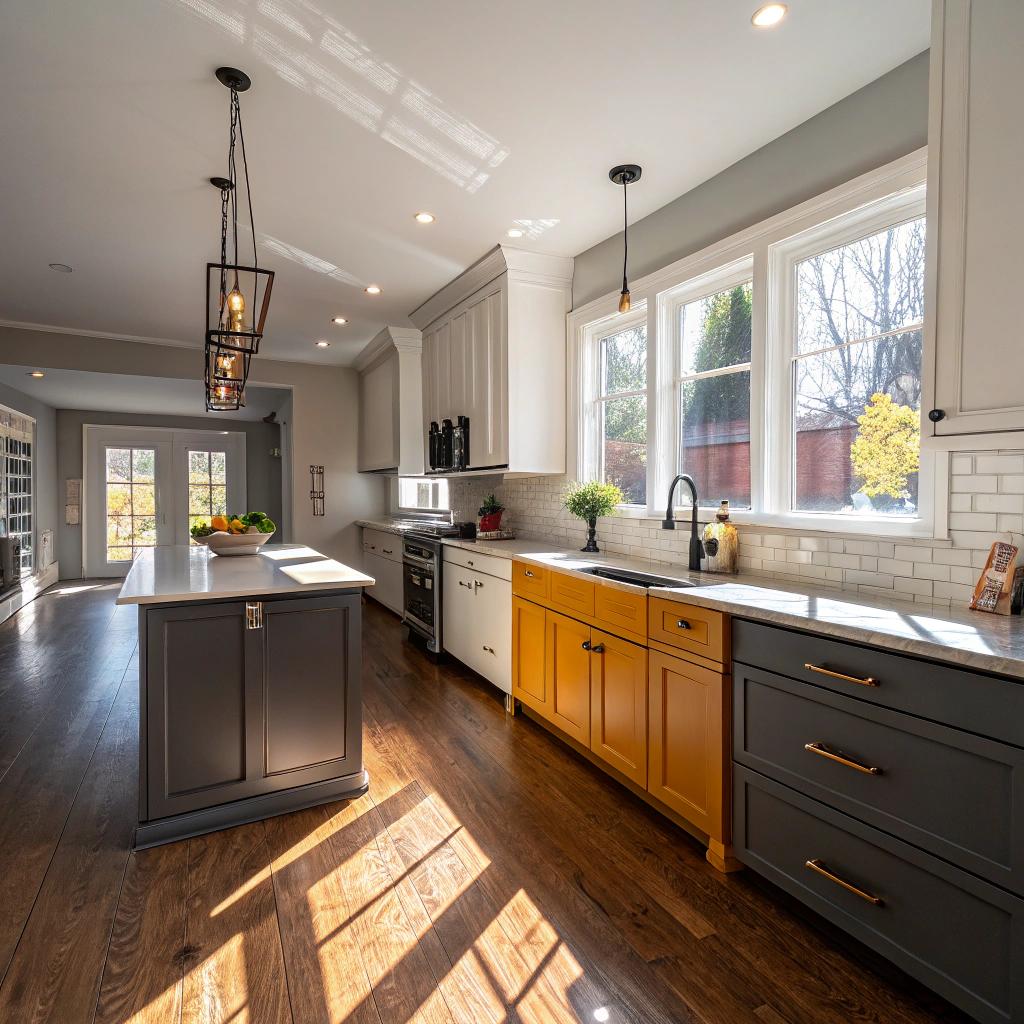
So you are planning a kitchen renovation in Belleville and want a clear guide to floors and layout. You should start by deciding how you cook and move in the space, then choose a layout that fits that flow, and only after that pick flooring that can handle local weather, traffic, and your maintenance tolerance.
Most people try to pick cabinets or pretty tiles first and then struggle to make the kitchen work. The truth is, if you get the layout and flooring wrong, you will feel annoyed every single day, no matter how nice your doors or backsplash look. Belleville also has its own little quirks: snow, salt, temperature swings, older homes with uneven subfloors, and a mix of smaller city kitchens and wider rural ones. All of that affects what layout and floor will actually hold up.
- Think about how you cook and what annoys you now before talking about products.
- Choose a layout that fits your room shape, not one from a magazine.
- Check your subfloor condition before falling in love with any flooring.
- For Belleville, factor in snow, grit, and seasonal humidity when picking floors.
- Plan outlets, lighting, and appliance locations together with your layout.
- Use mockups, tape on the floor, or cardboard boxes to test your layout in real size.
- Always compare flooring costs as installed cost, not just per square foot material price.
If you want someone local who deals with this all the time, a team that handles home renovation Belleville projects can walk through your space and spot things you may not see. But let me walk you through the basics first so those conversations are easier and you do not feel pushed into choices.
Start with how you actually use your kitchen
Before you think about layout rules or flooring charts, stop and picture a real weekday in your kitchen.
Do you cook most nights or only on weekends?
Do you bake?
Do kids or pets cut through the kitchen to reach the back door?
Does someone work from the dining table while you cook?
If you skip this part, you risk building a kitchen that looks neat but fights your habits.
Design the kitchen around your routines, not around what you think a “perfect” kitchen should look like.
A quick way to get clarity is to write down three lists:
- Things that drive you crazy now
- Things that already work well
- Things you wish you had
Some examples:
- “The fridge door blocks the oven when it is open.”
- “The garbage is too far from the prep area.”
- “I want a spot to drop groceries as I walk in.”
- “We need a place where kids can sit without getting in the way of cooking.”
Those notes are more useful than a dozen Pinterest boards. They steer choices when you face tradeoffs, and you will face several.
Understanding the main kitchen layouts
Most Belleville kitchens fall into a few common shapes, especially in older brick homes and post‑war houses. You rarely get a blank square box. There are doors, windows, radiators, bulkheads, odd corners.
Here are the main layout types and where they make sense.
Single wall kitchen
Everything sits along one long wall: sink, stove, fridge, cabinets.
Good for:
- Small apartments or secondary suites
- Basement in‑law units
- Very narrow rooms with one main wall
Pros:
- Simple and often cheaper to build
- All plumbing and electrical concentrated
- Leaves more open floor area for a dining table
Cons:
- Less counter space
- Harder to get good “triangle” movement between sink, stove, and fridge
- Often looks cluttered if storage is not smart
If you go this route, think about tall pantry cabinets at one or both ends, and keep the main prep area between sink and stove.
Galley kitchen
Two facing runs of cabinets and appliances, usually with a walkway in the middle.
Works well in:
- Townhouses and narrow detached homes
- Spaces where you can close one end with a door or archway
Pros:
- Very practical for cooking; everything is close
- Good use of space in smaller rooms
- Plenty of counter space if both sides have full runs
Cons:
- Can feel tight if walkway is too narrow
- Not great for seating inside the kitchen
Aim for at least 42 inches of walkway width, 48 if two people cook together. Less than that and you will bump into each other all the time.
L‑shaped kitchen
Two runs of cabinets that meet in a corner. Often this is what you see in Belleville bungalows where the kitchen opens to a small dining area.
Good for:
- Medium sized rooms
- Open concept to dining or living spaces
Pros:
- Nice flow, especially if you add an island later
- Corners can hold lazy Susans or blind corner pullouts
- You can usually add a small table or peninsula
Cons:
- Corner cabinets are tricky and can waste space if done badly
- Appliance doors can clash near the corner if you do not plan carefully
Try to keep the sink near a window if you have one. It sounds old‑fashioned, but people still like standing at the sink with some natural light.
U‑shaped kitchen
Cabinets on three sides. Sometimes one side is open to the dining room with a half wall.
Pros:
- Lots of counter and storage
- Easy to keep cooking zone compact
Cons:
- Can feel closed in if uppers are on all three sides
- Two corners to solve, not just one
Many Belleville homeowners remove uppers on the window wall or bring one side down to a peninsula height to stop it from feeling like a cave.
Island kitchen
This is more of an addition to the shapes above. An island can hold a sink, cooktop, seating, storage, or any mix of those.
Questions to ask before adding an island:
- Do you have at least 36 to 42 inches of space on each side of the island?
- Will appliance doors open without hitting it?
- Will it block the main path from entry to backyard or basement stairs?
People often want an island because it looks modern, but in a tight Belleville kitchen it can hurt more than help. A peninsula can sometimes give you almost the same function while keeping a clearer path.
The work triangle vs real life zones
You have probably heard of the “work triangle”: sink, stove, and fridge should form a triangle, each leg between 4 and 9 feet. That old rule still helps, but modern kitchens have more going on.
Today, you often have:
- Coffee or breakfast station
- Kids homework zone
- Snack and fridge access when someone is cooking
- Smart devices or charging spots
So instead of only thinking about the triangle, think about zones:
- Prep zone: between sink and cooktop, good lighting, main knives, cutting boards
- Cooking zone: around the range, pots, pans, spices
- Clean‑up zone: sink, dishwasher, garbage, recycling
- Snack and drink zone: fridge, maybe a small section of counter, glasses
- Storage zone: pantry, overflow items, bulk food if you shop at Costco
Place each zone so people who are not cooking can still grab snacks or drinks without stepping into hot or sharp spaces.
For example, in a Belleville family home, it is common to keep the fridge on the edge of the kitchen, closer to the living room or hallway. That way, kids can grab things without cutting through the main prep area.
If you do not cook much, you might shrink the cooking zone and make a bigger coffee and snack area. That is fine. You are not wrong for not following some old rule from a design book.
Common layout mistakes in Belleville homes
Every city has patterns. In Belleville, a few issues show up again and again in older houses and rushed remodels.
Appliances too close together
You open the fridge and cannot pull a pan from the oven. Or the dishwasher door blocks the only path through the kitchen.
To avoid this:
- Leave some counter space between major appliances where possible.
- Think about door swing direction; you can often choose left or right hinges.
- Mock up doors with painter tape on the floor to see where they reach.
Not enough landing space
You need a place to put things down next to the fridge, stove, and sink. Without it, groceries and hot pots end up on the floor or random chairs.
Try for:
- At least 15 inches of counter on the handle side of the fridge
- At least 15 inches on one side of the cooktop, 12 on the other
- Counter on at least one side of the sink, ideally both
Ignoring traffic flow
Think about the path from:
- Front or side door to the fridge
- Back door to the yard
- Stairs to bedrooms or basement
If someone has to cut through the main cooking zone every time they go outside, you will get frustrated fast. Sometimes moving a doorway just a foot or two makes a big difference. In some Belleville brick homes, removing a small portion of a wall opens things enough without tearing everything down.
Flooring basics for kitchens in Belleville
Layout affects how you move. Flooring affects how the kitchen feels under your feet and how long it looks good.
Belleville has a few local factors:
- Snow and slush in winter
- Salt and sand tracked in from driveways
- Older homes with uneven or creaky subfloors
- Basements and crawlspaces that can bring moisture
So while a glossy hardwood might look nice on Instagram, you need to think about grip, cleaning, and movement.
Here is a simple comparison of common kitchen flooring options:
| Floor type | Water resistance | Comfort underfoot | Scratch resistance | Typical price range (material only) |
|---|---|---|---|---|
| Luxury vinyl plank (LVP) | High | Moderate to soft | Good, varies by brand | Low to medium |
| Vinyl sheet | Very high | Soft | Good | Low |
| Porcelain or ceramic tile | Very high | Hard | Excellent on surface, grout can mark | Low to high, wide range |
| Engineered hardwood | Moderate | Warm, slightly softer | Medium | Medium to high |
| Solid hardwood | Low to moderate | Warm | Medium | Medium to high |
| Laminated flooring | Moderate (higher with waterproof lines) | Moderate | Good, but chips can show | Low to medium |
Prices change a lot by brand and installer. The main point is that tile and vinyl handle water best, while wood needs a bit more care.
Luxury vinyl plank and vinyl sheet
This is probably the most common choice right now for busy Belleville families.
Pros:
- Water resistant or even waterproof varieties
- Softer and warmer than tile
- Good grip if you choose a textured finish
- Wide choice of looks, from wood to stone
Cons:
- Cheaper lines can look fake or shiny
- Can fade if you get a lot of direct sun
- Sharp objects can gouge it
If you pick vinyl:
- Choose a thicker wear layer for kitchens.
- Ask the installer about subfloor prep; vinyl follows bumps.
- Check warranty around water and appliance leaks.
In some older Belleville homes with uneven floors, vinyl can hide a bit of that, but not everything. Leveling might still be needed.
Tile flooring
Porcelain or ceramic tile is classic for kitchens. It loves water and laughs at messy cooks.
Pros:
- Very durable
- Great for people with pets
- Works well with in‑floor heating
Cons:
- Hard on feet and backs during long cooking sessions
- Cold without heated floors
- Grout can stain without sealing and care
- Anything you drop tends to break
Also, tile needs a stiff, solid subfloor. In older houses near the Moira River or in parts of East Hill, floors can slope or bounce a bit. That movement can crack grout or tiles.
If you love tile, have someone check:
- Joist size and spacing
- Subfloor thickness
- Whether any extra plywood or backer board is needed
Never choose tile only because you saw a pattern online; choose it because your floor structure can support it and your body can live with standing on it.
Some people mix it by using tile in high splash areas and another flooring in adjacent rooms, but that adds transitions you need to think about.
Hardwood and engineered wood
Wood in the kitchen looks warm and ties into older Belleville homes nicely. But it makes some people nervous.
Solid hardwood:
- Looks great and can be refinished
- Does not love standing water
- Expands and contracts with humidity
Engineered wood:
- More stable with humidity swings
- Can handle light spills if wiped quickly
- Finish quality matters a lot
If your whole main floor is hardwood, many installers prefer to continue it into the kitchen for a clean look, then use mats in front of sink and stove.
Things to be honest with yourself about:
- Do people wipe spills right away or not?
- Do you have a dog that drips water after drinking?
- Are you ready for gentle rather than harsh cleaners?
If the answer is no, vinyl that looks like wood might serve you better, even if you like the idea of “real” wood.
Laminated flooring
This used to be a bad idea for kitchens because of swelling from water, but waterproof lines changed that somewhat.
Pros:
- Budget friendly
- Many realistic wood looks
- Tough against scratches
Cons:
- Seams can still be vulnerable if water sits
- Hollow sound if not installed with good underlay
- Edges can chip
If you choose laminate, look very closely at the warranty conditions around water, and consider how your family actually lives, not how you wish they would live.
How layout and flooring decisions interact
People often treat layout and flooring as separate. They are not.
Some examples:
- If you plan an island, where will stools sit? Those areas will see more scuffing.
- If your main entry to the house is through the kitchen, the path from door to hallway will need tougher flooring.
- If you move a wall, the subfloor under that wall might need repair before new flooring.
Say you choose tile. You may not want it in the adjoining living room, so you will have a transition. Carefully place that line so it does not cut through a doorway awkwardly. In Belleville homes where the kitchen opens to a small dining room, many people run the same flooring through both rooms to avoid a choppy feeling.
Or, suppose you pick a dark floor. Then, in winter, salt and sand will show more. You may find yourself cleaning daily, which some people do not mind and some hate.
Try to walk an imaginary day:
- You come in with wet boots.
- You drop grocery bags.
- You start dinner while kids do homework nearby.
- You clean up while someone else puts leftovers away.
Now imagine that on tile, on wood, on vinyl. Which one makes you feel relaxed instead of tense?
Budget planning for floors and layout
People often ask, “How much will this cost?” That question is fair, but there is no simple answer.
A better way is to break it into pieces:
- Layout changes: walls moved, doors relocated, windows changed
- Mechanical work: plumbing, electrical, HVAC adjustments
- Cabinetry: boxes, doors, hardware
- Countertops
- Flooring: material plus prep plus installation
- Backsplash and finishing touches
Flooring itself can range widely. What matters is the total installed cost. A cheap tile with high prep cost can end up more expensive than a midrange vinyl that needs less work underneath.
Ask for quotes that separate material, subfloor prep, and installation; that way you can make honest tradeoffs instead of just chasing a “per square foot” deal.
You might decide to:
- Simplify the layout a bit to free budget for better flooring.
- Pick a midrange vinyl but invest in sound underlayment and careful installation.
- Keep your current kitchen layout but upgrade floors and lighting first.
Some people in Belleville are surprised to learn that leaving the sink in the same spot but moving a non‑load‑bearing wall can make the space feel new while keeping plumbing costs down. So you do not always have to gut everything to get a big change.
Dealing with older Belleville homes
If you live in an older area like East Hill or some parts near the downtown core, your house might have quirks: sloped floors, plaster walls, small windows, odd vents.
These can affect layout and floor choices.
Uneven floors
You might have:
- Floors that dip toward the center
- Old repairs that left bumps
Vinyl and laminate follow the shape beneath them. Tile can crack if movement is too big. Cabinets need level bases or doors will not hang right.
What usually happens:
- Installer checks level over the full room.
- They suggest self‑leveling compound or plywood shimming.
- You decide how perfect you want it vs how much to spend.
No house is perfect, and you do not need perfection. You just need stable, safe, and visually reasonable.
Limited natural light
Many older kitchens have one small window. Dark floors and upper cabinets can make them feel smaller.
You might pick:
- Lighter floor color with a matte or low sheen finish
- Softer contrast between cabinets and floor for a calmer look
It is not about trends. It is about whether you feel like you are cooking in a cave at 5 pm in January.
Testing your layout before you commit
One of the simplest, most human things you can do is just tape it out.
- Use painter tape to mark where cabinets, fridge, and island will sit.
- Set up cardboard boxes at the height of counters.
- Walk the space as if you are making dinner.
Open imaginary doors. Pretend you carry a baking sheet, or a pot of pasta you just drained. Do you bump into corners? Do you feel hemmed in?
If something feels off at this stage, it will feel worse once you spend money.
Also, be honest about habits. If your family likes to gather in the kitchen, leave more room around the spot they usually stand, even if a design guide says “you only need X inches here.” You live there, not the guide.
Questions people in Belleville often ask
Is open concept always better for my kitchen?
Not always. Open concept can bring more light and make small homes feel bigger, but it also spreads cooking smells and noise through the whole floor.
If you like to close the door and leave a mess for later, you might prefer a partial wall or a wide cased opening instead of a full tear‑down. Also, some older Belleville homes rely on walls for support. Removing them is possible but costs more. Sometimes a wider doorway plus better layout gives enough of an open feel.
What flooring holds up best to kids and pets?
For most busy families, luxury vinyl plank or tile performs well.
Vinyl:
- Gentler on falling toys and dishes
- Quiet and warm
- Easy to clean spills and paw prints
Tile:
- Very tough against claws and sliders
- Great for water and mud
If your dog is older, consider grip. Shiny tile can be slippery. Look for textured surfaces.
Can I mix different floors between kitchen and living room?
Yes, but plan the transition carefully. Try to:
- Line it up with a doorway, a beam, or some logical break
- Keep transitions flush in height to avoid trip edges
Some people regret sharp color switches; a dark kitchen tile next to a very light living room floor can feel chopped up. It might still be right for you, but use samples side by side before deciding.
Do I need to move plumbing to get a better layout?
Not always. Moving plumbing adds cost, but sometimes sliding the sink along the same wall is less complex than you think. On the other hand, moving it to a new wall or into an island can involve more work, including venting and perhaps opening floors.
If your budget is tight, keep big fixtures close to where they are and work layout around them. You might fix 80 percent of your daily annoyances just by moving appliances and cabinets, not pipes.
What should I decide first: layout or flooring?
Layout first. Flooring choice comes right behind, since it ties into height, subfloor prep, and room feel, but if you try to force the layout to fit a tile pattern you saw online, you may end up with a pretty floor and an annoying kitchen.
Once you know roughly where things go, you can check whether certain flooring types make sense in those zones, and whether your budget agrees.
If you walk through your current kitchen right now, what is the one thing about the layout or floor that bothers you most, and what would need to change for that single thing to improve?