
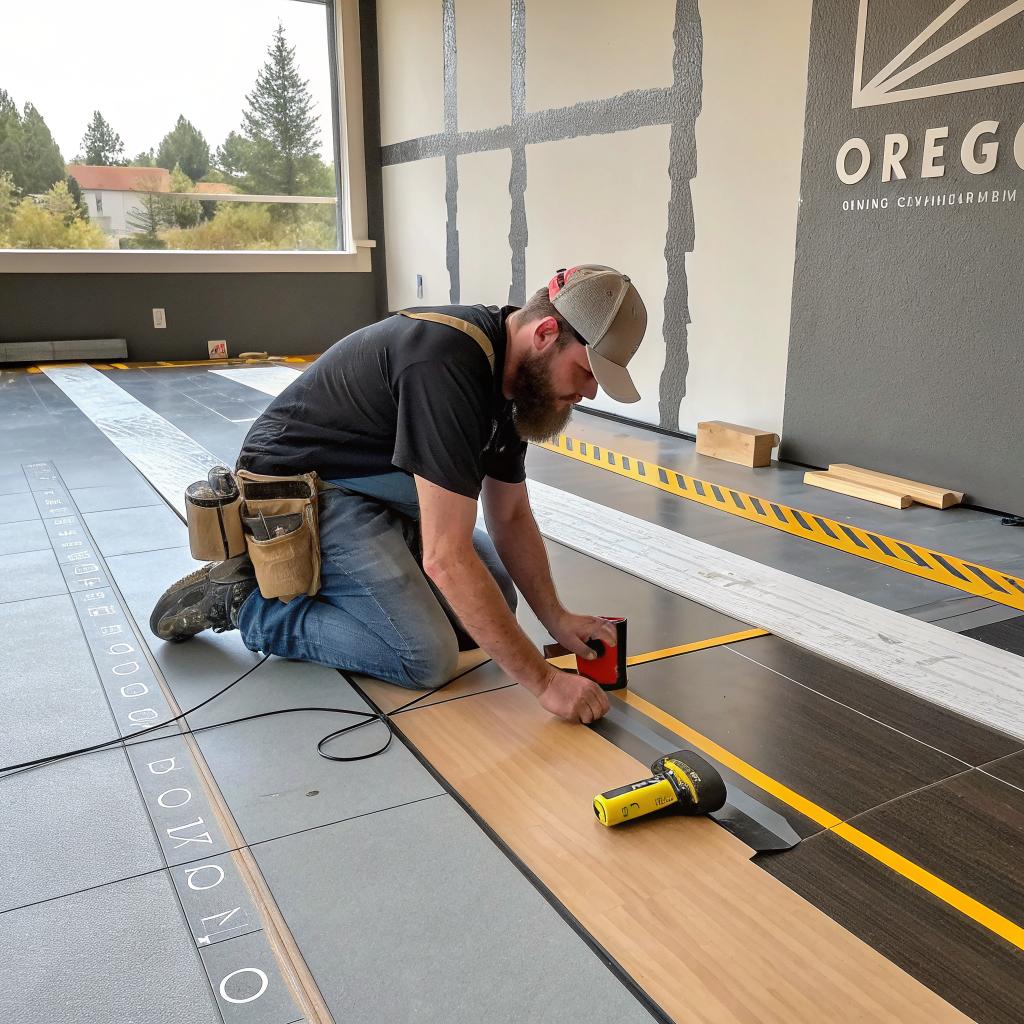
So, you are trying to figure out how the right general contractor in Oregon actually changes the way your flooring turns out, not just who installs it. The short answer is that the right contractor plans better, coordinates trades, handles subfloor and moisture issues, chooses the right materials for your home and climate, and catches mistakes before they become expensive problems.
That is the practical side of it. Flooring projects look simple from the outside. Pick a material, choose a color, schedule an installer, done. In real life, the quality of the floor you walk on for the next 10 or 20 years comes from what you do before the first plank or tile is laid. That is where a good contractor makes a real difference, especially in a state like Oregon where moisture, temperature swings, and older homes all add complexity.
- Things you need to know:
- The contractor you choose affects durability more than the material itself.
- Oregon homes have special flooring needs because of moisture and temperature.
- Subfloor repair and preparation decide if your new floor squeaks or stays solid.
- Good contractors coordinate electricians, plumbers, and flooring installers so your floor is not damaged later.
- Permits, inspections, and code issues sometimes apply even to flooring projects.
- Cheap bids often skip unseen work under the floor that you actually need.
- The right contractor protects you from warped boards, cracked tile, and warranty issues.
You might already know some of this. But the details matter, and in my experience, people usually regret saving money on the person who manages the project instead of on something small like trim or baseboards.
How a contractor in Oregon shapes your flooring project from day one
If you live in Oregon, you already know you live with a lot of rain and damp seasons, and in some areas, big seasonal swings. That affects what is under your floor, not just what is on top of it.
When you hire a general contractor Oregon who understands local conditions, they do not just say “Sure, we can put in vinyl plank.” They start by asking questions that might feel a bit nosy but are actually useful:
- Is this a daylight basement or over a crawl space?
- Do you get condensation on windows in winter?
- Have you ever had moisture or musty smells near this room?
- How long do you plan to stay in the home?
- Do you have pets, kids, or heavy furniture?
These answers guide everything from subfloor prep to final finish. A contractor who skips this step often just wants to get to the visible work fast, which feels efficient, but usually is not.
The right contractor in Oregon treats your flooring project as a system: structure, moisture, insulation, sound, and appearance, not just a new surface.
Project planning that fits real life, not just the estimate
A real project plan for flooring should cover more than square footage. A good contractor will talk through:
- Where you will walk and live during the work
- What you need to move out of the rooms
- How they will handle dust and debris
- How long adhesives, stains, or finishes need to cure
- What happens if they find rot or damaged joists
I have seen people try to live at home while installing solid hardwood everywhere at once. On paper, it looked fine. In reality, they ended up sleeping in the garage for three nights because the finish smell was too strong. A more thoughtful contractor would have planned the job in phases.
Oregon climate and why it matters for flooring
Running flooring in Arizona is not the same as running flooring in Oregon. In Oregon, you deal with:
- High humidity in coastal and valley areas
- Condensation in winter, especially in older homes
- Cooler subfloors over crawl spaces
- Basements that can get damp or even leak
A contractor who has worked locally for a while will usually have real stories of projects that went wrong because moisture was ignored. For example, hardwood that cupped in a coastal town, or laminate that swelled over an unventilated crawl space.
In a wet climate, nearly every flooring failure is some version of the same problem: moisture was not taken seriously enough from the start.
Material choices that fit Oregon homes
A contractor does not just install what you pick. At least, a good one does not. They guide your choices.
Here is a simple table that shows how a thoughtful contractor might compare flooring options for an Oregon home.
| Flooring type | Best areas in Oregon homes | Main risks | What a good contractor checks |
|---|---|---|---|
| Solid hardwood | Living rooms, bedrooms, upper floors | Cupping, gaps, movement from humidity | Moisture readings, acclimation time, HVAC stability |
| Engineered hardwood | Main floors, some basements if dry | Delamination if moisture is high | Vapor barriers, subfloor moisture, product rating |
| Luxury vinyl plank (LVP) | Basements, kitchens, rentals, pet homes | Subfloor irregularities, cheaper products denting | Flatness of subfloor, brand quality, transitions |
| Laminate | Living areas away from moisture | Swelling with spills or leaks | Water sources nearby, underlayment, room use |
| Tile | Baths, entries, some kitchens | Cracked grout, cold floors, slippery surface | Subfloor stiffness, movement joints, radiant heat |
This is the sort of thinking you want your contractor to share with you, not keep to themselves. If they just say “Everything is fine everywhere” that is a bit of a red flag.
Subfloor work: the part no one sees but everyone feels
The most direct way a contractor improves flooring is by taking the subfloor seriously. That is usually the plywood or OSB or concrete under everything.
If you have ever walked on a “new” floor that squeaks or feels uneven, odds are the installer focused more on speed than on fixing what was under the surface.
What a careful contractor does before installing flooring
Here are some concrete actions you should expect:
- Check for loose or squeaky areas and reattach the subfloor to joists.
- Level or flatten high and low spots with grinding or patching compounds.
- Inspect for water stains, rot, or mold and propose fixes, not coverups.
- Measure moisture in wood or concrete, not just guess by feel.
- Choose underlayment that fits the flooring type and the space.
It might feel uncomfortable when a contractor lifts your carpet and says, “You have some rot here, this will add to the cost.” But that is actually what you want. The awkward conversation now prevents much larger costs later, like sagging floors or mold.
If your contractor never finds a problem under old flooring, they are either extremely lucky or not looking closely enough.
Subfloor and Oregon crawl spaces
Oregon homes with crawl spaces bring extra challenges. The air under your floor can get damp, especially in valley and coastal areas. That moisture creeps up into the subfloor.
A smart contractor will:
- Look at vents, vapor barriers, and drainage in the crawl space.
- Recommend sealing gaps or adding a better vapor barrier when needed.
- Check for sagging or cracked joists before adding new flooring weight.
Does everyone do this? No. Many flooring-only installers just want a flat surface. The general contractor should care about the bigger picture.
Coordination with other trades so your flooring is not ruined later
Flooring is rarely the only thing happening in a renovation. You might also have:
- Cabinet work in the kitchen
- Plumbing changes in a bathroom
- Electrical updates and new lighting
- New interior doors or trim
If you hire a contractor who actually coordinates all of this, flooring goes in at the right moment. If not, you can get avoidable damage. For instance, I have seen:
- Heavy appliances rolled over fresh hardwood without floor protection
- Plumbers cutting into brand new subfloor and not sealing around penetrations
- Cabinets installed before uneven subfloors were corrected, forcing awkward transitions at the flooring
A practical contractor sequences work like this:
- Demolition and subfloor repair
- Rough plumbing and electrical that affect floor layout
- Framing or structural changes
- Subfloor leveling and moisture barriers
- Cabinet base installation (depending on the flooring type and plan)
- Flooring installation and transitions
- Trim, baseboards, and touchups
There is some debate about whether flooring should go under cabinets or up to them. This is where a contractor might give you a few options with pros and cons, instead of pretending there is only one “right” way.
Design and layout choices that change how your flooring feels
Contractors are not interior designers, but good ones develop an eye for layout. They can catch design choices that look fine in a sample but feel awkward across an entire room.
Room flow and plank direction
The direction you run planks or boards affects how a room feels. It is not just a style choice; it is also structural.
A good contractor will look at:
- The direction of joists under the floor
- Natural light sources and main views
- How one room meets another at thresholds
Typical guidelines:
- Run planks perpendicular to joists for better support.
- Run planks along the longest line of sight for a cleaner look.
- Avoid creating narrow “slivers” of plank at transitions and walls.
Sometimes these guidelines conflict. A thoughtful contractor will explain your options, not just pick whatever is easiest.
Transitions between rooms
One of the big differences between a floor that “looks expensive” and one that feels cheap is how rooms meet each other.
You will see two main styles:
- Continuous flooring through several rooms
- Separate rooms with thresholds or transition strips
Continuous flooring looks cleaner but needs more attention to expansion gaps and layout planning. Thresholds are a bit easier to install but can interrupt the visual flow.
Your contractor should talk with you about:
- Where to change direction or use transitions
- How to handle different floor heights between rooms
- What happens if you renovate an adjacent room in the future
Budget, bids, and what “cheap” really means for flooring
People often compare flooring bids by price per square foot. That is not a great way to judge a contractor, especially in Oregon where moisture, subfloors, and structural details can vary a lot.
You might get three bids like this on the same project:
| Bid type | Material cost | Labor cost | Subfloor work included | Moisture control included | Warranty details |
|---|---|---|---|---|---|
| Lowest bid | Budget materials | Low | Minimal, “as needed only” | Rarely included | Short, limited |
| Mid-range bid | Moderate quality | Average | Some leveling and repairs | Basic barriers where obvious | Standard warranty |
| Detailed bid | Better materials with options | Higher | Full inspection, line-item repairs | Moisture readings and planned barriers | Clear coverage of labor and materials |
On paper, the lowest bid looks attractive. But that low price often hides the exact work that protects your flooring from Oregon moisture and structural issues.
When comparing bids, ask yourself: “What work under the floor is included here, and what happens if a hidden problem shows up?”
A contractor who gives you a very short, vague description of the work might not be trying to trick you, but they are not giving you enough information either. That is where you need to push back and ask for more detail.
Permits, codes, and when flooring is more than “just flooring”
People often assume flooring is purely cosmetic. In some cases, that is true. Pull up carpet, lay vinyl, no one cares. In other cases, flooring connects to structural or code issues.
Examples where your general contractor should think about permits or codes:
- Changing floor height enough to affect stair rise and run
- Adding heavy tile or stone on older joists
- Running new radiant heat under the floor
- Working in basements where egress and moisture rules apply
In Oregon, local jurisdictions can have their own rules. A contractor who actually works in your county or city usually knows where they need to pull a permit and where they do not. If someone says “You never need a permit for flooring” that is too broad of a claim.
How a contractor protects your flooring investment over time
Good flooring is not just about how it looks on install day. It is also about how it holds up over years of use, cleaning, pets, and kids.
Product choices and warranties
Contractors often have brands they trust because they have seen them survive real life. They also know which products cause repeated callbacks.
They should help you answer questions like:
- Is this flooring rated for bathrooms or just “moisture resistant” marketing?
- Does the warranty cover residential or also light commercial use?
- Are specific underlayments or adhesives required to keep the warranty valid?
- Will this product handle radiant heat if you have it or add it later?
If your contractor seems uninterested in the technical details, you might want to be more cautious. Flooring warranties can be picky. An incorrect underlayment can void coverage.
Care, maintenance, and realistic expectations
A responsible contractor will speak honestly about what your flooring can and cannot handle. They might even push back against your first idea.
For example:
- If you want soft pine floors and have large dogs, they might warn you about dents.
- If you love glossy tile, they might warn you it will show every footprint.
- If you want thick carpeting in a damp basement, they will likely warn you about mold.
You might not like hearing that at first. It can feel like they are blocking your style. But that tension is usually a good sign. You want a contractor who is willing to disagree with you when needed, not just nod along.
How to tell if a contractor is actually good with flooring
Not every general contractor is strong on flooring. Some focus more on framing or exterior work. That is fine, but you should know who you are dealing with.
Here are a few simple checks you can do:
Questions to ask before you sign
- “Can you show me photos of flooring projects you completed in the last couple of years?”
- “How do you handle moisture checks for basements or concrete slabs?”
- “What do you usually find when you pull up old flooring in homes like mine?”
- “Who does the actual install: your crew or a separate flooring installer?”
- “If you find subfloor damage or rot, how do you communicate the extra cost?”
You are not trying to interrogate them. You just want them to talk. A contractor with real flooring experience will usually have stories, not just short answers.
Red flags to watch for
- They quote a price before asking about subfloors, moisture, or room use.
- They dismiss your concerns with “It will be fine” without details.
- They refuse to put subfloor or moisture work in writing.
- They avoid any discussion of local building codes or permits.
You do not need perfection, but you deserve honest detail. Flooring is not something you want to redo every few years because of early mistakes.
Practical examples from Oregon-style homes
To make this less abstract, it helps to think through a few common Oregon situations.
Case 1: 1970s home in the Willamette Valley
You have a typical split-level or ranch, original carpet on the main floor, maybe some sheet vinyl in the kitchen. You want luxury vinyl plank through the whole main level.
A good contractor in this situation will probably:
- Pull a section of carpet and pad to inspect the particle board or plywood.
- Check for pet stains or past leaks around the dishwasher and sink.
- Inspect transitions at the stairs for code-compliant heights.
- Plan for door undercutting if the new flooring is thicker.
You might think “Just lay it over what is there.” But if there is swelling or soft spots, that shortcut will show up as flexing or gaps later.
Case 2: Older Portland craftsman with basement
You want nicer flooring in the basement, which has some older concrete with small cracks and minor moisture.
A careful contractor will:
- Test moisture levels in the slab with proper tools.
- Look for any signs of water intrusion from walls, not just the floor.
- Recommend a suitable underlayment or barrier under LVP or engineered wood.
- Be honest if certain areas should stay tile or a different surface.
They might seem cautious or even negative at times. That is better than someone who says, “No problem, we lay LVP everywhere” and vanishes after the check clears.
Case 3: Coastal Oregon vacation home
Salt air, higher humidity, and sometimes less consistent heating. You want something that looks nice but does not demand constant care.
The right contractor will likely steer you toward:
- High quality LVP or tile in high traffic and wet areas
- Engineered wood instead of solid in rooms you want to feel warmer
- Proper acclimation periods for materials before install
They might also strongly recommend better ventilation or minor upgrades in problem areas before touching the flooring. That can feel like “extra” at first, but it is tied directly to how long the floor will last.
What if you already picked your flooring but not your contractor?
This is common. You fall in love with a specific product at a flooring store or online, then start looking for someone to install it.
If that is your situation, you still have room to choose wisely.
You can:
- Bring the product details and installation guide to contractor meetings.
- Ask the contractor how they usually handle that brand or material.
- Confirm they are fine following the manufacturers installation instructions.
- Discuss subfloor and moisture details upfront before signing.
If a contractor seems annoyed by the installation instructions or dismisses them, that is not a good sign. Those instructions are part of what keeps your warranty valid.
Common questions about contractors and flooring in Oregon
Can I skip the general contractor and just hire a flooring installer?
Sometimes, yes. If you are replacing carpet with carpet or doing a simple floating floor in a small, straightforward space, a good flooring installer might be enough.
But if you:
- Have moisture concerns
- Need subfloor repairs
- Are changing layout, walls, or cabinets
- Are working in a basement or older home
then having a general contractor coordinate the work is safer. Flooring problems rarely stay “just flooring problems” when structure and moisture are involved.
Is it overkill to worry this much about flooring?
Honestly, sometimes it is. Not every project needs deep analysis. But if you are spending serious money on materials and want them to last a decade or more, it makes sense to be careful.
Think about where you notice floor issues in other houses: squeaks, soft spots, transitions that catch your foot, tiles that sound hollow, boards that separate in winter. Those are mostly planning and preparation issues, not just material issues.
What is the single best question to ask a potential contractor?
One useful question might be:
“What is the worst flooring problem you ever had on a project, and how did you solve it?”
You are not looking for a perfect record. You are looking for honesty and problem solving. If they say, “I have never had a problem,” that is hard to believe. Real contractors in Oregon have all dealt with moisture, squeaks, or product defects at some point.
So, if you are planning a flooring project, which part worries you more right now: choosing the material, or finding the contractor who will actually make that material perform the way it should?