
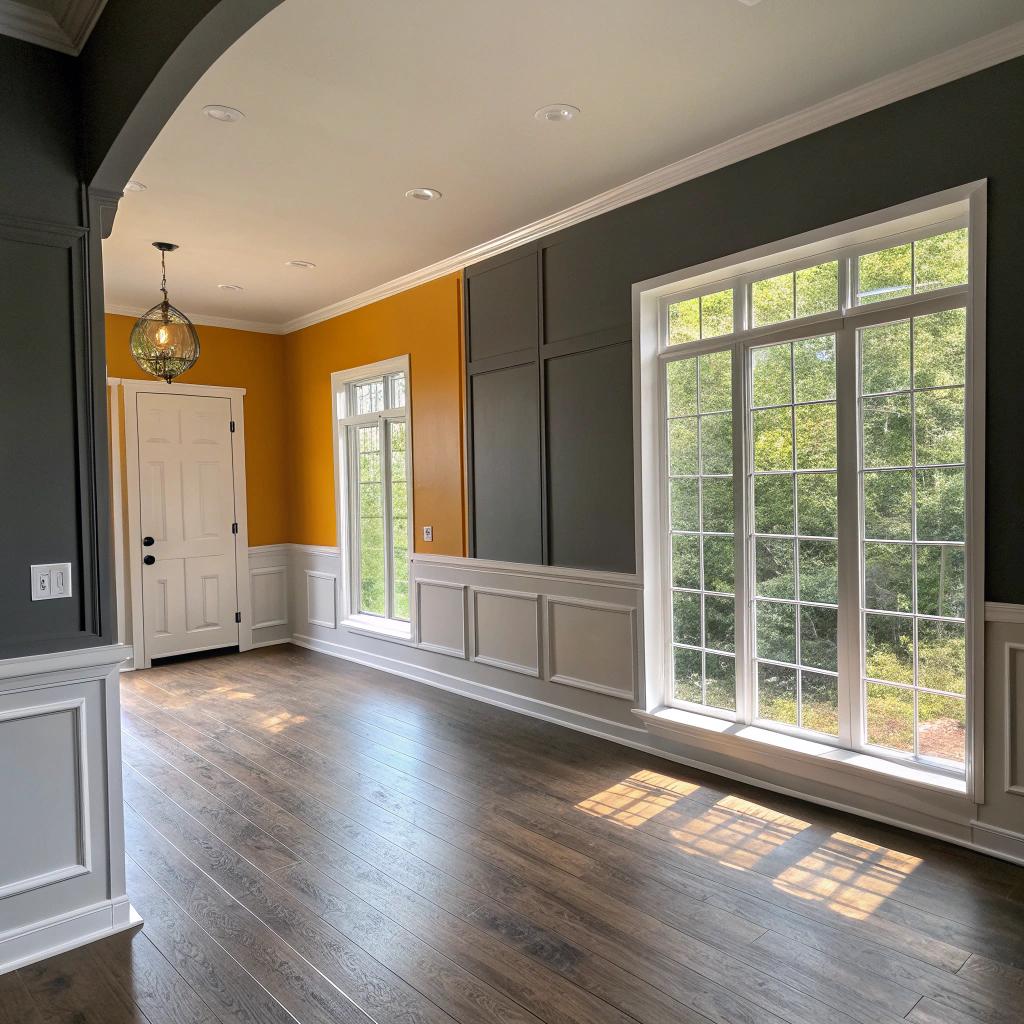
So, you are trying to figure out how house painters Thornton actually transform floors and walls, not just slap some paint on and leave. They do it by preparing the surfaces properly, using the right products for each material, and paying attention to the details that most people skip.
In other words, the big difference is in the process. Good painters do far more than color changes. They repair damaged drywall, seal stains, prime correctly, work around existing flooring, refinish or coat floors, and coordinate colors so your home feels like one space instead of a patchwork of random rooms. That is what makes a room feel “finished” instead of “just painted.”
If you care about flooring and home renovation, this matters a lot. Paint sits right next to your baseboards, stairs, railings, built-ins, and trim. If the walls look rough, the nicest floor will still feel off. And if the floors are chipped, scratched, or yellowed, fresh paint will not fully help. Floors and walls need to support each other visually and practically.
- Paint is only part of the job. Prep, repairs, and protection of floors are often more important.
- Good painters understand different surfaces: drywall, plaster, brick, concrete, and wood floors.
- The way they tape, mask, and cover flooring changes how your finished space looks and lasts.
- Color choices for walls affect how your floors appear: warmer, cooler, darker, or lighter.
- Floor and wall finishes need to match your lifestyle, not just look nice in photos.
- Professional results usually come from a system, not from one magic product.
If you want to see this in real life, you can look at what local house painters Thornton are doing in newer and older homes. You will notice they spend a lot of time on taping floors, fixing imperfections, and choosing sheens, not just brushing paint on.
How pros look at a room: floors and walls as one picture
Most homeowners think in steps: “First I paint the walls, then later I will deal with the floor.” Painters who work in renovation-heavy areas like Thornton often think differently. They look at the whole shell of the room at once.
They tend to ask questions like:
- What kind of flooring is in here now? Hardwood, laminate, tile, carpet, concrete?
- Is the floor staying, getting refinished, or being replaced soon?
- Where are the natural light sources and shadows on this floor and walls?
- Are there moisture or temperature swings that will affect the finish?
Once they know those things, they decide how to handle products, sequence, and prep. That is where the real “transformation” begins, even if you do not see it yet.
The part you see, the paint color, is only as good as the parts you do not see: prep, repairs, and surface choice.
Typical process painters follow with floors and walls
Every company has its own habits, but most organized painters follow some version of this:
1. Protect and inspect the floors
Painters in occupied homes usually start by protecting what is already there.
- Move furniture or cover it fully
- Lay rosin paper or builder paper on hard floors
- Use plastic and tape on carpet edges and stairs
- Cover vents and small transitions where dust can collect
This part feels boring, but it is where a lot of DIY projects go wrong. One small gap in floor protection, and you end up with paint in a joint or along a plank edge that never quite comes clean.
Painters who do a lot of renovation work also check your floors at this point. They look for:
- Gaping baseboards or quarter round that needs caulk
- Damaged shoe molding
- Dents or chips near doorways
- Cracked tile at thresholds
They will not fix every flooring problem, of course, but they might flag issues that affect paint, such as gaps that will shadow or trim that needs filling.
2. Repair walls so floors do not steal the show
If you are on a flooring site, you probably care about visible seams, joints, and transitions. Walls have their own version of that: nail pops, tape lines, corner cracks, and dents.
Good painters usually:
- Patch holes and nail pops
- Re-tape bad joints where the tape is failing
- Feather compound out wide enough so the repair is not visible
- Sand and dust carefully, especially near finished floors
Drywall dust is no friend to new floors. It scratches and gets into tiny gaps. Professional painters are often more careful with sanding around floors than many drywall-only crews, because they know they will be the ones blamed if dust scratches the planks.
If a wall is wavy, the floor will look crooked. Your eye compares the two, even if you do not realize it.
That is why painters spend time fixing corners, shadow lines, and baseboard gaps. When walls are straight and smooth, floors look straighter too.
3. Prime with the floor and finish in mind
Primer is not only about adhesion. It also changes how walls and floors interact visually.
For example:
- White or light primers reflect more light on darker floors, making rooms feel taller.
- Tinted primers under deep colors can reduce the “banding” line where wall meets floor.
- Stain-blocking primers stop pet stains or water marks from bleeding and clashing with fresh flooring.
In basements or concrete slab rooms, painters might choose a specific primer that tolerates slight moisture. That matters if you have vinyl plank or engineered wood touching the walls, since moisture issues can show first as swelling trim or peeling paint.
4. caulk and trim to close gaps around flooring
That thin line where wall and floor meet is where the room either looks finished or sloppy. Painters help control that with caulk and sharp paint lines.
You will often see them:
- Caulk the top of baseboards where they meet the wall
- Fill gaps at inside and outside corners
- Touch up cured caulk along the bottom of base if it shows above the flooring
- Paint shoe molding to match trim or stain to match wood floors, depending on the style
When this is done right, you do not notice it. When it is done wrong, you can see dark gaps, uneven lines, or random color changes from room to room.
How color choices change how floors feel
Pain is not just “color on a wall.” It affects how you see the whole room, including the flooring you just paid for.
Warm vs cool tones with popular flooring types
Here is a simple way to think about it. Imagine some typical floor types and how wall colors can help or hurt.
| Floor type | Common issue | Wall color approach that helps |
|---|---|---|
| Yellowed oak hardwood | Looks dated or too orange | Soft neutrals with a tiny bit of gray or green to calm the yellow, not bright yellows or reds |
| Dark brown or espresso wood | Room feels heavy or small | Lighter walls, gentle off-whites or light greige, minimal contrast at baseboards to keep the eye moving |
| Cool gray vinyl plank | Space feels cold or flat | Warm whites, beige-grays, or soft taupes so the room does not feel like a warehouse |
| Beige carpet | Looks bland or “builder basic” | Neutrals with a slight depth, soft color in bedrooms, avoid walls that match the exact carpet color |
| Patterned tile | Visual clutter and busy feel | Simple walls, low contrast near the floor, more color higher up if needed |
Painters in Thornton and similar areas deal a lot with existing floors that people are not ready to replace yet. The right wall and trim colors can make older floors feel intentional instead of “we painted and hoped for the best.”
You do not always need new floors. Sometimes you just need wall colors that stop fighting with the floors you already have.
When painting comes before, after, or during flooring work
If you are planning both flooring and painting, the timing matters more than most people expect.
Painting before new flooring
Pros like this sequence in many cases.
Pros:
- You can be less stressed about drips on old floors that are about to be torn out.
- Walls, ceilings, and trim get finished without working around new floors.
- Dust and sanding happen before the new floor install.
Cons:
- Baseboards may need touch up after flooring and shoe mold install.
- Sometimes floor installers scuff fresh painted trim.
If you go this route, painters usually leave touch up paint labeled for the flooring crew or for a quick return visit.
Painting after new flooring
People do this when the flooring schedule comes first or when replacing carpet with hard surfaces.
Pros:
- Painters can match caulk and trim lines precisely to the final floor height.
- You see the final floor color when choosing wall paint.
Cons:
- More risk to new floors if protection is not serious.
- Extra care needed for ladders, scaffold, and sanding.
This is where well-trained crews really show their value. They know how to protect brand new floors, not just cover them in a rush.
Painting between flooring stages
Sometimes, especially in larger remodels, painters come in more than once.
For example:
- Ceilings and high walls get painted early while floors are still rough.
- Floors are installed or sanded and finished.
- Painters return for walls, trim, and final touch ups.
This staggered approach takes more coordination but often gives the cleanest result. If you work with contractors who communicate well, it might be the most stress-free version.
How painters deal with tricky surfaces: brick, concrete, and more
Homes around Thornton can have some odd mixes: interior brick, basement concrete, old paneling, and different additions added over the years. Painters who understand both walls and flooring look at each surface as its own little project.
Painting or staining interior brick near floors
Brick near the floor, like fireplace surrounds or accent walls, can either tie a room together or fight with both floors and walls.
Painters often have a few choices:
- Full solid paint on brick for a smooth, modern look
- Limewash or whitewash to soften the color but keep texture
- Stain products that change tone while keeping the brick look
They also think about how that brick meets the floor. Is there a hearth that projects into the room? Does it sit flush with hardwood or tile? These details affect how they tape lines and what color they choose for nearby trim.
Concrete floors and walls
Basements, garages, and some entry areas have concrete on both planes: floors and sometimes lower walls.
Painters might:
- Use masonry primers on concrete walls to avoid peeling
- Recommend an epoxy or concrete coating on floors in utility spaces
- Keep sheens coordinated so the floor and wall do not fight for attention
Painting both concrete floor and walls the same color can make a small space feel like a storage unit. Skilled painters usually tweak tones or sheens so there is still definition, but not sharp contrast right at the floor level.
The role of sheen in how floors and walls look together
Sheen is one of those topics people skip until something looks off. A lot of the “feel” of a room near the floor comes from how light bounces between the surface and the baseboards.
Here is a quick comparison:
| Surface | Common sheen | Effect near floors | Good for |
|---|---|---|---|
| Ceilings | Flat | Hides imperfections, keeps focus on walls and floors | Most rooms except bathrooms |
| Walls | Matte or eggshell | Soft glow, some washability, gentle with wood and tile | Living rooms, bedrooms, halls |
| Trim & baseboards | Satin or semi-gloss | Crisp break between floor and wall, easy to clean scuff marks | Throughout the house |
| Doors | Satin or semi-gloss | Reflects light, stands up to heavy use | All rooms |
If you pick very glossy walls right above a matte floor, your eye will go straight to that contrast line. Some people like that look. Many do not. Good painters usually recommend a gentle sheen step between floor, baseboard, and wall so it feels like one system.
Color gets all the attention, but sheen is what controls how “expensive” or “cheap” a surface looks next to your floors.
How painters protect your floors while working
From a flooring perspective, this may be the part you care about most. You do not want paint stuck in your grout or scratches in fresh hardwood.
Professional painters usually have a clear routine:
Coverings and tape
They often combine:
- Paper or cardboard floor protection on hard surfaces
- Plastic sheeting where liquids are likely to drip
- Quality masking tape along transitions, thresholds, and vents
Some even use temporary floor protection products that are designed for remodels. They resist tears and stick better over longer jobs.
The challenge here is not just covering the floor once. It is keeping the protection in place while people move ladders, tools, and paint around for days.
Tools and habits that matter
Experienced painters teach their crews habits such as:
- Do not drag ladders across protected floors; lift them instead.
- Keep paint buckets on a separate piece of cardboard.
- Clean roller frames and brushes away from finished areas.
- Vacuum or sweep before pulling up paper so grit does not scratch.
These habits sound small, but they separate careful work from “we got paint on the wall, so we are done.”
When painters also refinish or coat floors
Not all painting companies touch flooring. But some in areas with lots of older homes do. They might not fully replace floors, but they often refinish or coat them.
Typical services include:
- Light sanding and re-coating hardwood floors with clear finish
- Painting or staining stair treads, risers, and handrails
- Applying porch and floor paints on concrete or wood steps
This is where floors and walls really merge. For example, on stairs:
- Risers might be painted to match trim.
- Treads get stained or painted a darker color for contrast.
- Walls along the staircase use a durable finish because traffic is heavy.
If you think of your home as one project, not separate “paint” and “floor” pieces, choices like these tend to come out better.
Small painting details that help flooring shine
There are a lot of tiny jobs painters do that make a big difference once you step back and look at the space.
Here are a few of them:
Sharpening baseboard lines
A clean line at the top of your baseboards helps your floor feel straight and contained. If the paint on the wall bleeds down, or if the baseboard color is dingy, your nice floor looks less polished.
Painters often:
- Lightly sand trim before repainting
- Use a steadier hand or better tape at edges
- Match caulk edges to reduce shadows and hairline gaps
Door casings and thresholds
Where one floor meets another at a doorway, the trim helps that transition feel smooth.
Painters pay attention to:
- Consistent trim color from room to room, even if floors change
- Touching up casings after flooring installations
- Painting thresholds if they are wood and need a refresh
If you have three different floors meeting in a hallway, unified trim color can calm the chaos a bit.
Color continuity across open floor plans
Newer homes often have kitchens, dining, and living rooms that share one big flooring area. When walls change color too sharply between these spaces, the room can feel broken up.
Painters usually suggest:
- One main wall color across open areas, with accents used sparingly
- Trim and doors in one consistent color across the whole level
- Subtle shifts in color only where there is a natural break in flooring or architecture
This approach lets your flooring highlight zones without paint trying to create artificial divisions everywhere.
Questions to ask painters when you care about floors and walls
If you are talking with painters in Thornton or anywhere else and your main concern is how floors and walls work together, you can ask more direct questions. Not aggressive, just clear.
Some good ones:
- “How do you protect existing floors while painting ceilings and walls?”
- “What is your process around baseboards and transitions after new flooring is installed?”
- “Have you worked with floors like mine before? Hardwood, luxury vinyl, tile, etc.?”
- “Do you recommend certain sheens for high traffic rooms with hard flooring?”
- “How do you handle dust from sanding near finished floors?”
- “Can you help choose wall colors that work with this exact floor sample?”
If a painter gives very vague answers or seems uninterested in how paint and flooring affect each other, that is a sign. You are not being too picky. The two are directly connected in how your home looks and holds up.
What if you want to handle some work yourself?
You might be thinking of a mix: you paint some rooms, and hire pros for others. That is fine, but be honest with yourself about the level of detail you care about.
Here are some tasks many homeowners handle well:
- Painting walls in small rooms with existing, protected floors
- Touching up baseboards after a flooring project
- Painting closets, pantries, or utility rooms
Tasks where pros usually do noticeably better:
- Large open spaces with expensive hardwood or new tile
- Staircases, railings, and two story walls
- Rooms where you plan to sell or rent soon
- Areas with water damage, heavy repairs, or past paint failures
If your new floors are a big investment, it often makes sense to let a careful crew handle the painting part, at least around high-visibility areas and transitions.
Common mistakes that make floors and walls look disconnected
Sometimes people think something is wrong with their floors, when it is really the paint. Here are a few patterns I see often.
Too much contrast at the baseboard
Dark floor, stark white baseboard, deep wall color. On its own, that can be nice. In some rooms though, it creates so much contrast that your eyes never relax.
You can:
- Choose a softer white or off-white for trim instead of bright white.
- Use a slightly lighter wall color so the difference from trim to wall is less intense.
Matching wall color to floor color too closely
If your wall and floor are almost the same shade of beige or gray, the room can feel flat and lifeless. It is a bit like wearing a shirt and pants that are the exact same tone with no variation.
A slight shift in undertone or depth usually helps.
Ignoring undertones
Wood and vinyl often have hidden undertones: pink, yellow, red, or green. If you put a wall color with a different undertone next to it, the clash can be subtle but annoying.
Example: a red undertone floor with a green-gray wall color can feel off, even if you cannot explain why. Painters who pay attention to color might point this out and suggest tests before you commit.
Quick Q&A: What people usually ask about house painters and flooring
Q: Do painters actually help with flooring choices, or is that asking too much?
A: Some do, some do not. You should not expect them to design your whole space, but many painters have seen hundreds of floor and wall combos. If you ask for honest feedback on a sample against your planned wall color, a good painter will usually share what has worked in similar homes and what has looked strange.
Q: Can painting really make old floors look better, or am I kidding myself?
A: You are not kidding yourself, but there are limits. Paint cannot fix deep gouges or warped boards. It can reduce how much those flaws stand out by calming the color around them, sharpening trim, and improving light reflection. Many homeowners wait a few years longer to replace floors after a good paint job, because the overall space feels cleaner and more intentional.
Q: Is it safer to do flooring first or painting first?
A: If you push me to pick one for most homes, painting before new flooring often leads to fewer headaches, as long as you plan for touch ups after the floors go in. That way dust and heavy work happen first, and your new floors are not exposed to ladders and sanding. But if your painter is careful and used to working over finished floors, doing flooring first can still work well. The key is not the order alone, but how each trade respects the other’s work.