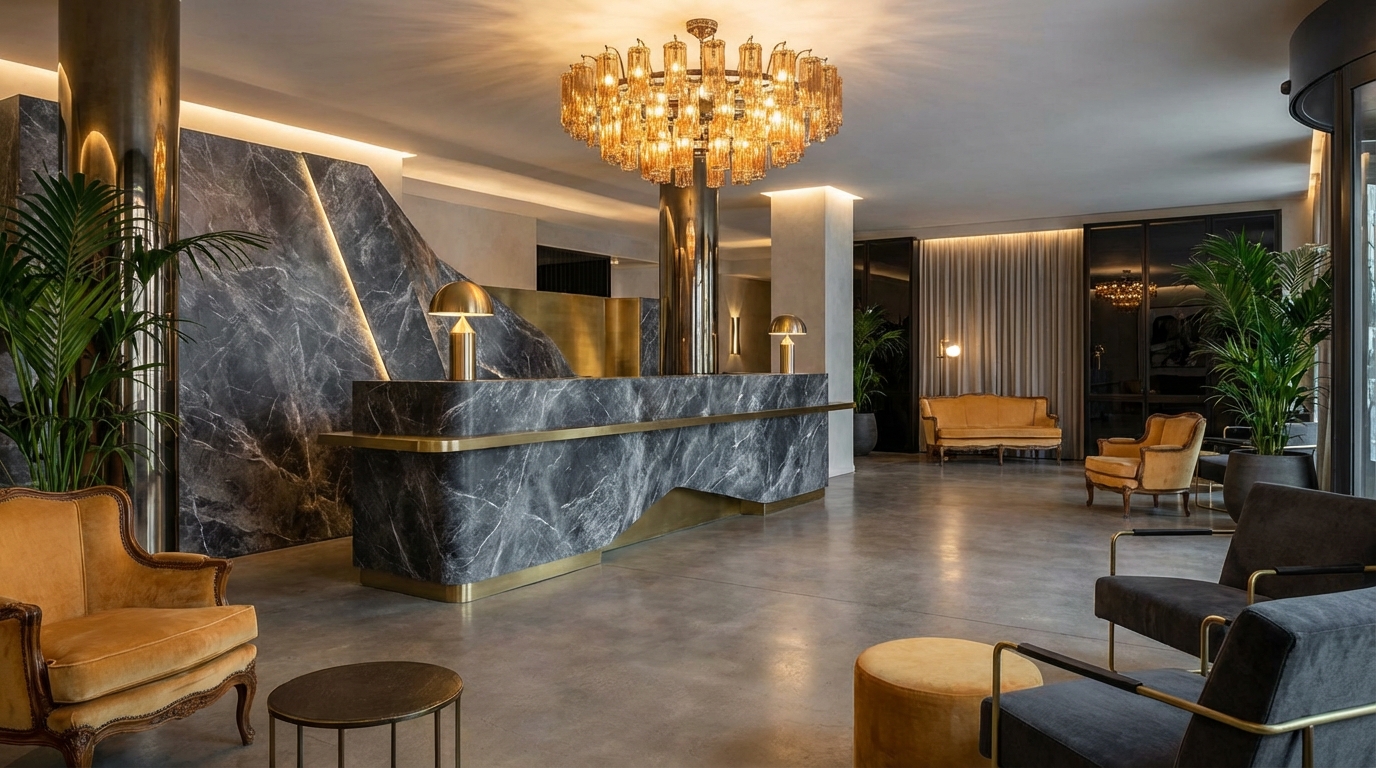
So, you are trying to understand hotel lobby trends and how to create grandeur on a budget. The short answer is: focus your money on a few visual “wow” points, keep everything else simple, and use smart design tricks with light, color, layout, and tech to look expensive without spending like a luxury brand.
You are not trying to win a design award; you are trying to make guests walk in, feel “this place is nice,” and stay long enough to check in, take photos, maybe buy a drink, and leave a good review. A lobby is marketing, operations, and guest experience in one space. The trick is to make it feel grand while your spreadsheet says “we really did not spend that much.”
- Your lobby is a sales tool first, a design project second.
- Spend heavily on 1 to 3 focal points; keep everything else calm and cheap but decent.
- Use light, reflection, and height to fake cost.
- Furniture comfort and layout matter more than rare materials.
- Tech in the lobby should remove friction, not distract staff.
- Photos drive bookings, so design with the camera in mind.
- Maintenance costs can destroy a “budget” project; pick finishes you can actually keep clean.
“Guests remember how your lobby made them feel about their stay before they even see the room.”
Why hotel lobbies matter more than you think
When a guest walks into your lobby, three things happen in about 10 seconds:
- They decide if they feel safe.
- They decide if they feel welcome.
- They decide if the room price feels fair.
If those three work, your review scores, upsells, and repeat stays go up. If they walk into harsh lights, dated chairs, and a cluttered front desk, your brand pays for it in complaints and discount demands.
Think of your lobby like a landing page. It has to:
- Build trust fast.
- Guide people where to go.
- Explain, in a visual way, what kind of place you are.
You do not need five-star marble to do this. You need clarity and one or two memorable visual stories.
The big lobby trends that can work on a budget
1. “Residential” comfort instead of corporate coldness
So, you want grandeur but you cannot afford custom everything. The current trend is friendly and “home-like” anyway. That plays in your favor.
Guests want:
- Soft seating that does not feel like an airport.
- Warm light that flatters faces.
- Small “zones” where they can sit alone, or with a group.
This is good news for your budget because it means:
- You can buy mid-range sofas and armchairs that look like living rooms, not boardrooms.
- You can use warm white LED bulbs instead of complex built-in lighting systems.
- You can break up a big space with rugs and plants instead of walls.
“Think of your lobby as a living room that happens to handle luggage and credit cards.”
2. Multi-purpose lobbies: not just check-in
Lobbies are turning into “everything spaces”:
- Work areas with power outlets.
- Coffee or wine corners.
- Casual meeting spots.
- Event-ready corners for small gatherings.
You do not need separate rooms. You need zones. You can create zones with:
- Different rug sizes.
- Ceiling-mounted lights that mark “areas.”
- Back-to-back sofas that divide space.
- Half-height shelves with books or decor.
A chair with a small table and a power socket feels like a “work pod” even if you only spent a few hundred dollars for the setup.
3. Biophilic elements: plants and natural textures
Real plants, even low-cost ones, change how guests feel about noise, air, and light. You do not need a full living wall. A few larger statement plants can do a lot.
What works on a budget:
- Two or three large indoor plants in nice, simple pots.
- Planter boxes to divide seating areas.
- Wood-look finishes: vinyl plank, laminate, or melamine that looks like oak or walnut.
- Stone-look tiles instead of real stone.
Your guests will not care if a table is real oak or a good laminate. They will care if it feels clean, sturdy, and coordinated with the rest of the space.
4. Tech that actually helps guests
Tech in the lobby is not about showing off screens. It is about saving time.
Trending features that can be budget-friendly:
- Self check-in kiosks for busy times.
- A clear, easy-to-read digital board with weather, local events, and transport updates.
- USB and power outlets near most seats.
- Good, stable Wi-Fi with a simple login process.
You do not have to build all of this from scratch. Many PMS and kiosk providers offer bundles or subscription deals cheaper than hiring more front desk staff.
“If your lobby tech makes guests line up longer or ask more questions, it is the wrong tech.”
5. Instagram-friendly corners
Guests post photos. Those photos sell rooms.
A trend you see in many hotels is one memorable wall or corner that people want to stand in front of. You can do this without big money:
- A bold mural by a local artist.
- A neon sign with a short phrase tied to your brand or city.
- A patterned tile wall behind a bench.
- A bookshelf wall lit from above.
You do not need everything to be photo-friendly. One or two corners are enough.
Where to spend and where to save
Let us break this down like a marketing budget. Some line items are worth a premium, some are not.
Spend on: first impressions and daily comfort
| Element | Spend level | Reason |
|---|---|---|
| Main entry doors & vestibule | Higher | Safety, energy loss, and first second of experience. |
| Reception desk front & counter | Higher on visible finishes | Shows in every lobby photo and every check-in. |
| Lobby flooring | Mid to high | High traffic; cheap flooring fails fast and looks worn. |
| Main sofa sets & lounge chairs | Mid to high | Comfort matters; guests sit here longer. |
| Lighting (fixtures & layout) | Mid | Controls your entire mood and feeling of “luxury.” |
| Check-in tech (PMS/kiosks) | Mid | Impacts lines, staff workload, and reviews. |
Save on: background and second-tier items
| Element | How to save | What to watch out for |
|---|---|---|
| Wall finishes | Use durable paint in 2 or 3 calm colors; limit feature walls. | Avoid too many accent colors and hard-to-repaint textures. |
| Side tables | Source from mid-range retail or commercial outlets. | Watch for wobble and surfaces that mark easily. |
| Decor items | Use fewer, larger pieces instead of many small items. | Too many cheap items make a space feel cluttered. |
| Rugs | Focus on a few large area rugs, not many small ones. | Make sure they are stain-resistant and easy to clean. |
| Artwork | Partner with local artists or print high-res public-domain art. | Keep frames and styles consistent. |
Design tricks that make a lobby feel grand with less money
1. Use height as your “luxury” feature
If your lobby has a higher ceiling, you already have something that feels expensive. Use it.
Ways to highlight height:
- Hang one long feature light or a group of pendant lights at staggered heights.
- Use tall plants or narrow tall shelves to draw the eye up.
- Paint the upper part of the wall slightly lighter to give a sense of openness.
If your ceiling is low, work with that:
- Keep large fixtures close to the ceiling to avoid crowding the space.
- Use vertical wall panels or stripes to suggest height.
- Avoid dark colors on the ceiling.
“Height and light create the feeling of money. Materials just back up the story.”
2. Play with reflection and contrast
You can get a grand feel by combining shiny and matte surfaces. For example:
- Matte wall paint with a glossy metal-framed mirror.
- Soft fabric sofas with a polished stone-look side table.
- Brushed metal light fixtures against a simple white ceiling.
Mirrors are your budget friends. One or two large, well-placed mirrors can:
- Double the visual size of a small lobby.
- Bounce light around and reduce the number of fixtures you need.
- Create a “glam” focal point for very little money.
Avoid overusing reflective surfaces, or your lobby will feel more like a gym than a hotel.
3. Restrict your color palette
Budget projects fall apart when there are too many colors fighting for attention.
A safe pattern that works:
- Base: 1 main neutral (off-white, light beige, or soft gray).
- Secondary: 1 deeper neutral (charcoal, mocha, navy).
- Accent: 1 or 2 accent colors tied to your brand or local theme.
Use accents only in:
- Throw pillows.
- Small chairs or stools.
- Art and decor.
- Signage highlights.
When your colors feel planned, guests assume higher quality even if your furniture is not top-tier.
4. Zone your space like a UX designer
Think like you would with a website. Each zone has a clear job.
Common lobby zones:
- Arrival & queue area.
- Front desk interaction zone.
- “I am waiting” seating close to the desk.
- “I am working or lounging” seating further away.
- Food & beverage corner, if you have one.
Simple tricks to make zones without building walls:
- Use different ceiling light patterns above each zone.
- Define each zone with rugs or floor tile changes.
- Turn sofas back to back to split spaces.
- Place plants or screens where you want soft boundaries.
The less confusion guests feel when they enter, the more comfortable and premium the space feels.
5. Use local touches instead of generic luxury
High-end hotels often show their budget in rare materials. You can show personality instead.
Low-cost ideas:
- Display black-and-white photos of your city from different decades.
- Show a small rotating display from a nearby gallery or craft studio.
- Feature a large map mural of your neighborhood with pins for highlights.
- Choose one local texture or material (like brick, rattan, or local stone look) and repeat it.
Guests like to feel the place they are in, not a generic version of “nice.” This can cost far less than importing marble.
Lighting: the cheapest way to look expensive
Lighting can make a basic lobby look impressive or make a costly lobby look harsh. It is that strong.
The three layers of lobby lighting
Think in three layers:
- Ambient: general light that fills the space.
- Task: focused light at the reception desk, seating, and work spots.
- Accent: light used just for effect, like washing a wall or lighting plants.
On a budget:
- Use LED downlights for general lighting on dimmers, so you can tune brightness.
- Add floor lamps or table lamps near seating for task lighting instead of custom ceiling wiring everywhere.
- Use LED strips behind the reception desk or under counters for accent without big costs.
Color temperature matters. Keep lobby lights mostly in the 2700K to 3000K range (warm white). That feels softer and more upscale than cold blue light.
“A cheap chair in good light looks better than an expensive chair in bad light.”
A note on daylight
If you have windows, use them. Grand lobbies often feel bright and open simply because they let natural light do the work.
To keep a sense of quality:
- Choose window coverings that look simple and clean, not busy.
- Keep window frames and sills spotless; dirt shows more in bright areas.
- Place nicer seating where daylight is strongest to lift that part of the space.
Furniture choices that feel grand but stay sensible
Pick a hero piece, not a hero set
Most budgets cannot support custom everything. That is fine. Aim for one or two “hero” pieces.
Examples:
- A sculptural reception desk front.
- One large curved sofa in the center of the lobby.
- An oversized lounge chair shape guests do not see everywhere.
Everything around that can be simpler. The trick is to keep shapes and colors coordinated so nothing screams “bargain bin.”
Choose fabrics like you expect spills
Lobbies host coffee, kids, and luggage. Your fabric choices can decide your maintenance bill.
Look for:
- Commercial-grade fabrics with high rub counts.
- Stain-resistant finishes or materials labeled for hospitality use.
- Patterns that hide marks without looking busy.
Leather-look and vinyl can work, but avoid very shiny versions that show every scratch. Matte or textured surfaces hold up better visually.
Comfort is a brand signal
If a guest sits on a chair and it wobbles or feels stiff, they will quietly question what else you cut corners on.
Test for:
- Seat height that works for most people (about 17 to 19 inches).
- Back support that does not force people to perch on the edge.
- Armrests at a comfortable height for older guests.
You can save money on looks, not on basic stability and comfort.
Acoustics: the quiet trend that matters for reviews
Many lobbies echo. That feels cheap and stressful, especially for guests on calls or families with kids.
On a budget, control sound with:
- Rugs, especially under seating clusters.
- Upholstered chairs instead of all hard surfaces.
- Acoustic panels disguised as art or ceiling features.
- Bookshelves or displays along walls to break up reflections.
If your ceiling is very high and you get long echoes, a few soft ceiling “clouds” or panels can change the feel of the room without guests even noticing what you installed.
Operational details that make a lobby feel premium
Looks alone are not enough. A lobby that looks grand but behaves badly will annoy guests.
Clear paths and information
Guests walking in should not have to stop and think, “Where do I go?”
Low-cost ways to help:
- Place the reception desk in a clear sightline from the door.
- Use simple, high-contrast signs for “Reception,” “Elevators,” “Restrooms,” and “Bar/Cafe.”
- Use floor changes or rugs to guide people toward check-in.
Digital screens can help, but printed, well-designed signs are often cheaper and more reliable.
Check-in experience
Your lobby can look like a magazine, but if guests face a long wait and confused staff, they will not care about your decor.
Improve check-in without big spending:
- Have a dedicated “help” or “concierge” spot separate from the main queue, even if it is just one end of the desk.
- Use a clear, short greeting script so service feels consistent.
- Offer a small welcome touch, like infused water or a candy bowl, that costs very little.
These gestures feel grand because they are about attention, not money.
Smell and sound
Two things guests often notice without naming:
- Odor.
- Music.
For smell:
- Keep strong cleaning odors away from peak times.
- If you use a scent, keep it light and consistent, not overwhelming.
- Watch entrances from outside; mats and frequent cleaning help control tracked-in smells.
For sound:
- Choose a playlist that matches your brand: calm, not too fast.
- Set volume so guests can talk without raising voices.
- Avoid music with heavy bass that travels up to guest rooms.
“Guests rarely praise your lobby music by name, but they do complain when it is wrong.”
Using data to guide lobby decisions
You do not have to guess which changes matter. Treat your lobby like you would treat a campaign: measure and adjust.
What to track
- Average check-in time before and after layout or tech changes.
- Guest review mentions of “lobby,” “reception,” and “entrance.”
- Time spent in the lobby outside check-in (rough counts across the day).
- Food and beverage revenue tied to lobby seating, if you sell drinks or snacks.
For example, one mid-range hotel group found that adding just 12 bar-height work seats with power in their lobby raised lobby bar sales by around 8 percent, because guests stayed longer while working.
A/B testing in the physical world
You can test in small steps:
- Change lighting levels and watch how many people choose to sit in each zone.
- Swap seating layouts for one month and see where people actually sit.
- Add or remove decor from one wall and monitor photo tags on social media.
Make changes in phases instead of a full renovation. That spreads costs and lets you learn what truly matters before you commit.
Common budget mistakes that kill grandeur
1. Buying everything from one catalog page
A fully matching “set” of lobby furniture is tempting. It is simple and often discounted.
The problem:
- Everything looks flat and generic.
- Guests feel like they are in a waiting room, not a hotel.
Better: mix 2 or 3 complementary styles. Keep color and scale aligned, but let shapes vary.
2. Over-decorating to hide cheap finishes
When owners worry the lobby looks plain, they often add more art, more vases, more pillows. That usually backfires.
Too many small items:
- Collect dust.
- Look messy when guests move them around.
- Make cleaning slower for staff.
Think fewer, bigger, simpler.
3. Ignoring maintenance in material choices
Marble-look tiles that stain, fabrics that pill after six months, glossy black surfaces that show fingerprints every hour. These cost you in extra labor and early replacement.
Before you buy:
- Ask for samples and test them with coffee, wine, and water.
- Have your housekeeping manager give input; they know what will be hard to keep clean.
- Check replacement lead times; if a tile breaks, can you get more?
4. Forgetting accessibility
Accessibility is not only a rule. It affects how “high quality” your place feels to many guests.
On a budget, make sure:
- Paths are clear and wide enough for wheelchairs and luggage.
- Reception has at least one lower counter section.
- Floor transitions are smooth to avoid tripping.
- Signs are readable with good contrast.
A lobby that quietly works for everyone feels more polished than one that only looks pretty.
How to phase a “grandeur on a budget” lobby upgrade
You do not have to shut down your lobby to improve it. Think step by step.
Phase 1: Clean, declutter, and re-light
Cost: low, impact: often very high.
Actions:
- Remove old brochures, random decor, and extra furniture that block paths.
- Deep-clean floors, upholstery, and windows.
- Replace dead or mismatched light bulbs with consistent warm white LEDs.
- Reposition a few seats to create clearer zones.
Take before and after photos. You will often see a big difference without buying new furniture yet.
Phase 2: Focus on focal points
Cost: medium.
Pick one or two of these:
- Refresh the reception desk front with new panels, paint, or cladding.
- Add a statement light fixture over the main seating area.
- Create one photo-friendly feature wall with art, mural, or tile.
Keep the rest of the lobby calm to let these elements do the work.
Phase 3: Upgrade seating and add tech where needed
Cost: medium to high, depending on scale.
Actions:
- Replace the most worn sofas and chairs first, not everything at once.
- Introduce 1 or 2 high-comfort seating types (e.g., lounge chairs with good lumbar support).
- Add power outlets and small side tables to the most used seats.
- Install or update a simple self check-in option if your volume justifies it.
Watch how guests adapt, then decide if you need more of any particular item.
Phase 4: Fine-tune sound, smell, and signage
Cost: usually low to medium.
Actions:
- Add rugs or acoustic elements in echo-prone areas.
- Choose a mild, consistent scent strategy, or stay neutral and focus on fresh air.
- Upgrade key signs with clear typography and brand-consistent colors.
This phase often turns a “nice” lobby into a place that feels calm and deliberate.
Example: turning a mid-size budget lobby into something grand
Imagine a 120-room city hotel with a tired lobby:
- Old brown tiles.
- Reception desk blocking half the entrance view.
- Mixed chairs from different eras.
- Harsh white lighting.
Budget for lobby refresh: not enough for a full remodel, enough for smart changes.
A realistic approach:
- Keep the floor but deep-clean and re-grout. Add one large rug in the lounge area.
- Repaint walls in a light neutral, with one darker accent behind reception.
- Re-clad the front of the reception desk with vertical wood-look panels.
- Add a long, simple pendant light over the desk.
- Replace only the worst seating with 2 matching sofas and 4 accent chairs.
- Install warm LED bulbs and dimmers in public areas.
- Set up one “Instagram wall” with a local city map and subtle brand mark.
This type of project, done over a few weeks, can change guest photos and first impressions without moving walls or changing all finishes.
One practical tip you can act on this month
Walk into your lobby from the street with your phone camera open, as if you are a new guest. Take five photos from:
- The front door.
- The middle of the lobby.
- The reception line.
- The main seating area.
- The elevator waiting area.
Then ask yourself, and your team:
- What is the first thing my eye goes to in each photo?
- Do those first impressions look grand, or just busy?
- What one thing in each frame, if improved, would make the lobby feel twice as polished?
Start upgrading those five “first things” before touching anything else.