
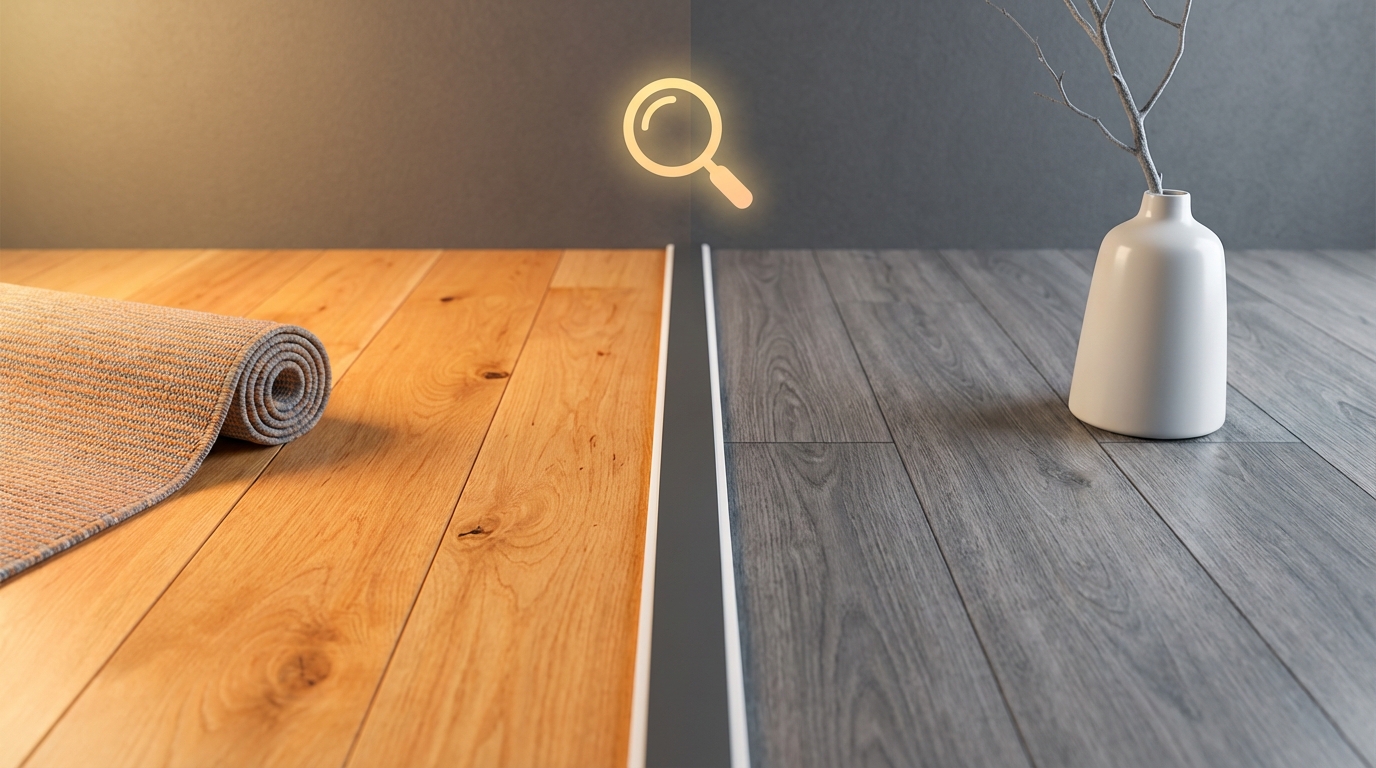
So, you are trying to figure out “Hardwood vs. Laminate: What Do Homebuyers Actually Want?” because you do not want to guess with something this expensive.
Most homebuyers still prefer real hardwood, but good laminate can attract plenty of buyers too if the house is priced right and looks consistent.
The short version: hardwood wins for long term value, resale, and emotional appeal. Laminate wins for cost, durability in tough areas, and fast makeovers in starter homes or rentals. The right choice depends on your target buyer, your local market, and which rooms you are updating. Most buyers care more about the overall look and condition than the exact material, until you move into the higher price ranges.
Things you need to know:
- Hardwood adds more resale value on average, but costs 2x to 4x more up front.
- Laminate can look close to real wood, but buyers often can tell once they walk on it or look closer.
- In entry-level homes, buyers usually care more about “nice, clean flooring” than if it is real wood.
- In mid to higher price homes, buyers often expect hardwood in main living areas.
- Moisture zones (kitchens, baths, basements) can be risky for hardwood, better for certain laminates.
- Refinishing hardwood can rescue old floors; worn laminate often needs full replacement.
- Your local market data matters more than national averages, so check recent sales near you.
How buyers actually think about flooring (not how sellers think they think)
Here is the funny thing. Sellers obsess over “hardwood vs laminate” like it is a binary yes/no. Buyers think about something else first:
“Does this house feel move-in ready, or is it a project?”
Flooring is a huge part of that feeling. When a buyer walks in, they notice:
- Is the color dated or current?
- Is the floor scratched, chipped, warped, or squeaky?
- Do rooms feel connected, or choppy with different floors everywhere?
- Does it match the style of the home and the paint?
Only after that first pass do they start asking:
- “Is this real hardwood?”
- “Is this laminate?”
- “Is this vinyl plank?”
So the material matters, but the condition, color, and consistency hit them first.
> Buyers rarely say “I will not buy this home because it has laminate.”
>
> They often say “I do not like these floors; I will have to replace them,” then mentally subtract thousands from your asking price.
What the data says about hardwood vs laminate and resale value
Let us talk numbers, because feelings are helpful, but your bank account needs facts.
Resale lift from hardwood
Different sources give different ranges, but you see a pattern:
- National surveys from real estate agents often report that buyers are willing to pay several thousand more for homes with hardwood in main living areas.
- One industry study often quoted in the market found that homes with hardwood floors can sell for 2 percent to 5 percent more than similar homes without.
- Return on investment estimates for hardwood often sit in the 70 percent to 80 percent range for resale-focused projects.
That does not mean you make a profit on the flooring itself. It means:
- If you spend 10,000 on hardwood, you might see 7,000 to 8,000 back in higher sale price or faster sale.
- You also get better photos, more showings, and fewer “flooring discount” requests during negotiation.
Where laminate fits into resale
Laminate does not usually give the same resale boost as real hardwood, but it still tends to beat old carpet or tile that buyers dislike.
Patterns you see in actual listings:
- Starter homes with nice laminate often sell faster than ones with worn carpet.
- Buyers rarely ask for a premium because of laminate; they just accept it if it looks good.
- Lenders and appraisers rarely assign extra value just because laminate is present, though it may help the home compare better to “updated” comps.
So you rarely get a pricing premium from laminate. You get:
- Better photos
- Less buyer pushback on “old flooring”
- More of a move-in-ready feel
Which still helps you sell faster, even if the dollar lift is lower than hardwood.
> Think of hardwood as “value-adding” and laminate as “value-protecting.”
>
> Hardwood can raise the ceiling. Laminate helps you avoid dropping the floor.
Cost breakdown: what you pay vs what you get
Here is a simple comparison. Numbers vary by region, but this gives you a ballpark.
| Factor | Solid / Engineered Hardwood | Laminate Flooring |
|---|---|---|
| Material cost per sq ft | 4 to 15+ | 1.50 to 4 |
| Installed cost per sq ft | 8 to 20+ | 3 to 8 |
| Refinishing possible | Yes (solid), 1-3 times (engineered) | No, usually replacement only |
| Life span (proper care) | 30 to 100+ years | 10 to 25 years |
| Water resistance | Poor to moderate | Moderate to high (varies by product) |
| Buyer prestige factor | High | Medium |
| Ideal for high-end listings | Yes | Only in small doses or secondary spaces |
So if you have 1,000 sq ft of main living space:
- Hardwood might run you 8,000 to 20,000 installed.
- Laminate might run you 3,000 to 8,000 installed.
That 5,000 to 12,000 difference is not small.
If you are selling a 250,000 starter home, you may never see a full payback on top-tier hardwood. If you are selling a 900,000 home, buyers might see cheap laminate and just scroll to the next listing.
What different types of buyers want from flooring
Not all buyers think the same way. Flooring wishes depend a lot on budget, life stage, and how they plan to live in the home.
First-time buyers and starter homes
These buyers often say:
- “We just want something move-in ready. We can update later.”
For them:
- Clean, consistent flooring matters more than the exact material.
- They do not want to rip out dirty carpet right after closing.
- They like the idea of hardwood, but may not pay a heavy premium for it if it raises the monthly payment.
Here, laminate can work really well, especially if:
- The color is neutral (light oak, natural tones, not orange or red).
- It runs through most of the main level without awkward transitions.
- It is newer, with no chips, swelling, or loud echo when you walk.
> A 250,000 buyer is more likely to say “I like that it looks new” than “I refuse to buy this because it is not solid oak.”
Move-up buyers and mid-range homes
These buyers often have more specific preferences. You might hear:
- “We want wood floors, at least in the living room and dining room.”
For them:
- Hardwood in main living areas becomes an expectation in many markets.
- They may accept laminate in basement rec rooms, kids rooms, or secondary spaces.
- They often notice cheaper click-together floors and wonder how long they will last.
In a 450,000 to 700,000 price range, laminate across the entire main level can become a real objection. Not always, but often enough that agents bring it up.
Higher-end buyers and luxury homes
Once you move above the mid range in your area, flooring expectations get stricter.
These buyers might say:
- “We want site-finished hardwood, wide planks, and something that feels solid underfoot.”
They tend to:
- View laminate as a downgrade, especially if it is clearly cheap.
- Expect hardwood or high-end engineered wood almost everywhere on main levels.
- Accept different materials in wet areas, but still want cohesive design.
In this tier, putting laminate in main living areas can hurt your listing compared to nearby sales.
> At the high end, buyers do not want to pay luxury prices for starter-level finishes.
>
> Flooring is one of the first tells.
Hardwood: what buyers actually notice
Buyers do not grade hardwood on a technical checklist. They go by feel and look. Here is what they react to.
Color and finish
Trends shift, but a few patterns:
- Very red or orange tones (think 90s oak with oil-based finish) feel dated to many buyers right now.
- Very dark floors show dust and scratches; some buyers love them, some run from them.
- Light to medium natural tones with a matte or satin finish feel “current” to many buyers.
If you already have hardwood but the color feels off, refinishing can be more powerful than replacing. A 3,000 to 5,000 refinishing job can make your floors look like new and photo-ready.
Consistency across rooms
Buyers notice when:
- There is hardwood in the living room, then a random transition to laminate in the hall, then tile, then another type of hardwood in the dining room.
That patchwork feels like a project. It also makes the home feel smaller and choppier.
If you are going to invest in hardwood:
- Run the same species and color through as much of the main level as you can.
- Limit flooring types to 2 or 3 in the whole home (for example: hardwood, tile in baths, carpet in bedrooms).
Noise and feel underfoot
Hardwood tends to:
- Feel solid and “quiet” compared to cheap laminate.
- Have less of a hollow echo sound when you walk.
- Age in a way that buyers describe as “character” rather than “damage,” if it is not too rough.
Buyers might not know why they feel different in two homes. They just know one feels higher in quality.
Laminate: what buyers notice and what they ignore
High quality laminate today looks much better than it did 15 years ago. But there are still some tells.
Pattern repeat and texture
Buyers pick up on:
- Repeating grain patterns that make the floor look “printed.”
- Very smooth surfaces that do not feel like wood.
- Board widths that look off for the style of the home (tiny “strip” planks in a modern open floor plan, for example).
If you go with laminate:
- Choose a product with several different plank patterns, so repeats are less obvious.
- Pick a matte finish and some texture so it looks less plastic-like.
- Stay away from extreme colors that will date quickly.
Transitions and thresholds
One of the biggest laminate giveaways is the transitions:
- Metal strips between rooms or where laminate meets tile
- Raised thresholds that catch your toes
Cleaner, low-profile transitions help the floor look more thoughtful and less “weekend DIY.”
Sound and feel
Many laminates have a hollow or clicking sound when you walk on them, especially with cheap underlayment.
Buyers might not say “this is laminate,” but they often feel:
- “This feels cheaper than the other house we saw.”
You can reduce that reaction by:
- Using a higher quality underlayment with sound dampening.
- Making sure the subfloor is level so boards do not flex.
> If you spend a bit more on underlayment, your laminate can jump up a category in how buyers perceive it.
Room-by-room: where hardwood and laminate make sense
Not every room needs the same flooring. You can mix smartly without making the house feel broken up.
Living rooms, dining rooms, main hallways
These are the areas buyers care about most. They show up in photos and video tours.
- Strong preference for hardwood in mid to higher tier homes.
- Laminate acceptable in starter homes or markets where laminate is common.
- Try to have one consistent wood-look surface across the whole main space.
If you are on a budget:
- Focus your best material here.
- Do not waste money on premium floors in low-impact rooms first.
Kitchens
Kitchens see spills, dropped pans, and heavy traffic.
Hardwood:
- Looks great and ties into nearby living areas.
- Can get water stains and dents but is refinishable.
Laminate:
- Resists stains and light scratches fairly well.
- Can swell and buckle from standing water if you do not clean up fast.
Many sellers tie kitchen flooring to what is in the adjacent rooms:
- If the main level is hardwood, they often continue hardwood into the kitchen.
- If the main level is laminate, they either continue it or switch to tile with a clean transition.
Bedrooms
Here buyers are a bit more flexible.
- Carpet is still common in many markets, especially in secondary bedrooms.
- Hardwood is seen as an upgrade, especially in primary bedrooms.
- Laminate is accepted, but less of a “wow” feature.
If budget is tight, you can:
- Put hardwood or laminate in the main living areas.
- Keep or replace simple carpet in bedrooms if it is clean and neutral.
Bathrooms and laundry rooms
Moisture is the main enemy here.
Hardwood:
- Can be risky in full baths with tubs or showers.
- Works better in powder rooms with less water exposure.
Laminate:
- Traditional laminate does not like standing water; edges can swell.
- Some newer laminates are marketed as “water-resistant,” but check the fine print.
Many buyers still expect tile or another hard waterproof surface in full baths and laundry rooms. If you use laminate, choose products rated for higher moisture and seal edges well.
Basements
Basements have their own rules, especially in areas with humidity or minor leaks.
Hardwood:
- Usually not recommended directly on concrete.
- Can be used in engineered form with the right installation, but risk is higher.
Laminate:
- Common choice because it handles minor humidity better than solid wood.
- Can be installed as a floating floor over a moisture barrier.
Many buyers accept laminate or vinyl plank in basements because they think of that space as secondary. Just keep the look consistent and not like leftover scraps from upstairs.
How local markets change buyer expectations
Real estate is very local. What feels normal in one city can feel odd in another.
Markets where hardwood is “standard”
In older cities or neighborhoods with many historic homes, hardwood underneath everything is common. In those areas:
- Buyers almost assume there is hardwood under old carpet.
- Covering hardwood with laminate can frustrate buyers and even show up in feedback.
- Refinishing original hardwood often wins over installing new laminate.
If this sounds like your area, ripping out carpet and refinishing original wood can be one of the best projects for resale.
Markets where laminate or other hard surfaces are normal
In some newer suburbs, warm climates, or cost-conscious regions:
- Many homes were built with laminate or tile from day one.
- Buyers just expect “hard surface” floors, not necessarily real wood.
- Putting in very expensive hardwood may not raise your selling price enough to cover the full cost.
Here, mid-range laminate, high-quality vinyl plank, or engineered wood can hit a good sweet spot.
> Before you spend, pull recent sales in your area.
>
> Look at the pictures, price, and days on market. You will see quick patterns in what floors attract buyers.
Longevity and maintenance: what buyers think about living with the floor
Many buyers, especially families, think past closing day. They worry about kids, pets, and maintenance.
Pets and kids
Hardwood:
- Can scratch, especially softer species like pine.
- Can be refinished, which buyers like long term.
Laminate:
- Resists surface scratching fairly well if you choose a premium wear layer.
- Cannot be refinished; deep damage needs plank replacement.
Some buyers with big dogs prefer high quality laminate or luxury vinyl for toughness. Some still prefer hardwood and accept that it will get character marks.
Cleaning and care
Buyers often ask:
- “Can I just use a Swiffer on this?”
- “Do I have to worry about every spill?”
Hardwood:
- Needs careful cleaning products and not too much water.
- Does not love standing water from mopping or spills.
Laminate:
- Usually tolerates light mopping and quick cleanups better.
- Still does not like long-standing puddles.
If you are selling, leaving a short one-page “flooring care” sheet can actually reassure buyers that upkeep is manageable.
When you already have hardwood: repair, refinish, or replace?
If you already have hardwood, buyers almost always see that as a plus, even if it needs some help.
Here are your main choices:
- Spot repair and clean
- Full refinishing
- Replace with new hardwood
Spot repair and cleaning
Good when:
- Floors have minor scratches, minor gaps, and light wear.
- Finish is still mostly intact.
You can:
- Do a professional deep clean and buff.
- Fix squeaks and nail pops.
- Replace a few badly damaged boards.
Many buyers see “original hardwood with a few marks” as acceptable, even charming, if the rest of the house is well kept.
Full refinishing
Best when:
- Color is dated (orange/red) and you want a modern look.
- Finish is worn through in traffic paths.
- You have several rooms of hardwood you can match.
Refinishing swaps sanding dust and short-term hassle for a strong visual upgrade. You can:
- Neutralize the color to appeal to more buyers.
- Switch from glossy to matte or satin.
- Repair many years of wear in one move.
> If you have real hardwood and you cover it with laminate, buyers often ask “Why?”
>
> Refinishing usually scores better than covering in most markets.
Full replacement with new hardwood
Makes sense when:
- Existing floors are too thin to refinish again.
- Sections have severe water damage or structural issues.
- You are doing a full remodel and changing layouts.
This is often the most expensive path. It tends to pay off more in higher price brackets or in homes where everything else is being upgraded to a similar level.
When you already have laminate: work with it or swap it?
If your house already has laminate, you do not always need to rip it out. But you do need to look at it like a buyer would.
When to keep existing laminate
You can usually keep it when:
- It is in good shape (no bubbling, chipping, gaps, or heavy wear).
- The color is neutral and not overly trendy from 10 years ago.
- It runs consistently through a full area instead of random patches.
You might:
- Deep clean and polish to refresh appearance.
- Stage rooms with rugs to soften sound and look.
When laminate should probably go
It might be time to replace when:
- Multiple boards are swollen near doors or sinks.
- The pattern is extremely outdated.
- There are three different types of laminate from different projects.
At that point, buyers see “project,” and many will bake a big flooring budget into their offer, or they will skip your listing.
Mixing hardwood and laminate in the same house
Many homes end up with some mix over time. That does not have to hurt you if you are careful.
Good mixing patterns
Some combinations that work for buyers:
- Hardwood on main level, laminate or vinyl plank in the basement.
- Hardwood in living/dining, laminate or carpet in bedrooms.
- Hardwood in main spaces, tile in baths and entryways.
The key is a clear “hierarchy”: the most visible spaces get the higher perceived quality.
Mixing patterns that confuse buyers
Patterns that often raise eyebrows:
- Hardwood in one part of a room, laminate in another part that was once a porch or add-on.
- Every room a different wood tone with visible transitions at each doorway.
- Laminate installed over what agents suspect is original hardwood.
> Buyers do not need every room to match perfectly, but they want the house to tell one flooring story, not six.
What real estate agents hear from buyers about floors
If you talk with agents who do a lot of buyers tours, you hear similar comments.
Common buyer reactions to hardwood:
- “I love these wood floors.”
- “We could refinish these later to our color.”
- “These make the house feel higher quality.”
Common reactions to laminate:
- “These look nice; what kind of flooring is this?”
- “Is this going to hold up with our kids and dog?”
- “We might replace this with hardwood in a few years.”
Sometimes buyers are fine with laminate and then bring it up during negotiation:
- “We like the house, but the floors are laminate. We want some credit for eventual replacement.”
So even if laminate does not kill interest, it can show up as a negotiation lever.
If you are flipping or updating to sell soon
Your timeline matters a lot here. If you plan to sell within 1 to 3 years, your flooring decision is mostly about market positioning and profit.
Flippers and investors
Investors tend to:
- Use laminate or luxury vinyl plank in rentals because it handles wear and is cheaper to replace between tenants.
- Use nicer products in flips that target owner-occupants.
For a flip:
- Study the comps carefully: if competing flips have hardwood, you probably want hardwood in the main spaces.
- If competing homes mostly use vinyl plank or laminate, matching that level while focusing on good color and layout can be smarter.
Owner-occupants selling in a few years
If you will live in the home for a bit before selling:
- Pick something you like living with, not only what the buyer wants later.
- If you can afford hardwood and it matches your area, it gives you enjoyment now and resale power later.
- If budget is tight, a mid-range laminate with good color and feel can still be a big upgrade over stained carpet.
> One simple test before you sign:
>
> Walk a few open houses nearby and listen to what other buyers say about the floors. That will tell you more than any blog post.
Practical decision guide: which should you pick?
Here is a quick way to think through your choice in a structured way.
Ask yourself these questions
- What is your expected sale price range?
- How long will you stay before selling?
- What kind of flooring do similar sold homes in your area have?
- Which rooms are you updating, and how visible are they?
- Do you have pets, kids, or moisture issues?
Then use a basic rule-of-thumb matrix like this:
| Scenario | Better choice | Why |
|---|---|---|
| Starter home, tight budget, selling in 1-3 years | Good laminate (or vinyl plank) | Gives a clean, updated look at lower cost; buyers in this range focus on appearance and move-in readiness. |
| Mid-range home, family suburb, selling in 3-7 years | Hardwood in main areas | Matches expectations, supports resale, and gives you years of use and refinishing options. |
| High-end home, competitive market | High quality hardwood / engineered wood | Buyers expect it, and it supports premium pricing. |
| Basement or moisture-prone space | Laminate or vinyl plank (moisture-rated) | Handles humidity better and costs less if there is an issue later. |
| Historic home with existing hardwood under carpet | Refinish existing hardwood | Preserves character and gives you real wood without buying new materials. |
So what do homebuyers actually want from you?
If you zoom out from all the details, here is what most buyers, across price points, want from your flooring:
> They want the house to feel cared for, current, and consistent.
>
> Then they care whether it is hardwood, laminate, or something else.
So your flooring decision is really a design and strategy decision.
- In many markets and price points, hardwood is the “aspirational” choice that supports a stronger sale.
- Laminate is a smart, practical choice when you want to control costs but still present a clean, updated home.
If you are stuck between the two right now, here is a practical next step:
Walk through your house as if you are a buyer seeing it online first. Stand in each room and ask yourself, “If this photo was on a listing site, would the floor make me want to click, or keep scrolling?” Then base your budget and material choice on fixing the rooms that fail that test first.