
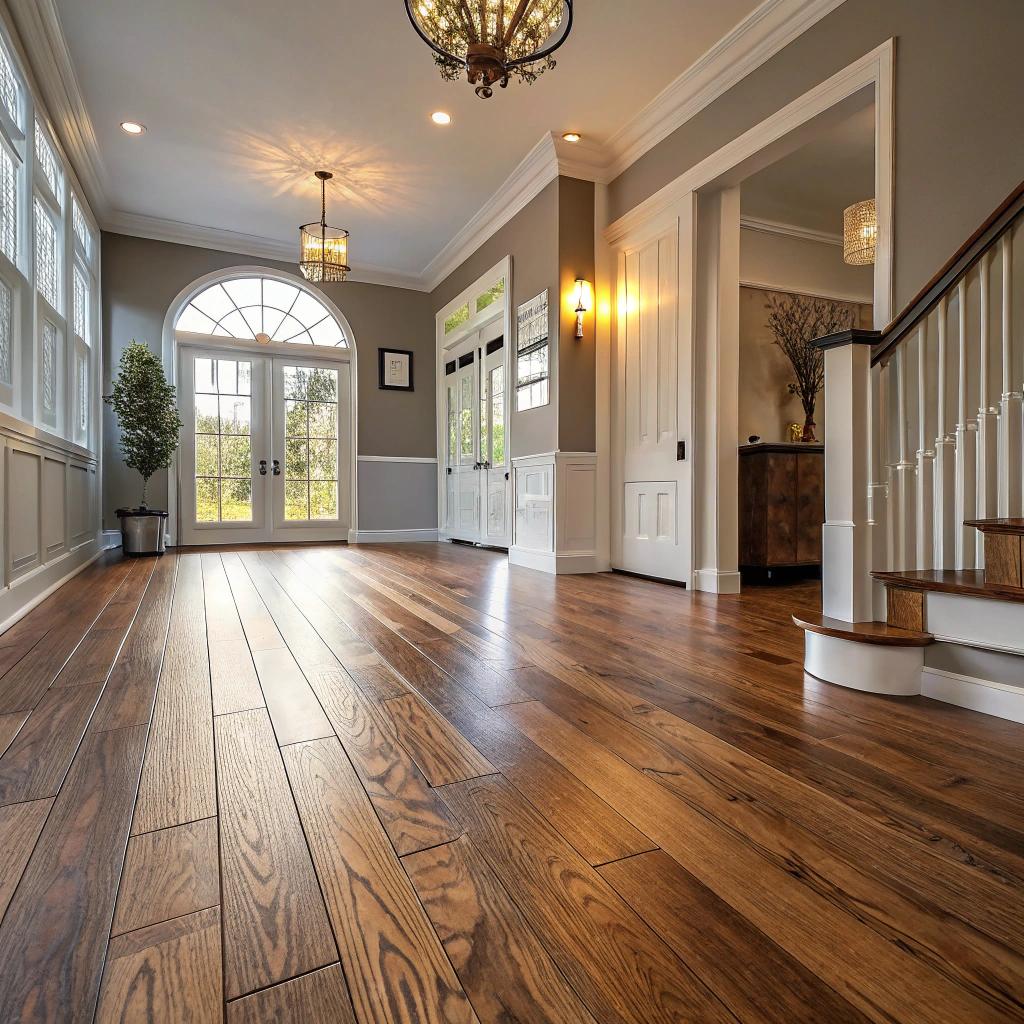
So, you are trying to figure out how to get stunning hardwood floors in Littleton without wasting money or making a long term mistake. You do that by choosing the right wood, finish, installation method, and care routine from the start, usually with help from a local pro who knows Colorado homes and climate.
Hardwood seems simple at first. It is just planks of wood, right? Then you start looking at species, plank widths, engineered vs solid, glue vs nail, water based vs oil finishes, and it gets confusing very fast. Add in Colorado’s dry air, winter swings, and older basements, and the choices matter even more if you want your floors to stay flat and look good for years.
Here is the short version of what you need to know before you call a contractor or walk into a showroom.
- Wood moves with Colorado’s dry air, so you need the right material and proper acclimation.
- Solid and engineered hardwood are both good, but they fit different parts of the house.
- Finish choice changes the whole look and how much maintenance you will have.
- Good subfloor prep matters more than most people think.
- Professional sanding and finishing can often save old floors instead of replacing them.
- Simple cleaning habits protect your investment much more than expensive products.
- Local Littleton installers understand foundation types, humidity swings, and common issues in the area.
If you want someone to walk you through it in person, a local company that handles hardwood flooring Littleton projects all the time can be helpful. But before you call anyone, it helps to understand your options so you can ask better questions and spot bad advice.
Understanding hardwood flooring in a Colorado home
Hardwood behaves differently in Colorado than in a coastal or humid area. The air is dry for a big part of the year, and winter heat dries it even more. Wood reacts to that.
How wood responds to Littleton’s climate
Every plank of hardwood is like a sponge that takes in and loses moisture. When the air is dry, it gives off moisture and contracts. When the air is humid, it swells.
If your hardwood is not chosen and installed with this in mind, you can end up with gaps, cupping, or squeaks that you never really fix.
In Littleton, the most common issues are:
- Seasonal gaps between boards in winter.
- Minor cupping or crowning if humidity climbs fast in summer.
- Squeaks from fasteners pulling slightly as the wood moves.
This is normal to a point. The goal is not zero movement. The goal is controlled, predictable movement that does not ruin the floor.
A few things help with that:
- Choosing the right width of planks for your home.
- Proper acclimation before installation.
- Keeping indoor humidity in a steady range when possible.
Solid vs engineered hardwood for Littleton
People sometimes argue about which is “better.” That is not really the right question. They do different jobs.
| Type | What it is | Best locations in a Littleton home | Typical pros | Typical cons |
|---|---|---|---|---|
| Solid hardwood | One solid piece of wood top to bottom | Main and upper levels, rooms with stable environment | Can be sanded many times, classic feel, long lifespan | More movement, not ideal for basements or over concrete without special systems |
| Engineered hardwood | Real wood top layer over stable layered base | Basements, over concrete slabs, wider planks, radiant heat | More stable, handles wider planks better, often easier over concrete | Limited sandings, quality varies by brand and thickness |
If your Littleton house has:
- A basement family room or office: engineered is often safer.
- Existing solid planks upstairs: solid again usually matches better.
- Radiant heat: many installers prefer engineered for stability.
There are rare cases where someone does solid over concrete with complex subfloor systems. But for most homeowners, that cost and risk do not make sense.
Choosing the right hardwood species
Species choice affects durability, color, and how much damage you will actually see.
Popular species Littleton homeowners pick
Here are some common options and what they are like in real life.
| Species | Look | Durability | Good for |
|---|---|---|---|
| Red oak | Visible grain, warm tones, takes stain well | Moderately hard | Traditional homes, refinishing flexibility |
| White oak | Smoother grain, cooler tone, popular with modern looks | Harder than red oak | Most Littleton homes, light or natural finishes |
| Maple | Smoother, more uniform, lighter color | Quite hard | Clean, simple designs, kids rooms |
| Hickory | Strong color variation, rustic look | Very hard | Active households, mountain or rustic style |
| Walnut | Rich brown, softer grain pattern | Softer than oak | Formal spaces, offices, bedrooms |
If you have a busy household with kids, big dogs, and lots of traffic, I think white oak or hickory is often a good starting point. Walnut is gorgeous, but you will see dents sooner.
For most Littleton homes that want both looks and durability, white oak has become the go to choice because it takes different stains well and works with both modern and classic styles.
A quick tip that many people miss: look at large samples, not just tiny boards. Grain and color can vary a lot, and a showroom board rarely tells the full story.
Plank size, pattern, and layout
Once you pick a species, you still have to choose plank width and layout pattern. This changes the whole feel of the room.
Plank width
Common choices:
- 2 1/4 to 3 inch: traditional, more seams, less movement per board.
- 4 to 5 inch: a common modern choice, still practical.
- 6 inch and wider: very modern, makes rooms feel bigger, but shows movement more.
With Colorado’s dry climate, very wide planks in solid wood can show bigger gaps and seasonal changes. Engineered wide planks handle this better.
If you want wide planks upstairs in a newer Littleton build, engineered white oak around 6 inches is a pretty common combination.
Layout patterns
Most Littleton homes use straight, parallel planks. It is simple, clean, and budget friendly.
You can also do:
- Herringbone or chevron in entryways or dining rooms.
- Border patterns around the perimeter of a room.
- Mixed width planks for a more casual feel.
Just know that anything beyond straight lay adds labor cost. For a single accent space, that can be worth it. For the entire main level, costs climb fast, and you may not get that money back on resale as much as you expect.
Installation methods that actually work long term
The way the floor is attached to the subfloor matters as much as the wood itself. This part often gets rushed.
Common methods
| Method | How it works | Used with | Pros | Cons |
|---|---|---|---|---|
| Nail or staple down | Fasteners driven through tongues into wood subfloor | Solid hardwood, some engineered, over wood subfloors | Traditional feel, secure, long track record | Needs good wood subfloor, not ideal directly over concrete |
| Glue down | Adhesive spread and boards pressed into it | Engineered over concrete or wood | Good sound control, stable, common in basements | Harder to remove, needs skilled installer |
| Floating | Boards lock together and rest on pad without fasteners | Some engineered products designed for floating | Faster install, easier to replace sections | Can feel less solid, more sensitive to subfloor flatness |
If you have:
- Existing plywood subfloor: nail or staple down is usually best for solid wood.
- Concrete basement or slab: quality engineered planks, often glued, usually perform better.
An installer who tries to push a method that does not fit your subfloor just because it is easier for them is a red flag.
Subfloor prep that people rarely see
A stunning floor that feels solid starts before the first plank is installed.
Installers should:
- Check moisture in both subfloor and wood.
- Fix squeaks and loose subfloor panels before installing hardwood.
- Level or feather out low spots within manufacturer tolerances.
- Use proper underlayment or vapour barriers where needed.
If the subfloor is not flat and secure, no amount of expensive hardwood will hide the problem for long.
If a quote comes in much lower than others, ask how much time they have budgeted for prep. That is where corners often get cut.
Finishes: how your floor looks and wears
You might already have a picture in your head of what you want. Light and natural. Dark and rich. Matte and soft. Shiny. Finish choices control that.
Site finished vs prefinished
There are two main paths.
- Site finished: Wood is installed raw, then sanded and finished in place.
- Prefinished: Boards arrive with finish already applied at the factory.
Site finished:
- Smoother, more continuous surface with filled seams.
- More custom color options and stain mixing.
- More dust and odor during work, more disruption.
Prefinished:
- Faster install, less time in your home.
- Factory finishes are very durable and consistent.
- Visible micro bevels between boards, which some people dislike, some do not mind at all.
If you are living in the house and want less disruption, prefinished can be nice. If you want a very clean, continuous look across big open spaces, site finishing is still hard to beat.
Finish types
Common choices for site finished hardwood:
- Water based polyurethane: Dries fast, lower odor, stays clearer over time, supports matte and satin looks.
- Oil based polyurethane: Warmer tone, ambering over time, slower to dry, stronger odor.
- Hardwax oils: More natural look, easier spot repairs, but need more frequent care.
Right now, in Littleton, water based poly in a matte or satin sheen is probably the most common choice. It fits both light and dark stains and matches the overall clean style many newer homes have.
Color choices that work in Littleton homes
You will see trends online. Very dark floors. Pure white washed floors. People change tastes. Your floor will be there a long time.
What works with Colorado light and dust
Littleton has bright sun and a fair amount of dust and outdoor grit. Very dark floors show everything. Every speck, every scratch. Very light, almost white floors can show dirt and scuffs as well.
Middle tones and natural finishes usually hit a better balance.
A few reliable options:
- Natural white oak with a matte water based finish.
- Light brown stains that keep some grain visible.
- Neutral greige tones if you like modern, but not cold, spaces.
If you are thinking about resale within 5 to 10 years, staying closer to natural color tends to age better. Extreme colors might look great now but feel dated faster.
Refinishing vs replacing: what makes sense
A lot of Littleton homes already have hardwood, sometimes under carpet. Before you rip it out, you should know what refinishing can do.
When refinishing is enough
Refinishing works well when:
- Boards are structurally sound with no major rot.
- Gaps are normal size, not huge or broken tongue joints.
- You mostly see surface wear, fading, or scratches, not deep water damage.
Professional sanding can remove:
- Old finish and stain.
- Most surface scratches and minor dents.
- Many pet stains up to a point.
You can often change the color completely. For example, old orange oak can become a neutral light brown or natural tone.
When replacement is smarter
Replacement may be better if:
- There is major structural damage or soft spots.
- Boards have been sanded too many times already.
- You want to change direction, width, or layout in ways refinishing cannot handle.
- Water damage or cupping is severe and long standing.
Some homeowners try to save obviously failing floors with one more sanding and a thicker finish. That rarely ends well. At some point, you are spending good money on a short term fix.
Costs, budgets, and where the money actually goes
Hardwood pricing can feel random. But if you break it down, there are clear pieces.
Main cost categories
| Cost area | What it covers | What affects price most |
|---|---|---|
| Material | Wood planks, underlayment, adhesives, fasteners | Species, grade, solid vs engineered, thickness, brand |
| Labor | Install, sanding, finishing, layout details | Pattern complexity, stair work, site finished vs prefinished |
| Prep | Subfloor repair, leveling, old floor removal | Condition of existing floors and subfloor |
| Extras | Baseboards, transitions, vents, moving furniture | House layout, number of rooms, trim choices |
People often focus only on the price per square foot of material. But on many jobs, labor and prep combined are equal or even more.
If one quote includes robust prep and another skips it, the cheaper one is not necessarily a deal. It is often just incomplete.
Questions to ask a Littleton hardwood installer
You do not need to be an expert, but you should feel comfortable asking direct questions.
Some good ones:
- How do you handle acclimation for this product in our climate?
- What humidity range do you recommend for these floors long term?
- How will you test moisture before installation?
- What is your approach if you find subfloor issues during prep?
- Can you show me photos of jobs with the same species and finish I am considering?
- Who will actually be working in my home, and how long will the job take?
If answers are vague, rushed, or defensive, that is a sign to slow down your decision.
A good installer is usually happy to explain their process in plain language, because they know good preparation makes their work last.
Practical care tips for stunning floors that stay that way
Once the floors are in, the daily habits you keep matter more than special products.
Daily and weekly habits
Basic routine:
- Use a soft broom or microfiber dust mop often to remove grit.
- Vacuum with a hardwood safe setting and soft brush, not a beater bar.
- Clean spills quickly so they do not soak into seams.
Use a cleaner your installer approves. Many general purpose cleaners leave residue or dull the finish over time.
Avoid:
- Wet mops that leave standing water.
- Steam mops that drive moisture into joints.
- Wax or oil soaps on polyurethane finishes unless the manufacturer says they are compatible.
Preventing damage
Small changes can prevent a lot of scratches.
- Put felt pads under chairs and furniture, and replace them if they get dirty.
- Use walk off mats at doors to capture grit and moisture.
- Trim pets nails regularly.
- Avoid dragging furniture; lift it or use sliders.
If you add area rugs, check that the backing is safe for hardwood. Some rubber or plastic backings can trap moisture or damage certain finishes.
Special concerns in Littleton homes
Homes in and around Littleton have a range of ages and foundation types. That affects hardwood choices in a few specific ways.
Older homes and remodels
In older houses, you might run into:
- Uneven subfloors or settling.
- Previous layers of flooring stacked on each other.
- Mix of hardwood and other surfaces across rooms.
For these, a good plan might include:
- Removing old layers instead of stacking new ones on top.
- Leveling or shimming subfloors before installation.
- Careful transitions between older and new hardwood areas.
Sometimes homeowners want to match new hardwood to existing old floors. You can often get close, but perfect matches are rare, especially with older stains and wood that has aged under sunlight. A good installer will tell you this honestly instead of promising a match they cannot fully achieve.
Basements and moisture
Basements in Colorado are not as damp as in some regions, but they still need attention. Concrete can hold moisture that rises slowly.
For basements, I think:
- Engineered hardwood designed for lower levels is usually smarter.
- Moisture tests on the slab before installation are non negotiable.
- A proper vapour barrier or system the manufacturer approves is mandatory.
If someone suggests putting solid hardwood directly on concrete with minimum prep, that is a risk. You might not see problems right away, but cupping and gaps can show up over time.
Blending hardwood with the rest of your renovation
If you are renovating more than just flooring, you need hardwood decisions to fit with other choices.
Flooring between rooms
Think about:
- How hardwood meets tile in kitchens or baths.
- Whether you want the same floor through open spaces or changes from room to room.
- Stair treatment, nosing choices, and railing details.
For many Littleton homes with open concept main levels, running the same hardwood through the entry, living, dining, and kitchen areas creates a cleaner look and actually makes the area feel larger.
Partial coverage with constant changes from wood to tile to carpet can make the space feel chopped up.
Color with cabinets, trim, and furniture
Hardwood color does not live alone. It plays with:
- Cabinet color and style in the kitchen.
- Wall colors and trim.
- Existing furniture and rugs you plan to keep.
One simple approach that rarely looks bad:
- If your cabinets are dark, use a medium or lighter floor for contrast.
- If your cabinets are white or light, a medium tone hardwood often balances things.
Matching cabinets and floors too closely can feel heavy and flat. Some contrast usually looks better in real life than perfect matching.
Common myths about hardwood in Littleton
You will probably hear a few strong opinions. Some are half true. Some are just wrong.
“Hardwood cannot go in kitchens at all”
Many Littleton homes have hardwood in kitchens and do fine. Yes, there is more risk from water, spills, and dropped objects. But with:
- Decent habits cleaning spills.
- Good mats around the sink and dishwasher.
- A quality finish and occasional recoat.
Hardwood in kitchens can last a long time. You do accept a bit more maintenance risk than tile or LVT, but many people prefer the warmth and flow.
“Engineered hardwood is fake wood”
Engineered has a real hardwood wear layer on top. The base is layered wood to increase stability. It is not laminate, which has a picture of wood on top.
Good engineered products perform very well, and many can be refinished at least once or twice, depending on thickness.
“Hardwood is too much work compared to other floors”
It does take care. More care than some options. But basic sweeping and common sense with water already cover most needs. If you want a floor you never think about, maybe hardwood is not for you. If you want one that can be repaired, refinished, and changed over time, hardwood has real advantages.
Simple step by step path for your Littleton flooring project
If you are feeling overloaded, here is a straightforward way to move forward without getting stuck.
Step 1: Decide where hardwood makes sense
Walk your home and decide:
- Which floors you want in hardwood.
- Where other materials make more sense, like bathrooms.
Mark that on a sketch, even a rough one.
Step 2: Set a realistic budget range
Instead of picking an exact number, think in a range. Ask yourself:
- What is the high limit where it starts to feel uncomfortable?
- What is the minimum you would realistically need to get what you want?
Hardwood is not the cheapest material. Expect to pay more than carpet or basic vinyl but less than many custom tiles and stone jobs.
Step 3: Pick a general style direction
Narrow to one or two options like:
- White oak, natural or light tone, matte finish.
- Mid brown oak with visible grain, satin finish.
This gives installers and showrooms a starting point and keeps you from looking at everything.
Step 4: Talk with two or three local installers
Not ten. Just two or three. Ask the questions from earlier. Compare how they handle:
- Moisture testing.
- Subfloor prep.
- Schedule and daily cleanup.
Price matters, but so does communication and how clearly they explain their process.
Step 5: Confirm details before work starts
Before you sign:
- Make sure product, species, width, color, and finish are all written down.
- Clarify who moves furniture and appliances.
- Know how long you will be off the floors, especially with site finished work.
A bit of planning up front avoids problems later.
Common questions about hardwood floors in Littleton
Will my hardwood crack or gap in Colorado’s dry winters?
Small gaps in winter are normal, especially with solid hardwood. They usually close up again when humidity rises. If you see large gaps or boards pulling away, that suggests moisture swings that are too extreme or poor installation. Keeping your home in a reasonable humidity range, often around what your installer recommends for your specific product, usually keeps things under control.
Is it worth paying more for better hardwood?
Sometimes yes, sometimes no. Paying a bit more for a thicker wear layer, stable engineered core, or better grade can extend the life of your floor and how many times it can be refinished. But paying for an expensive brand name alone does not mean much if subfloor prep and installation are rushed. It makes more sense to balance good quality material with careful installation than to overspend on one and cheap out on the other.
How long should I expect new hardwood floors to last in my Littleton home?
With normal care, quality hardwood floors can easily last several decades. Solid hardwood can go much longer with occasional sanding and refinishing. Engineered hardwood has a shorter refinishing life but can still last many years, especially with a thick wear layer and good maintenance habits. The real question is less “how long can it exist” and more “how long will it look the way you want.” That part is up to daily care, smart choices on finish, and how much abuse the floor sees.
If you look around your house right now, what is the one room where new hardwood would make the biggest difference in how your home feels day to day?