
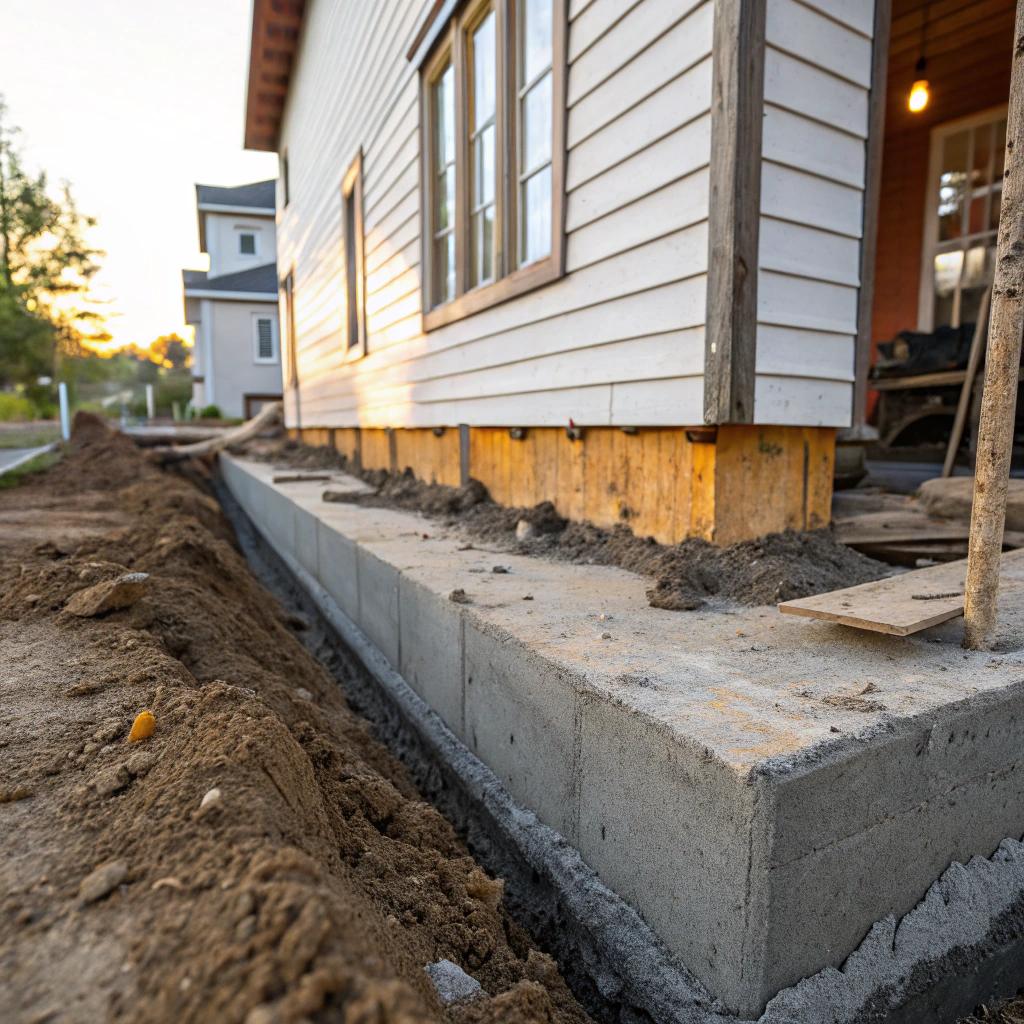
So, you are trying to fix your floors or plan a renovation in Nashville and you are wondering how foundation repair fits into that picture. The direct answer is that if your foundation is moving, cracked, or sinking, you will not get strong, level floors or a long lasting home until that foundation problem is fixed first.
Your floors, tile, hardwood, and even the best luxury vinyl can only perform well if they sit on stable support. When the ground shifts or the foundation settles, you start to see sloping floors, gaps, cracked grout, doors that stick, and trim that pulls away from the wall. Many people try to fix those symptoms on the surface, then feel frustrated when the same problems come back a year later. So, I think it helps to treat foundation repair as part of your flooring and renovation plan, not as a separate headache you deal with “someday.” Visit Website for more information.
- Foundation movement usually shows up first in your floors and walls.
- Leveling a house after new flooring is installed can damage that new floor.
- Good contractors in Nashville will check the foundation before major flooring work.
- Not every crack means disaster, but some are serious and need fast attention.
- Moisture control around the home is just as important as the structural fix itself.
- Repairs can use piers, beams, slab leveling, or drainage changes, depending on the home.
- Documenting the repair can help with resale and home insurance conversations.
How foundation repair connects to flooring and renovation
If you are reading a home renovation or flooring site, you are probably thinking about looks first. New hardwood. Better tile in the kitchen. Maybe a heated bathroom floor. That is normal. The tricky part is that the most expensive flooring upgrades can fail if the base under them is not stable.
Stronger floors start with a stable subfloor, and a stable subfloor starts with a sound foundation.
Think about what you expect from your floors:
- No squeaks or soft spots
- Gaps between planks that do not keep growing
- Furniture that does not wobble in different corners of the room
- Doors that open and close without scraping the floor
All of that depends on the structure below. In Nashville, with its mix of clay soils and changing moisture, some neighborhoods see more settlement than others. If a contractor levels your floors or installs expensive hardwood while the foundation is still moving, you may end up redoing that work. And that is the part that really hurts.
That is why many experienced flooring contractors quietly suggest a foundation inspection before a big project, especially in older homes or houses with clear signs of movement.
Common foundation and floor problems in Nashville homes
I will not pretend every irregularity in a floor is a crisis. Houses are not perfect. They shift a little over time. Still, certain patterns show up again and again here, especially in homes built on expansive clay or on sloped lots.
Signs that point toward foundation issues
You might notice one or more of these before you ever think about the word “foundation.”
- Floors that feel like they slope toward one side of the room
- Cracks that go through several tiles or through grout lines in a pattern
- Hardwood boards that separate or cup in one section of the house
- Baseboards that pull away from the wall or have gaps at corners
- Interior doors that used to close fine but now drag or will not latch
- Cracks in drywall over doors and windows, often diagonal
- Gaps where the wall meets the ceiling, usually near corners
If floor and wall issues keep returning after you fix them once, the problem usually is not the finish material; it is the structure underneath.
Soil, moisture, and Nashville weather
Nashville soil can be a bit unpredictable. There is clay that swells when wet and shrinks when dry. Heavy rain one season and a dry spell the next can cause the ground to move just enough to pull your foundation with it.
A few factors make things worse:
- Poor drainage that lets water pool around the perimeter of the house
- Gutters that dump water right at the base of the walls
- Landscaping that traps moisture near the foundation
- Trees planted very close to the house, with roots seeking water under the slab
This is why many foundation repair plans include drainage changes, not just structural hardware. If the water problem is not controlled, the same movement may keep happening.
Types of Nashville homes and how they affect repair choices
Not all homes in the area share the same structure. The way your house is built affects how a contractor will approach foundation and floor repairs.
| Home Type | Common Floor Issues | Typical Foundation Fixes |
|---|---|---|
| Slab-on-grade | Tile cracks, hard floor heaving or sinking, gaps at baseboards | Piers under slab edges, slab leveling, drainage corrections |
| Crawlspace | Spongy floors, sagging in the middle of rooms, cupped hardwood | Added support beams, adjustable jacks, sill or joist repair, moisture control |
| Basement | Cracks in slab, wall bowing, uneven basement floor | Wall reinforcement, piers, interior drainage, sump systems |
If you are planning a flooring project, it helps to know what you are sitting on. A quick look in the crawlspace or basement, or a look around the exterior, can give you some clues before you call anyone.
How foundation repair affects your flooring plans
This is where people often get the order wrong. They buy new flooring, schedule installation, then someone notices a sag in the subfloor on the day of the job. Work stops. Everyone is frustrated. It would be better to reverse that order.
If you suspect foundation or structural issues at all, handle those first, then level and repair subfloors, then install or refinish your floors.
Why the order of work really matters
Here is what can happen if the order is flipped:
- You install tile over a slab that is still moving, and cracks appear across the room within months.
- You lay hardwood on a subfloor that later gets lifted when foundation piers are installed, causing gaps and squeaks.
- You pay to level interior floors with self leveling compound, but then exterior foundation work changes the slope again.
None of these are strange edge cases. They are common. Installers often know better but are under pressure to “just install it” because the material is already bought.
What to ask before new flooring
Before you commit to a flooring job, it is fair to ask a few questions, either to yourself or to your contractor:
- Have you noticed doors sticking or new wall cracks in the last year?
- Does your floor feel lower or higher in certain areas, not just slightly off?
- Has anyone checked your crawlspace, basement walls, or slab in the last few years?
- Are you planning big changes like a kitchen island that will add weight to one area?
If the answer to any of these is yes, that does not mean your home is unsafe. It just means it might be smart to bring in someone who understands structural movement before putting a lot of money into flooring.
Typical foundation repair methods and what they mean for your home
Foundation repair is not one thing; it is a group of different methods. Each one has its own impact on floors and renovation projects.
Piers and underpinning
When part of your foundation has sunk or is at risk of sinking, contractors often add support below it. They install steel or concrete piers down to more stable soil, then carefully lift or stabilize the structure.
What that means for your floors:
- Some floors may rise a bit as the foundation is lifted closer to level.
- Cracks in walls and ceilings might partially close, or new hairline cracks can appear during adjustment.
- Old tile may shift slightly while lifting, which is one more reason to repair the structure before installing new flooring.
Slab leveling or slabjacking
For a concrete slab that has settled in one area, some companies pump material under the slab to raise it. Others use foam that expands under the concrete.
Impact on floors:
- If the slab is visible, like in a garage, you will see the change directly.
- If tile or another rigid floor is bonded to the slab, it may flex during lifting and crack.
- Planning timing with your flooring installer helps avoid doing these steps out of sequence.
Crawlspace support and moisture control
Many older Nashville homes sit on crawlspaces with wood beams and joists. Over time, moisture, poor ventilation, or undersized supports can lead to sagging floors.
Common fixes include:
- Adding or adjusting support piers and beams
- Replacing damaged joists or sill plates
- Adding vapor barriers or encapsulating the crawlspace
- Improving drainage around the perimeter of the house
For flooring, this type of repair is often a good opportunity. If the floor must be opened or the subfloor replaced, you can coordinate that with new hardwood or tile.
Planning a renovation around foundation work
Renovation projects can be stressful enough without surprise problems. A bit of planning can reduce that stress.
Step one: inspection and diagnosis
You do not want to guess here. Before major work, a structural or foundation specialist should walk your property, look for patterns in cracks, measure floor slopes, and check moisture conditions. Some companies also offer detailed guides, like this one on Foundation Repair Nashville, if you want a deeper technical overview before anyone picks up a tool.
Be honest during the inspection. Mention any changes you have noticed, even small ones. Say if a crack is new or has been around for ten years. That context helps more than people think.
Step two: decide what really needs repair now
Not every minor issue needs immediate action. Sometimes a contractor will say something like, “This side has moved a bit, but it is stable; we can monitor it.” Other times, the movement is ongoing and affecting your floors, and waiting makes things worse.
Ask direct questions:
- Is the movement active or old?
- What happens if I wait a year?
- How will this affect my flooring plans?
- Can the repair be done in stages if my budget is limited?
It is fine to push back if a plan feels too big or too vague. A clear explanation should make sense in plain language.
Step three: coordinate trades
If you are doing foundation work, flooring, and maybe a kitchen or bath remodel, timing matters. Ideally, your schedule looks something like this:
- Foundation inspection and repair plan
- Foundation repairs and structural stabilization
- Subfloor repairs, leveling, and framing adjustments
- Rough plumbing or electrical changes, if any
- New flooring installation or refinishing
- Baseboards, trim, and paint touch ups
Is this perfect sequence always possible? Not really. Real life gets in the way. But the closer you get to it, the fewer surprises you will have.
Cost, value, and when the numbers make sense
People often want one simple number for foundation repair. That is hard, because the cost depends on house size, type of issue, access, and repair method. Still, it helps to think about cost in context.
Comparing foundation repair to flooring costs
You might already be pricing hardwood or tile. Here is a rough sense of how these costs can relate:
| Project Type | Typical Scale | Effect on Floors |
|---|---|---|
| Moderate foundation repair | Several piers or crawlspace supports | Protects future flooring across much of the home |
| Full home hardwood replacement | Several main rooms and hallways | Looks great, but fragile if the structure is still moving |
| High end tile in kitchen and baths | Smaller areas, rigid material | Very sensitive to slab or subfloor movement |
When someone spends a large amount on flooring but skips a needed structural fix, they sometimes end up paying more later, both to redo floors and to tackle a bigger foundation problem that has had time to grow.
Resale and inspection concerns
If you think you might sell the house within a few years, foundation and floor issues will likely come up during the buyer’s inspection. Cracks and sloping floors are things inspectors flag quickly.
Addressing problems early can give you:
- Repair documents and warranties to show buyers
- Better negotiation position, since you can say the work was already done
- A cleaner inspection report, which tends to keep deals from falling apart
From a buyer’s perspective, a home with documented, repaired foundation work often feels safer than a home with obvious issues and no clear story.
Practical steps you can take right now
All of this can feel like a lot when you just wanted a new floor. So here are some simple, concrete steps you can take without overcomplicating things.
1. Walk your home with fresh eyes
Take ten minutes and do a slow walk through. Look at:
- Floor slopes: does a ball or marble roll in certain spots?
- Cracks: do they go through several materials, like drywall and tile, not just paint?
- Doors and windows: are there new gaps or sticking points?
- Baseboards: are there gaps at the top or bottom that were not there before?
Then walk outside:
- Check for cracks in brick or siding, especially stepping patterns.
- Look at where your gutters drain: are they dropping water at the base of walls?
- Notice if the ground slopes toward or away from the house.
2. Take simple notes and photos
Write down what you see, even if it seems small. Take a few photos with your phone. If you decide to talk to a contractor later, these details help show whether issues are getting worse or staying the same.
3. Talk to your flooring or renovation contractor honestly
If you already have a flooring contractor lined up, tell them what you noticed. Ask if they are comfortable installing over areas with visible movement, or if they recommend a structural look first. Good tradespeople are usually relieved when homeowners bring this up early rather than hiding it.
4. Get at least one structural opinion
You do not have to sign anything quickly. Invite a foundation or structural specialist to take a look, compare their observations with your own, and ask clear questions. If part of their answer sounds too perfect or dramatic, ask again. Realistic answers often include some uncertainty or trade offs.
How foundation repair can actually help your renovation
It can feel like bad luck when a foundation problem shows up just as you are planning a nice upgrade. Still, if you look at the whole house, dealing with structure first can open possibilities.
- Rooms can be leveled in a way that makes furniture placement easier.
- You can fix subfloor squeaks at the same time as structural work.
- A drier crawlspace or basement can protect hardwood and reduce cupping.
- Improved drainage can keep outdoor concrete and patios from tilting later.
There is also a psychological side. When you know the foundation and structure are sound, it is easier to enjoy the cosmetic upgrades. You are not waiting for the next crack to show up.
Questions homeowners often ask about foundation repair and floors
Will foundation repair damage my current floors?
It can, but not always. If the work involves lifting part of the structure, some movement inside is likely. Minor cracking or shifting can happen, particularly in tile and old drywall. Many contractors will warn you about this and sometimes suggest doing repairs before you invest in high end finishes.
Can I just level my floors without fixing the foundation?
You can level floors locally, using self leveling compound or shims, and in mild cases that might be enough. If the underlying structure is still moving though, that fix is temporary. The new level surface will follow the same movement over time, and you could end up repeating the job.
Are hairline cracks always a sign of foundation trouble?
No. Houses settle and materials shrink with age. Small, stable hairline cracks that do not grow or reappear after repair are not always a concern. Cracks that widen, extend across different surfaces, or come with floor slopes or stuck doors are more concerning and worth checking.
Is it better to repair the foundation before or after new flooring?
Almost always before. The only rare exception is when flooring is part of accessing the structure and will be replaced anyway. As a general rule, stabilize structure, then fix subfloors, then install finished flooring.
What if I cannot afford a full repair right now?
This is common. In that case, talk openly to the contractor about priorities. Sometimes there is a way to address the most active or risky section first and monitor the rest. You might also choose more forgiving flooring, like floating floors, in areas where some minor movement is expected.
Do all homes in Nashville eventually need foundation repair?
No, that is an exaggeration. Many homes go decades with minimal structural issues, especially if drainage is good and loads are moderate. But the mix of soil types and weather here does mean that structural movement is not rare. Paying attention early can turn a big problem into a smaller one.
How do I know if a foundation contractor is giving me a fair plan?
Look for clear explanations in plain language. Ask how they reached their conclusions, what other options exist, and what happens if you delay. If two opinions completely disagree, you might get a third. You do not need to understand the engineering details, but you should feel that the logic of the plan matches what you see in your home.
Renovation and flooring projects are more satisfying when the home feels solid under your feet. If your floors are sloping or your walls keep cracking, maybe the best next step is not another surface repair, but a closer look at the foundation that holds everything up.