
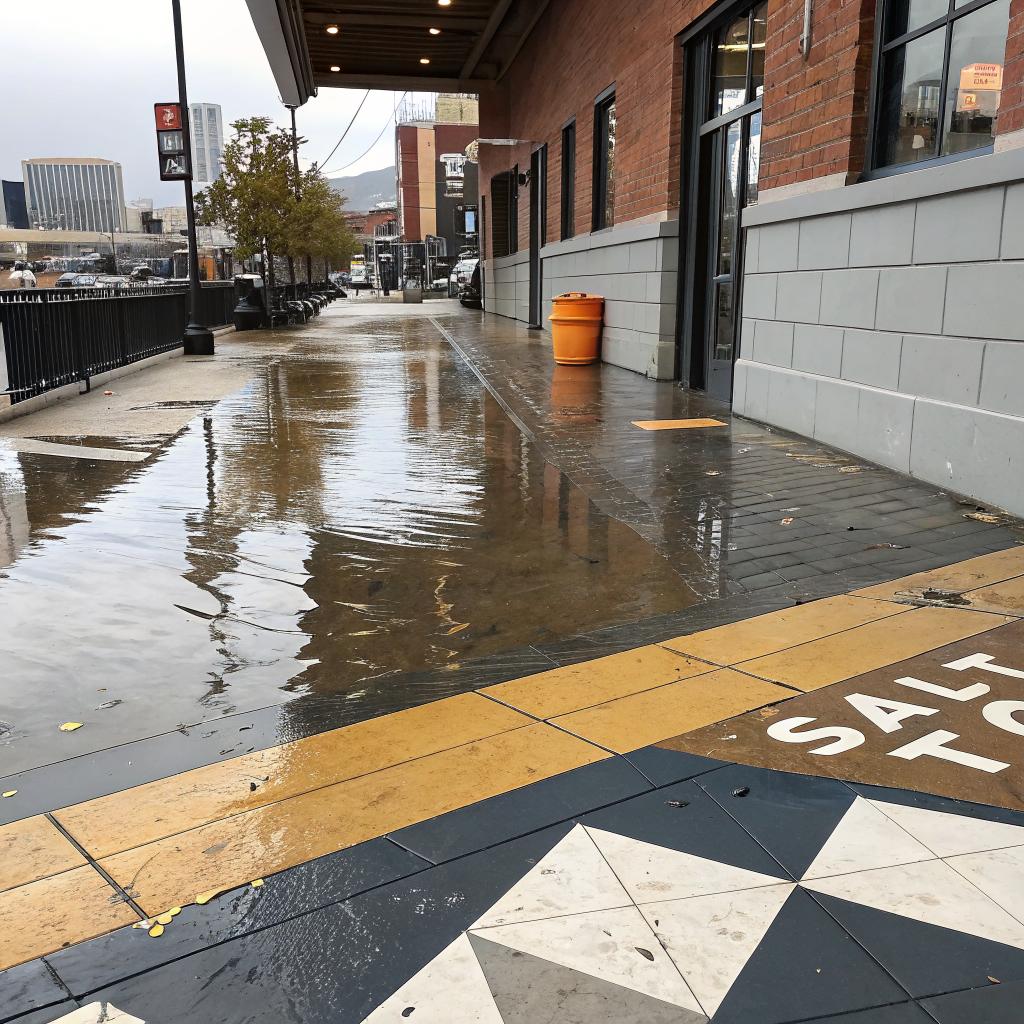
So, you are trying to fix flood damage and figure out what to do with your flooring in Salt Lake City. The short answer is that you need to dry everything fast, check what can be saved, remove what cannot, and then pick new flooring that can handle future water, not just what looks nice.
Flooded floors feel like a disaster, but the process is more step by step than it seems in that first stressful hour. You are dealing with two main jobs at once: stopping ongoing damage and making better choices for your next floor so this is less painful next time. Salt Lake City has its own mix of risks, like snowmelt, broken sprinkler lines, and older basements, so a plan that works in a dry climate on paper is not always the best for an actual Utah house.
Here are a few things you need to know before you start ripping boards out or shopping for new flooring.
- Water under flooring is more serious than what you see on top.
- Drying correctly is more important than saving the old floor at all costs.
- Basements in Salt Lake tend to need different flooring than main levels.
- Not all “water resistant” floors handle a real flood.
- Insurance rules affect how you repair and what will be paid for.
- Professional help is usually needed if water sat for more than 24 to 48 hours.
- Your next flooring choice should assume there will be another leak or flood at some point.
If you want a local start for cleanup, you can look at mold testing Salt Lake City, but let me walk through how to think about the flooring side in detail.
Step 1: What kind of flood are you dealing with?
All water is not the same, at least not for floors.
The first question is: where did the water come from?
Clean, gray, or black water
Most restoration companies sort water into three basic categories. It is not perfect, but it is useful for flooring decisions.
| Type of water | Common sources in Salt Lake City homes | Flooring impact |
|---|---|---|
| Clean water | Broken supply lines, burst pipes, tub overflow, ice maker line, snowmelt leaking through a small gap | Best chance to dry and save certain floors if handled quickly |
| Gray water | Washing machine drain, dishwasher discharge, some sump pump failures | May still be restorable, but needs stronger cleaning and more caution |
| Black water | Sewage backup, storm drain backup, flood water coming in from outside | Porous flooring is usually removed, not saved |
You might not know exactly which type it is, and that is fine. If there is any chance sewage or outside floodwater is mixed in, treat it as black water. People often want to “save the hardwood at any cost,” but if the water was dirty, saving the floor is sometimes not wise from a health side.
If the water came up from a drain or sewer, expect to remove any porous flooring, padding, and often parts of the subfloor, even if it does not look that bad yet.
How long has the water been sitting?
Time is just as important as source.
A rough guide:
- Less than 24 hours: highest chance to save flooring, less chance of mold.
- 24 to 72 hours: structure might still be saved, but flooring is at higher risk.
- More than 72 hours: mold risk is high, and most porous materials need to go.
If you are reading this and it has already been a few days, flooring decisions will lean more toward removal and replacement than gentle drying.
Step 2: First 24 hours for flooring after a flood
I will keep this practical and focused on floors, not the whole house.
Safety first, then stop the water
You know this, but people skip steps when panic hits.
- Turn off electricity to the flooded area if outlets or cords are wet.
- Stop the water at the main shutoff or the appliance valve.
- If it is a storm event, try to divert water from window wells or doors.
Do not walk into standing water with electrical cords or tools. Floors are not worth a shock.
Get standing water off the floor
The longer water sits on or under a floor, the worse the damage. If you can, start removing water even before a crew arrives.
You can:
- Use a wet/dry vacuum, dumping it outside or into a floor drain if that drain is not part of the problem.
- Push water out with a squeegee or broom toward a drain.
- Pull up soaked area rugs and remove them from the house.
Try not to tear out flooring at this stage unless you already know it is not salvageable. Early removal is sometimes good, but random ripping can confuse insurance and make clean repair harder.
Start air movement and dehumidification
This is where people in a dry climate like Utah sometimes get overconfident. The outside air feels dry, so it is easy to think “it is fine, it will dry by itself.”
The hidden parts do not dry as fast as you think.
- Run dehumidifiers as soon as you can, especially in basements.
- Use fans to move air across the surface of the floor, not pointed straight at one wet spot.
- Open closets and remove baseboards if they are already swelling or warping.
Drying the air and the cavities under the floor is more helpful than just blowing a big fan at the wet area for days.
If you see cupping, buckling, or strong odors within 24 hours, that is a sign that water is trapped underneath, not just on the surface.
Step 3: How to judge each type of flooring after a flood
Salt Lake City homes tend to mix a lot of flooring types. Main living areas might have hardwood or LVP, basements often have carpet or tile, and older homes might have random layers stacked from past remodels.
I will go through the common ones and be honest about what is usually worth saving.
Solid hardwood flooring
People love their hardwood, and many hope it can always be sanded and brought back. Sometimes that is true, sometimes not.
What hardwood can handle:
- Short-term clean water exposure, especially if it is on the main level over a dry basement or crawlspace.
- Light cupping that can flatten out during careful drying.
What usually forces replacement:
- Water that sat on the floor for days.
- Water that soaked from below through a wet basement ceiling or crawlspace.
- Sewage or outside floodwater touching the boards.
Signs your hardwood might be savable:
- Cupping is present but not extreme.
- Boards are still attached to the subfloor.
- No strong musty smell after a few days of controlled drying.
Signs it is probably done:
- Boards have crowned or warped badly.
- There are large gaps or lifted planks.
- The subfloor underneath is soft or moldy.
Drying hardwood correctly takes weeks, not days, and usually needs professional monitoring. Many people get impatient, sand too soon, then end up with a wavy floor later when moisture equalizes.
Engineered wood flooring
Engineered wood is less forgiving than people expect in a flood.
It has multiple layers of wood, and once the layers swell or the core breaks down, it does not come back like solid wood.
In most wet-floor jobs:
- Floating engineered wood is removed and replaced.
- Glue-down engineered wood may be tested piece by piece, but large sections usually go if water sat under it.
You might save a small area from a quick dishwasher leak, but real flooding usually means replacement. The good news is this is often simpler to reinstall than solid hardwood.
Laminate flooring
I am going to be blunt here. Traditional laminate and real flooding do not mix.
The core of most laminate planks is a high-density fiberboard that swells quickly. Once it swells, it does not shrink back to normal.
If you see:
- Edges puffing up
- Bubbles under the surface
- Soft spots when you walk
That is not going to be “fixed” by drying. It needs to be removed, including any foam underlayment, and the subfloor must be checked.
Luxury vinyl plank (LVP) and luxury vinyl tile (LVT)
This is where the story gets more positive. Many LVP products handle water better, especially in basements.
But this is where marketing can be a bit misleading. “Waterproof” means the plank itself does not get damaged by water. It does not mean:
- Water cannot get under it.
- Your subfloor is safe.
- You will not get mold in trapped areas.
For click-together floating LVP:
- It can often be removed, dried, and reinstalled if the planks are not warped.
- The main goal is to dry the subfloor and walls behind the baseboards.
For glued-down vinyl:
- Adhesive can fail when submerged, and planks may release.
- Some or all of it might need to be scraped up, then replaced after drying.
Do not assume that because your LVP is labeled “waterproof,” you can ignore trapped moisture underneath. The subfloor still cares about water.
Tile flooring (ceramic or porcelain)
Tile itself usually does fine with water. The trouble spots are:
- Grout
- Subfloor (plywood, OSB, or older underlayments)
- Backer boards or crack isolation membranes
You might think “the tile looks perfect, so we are safe,” but water can move through grout lines and collect in the layers below, especially on wood subfloors.
Signs of a problem under tile:
- Hollow sound when tapping tiles after drying.
- Cracked grout that was not there before.
- Soft or bouncy spots in a previously solid floor.
On concrete, tile often survives floods with minor grout repair and cleaning. On wood, it is more hit and miss. Sometimes the tile has to be removed to dry the structure underneath if readings stay high.
Carpet and pad
Basements in Salt Lake are full of carpet, and they are the most common flooring affected by floods.
Here is the honest breakdown.
Carpet and pad that might be saved:
- Clean water only
- Contact less than about 24 to 48 hours
- Thinner, synthetic pile that can be dried quickly
In these cases, professionals sometimes:
- Remove and discard the pad
- Extract water from the carpet
- Dry the carpet in place with air movers and dehumidifiers
- Install new pad later, then restretch the carpet
Carpet that usually needs removal:
- Any contact with sewage or outside floodwater
- Water sitting for several days
- Thick pad or high-pile carpet that holds moisture
If this is a basement that has flooded more than once, I would strongly question reinstalling wall-to-wall carpet, no matter how cozy it feels.
Concrete floors
Some people forget that concrete counts as part of the flooring system.
Concrete slabs handle water exposure without falling apart, but they hold moisture for a long time. That hidden moisture can:
- Cause new floors to fail later
- Promote mold growth behind baseboards and in wall cavities
Restoration crews usually use moisture meters or calcium chloride tests to confirm when a slab is ready for new flooring. Skipping that step can lead to vinyl bubbling, wood cupping, or adhesive failure months later, which feels random unless you saw the readings.
Step 4: Salt Lake City specific issues for flooded floors
Every area has its quirks. For Salt Lake homes, a few patterns show up again and again.
Basements and high water tables after storms
A big chunk of local flood calls are basement related:
- Sump pump failures
- Window well leaks from heavy rain or melting snow
- Foundation seepage on older homes
Basement floors should be chosen with repeat risk in mind. Carpet and traditional hardwood might look nice but are painful when the third minor flood hits.
Flooring types that usually perform better in Salt Lake basements:
- LVP or LVT, properly installed, with attention to subfloor flatness
- Tile over a correctly prepared slab
- Stained or sealed concrete with area rugs that can be removed
Carpet can still be used, but I would treat it as a comfort choice, not a “smart for flooding” choice.
Freeze-thaw cycles and plumbing
Cold snaps here can crack pipes in exterior walls or uninsulated basements. When that happens, water often travels inside the wall and then onto the floor, which means:
- By the time you see water, the structure behind the floor has been wet for a while.
- Drying only the visible floor is not enough.
If a pipe breaks in a wall near the floor, expect:
- Baseboard removal
- Cutting out wet drywall
- Checking insulation and framing, not just the surface floor
That extra step adds cost, but skipping it leads to hidden mold and future odors.
Older homes with “mystery” layers
Salt Lake has many houses that have seen several remodels. It is common to find:
- Sheet vinyl over old hardwood
- Multiple layers of laminate stacked
- Tile on top of a questionable subfloor
After a flood, those layers can trap water between them. That is one reason restoration crews often recommend pulling more material than you want to hear. They are not just being picky; they know moisture can get stuck between old and new layers.
Step 5: Working with insurance and restoration crews
Flooring choices are not only about what you like. Insurance coverage, adjusters, and local restoration companies all shape the final result more than most people expect.
Document before you tear out
One big mistake I see is people ripping up flooring in frustration, then trying to explain it to the adjuster later. It rarely goes smoothly.
Better steps:
- Take clear photos and videos of the water, damage, and the affected areas.
- Measure rooms and note flooring types and transitions.
- Save a sample of the old floor if you can, in case there are matching questions.
Insurance often expects proof that materials were not salvageable. Test readings from meters and photos of swelling, staining, or mold help support decisions about removal.
What restoration pros check that homeowners often miss
Here are a few places professionals usually measure and inspect:
- Under cabinets near wet floors
- Subfloors through small test holes or lifting vents
- Bottom of wall cavities behind removed baseboards
- Transitions between different flooring types
If a crew does not check under or behind anything and just says “it will dry on its own,” that is usually a red flag.
You do not need to know every technical detail, but you should at least ask where they took moisture readings and what their goal moisture levels are.
Matching old flooring vs. replacing whole areas
One frustrating part for homeowners is when a small area is damaged but the exact product is discontinued. You might be told that one room’s flooring is being fully replaced, or even an adjoining room, because the current stock does not match.
You might think that sounds wasteful, but partial patching with a close match can look bad forever. Insurers sometimes agree that “reasonable match” means replacing whole connected areas rather than living with obvious patchwork. The rules vary by policy and company.
Step 6: Choosing new flooring after flood damage
Once the wet mess is cleaned up and everything is dry, you are back to a more familiar question: what flooring should you put in?
The difference now is that you have real data. You know which area flooded, how high the water went, and how long it took to notice.
I like to think about it in three layers:
- Risk level of the area
- Daily use of the space
- Budget and tolerance for future repairs
Match flooring to risk level, not just looks
Here is a simple way to think about it.
| Area | Flood / leak risk | Better flooring options | Risky choices |
|---|---|---|---|
| Basement living area | Medium to high in many SLC homes | LVP, LVT, tile, sealed concrete with area rugs | Solid hardwood, thick pad + plush carpet |
| Basement bedroom | Medium | LVP with rugs, low-pile carpet with moisture-aware underlayment | Engineered wood, thick laminate |
| Main level kitchen | Moderate (dishwasher, sink leaks) | LVP, tile, well-installed hardwood if you accept the risk | Laminates that swell easily |
| Bathrooms | Frequent splashes, occasional overflows | Tile, sheet vinyl, quality LVP | Carpet, traditional hardwood |
| Main level living room (over dry basement) | Low | Hardwood, engineered wood, LVP, carpet | Anything is possible, risk is more about personal comfort |
You might disagree with some of these, and that is fine. It is your house. But if you put thick carpet back into a basement that already flooded twice, you are choosing comfort over resilience, which is a valid choice, just not one you should make by accident.
Underlayments and subfloors matter more after a flood
After a water event, think about how your flooring is supported.
Questions to ask your installer:
- Is the subfloor completely dry and checked with meters, not just by feeling?
- Are you using a moisture barrier, and if so, which side of the assembly?
- Will this underlayment trap water if there is another leak?
For example:
- Some foam underlayments for floating floors are fine for normal use but can hold water in a flood.
- In basements, some people use dimpled subfloor panels that keep the flooring off the cold concrete and allow some ventilation.
You do not need to be an expert, but asking these questions helps filter out careless installs.
Moisture testing before installing new floors
Any installer working over concrete or a once-wet subfloor should be testing for moisture. If they shrug and say “no need, it looks dry,” that is a concern.
Tests can include:
- Moisture meters for wood subfloors
- Calcium chloride or RH tests for concrete slabs
You do not need the technical details, you just want:
- Numbers written down
- Confirmation that those numbers are within the limits for the product you chose
Skipping this step is one of the quiet reasons people have flooring failures months after a flood repair.
Step 7: Reducing damage next time, especially for floors
No one likes to think about “next time,” but water finds a way eventually. Small changes now can reduce how much flooring you lose in the future.
Practical changes around plumbing and appliances
Here are a few upgrades that actually help:
- Install leak sensors under sinks, behind toilets, and near the water heater.
- Use braided stainless supply lines instead of cheap plastic ones.
- Consider an automatic shutoff valve that reacts to leaks.
- Have your sprinkler and exterior hose bibs winterized properly.
If you already know which room flooded, put sensors and shutoff focus there. It is not about covering the whole house perfectly; it is about catching the most likely failures faster.
Improving exterior drainage
A lot of basement flood floors are really drainage problems in disguise.
Basic checks:
- Do gutters and downspouts send water away from the foundation or right next to it?
- Does the soil slope toward or away from your house?
- Are window wells clear of leaves and debris?
This stuff feels boring compared to picking pretty flooring samples, but it has a bigger effect on whether that flooring survives a big storm.
Choosing “sacrificial” flooring in some spaces
This is not a term most showrooms use, but it is realistic.
For some rooms, especially:
- Storage rooms in basements
- Mechanical rooms
- Lower-level laundry rooms
It can be smarter to use flooring that:
- Is cheap to replace
- Does not trap moisture
- Can be removed and reset without much drama
That might mean simple sealed concrete or basic LVP instead of a high-end, hard-to-match product. You are not underselling your house; you are accepting the reality of that specific space.
Frequently asked questions about flooded floors in Salt Lake City
Can my hardwood floors be saved after a flood?
Sometimes, but not always. Clean water caught within the first 24 hours stands a chance, especially on upper levels. Dirty water or water that sat for days usually means removal. The final call depends on cupping, subfloor condition, and mold risk, not just what you can see on the surface.
Is it safe to just dry my carpet myself with fans?
If the water is truly clean and very recent, small areas might be ok. But without strong extraction and dehumidification, moisture stays in the pad and subfloor. That often leads to odor and mold. Any sewage or outside water on carpet is a clear no; that carpet and pad should be removed.
What flooring is best for a Salt Lake City basement that has flooded before?
Many people choose LVP or LVT, tile, or sealed concrete with area rugs. All three are easier to clean and dry after future water problems. Wall-to-wall carpet and solid hardwood look nice but are more likely to end up in a dumpster after the next leak.
Does “waterproof” flooring mean I do not need to worry about floods anymore?
No. “Waterproof” usually means the product itself does not swell from water. It does not protect your subfloor, walls, or framing from moisture. You still need proper drying if water gets under or around that floor.
How long does it take to dry floors after a flood?
Most drying projects run around 3 to 7 days for basic structures, sometimes longer for hardwood or thick assemblies. True drying time depends on how wet things were, the materials involved, and how strong the dehumidification setup is. Guessing by touch or waiting “until it feels dry” is not reliable.
Is it really necessary to remove baseboards and cut drywall if the floor is the only thing that looks wet?
If water reached the wall line, it often wicked up into drywall and insulation. Leaving that wet can create mold inside the wall, even if the floor dries. Removing baseboards and making small cuts lets crews dry behind the scenes. It feels extra, but it prevents more invasive work later.
What is one change I can make so the next flood does less damage to my floors?
Pick more water-tolerant flooring in high-risk areas, especially basements, and pair that with leak detection in the rooms that have plumbing or past issues. It sounds simple, but that mix of better material and earlier warning makes future floods more of a cleanup job and less of a full flooring replacement.