
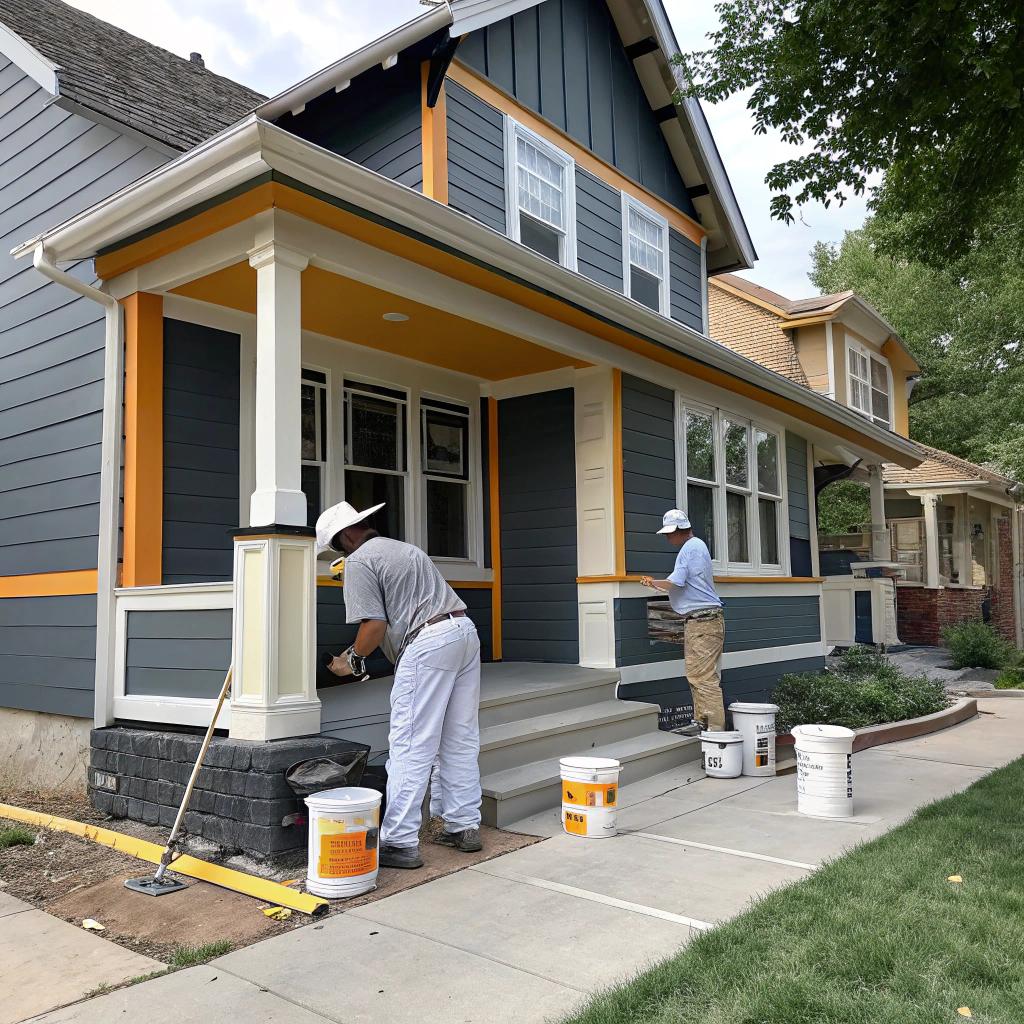
So, you are trying to figure out how exterior painters in Denver can transform both your curb appeal and even your floors. Yes, the right exterior painters can completely change how your house looks from the street and also upgrade outdoor floors like patios, porches, and even garage floors with the right coating system.
Most people think exterior painting is just brushing color on siding, but it affects the whole feel of the property. It changes how your home looks in real life and in photos, and it can even make outdoor flooring easier to clean and longer lasting. That matters a lot in a city like Denver, where the sun is strong, temperature swings are big, and snow, ice, and grit beat up surfaces all year.
Here are some quick things you need to know before you hire anyone or pick colors:
- You need paints and coatings that handle Denver sun, hail, and freeze-thaw cycles.
- Color choices affect how big, clean, and modern your house feels from the street.
- Good prep work is more important than the paint brand.
- Floors like garages, porches, and patios can be coated, not just walls.
- Concrete and wood need very different products and prep steps.
- Quality exterior work usually increases home value more than cheap cosmetic work.
- Bad exterior or floor coatings can peel fast and cost you more in repairs.
If you want to see what real pros in your area offer, you can look at interior painting Denver for examples of services, but let me walk through the details first so you know what to look for and what to question.
How exterior painters actually affect curb appeal
People often say “curb appeal” like it is just a buzzword for real estate listings. It is not. It is a mix of small visual choices that hit you in 2 or 3 seconds as you drive up.
Your eye usually notices:
- Color contrast between siding, trim, and roof
- The condition of the paint (clean, faded, peeling, stained)
- The state of the front door, porch, and visible railings
- The driveway and any porch or step flooring
A good exterior painter thinks about all of these at once, not just what is on the main walls.
Good curb appeal is less about “pretty colors” and more about clean lines, clear contrasts, and finishes that look intentional.
If your siding looks fresh but your porch floor is flaking and the railings are rusty, your house still feels tired. So if you only paint the siding and skip the floor and trim, you only do half the job.
Why Denver is a bit harsh on paint and floors
I think this part is easy to ignore, but it explains why some paint jobs last and others fail in 2 years.
Weather factors you cannot wish away
Denver has a mix that is tough on coatings:
- Strong UV from higher altitude, which fades colors and breaks down cheap paint.
- Large temperature swings, sometimes in the same day, which expand and contract surfaces.
- Snow and ice, plus melting agents, that sit on steps, decks, and driveways.
- Dry air that can make some coatings cure faster than expected while you are working.
All of this leads to:
- Faster fading on darker colors, especially south and west facing walls.
- Hairline cracks in caulk and paint films.
- Peeling on horizontal surfaces where water sits, like rail tops and steps.
- Spalling and flaking on bare or poorly sealed concrete floors.
This is why a painter who works in coastal Oregon, for example, should not use the exact same products and methods in Denver. Same for floors. Garage floor systems that work in mild climates might not handle hot tires and deicing salts here for long.
Where exterior painters usually work: beyond siding
People often picture just siding and trim, but exterior painters often touch more surfaces than you think.
Main exterior surfaces
- Siding (wood, fiber cement, stucco, brick, vinyl in some cases)
- Trim (fascia, soffits, window and door trim)
- Gutters and downspouts
- Garage doors and exterior doors
- Railings and metal details
Floor-related surfaces many homeowners forget
- Front and back porches (wood or concrete)
- Steps and stoops
- Deck floors and railings
- Balcony floors
- Garage floors and sometimes basement walkout slabs
- Walkways and small patios, if they are part of a painting or sealing scope
Some painting companies handle all these surfaces; some only do walls and trim. It is worth asking, because doing floors at the same time as the exterior can save you labor costs and disruption.
How paint choices change the feel of your house from the street
You probably care less about paint chemistry and more about “will this look good and last.” Fair.
Still, color and sheen choices affect both the look and how durable the job is.
Color contrast and proportions
Think about three basic elements:
- Body (main color of the siding or stucco)
- Trim (around doors, windows, facia)
- Accent (front door, shutters, maybe the garage door)
A quick way to think about it:
| Area | Safer choice | What it does visually |
|---|---|---|
| Body | Mid-tone neutral (warm gray, greige, soft green, tan) | Gives a calm base that is easy to match with roof and stone |
| Trim | White or off-white, or slightly darker version of body color | Frames the house and sharpens lines |
| Door | Stronger color (deep blue, red, black, dark green) | Creates a clear focal point for curb appeal |
In Denver sun, very dark full-body colors on siding can heat up and stress caulk joints more. They can look great, but a painter should warn you about possible movement, especially on older wood siding.
A color that looks perfect on a sample card can look too bright or too washed out on a full wall in Denver sunlight, so always test on the actual exterior first.
Sheen and durability: walls vs floors
Sheen is how shiny the paint looks. Many homeowners shrug and say “just something not too shiny”, but sheen affects:
- How much dirt shows or wipes off
- How surface flaws look
- How slippery a floor might be
Common sheen choices for exteriors
| Surface | Typical sheen | Why |
|---|---|---|
| Siding | Flat or low-sheen | Hides imperfections, softer look in bright light |
| Trim | Satin or semi-gloss | Sharper lines, easier to clean, stands out a bit |
| Front door | Semi-gloss | Richer color, more washable |
| Interior floors (garage, basement) | Low to medium sheen epoxy or poly | More rugged and cleanable, but needs grip texture |
| Exterior concrete (porch, steps) | Low sheen concrete coating | Less glare and less slippery, often with texture |
For floors, too much gloss can look nice in photos but become slippery when wet or dusty. A good painter or coating installer balances looks with safety.
How exterior pros handle concrete floors and slabs
This is where the flooring side connects directly with painting.
Not every exterior painter does coatings, but many in Denver either handle them or partner with a floor specialist. If you want curb appeal plus better flooring, it helps to do both at once, or at least plan them together.
Typical surfaces that get coated around a Denver home
- Garage floors
- Front concrete porches
- Back patios
- Walkout basement slabs
- Concrete steps and landings
For each of these, the basic steps are similar, even if the products differ.
Step 1: Inspection and moisture check
The installer checks:
- Cracks, spalling, or loose surface material
- Previous coatings or sealers that might block adhesion
- Moisture issues, such as efflorescence or damp spots
If the slab has moisture pressing up from below, certain coatings will fail quickly. In those cases, breathable systems or different prep work are needed. Some contractors skip this step, which is one reason you see flaking porch paint after one winter.
For any floor coating, adhesion and moisture control matter more than the product label or brand name.
Step 2: Surface prep for concrete
There are a few common methods:
| Prep method | What it is | Where it fits |
|---|---|---|
| Grinding | Using a machine with diamond heads to open the surface | Garages, patios, thick coatings or epoxy systems |
| Shot blasting | Blasting small steel shot to profile the surface | Bigger jobs or when heavier profile is needed |
| Acid etching | Chemical etch with acid, then rinse | Light-duty coatings; not ideal for all situations |
| Power washing only | High-pressure wash without profiling | Very light film-forming sealers, not high-performance coatings |
For Denver garages and heavily used porches, grinding is common, because it gives a more controlled surface for coatings to bond to.
Cracks are usually filled with repair mortars or polyurea crack fillers before the main coating is applied.
Step 3: Choosing a coating system
There is no single “best” product, but here is how they differ:
| Type | Pros | Cons | Good for |
|---|---|---|---|
| 1-part concrete paint | Easy to apply, lowest cost | Less durable, more likely to peel under hot tires | Light-use areas, budget projects |
| 2-part epoxy | Strong, chemical resistant, common for garages | Can amber in UV, sensitive to moisture issues | Garages, indoor or shaded slabs |
| Polyurea / polyaspartic system | Fast cure, UV stable, very durable | Higher cost, needs skilled installer | Garages, porches, patios, high-use floors |
| Penetrating sealer | Very natural look, improves stain resistance | Less “finished” look, no color change | Concrete that you want to keep looking like concrete |
For curb appeal, a colored system with decorative flakes in the garage or on the front porch can make the entrance feel more finished. But a simple clear sealer on a clean broom-finished concrete porch can also look nice and is less of a commitment.
Wood decks, porches, and stair treads
Wood floors outside are tricky, especially in Denver. The sun beats up clear finishes quickly, and snow can sit on horizontal boards.
You have two broad paths:
- Transparent or semi-transparent stain that shows wood grain
- Solid color stain or floor paint that hides most grain but gives a more uniform color
Transparent stains look warm at first but may need more frequent re-coating, sometimes every 1 to 3 years, depending on exposure. Solid stains or porch paints can last longer on vertical parts, but horizontal surfaces still wear faster from foot traffic and weather.
Painters who know Denver will usually:
- Recommend stain instead of standard wall paint for deck floors.
- Pay attention to board spacing and trapped moisture around posts and rail bases.
- Explain that anything horizontal will wear faster than railings or posts.
How exterior painting and flooring play together
This is where it ties back to home renovation and flooring as a whole.
If you are already thinking about new floors inside, it often makes sense to look at your exterior floors at the same time. The house then feels consistent, instead of having a brand new kitchen floor and a flaky front step.
Visual flow from street to inside
Imagine this path:
- You see the house from the curb. Siding and trim are fresh and clean.
- You walk up the driveway or path. The porch or entry steps have a clean, non-peeling surface.
- You reach a front door in a strong, clear color. No chips on the threshold.
- You cross the entry and step onto indoor flooring that feels like it belongs with the outside colors.
This continuity is not about being fancy. It just means someone thought about the transition from street to entry to interior.
Common color coordination ideas
You do not need to match colors exactly, but it helps to coordinate tones.
| Exterior element | Related interior element | Simple way to coordinate |
|---|---|---|
| Front door color | Entry rug, accent wall, or decor | Repeat the door color in one small interior accent |
| Porch floor or tile | Entry or hallway flooring | Stay in similar warm or cool tones so the shift feels natural |
| Trim color | Interior baseboards and door trim | Use a similar white or off-white family |
You do not have to over-think this. Sometimes it is enough just to avoid clashing. For example, if you pick a very cool gray for siding, but your interior flooring is a very warm orange wood tone, the transition can feel a bit off. Not wrong, just slightly mismatched.
What to ask exterior painters about flooring work
Not every company in Denver that paints exteriors is strong with floors, and that is fine. But you want to know.
Here are questions you can ask in plain terms:
- “Do you handle garage, porch, or patio floor coatings, or do you focus on walls and trim only?”
- “How do you prep concrete before coating it?”
- “What do you use on wood porch floors and steps, and how long does it usually last here?”
- “How do you deal with peeling paint on old concrete steps?”
- “Can you help choose colors so the porch or garage feels coordinated with the siding?”
If answers are vague, that is a small warning sign. A good pro will have concrete examples of past jobs, and they will usually talk more about prep than about the brand name of the paint.
Cost considerations: where to spend and where to save
I think most homeowners are fine paying for quality if they see the reason. It just feels bad to pay more and still get problems.
Areas worth spending a bit more
- Sun-exposed elevations on your house, where fading and breakdown are fastest.
- Front-facing elements: siding around the entry, trim, the front door, and porch railings.
- Garage floors, if you use the space for parking or as a workshop.
- Porch floors and steps where safety and traction matter.
Using better materials and better prep here gives more visible benefit.
Areas where basic products might be enough
- Back-side trim that nobody sees much.
- Utility doors or small service areas.
- Low-use concrete slabs that are mostly hidden or only used for storage.
You can still have them painted or sealed, but you may not need the highest grade coating there.
Timing the work around Denver seasons
Climate affects when you can paint or coat floors. Some products can handle lower temperatures; others cannot.
Painting exterior walls and trim usually works best in:
- Late spring through early fall
- Days where temperatures stay above the minimum on the can for most of the day and night
Concrete coating and sealing also need dry surfaces and a certain temperature window. Many installers prefer:
- Cool to mild days for epoxies and polyureas, so they do not cure too fast
- Dry weather, so moisture is not trapped in the slab
Denver weather can change quickly, so reliable painters keep an eye on forecasts and may adjust schedules. It can feel annoying when they reschedule, but that is often because they are trying to avoid failures like blistering or hazing.
DIY vs hiring pros for exterior and floor work
You can absolutely do some of this yourself, especially touch-ups or a small porch repaint. The question is where the risk and effort outweigh the savings.
DIY-friendly tasks
- Painting or staining small railings and fences.
- Repainting a front door, if you have a few hours and some patience.
- Applying a basic concrete stain or clear water-based sealer to a small patio.
- Touching up trim, fascia, and minor dings.
These jobs mostly need time, some sanding or cleaning, and careful taping.
Jobs better suited to pros
- Full exterior repaint on two-story homes.
- Garage floor epoxies or polyurea systems that require grinding and mixing parts.
- Heavily cracked or flaking concrete that needs more than simple patching.
- Complex color schemes on stucco or detailed trim.
If working on tall ladders makes you uncomfortable or you do not have the right safety gear, that is another reason to bring in pros, not just for convenience but for basic safety.
How exterior work connects with overall home renovation and flooring
Since this is for people into home renovation and flooring, it might help to look at how exterior painting fits into larger plans.
Planning order: outside vs inside
There is some debate on whether to start interior or exterior first. I lean toward this simple logic:
- If exterior is in bad shape (peeling, bare wood), handle that before big interior work. It protects the structure.
- If the exterior is stable but just dated in color, you can do either first and plan color schemes together.
For flooring, think about how construction traffic moves:
- If you coat the garage floor first, protect it well before bringing in crews and heavy materials.
- If you put in new interior flooring first, be careful with painters carrying ladders and buckets through the house.
You can also stage it: exterior paint first, then garage floor coating, then interior floors, then interior painting. But every house and schedule is a bit different.
Common mistakes homeowners make with exterior painting and floors
To be fair, a lot of these are easy to fall into. I have made some of them myself.
- Choosing color from a tiny sample card without testing on the actual wall.
- Ignoring the roof color and stone or brick when picking a new exterior scheme.
- Using interior paint products on exterior surfaces or floors, just because they were on sale.
- Skipping power washing or scraping because the surface “looks pretty clean.”
- Painting over unknown old coatings on concrete without testing adhesion.
- Expecting deck floors to last as long between coats as vertical railings.
Usually these mistakes do not ruin the house, they just shorten the life of the coating and cost you more time or money down the line.
Quick Q&A to wrap up
Q: Do I really need a special product for exterior concrete floors in Denver?
A: If you only care about a short-term cosmetic change, you can use basic concrete paint. If you want it to last through hot tires, freeze-thaw cycles, and deicing salts, a better system with proper surface prep is worth it. That often means grinding and a higher-grade coating.
Q: Can exterior painters help pick floor colors for my porch or garage?
A: Many can. They look at siding, trim, roof, and interior floors and suggest colors that do not clash. Some painters will give you sample chips or even test patches on the floor so you can see the real look in your light.
Q: How long should a good exterior paint job last in Denver?
A: It depends on product quality, surface material, and exposure, but a well-prepped job with good paint on siding can often look solid for 7 to 10 years. Trim, south-facing areas, and horizontal surfaces might need touch-ups sooner.
Q: Is it worth coating the garage floor if I am not trying to make it look fancy?
A: If you do basic auto work, park every day, or store things there, a durable, light-colored floor coating can still help. It reflects light, is easier to sweep, and can protect the slab from oil and salt. It does not have to be flashy to be useful.
Q: Should I match my interior floors to my exterior porch or just coordinate?
A: Matching exactly is often hard and unnecessary. Coordination is enough. Keep them in the same general warm or cool family and avoid clashing tones. Use rugs and smaller accents to tie them together visually.
If you stand across the street and really look at your house, what feels more tired right now: the walls, the trim, or the floors you walk on to reach the front door?