
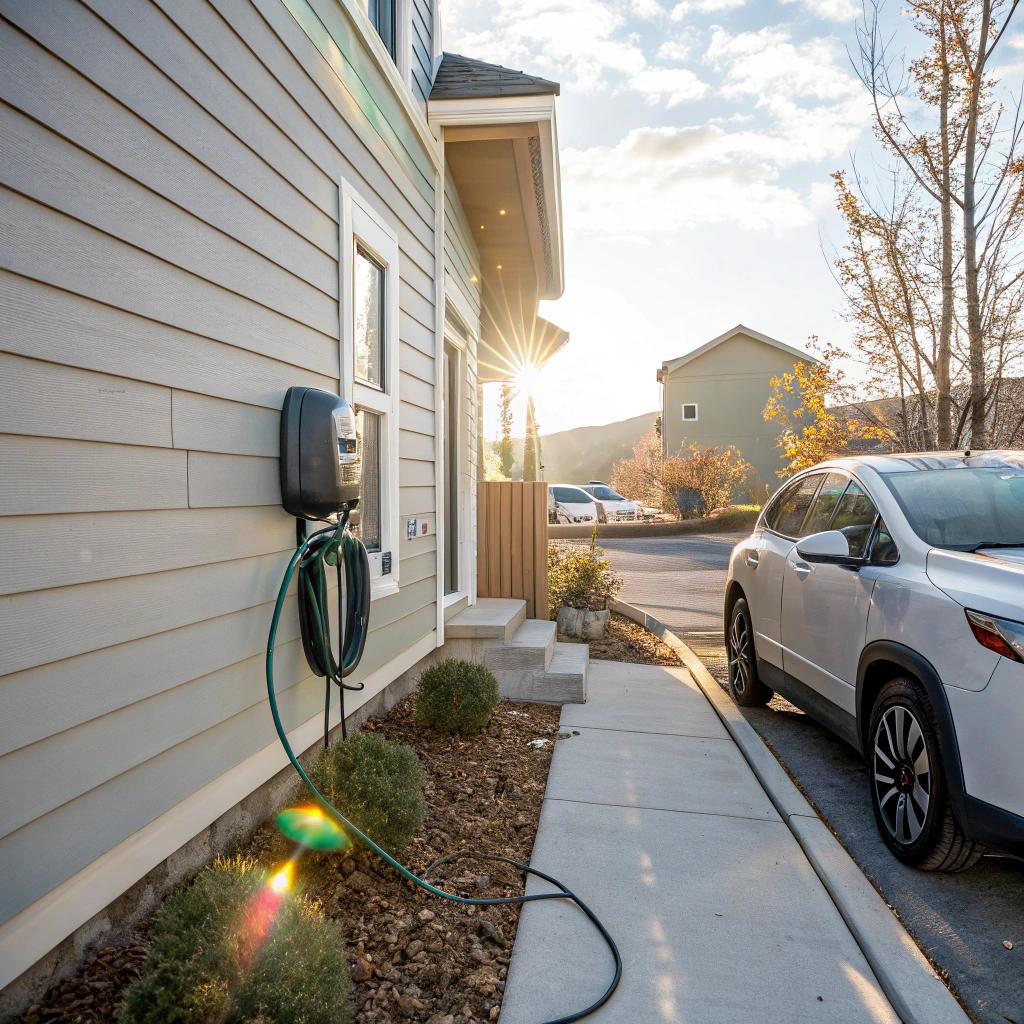
So, you are trying to figure out how EV charger installation Colorado Springs CO fits into your home remodel, and how it affects things like layout, walls, and even flooring. The short answer is that you should plan the EV charger at the same time you plan electrical and flooring changes, and you will almost always want a licensed electrician to install a dedicated circuit, wiring, and the charger itself.
That is the quick version. The longer version is that adding an EV charger is part electrical project, part space planning, and part future-proofing. If you are opening up walls, changing a garage, finishing a basement, or redoing flooring, this is actually the best time to run conduit, upgrade your panel, and make sure the charger sits in the right place so you are not cutting into fresh drywall or new epoxy later. It ties directly into how people move through the space, where the car parks, and how durable that floor needs to be.
For local context and ideas on what this looks like in practice, you can look at emergency electrician Black Forest to see typical setups and services.
Things you need to know
- You almost always want a Level 2 charger for daily home use, not just a basic 120V outlet.
- The electrical panel might need a capacity check or upgrade before adding a charger.
- Permits are usually required in Colorado Springs for EV charger installs.
- The charger location affects walls, ceiling runs, and sometimes garage or driveway flooring.
- Running conduit while walls or floors are open during a remodel saves money later.
- Cold winters, snow, and road salt in Colorado Springs should influence charger placement and floor materials.
- Resale value can improve if the EV charger setup is clean, safe, and integrated into the remodel design.
Level 1 vs Level 2 during a remodel
When you remodel, it is tempting to keep things simple and just plan for a regular 120V outlet in the garage and call it good. That can work, but most people end up wanting more.
What Level 1 actually feels like day to day
Level 1 charging uses a standard 120V outlet. You plug into what looks like a normal receptacle, usually on a dedicated 15 or 20 amp circuit. It adds maybe 3 to 5 miles of range per hour. If you drive only a few miles per day, that might be fine, but once you stack a normal Colorado commute, errands, and winter driving, it starts to feel slow.
If you are already opening walls for new outlets, cabinets, or storage, planning only for Level 1 can feel like a half step. You might save a little now, then pay more later to upgrade.
Why most remodels plan for Level 2
Level 2 chargers run on 240V and usually use a 40 or 50 amp circuit. These are what most EV owners end up using every day. They can add 20 to 40 miles of range per hour, sometimes more depending on the vehicle and charger model.
Level 2 is usually the right choice during a remodel, even if you do not own an EV yet, because the wiring and panel work are easier and cheaper to handle while everything is already opened up.
So if you are touching drywall, framing, or the garage layout, you might as well at least run conduit and a circuit for a future Level 2, even if you hold off on buying the actual charger hardware.
How EV chargers fit into a remodel plan
EV charging should not be an afterthought. It sits in the same planning bucket as:
- Where your panel or subpanel will go
- How the garage or carport is arranged
- What flooring you put down near the car
- Which walls you insulate or finish
Step 1: Start with your driving and parking habits
Ask yourself a few simple questions:
- Where does the car usually park at night, exactly?
- Is that spot going to change after the remodel, or will you add a second EV later?
- Do you want the charger mounted on a wall, on a post, or near a door for easy reach?
- How often do you plug and unplug? Do you want the cord hidden or out in the open?
If you always park in the left bay of the garage, it is better to place the charger so the cable reaches both sides. That way if a guest or a future second car needs to plug in, you are not stuck with a too-short cord stretched across the floor.
Step 2: Coordinate with electrical and flooring work
This is where the home renovation side really matters. Charging is not just about power. It changes how you use the garage or driveway space.
Think about:
- Where conduit will run in relation to studs and ceiling joists
- Whether anything needs to go under or through a concrete slab
- What happens to new drywall, paint, or cabinets if you have to open things up later
- How water, snow, or oil on the garage floor could interact with the charger cord
Pulling a new 240V line is much cleaner when your walls are still open and your flooring choices have not been finalized yet.
If you plan epoxy or polished concrete in the garage, you want all wiring and anchor holes drilled before that final finish goes down. Once that coating is set, any new trenching or drilling feels painful and messy.
Local factors in Colorado Springs
Location matters for EV chargers, and Colorado Springs has its own quirks. The cold, the snow, and the mix of newer and older homes all show up in planning.
Climate, snow, and road salt
Colorado Springs sees cold winters, ice, and a lot of road salt on cars and floors. That affects both charger placement and finish materials around it.
Some practical details:
- Try not to place the charger where meltwater from the car constantly drips on it.
- Think about a wall mount height that stays above most slush spray.
- Pick flooring in the charging area that tolerates salt, moisture, and tire wear.
In a garage, that often means sealed concrete or a good epoxy system near the charger, instead of something softer that might stain or peel. In a carport or outdoor setup, drainage is more important than people expect. Water should move away from the charging zone, not pool around it.
Older homes and panel capacity
Many homes in Colorado Springs were not built with EVs in mind. You might be dealing with a 100 amp panel that is already feeding a range, dryer, AC, and other loads.
Here is a simple comparison to think through during a remodel.
| Panel situation | What often happens | What to plan in a remodel |
|---|---|---|
| Older 100A main panel | May not support a 40A EV breaker without a load calculation | Consider a panel upgrade or a subpanel near the garage |
| Newer 150A or 200A panel | More room for Level 2 charging | Reserve space for a dedicated EV circuit and future expansion |
| Detached garage with small subpanel | Limited capacity for higher load charging | Run a larger feeder during remodel if trenching or framing is open |
During a remodel you are already spending on trades, so it often makes sense to solve the panel question now instead of patching around it later.
How EV chargers change garage and flooring choices
Since this content is for people interested in home renovation and flooring, it helps to be blunt: an EV charger changes how your garage floor and nearby finishes get used, whether you notice it at first or not.
Flooring under and around the charger
The main issues are durability, traction, and cleanup:
- The charger cord is dragged, coiled, and sometimes dropped on the floor, often daily.
- Occasional drips of washer fluid or oil still happen, even with EVs parked nearby.
Common garage flooring options near an EV charging station include:
| Flooring type | Pros near EV charger | Drawbacks to remember |
|---|---|---|
| Sealed concrete | Low cost, easy to repair, tolerates moisture | Can be dusty if sealer wears, cord can scuff surface |
| Epoxy coating | Looks cleaner, resists salt and oils, easier mopping | Prep is critical, drilling later for conduit can crack or chip it |
| Interlocking tiles | Simple to replace pieces, some grip for wet shoes | Water can trap under tiles, not ideal for heavy rolling loads in some cases |
If you plan a premium garage floor, get the wiring and exact charger location done first, so you are not cutting into a brand new surface for conduit or anchors.
This might seem obvious, but many people choose a new coating, then call for an EV charger later and end up drilling into fresh work. Good contractors usually coordinate this, but it helps to think it through yourself too.
Wall finishes and storage around the charger
The charger usually mounts on a wall, which means wall finishes matter. Here are a few points that show up during remodels:
- If you are installing plywood or slatwall for storage, make sure there is solid backing where the charger will attach.
- Think about hose reels, shelves, and hooks so they do not crowd the charger or tangle with the cable.
- Plan the charger on a section of wall that is unlikely to get hit by door swings or bikes.
Paint finish matters too. Gloss or semi-gloss near the charger handles dirt and scuff marks better than flat paint. Nothing fancy, just practical.
Permit, code, and safety basics in Colorado Springs
I will be honest, this is the part many homeowners want to skip, but it is not smart to ignore it.
Permits and inspection
For a permanent Level 2 EV charger in Colorado Springs, a permit is typically required. The work needs to follow National Electrical Code and local rules. That usually includes:
- Dedicated circuit for the charger
- Correct wire size for the breaker and distance
- Proper GFCI or other protection as required for the location
- Correct mounting height and secure hardware
During a remodel, your general contractor or electrician can roll this into the larger permit set. If you are doing some of the remodel yourself, talk to a licensed electrician early so you are not redoing work to meet inspection.
Safety details people forget
There are small choices that affect daily safety:
- Mount the charger so the cable naturally hangs without being pinched under tires.
- Give yourself room to unplug without squeezing between a wall and the car door.
- Keep outlets, cords, and junction boxes out of splash zones from snowmelt if possible.
These feel minor but show up during real use. If you have ever tripped over a vacuum cord that was placed in a bad spot, imagine that, but with a heavy EV cable and a wet floor.
Planning for more than one EV
Even if you have one EV now, Colorado Springs is seeing more multi-EV homes each year. You might not be there yet, but during a remodel it is worth asking how hard it would be to add:
- A second charger on the other side of the garage
- A longer run to a driveway parking pad
- A future upgrade from 40A to 60A charging
Sometimes the answer is that your panel or service is already near the limit. Other times, running a slightly larger conduit or leaving space for a second circuit solves most of the future problem. You do not have to overbuild, just think one step ahead.
Interior remodels and charging in unexpected spots
Most people place EV chargers in garages, but remodels sometimes push parking or charging to more unusual locations.
Carport or exterior wall charging
If you park under a carport or in a driveway, the charger may live on an exterior wall. That affects both siding and nearby surfaces:
- Weather rated enclosures and fittings are needed.
- Conduit routes might run along finished siding or brick, which changes how it looks.
- Ground clearance and snow drift patterns matter in winter.
From a flooring and surface view, you are now in the zone of driveway material choice: concrete, pavers, or asphalt. Each handles dripping water and cord wear a bit differently. Concrete under the charger area usually gives the most stable base.
Charging near a finished basement or mudroom
Some remodels turn a garage into living space and shift parking outside. In those cases the wall that once was a garage wall might now be behind a finished mudroom or storage space.
That can work, but it changes a few things:
- Sound transfer when the charger fan runs, especially in quiet rooms.
- How wiring passes through insulated and finished walls.
- Protection of indoor flooring from wet shoes entering from the charging area.
I have seen people lay nicer tile or vinyl planks in a mudroom, then realize the path from EV to interior goes straight across a puddle-prone spot. Thinking about floor transitions and mats near that door makes day to day use much smoother.
Cost ranges and where remodel timing saves money
Costs vary a lot, but it can help to see how remodel timing affects things. These are rough concepts, not quotes.
| Scenario | What is involved | Impact of doing it during remodel |
|---|---|---|
| Simple wall mounted Level 2 near panel | Short wiring run, no panel upgrade, no drywall repair | Modest savings during remodel, mostly in coordination |
| Charger across garage with new conduit | Longer wiring run, wall fishing or surface conduit, drywall patching | Often significantly cheaper if walls are already open |
| Detached garage needing subpanel upgrade | New feeder, trenching or new overhead feed, subpanel work | Much easier to combine with broader exterior or yard remodel |
| Panel at capacity | Main panel change, possible service upgrades | Combining with remodel spreads labor and inspection visits |
If you only look at the charger as a small add-on, it can seem pricey. Once you see it as part of the larger remodel, some of that cost is just normal electrical work that is happening anyway.
Common mistakes to avoid when tying EV charging into a remodel
People are smart, but home projects are messy. A few patterns show up again and again.
Putting the charger in the wrong place
This is more common than you might think. You finish the remodel, the garage looks great, then you realize:
- The cable barely reaches the car with the door open.
- You have to walk around the car to plug in each time.
- Bikes or storage bins keep bumping into the charger.
A simple trick is to park the car in its usual spot, then use a rope or tape measure as a stand-in for the charger cord. Walk through the plug and unplug motion. If it feels awkward now, it will feel a lot worse in February when it is cold and dark.
Ignoring floor slopes and water flow
Garage floors often slope toward a door or drain. If the lowest point is right under your ideal charger location, you might end up with a standing wet zone. Not great when you are handling a heavy cable every day.
If you are resurfacing the floor or doing new concrete, talk with your contractor about adjusting slopes so water moves away from where you stand to plug the car in.
Skipping future conduit
Some people say they will never own an EV, then three years later they are pricing one. If you are already remodeling, especially near the garage or driveway, running an empty conduit from the panel area toward that zone is cheap insurance.
The cost of conduit during a remodel is small compared to the cost of opening finished walls and flooring later just to add a new cable.
You might never use it, but if you do, you will be very glad it is there.
How EV charging interacts with other electrical upgrades
EV charger projects often show up at the same time as other electrical changes in a remodel. Some pairings make a lot of sense.
Lighting upgrades in the garage
If you are already pulling new circuits or cleaning up wiring, upgrading garage lighting at the same time feels logical. Better lighting near the charger makes plugging in and reading the vehicle display easier at night. LED fixtures with good coverage usually pay off quickly.
Solar and EV chargers
Some Colorado Springs homeowners add solar panels and EV chargers as part of a broader upgrade. That combination needs careful planning, but the remodel is a good chance to:
- Reserve panel space for future solar backfeed.
- Plan where solar inverters, disconnects, and EV charger will sit.
- Keep wire runs tidy instead of having equipment scattered randomly.
Again, this is where a conversation with a knowledgeable electrician can save you from a weird layout that works on paper but feels cluttered on your walls.
Is DIY EV charger installation a good idea during a remodel?
This is where I will push back a bit if you are assuming you should do everything yourself. Some parts of remodels are great for DIY. Painting, some flooring, maybe basic trim. EV charger installation is different because you are dealing with higher voltage, dedicated circuits, and code rules that protect your home from overloads and faults.
If you try to DIY the charger while a professional is handling the rest of the remodel electrical, you can end up:
- Voiding the charger warranty.
- Failing inspection and paying for rework.
- Creating conflicts with how the panel is balanced.
You are not wrong to want to save money, but in this case the better move is to be very clear about what you want, get a layout you like, and then let a licensed electrician handle the actual connections and breaker work.
Bringing it back to your remodel plan
If you step back and look at the whole picture, EV charger installation is just one more piece of a remodel, but it touches a lot of elements: electrical, walls, floors, traffic flow, and even resale value.
A simple way to sanity check your plan is to ask yourself three questions:
- Will I be happy walking to this spot to plug in every single day, in winter, with the floor and walls the way they are?
- If I upgrade or add a second EV later, do I have at least a path that is not painful or destructive to my finished spaces?
- Did I coordinate wiring and charger placement before locking in flooring, wall finishes, and storage?
If you can answer yes to those, you are in pretty good shape.
Common questions about EV chargers and remodels in Colorado Springs
Q: Should I install the EV charger before or after new garage flooring?
A: In most cases, get the wiring, conduit, and mounting done before the final floor finish. You can still protect the floor area while trades are working, but it is easier to patch and adjust concrete than to repair new epoxy or tiles.
Q: Is it overkill to rough in a 240V circuit if I do not own an EV yet?
A: I do not think so, especially if you are already remodeling near the garage or driveway. The cost to run cable or conduit while walls are open is low compared to future demolition. If you never use it, you spent a bit extra. If you do use it, you avoid a much bigger hassle.
Q: How close should the charger be to the parking spot?
A: Close enough that the cord reaches the charge port without crossing major walkways or tight corners. Most Level 2 chargers have cords around 18 to 25 feet. Parking the car in its usual spot and testing with a rope can help you pick the exact location before anyone drills holes.
Q: Will a Level 2 charger overload my panel in an older home?
A: It might, but not always. A proper load calculation is needed. This is one place where guessing is not a good idea. If your panel is marginal, you can either upgrade it during the remodel or look at chargers with load sharing or lower amperage settings, but that choice should be made with an electrician, not just by feel.
Q: Does an EV charger actually help home value in Colorado Springs?
A: Buyers who own or plan to own an EV often see a ready-to-use, well placed charger as a plus, especially if the garage and flooring look clean and intentional around it. It may not change the appraisal by a huge number on its own, but it can make your home more attractive compared with a similar one that has no EV setup at all.