
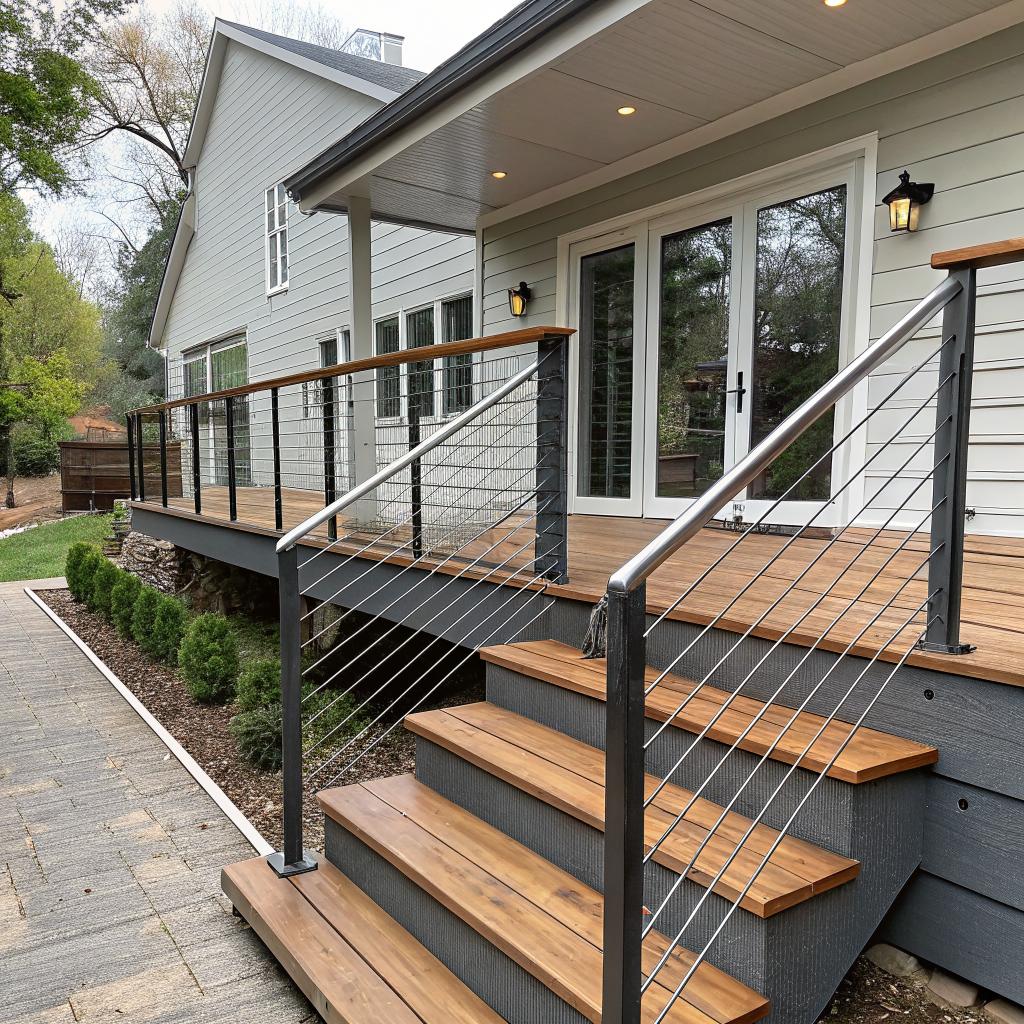
So, you are trying to figure out how cable railing installation in Madison fits into your modern remodel, and what it actually takes to get it right. The short answer is that cable railing works very well for modern remodels in Madison, but you need a clear plan, the right materials, and someone who understands local codes and climate before you start. It is not just a style choice, it affects safety, views, and even how your new floors and deck surfaces come together.
If you are redoing a deck, staircase, or balcony, cable railing can create that clean, open look a lot of modern homes aim for. It keeps sightlines open to your yard, lake views, or just your remodeled living room. But there are tradeoffs. You have tension, spacing, wood or metal posts, and attachment details that connect right into your framing and sometimes into your flooring. All of that matters for both how it looks and how long it lasts, especially with Wisconsin weather and freeze/thaw cycles.
For local projects, many people start by talking with a pro who handles cable railing installation Madison so they can walk through layout, code rules, and finish options before they pick flooring or deck boards. That sequence is more helpful than most people think.
Things you need to know
- Cable railing needs solid structure behind it, not just nice posts.
- Madison building code and inspectors care about spacing, height, and tension.
- Outdoor installs must handle snow, ice, and temperature swings.
- The railing layout should be planned at the same time as your decking and flooring, not after.
- DIY is possible, but mistakes with tension, hardware, or waterproofing can get expensive.
- Maintenance is not huge, but it is not zero either.
- Good installation can raise the level of a remodel; bad installation can make even new floors look cheap.
Why cable railing works so well for modern remodels
Most people are drawn to cable railing because it looks simple. Horizontal lines, minimal bulk, and a nice open view. It feels calm. Less visual noise. If you just redid your floors with wider planks, or you lightened up dark trim and doors, cable railing fits that change.
In many remodels I have seen, the first big “wow” moment happens when the old wooden balusters or heavy lattice railings come down. The room or the deck just feels bigger. The nice part is that cable railing does this without removing safety. You still get a firm barrier, just with more transparency.
Good cable railing should almost disappear when you stand back and look at your space. You notice the view and the surfaces, not the railing itself.
From a flooring point of view, cable railing is one of the few railing choices that works with both classic and very modern surfaces. It pairs well with:
- Engineered wood floors and wide-plank hardwood
- Luxury vinyl plank in wood or stone patterns
- Large format tile on stairs or landings
- Composite decking with hidden fasteners
You might still be torn between something more traditional like wood balusters and a cable system. If your remodel goal is lighter, more open, and a bit more current, cable railing usually leans in the right direction.
How cable railing fits into a whole-home remodel plan
One mistake people make is treating railing as a late detail. They pick cabinets, flooring, and paint first, then scramble to find a railing system that matches. That can work, but it often leads to awkward compromises.
A better path is to treat cable railing as one of the core design elements. Especially if you are redoing stairs and floors at the same time.
Coordinate railing with flooring and stairs
Think through these questions before you order anything:
- Are your stair treads wood, carpet, or something else?
- Do you want the posts to match floor color, or contrast with it?
- Will the cable railing be inside, outside, or both?
- Are you keeping any existing trim or rail pieces?
I have seen projects where someone installed beautiful white oak treads and then bolted on a cold, bright stainless system that fought with everything. The railing looked like it belonged in a commercial space, not a living room. The cable itself was fine; the post choice and finish color were off.
Try to decide on a small handful of finishes for your remodel, then repeat those on floors, posts, and handrails. Too many metal and wood tones in one area can make even a high-end cable system feel disjointed.
Think about sightlines and light
Cable railing can change how light moves through your home. On a staircase next to a window, swapping bulky wood spindles for cable can brighten the interior. On a deck, it can open up a view to a backyard or lake that you barely noticed before.
Ask yourself:
- What do you want to see when you walk into the room or step out onto the deck?
- Are there focal points outside, like trees or water, that a tall opaque railing would block?
- Can people inside the house see beyond the railing to the flooring and finishes, or do posts block their view?
These questions sound like design fluff at first, but they actually affect hardware placement and post layout. A small shift in post spacing can clear a view from a favorite chair or from the kitchen sink.
Key parts of a cable railing system
Before you think about installation in Madison, it helps to know the main parts of a cable system. Nothing extreme here, just the basics.
| Component | What it does | Typical material |
|---|---|---|
| Posts | Support the cables and take the tension load | Wood, aluminum, or steel |
| Top rail / handrail | Provides grip and prevents cable deflection at the top | Wood, composite, or metal |
| Cables | Provide the infill that keeps people from falling | Stainless steel |
| Fittings / terminals | Attach and tension the cable at each end | Stainless steel |
| Intermediate supports | Prevent cables from bowing between posts | Wood or metal pickets, or brackets |
You do not have to become an expert on fittings, but you should at least understand that each cable line needs secure anchoring and proper tension. It is not just “thread it through and call it good.”
Madison building codes and safety basics
This is where people sometimes go wrong, mostly because they rely on what they saw in a photo instead of what the local inspector expects.
Common safety rules you need to plan around
Building code can vary a little, but in the Madison area, these general points tend to apply to decks and interior stairs:
- Railing height: usually at least 36 inches for decks and balconies, and 34 to 38 inches for stair handrails.
- Openings: the “4 inch sphere” rule is common, meaning a 4 inch ball should not pass through any opening.
- Cable spacing: often around 3 inches on center so that when the cables are pushed, they still meet the 4 inch rule.
- Post spacing: often in the 4 to 6 foot range, but it depends on the system and cable thickness.
With cable railing, the inspector will care about “climbability” much less than simple gaps. There is a lot of talk online about horizontal cable being easy for kids to climb. That is a real concern, but codes in many places accept horizontal cable if the spacing and strength are correct.
Do not guess at code rules based on a photo from another state. Ask your contractor or the local building department what they expect for cable railing in your specific project.
If this feels overwhelming, that is actually normal. Codes are written to cover a wide set of situations. A contractor who works on decks and stair remodels in Madison will already know how inspectors tend to interpret cable systems.
Outdoor vs indoor cable railing in Madison
Madison’s climate is rough on outdoor materials. Snow loads, salt, sun, and wild temperature swings can strain even strong components. The way you choose and install cable railing outside should reflect that.
Outdoor cable railing on decks and balconies
For decks and outdoor stairs, moisture control and material choice matter a lot.
- Posts: Metal posts (aluminum or steel with good coating) often hold up better than wood in harsh conditions. If you use wood, you want it well sealed at all cut edges.
- Fasteners: Stainless hardware is worth the extra cost, especially where rain and snow sit.
- Flashing: Where posts meet deck surfaces, poor flashing can let water into framing or subfloor, which then damages both the deck and the railing posts.
- Attachment to house: If the railing ties into a ledger or rim near your home, poor sealing can lead to water damage inside walls.
If you are also redoing your deck boards, talk about railing before finalizing board layout. For example, it is common to “picture frame” composite decking around the perimeter. Post locations and brackets can interrupt that pattern. Adjusting layout a little can avoid awkward cuts near posts.
Indoor cable railing on stairs and lofts
Inside, you have less worry about moisture, but more concern about comfort, noise, and looks.
- Handfeel: Many people prefer a wood or composite top rail inside, even if the posts are metal, because it feels warmer to the touch.
- Sound: Loose cables can rattle slightly if not tensioned correctly, especially in high-traffic stairways.
- Wall protection: On tight staircases, shoes may scuff the bottom cables or adjacent walls. Plan where the lowest cable will sit.
Indoor flooring transitions matter too. If you have new hardwood or luxury vinyl on the upper floor and carpet on the stairs, how the posts and base plates meet those surfaces can either look intentional or messy.
DIY vs hiring a pro in Madison
You may be tempted to handle the railing yourself, especially if you already like working on home projects. That can work, but cable railing is less forgiving than many people hope.
Where DIY can make sense
A homeowner with good carpentry skills and patience might do fine in these situations:
- Small projects, like a short interior guardrail or a simple balcony.
- Using a complete cable railing kit with clear instructions and matched hardware.
- Working with new, straight framing rather than old, warped structures.
If your main aim is to save some cost and you enjoy detail work, a small DIY cable run can be satisfying. Just be honest with yourself about your comfort level with code requirements and exact measurements.
When a professional is usually smarter
Larger or more complex projects are better handled by someone who does these installs often. For example:
- Large decks with corners, stairs, and long cable spans.
- Remodels that tie into existing framing and flooring with unknown condition.
- Homes where permits and inspections are clearly required.
Common mistakes that pros know how to avoid include:
- Under-sized end posts that bend from cable tension.
- Poor anchoring into weakened or weathered framing.
- Incorrect cable spacing that fails the 4 inch sphere test.
- Misaligned holes that cause crooked or wavy cable runs.
When you spread the cost across the life of your deck or staircase, correct installation usually pays off. A failed inspection or a sagging rail a year later often wipes out whatever you saved up front.
Planning your project timeline
Cable railing installation in Madison rarely happens in isolation. It is part of a sequence of remodel tasks. The order matters more than most people expect.
Typical order for an outdoor deck remodel with cable railing
- Design and permits: Layout, heights, spans, and code checks.
- Structure: Posts, beams, and framing built or repaired.
- Decking: Boards installed, including any picture framing.
- Railing posts: Set and firmly attached through the decking into framing.
- Top rails: Installed and aligned with steps and corners.
- Cable runs: Drilled, threaded, and tensioned.
- Final inspection and small adjustments.
Some people push for installing all decking before any thought of railing. Others want posts installed first. The more honest answer is that the design should cover both at once. Post base locations and deck board layout play off each other. A good crew will think through both at the framing stage.
Indoor remodel with new floors and cable railing
Inside the house, the timing usually looks more like this:
- Demolition of old railings, carpet, and damaged flooring.
- Structural checks on stair stringers, landings, and balcony edges.
- Rough placement and blocking for new railing posts.
- Flooring installation on main level and stairs.
- Post install, then top rail, then cables.
- Touch up of walls and trim where old railings attached.
Trying to install flooring perfectly, then figuring out railing can backfire. Posts may need blocking through the subfloor, and that is harder once finished flooring is in place. At the same time, you do not want to beat up new floors with tool drops and heavy hardware boxes. So it is a bit of a balancing act.
Cost factors for cable railing in Madison
Costs vary, but you can at least understand what pushes the price up or down. It is not just the length of railing.
| Factor | How it affects cost |
|---|---|
| Material choice | Metal posts with stainless hardware often cost more upfront than wood, but may last longer outside. |
| Project size | More linear feet cost more, but larger projects sometimes have better cost per foot. |
| Complexity | Corners, stairs, and level changes raise labor time compared to straight runs. |
| Existing structure | Rot, weak framing, or out-of-square layouts add repair work before railing can even start. |
| Indoor vs outdoor | Outdoor jobs may need more corrosion resistance and more weather protection work. |
Someone might say “cable railing is expensive.” That is partly true compared with simple wood balusters. But if you look at the whole remodel, including flooring and other finishes, the visual impact of cable railing is usually large relative to its share of the budget.
Maintenance and long-term care
No railing system is truly zero maintenance. Cable railing is fairly low effort, but it still needs occasional attention, especially outside.
What you will likely do over time
- Cleaning: Wipe cables and posts with mild soap and water to remove dirt and pollen. Avoid harsh cleaners that can stain stainless steel.
- Tension checks: Once or twice a year, look for sagging or loose cables and adjust as needed.
- Finish care: For wood top rails or posts, check for fading or hairline cracks and recoat when needed.
- Hardware checks: Make sure screws and bolts stay snug but not over-tightened.
Madison winters can place stress on materials. After a harsh season, a simple walk around your deck to check for movement in posts and cables is worthwhile. It pairs well with checking your deck boards, stair treads, and any exterior caulking.
Design choices that work well in Madison homes
There is no single “right” look, but some patterns show up again and again in successful projects around the region.
Warm wood with cool metal
A common mix is:
- Wood top rail that matches or complements your flooring tone.
- Painted steel or aluminum posts in black or dark bronze.
- Stainless steel cables in a brushed finish.
This combination sits nicely with both mid-century homes and newer suburban houses. The wood keeps it from feeling too cold. The dark posts visually disappear more than white or shiny metal would, which helps with views.
Light, airy interior stairs
For indoor remodels where someone replaced carpet with wood or luxury vinyl plank on the stairs, a slim cable system can prevent the staircase from looking too heavy. Some people worry that cable railing inside will feel too “industrial,” but softer wall colors and wood handrails tend to balance that out.
If your remodel also removed some walls or opened up a loft, cable railing can protect edges without putting the walls back visually. That can keep an open concept from turning into a series of choppy sections.
Common mistakes to avoid
There are a few things that come up again and again in cable railing projects, especially when people rush or try to cut corners.
- Skipping structural checks: Attaching new posts to old, weak framing leads to movement and sagging.
- Underestimating tension: Cables pull hard on end posts. If posts are too small or not reinforced, they twist or lean.
- Poor alignment: Misaligned holes or posts make cables wave or rub, which looks sloppy and can cause wear.
- Ignoring thermal expansion: Long cable runs need tension adjusted carefully so they do not slacken or over-stress over time.
- Not planning for children or pets: Horizontal cables are usually fine, but you might choose tighter spacing or taller rails in some cases.
Another mistake is choosing cable thickness based only on looks. Thicker cable is not always better. It can be harder to tension and bend around corners, and it may require heavier fittings.
How cable railing interacts with different types of decks and floors
If you are reading this on a home renovation site, you might care about how railing ties into your flooring choices. That is worth a closer look.
Composite decking and cable railing
Composite decking is common in Madison for low maintenance. When you mount posts on a composite deck:
- Posts should usually attach through the deck boards into joists or blocking, not just into the composite itself.
- Post flashing and gaskets help keep water from seeping into screw holes.
- Cable hardware may need stand-off fittings so the cable does not pinch the decking at odd angles.
Matching color between deck boards and wood top rails can make the whole assembly feel cohesive. Or you can contrast on purpose, like light gray boards with a warm brown top rail.
Wood decks and cable railing
On wood decks, you have more freedom to notch posts or use surface mount brackets, but the same rules about structure apply. Old decks sometimes lack the blocking needed for strong post attachments. If your framing is old, it may be smarter to address that before adding cables that load the posts harder than traditional pickets would.
Interior wood and vinyl plank floors
Inside, how you cut and finish the flooring around post bases matters.
- With floating floors like many vinyl plank products, you often need to plan expansion gaps around posts, then cover them with trim or post skirts.
- For nailed or glued hardwood, you can cut tight around posts, but you still have to think about movement and any future refinishing.
I have seen some jobs where posts sat on top of the floating floor and later caused buckling as the floor expanded. It looked fine for a while, then problems showed up. This is a detail a good installer thinks about early.
Questions people often ask about cable railing in Madison
Will cable railing rust or stain in our climate?
Quality stainless steel cable and fittings resist rust very well, but they can still get small tea stains from contaminants. Regular cleaning and avoiding harsh chloride cleaners helps. If you buy low-grade hardware, you increase the risk of rust spots, especially around lakes or where road salt drifts.
Is cable railing safe for kids and pets?
Cable railing can be safe if installed correctly with code-compliant spacing and proper tension. Some parents do not like the horizontal lines because kids can climb them more easily than vertical balusters. Others feel fine about it and just teach boundaries. For pets, the main risk is smaller animals squeezing through if spacing is wide. If that worries you, tighter spacing or partial glass infill in certain areas can help.
Does cable railing block less of the view than glass?
Yes, in most cases. Glass can look more invisible head on, but it reflects light and can fog or spot. Cable has thin lines you can see, but they do not reflect as much and they let air and sound move freely. In winter, glass can collect snow or ice, while cable usually sheds it more quickly.
Will cable railing make my home feel too modern?
It depends how you pair it with other finishes. Metal posts with sharp corners and all-metal rails can feel very modern. But mixing cable with warm wood, softer paint colors, and traditional trim can create a balanced look that sits comfortably in older Madison homes. If your floors and cabinets still lean classic, cable can be the one modern piece that refreshes the space without taking it too far.
Does cable railing add value to a home?
Value is tricky to measure, but many buyers respond well to updated decks and open stair designs. If your old railing was dated or failing, cable railing can help your remodel feel current. It does not magically raise price on its own, but as part of a well thought out project with solid decks and good flooring, it can be a strong selling point.