So, you want to book a tour to see senior-friendly flooring ideas and figure out what actually works in real homes, not just in photos. The simple answer is: yes, you should, and you can start by reaching out to senior communities or showrooms that let you Book a Tour and walk through real spaces where older adults live every day. Visit Stratford Place to know more.
Tours like this help you skip a lot of guesswork. You can see how floors look in natural light, listen to how loud they sound, and watch how residents actually move and live on them. You also get real feedback from staff who deal with falls, spills, walkers, and wheelchairs every single day. That is much more useful than a glossy catalog or a home decor Pinterest board.
Before we go deeper, let me lay out the core ideas.
- Senior-friendly flooring is mostly about safety, comfort, and ease of cleaning, not about trends.
- On a tour, pay attention to glare, transitions, and noise, not just color or style.
- Staff in assisted living or senior-focused spaces usually know what flooring holds up and what causes problems.
- A mix of flooring types often works better than one material everywhere.
- Small changes, like better lighting or contrasting thresholds, sometimes matter more than the floor material itself.
Why seeing flooring in person matters so much
I think most of us have made at least one flooring choice from a tiny sample and later regretted it. That small plank or square never tells you how it feels underfoot over a long hallway, or how it looks next to your furniture, or how it responds to daily traffic.
Now add aging to the equation.
Seniors deal with very specific challenges:
- Slower reaction time
- Weaker balance
- More joint pain
- Vision changes
- Higher risk of injury from falls
So picking a floor from a sample on a desk is not just a design risk. It can become a safety risk.
When you walk through a senior living community, a rehab center, or a well-designed model home focused on aging, you see real-world use:
- Wheelchairs rolling across thresholds
- Walkers turning in tight spaces
- Staff cleaning up spills
- Residents getting up from chairs or beds
You might even notice things like someone shuffling their feet on a certain surface and catching slightly. That is the kind of detail you will never get from an online photo.
If you are choosing flooring for an older adult, you are really designing for mobility, confidence, and daily routines, not just looks.
What “senior-friendly” flooring actually means
The phrase sounds simple, but it covers a few different needs. And sometimes they compete a bit with each other.
1. Safety: reducing fall risk and injury
This is the big one. No floor can prevent every fall, but some floors can reduce the chances or soften the impact.
Things that influence safety:
- Slip resistance: The floor should have good grip, even with socks, even when slightly wet.
- Shock absorption: Slight cushioning can reduce injury if a fall happens.
- Visible edges: Clear transitions between rooms and levels help seniors understand where to step.
- Minimal tripping hazards: No high thresholds, no curled rugs, no sudden steps.
2. Comfort: how it feels day after day
Older adults spend a lot of time at home. Standing at the counter, shuffling to the bathroom at night, sitting in the same armchair.
Comfort is about:
- How hard the surface feels on feet, knees, and hips
- How warm or cold the floor feels
- Noise level when walking
A concrete-hard floor might be easy to clean but painful on joints. A very soft carpet might feel nice but catch walkers and wheelchairs.
3. Maintenance: cleaning and repairs
Caregivers, family, or residents themselves will be cleaning. Some floors look nice on day one and then become a burden.
Think about:
- How easy spills come up
- Stain resistance for food, drinks, and accidents
- Resistance to scratches from walkers, wheelchairs, and chairs
- Whether it can be spot-repaired or if you need to replace big sections
If the flooring is a struggle to clean, it eventually becomes a safety problem because people delay cleaning or leave moisture on the surface longer.
4. Visual clarity: how it looks to aging eyes
Vision changes with age. Glare becomes more annoying. Depth perception can decline. High-contrast patterns can confuse the brain.
Visual mistakes people make:
- Shiny floors that reflect light and create glare
- High-contrast patterns that look like steps, holes, or clutter
- Very dark floors that hide spills and cords
- Very light floors that show every speck of dust and can look slippery
You really have to see some of these effects in person. In photos, they can look fine. In real life, an older adult might hesitate to cross a patterned area because they think it is uneven.
Common flooring materials for seniors: what to look for on a tour
It might help to break down what you are likely to see when you walk through a senior-focused space. Here is a simple comparison you can keep in mind.
| Floor type | Pros for seniors | Cons for seniors | Best areas |
|---|---|---|---|
| Luxury Vinyl Plank (LVP) or Tile (LVT) | Slip-resistant options, softer than tile, easy to clean, handles spills, quiet with underlayment | Very cheap products can be too slippery or dent easily | Kitchens, living rooms, hallways, bedrooms |
| Sheet vinyl | No seams, very easy to clean, good for wheelchairs and walkers | Can feel cold and a bit hard, looks less “homey” if not chosen well | Bathrooms, laundry rooms, some kitchens |
| Low-pile carpet | Soft, reduces injury from falls, quieter, warm | Harder to clean, stains, can catch walkers, may hide spills | Bedrooms, living rooms where falls are a big concern |
| Cork | Soft, warm, some natural resilience, quieter | Sensitive to moisture, may fade or dent, not great under heavy wheels | Bedrooms, hobby rooms, offices |
| Rubber flooring | Excellent slip resistance, soft, good shock absorption | Looks more institutional, smell at first, cost can be higher | Therapy rooms, exercise rooms, some bathrooms |
| Tile (ceramic or porcelain) | Very durable, water-resistant, easy to clean | Hard, cold, slippery if not textured, falls are harsher | Some bathrooms, entryways, not the best for main living spaces |
| Hardwood / Laminate | Familiar look, warm feel, easy to sweep | Can be slippery, noisy, scratches from mobility devices, water damage risk | Living areas, but only if slip risk is low and residents are steady |
When you tour a space, refer back in your mind to this kind of chart. Ask yourself: where did they choose each type and why?
What to pay attention to during a flooring tour
Booking a tour is the easy part. Knowing what to look for is where you need to be more deliberate.
Here are some things to watch, step by step, as you walk through.
1. The entrance and lobby
The entrance tells you a lot about priorities.
Questions to quietly ask yourself:
- Is there a mat or runner that lies completely flat?
- Is the surface just inside the door slippery when wet?
- Does the inside floor look shiny or matte?
- Is the transition from outside to inside smooth, or is there a lip?
If you can, step into the lobby, pause, and look straight ahead. How does the light hit the floor? Any glare? If you squint a bit and it still seems bright, that can be a problem for older eyes.
2. Hallways and long walking paths
This is where day-to-day life happens. People walk here many times a day.
Observe:
- Is the hallway one continuous surface, or are there lots of transitions?
- How many seams are visible?
- Is there a pattern that could confuse someone with vision issues?
- How loud are footsteps or wheels across the surface?
If staff are pushing carts or wheelchairs, listen. A very loud floor can be tiring for people with hearing sensitivities or with dementia.
I also like to look at the edges along the walls. If you see chipped corners, deep gouges, or stained areas, it can tell you something about durability.
3. Resident rooms and bedrooms
Bedrooms are where falls often happen, especially at night.
Pay attention to:
- What happens at the bedroom doorway. Is there a strip or transition bar?
- Is the flooring the same inside and outside the room, or different?
- Is there a rug beside the bed? If so, how is it secured?
- How does the floor look under the bed area? Any evidence of wheels or furniture damage?
Ask yourself: if someone got out of bed half asleep, in the dark, wearing socks, would they feel stable on this surface?
Bedside areas might be the single most critical square footage in a senior’s home because that is where many unsteady first steps happen.
4. Bathrooms and wet areas
Bathrooms are tricky. Water, soap, and tile can be a bad mix.
Look for:
- Texture on the flooring, especially inside walk-in showers
- Slopes for drainage that are gentle and not awkward to stand on
- Whether the floor outside the shower or tub looks like it gets slick
- Grab bars and how they relate to the flooring
Run your fingers across the surface, if you are allowed. Slight texture is good. Very glossy flat surfaces in bathrooms are a red flag.
5. Dining rooms and activity spaces
Here, you see how flooring works with chairs, food, and movement.
Details to notice:
- Do chair legs snag on the surface or glide easily?
- Do you see stains under tables?
- Are there multiple floor types in one large open space that create “visual breaks”?
- How noisy is it when staff move chairs across the floor?
In activity rooms, watch how people walk and move. Do they hesitate when stepping from one surface to another?
Questions to ask staff during a tour
A tour guide will usually talk about amenities and services. You might have to steer the conversation a bit toward flooring. That is fine. You are focused on something specific.
You can ask things like:
- “Which flooring areas are easiest to clean after spills or accidents?”
- “Have you changed any flooring materials because they caused problems?”
- “Where do you see the most falls, and do you think the surface plays a role?”
- “Do residents ever complain about noise or glare from the floors?”
- “If you renovated again, what would you pick for the main hallways?”
Try to get honest, practical comments, not marketing lines. Staff who clean, nurse supervisors, or maintenance managers usually have strong opinions about what works and what does not.
Bringing ideas home: applying what you see to your own renovation
A senior-focused community or care home has different requirements than a private house, but you can still borrow a lot of the thinking.
Here is one way to translate what you see into your own project.
1. Match zones to needs, not to fashion
Instead of picking one flooring style for the entire home, divide your space into zones:
- High-risk wet zones: bathrooms, laundry, near exterior doors
- High-traffic zones: hallways, kitchen, living room
- Quiet or rest zones: bedroom, reading nook, office
Then ask: what did you see on the tour for each of these zones?
Maybe the bathrooms used slip-resistant sheet vinyl with a coved base. That could inspire your bathroom, even if you tweak the color to feel more residential.
Maybe the hallways were LVP with good underlayment. That could guide your choice for your own hallway instead of slippery hardwood.
2. Think about transitions as much as surfaces
A lot of falls happen at the boundary between two materials, not in the middle of a room.
When you come back from your tour, sketch your own floor plan and highlight:
- Doorways
- Stair tops and bottoms
- Thresholds between materials
Ask your installer bluntly: “How tall will the transition be between this room and that one?” Anything that creates a little bump can catch a shuffling foot or a walker.
You will probably notice on your tour that many senior communities try to keep transitions very flat. Try to copy that.
3. Consider color and contrast carefully
You might notice on your tour that some communities use contrast intentionally:
- Darker border against a lighter main floor so edges are more obvious
- Contrasting color at the start of stairs
- Different, but not jarring, color in bathrooms so the room is clearly defined
At home, you can borrow this idea:
- Use a slightly darker tone in hallways and a bit lighter in bedrooms, so spaces feel distinct.
- Use baseboards that contrast with the floor, so wall edges are easy to see.
- Use non-slip tape or paint with contrast on stair treads if you have stairs.
Just avoid strong, high-contrast patterns in the main walking path. Large swirls, fake cracks, or checkerboards can confuse depth perception.
Balancing safety with a home-like feel
Some people worry that if they copy ideas from assisted living or senior communities, their home will start to look like a facility. That is a fair worry.
I do not think you need to copy everything. You can take the safety logic and apply it with more personal style.
Some thoughts:
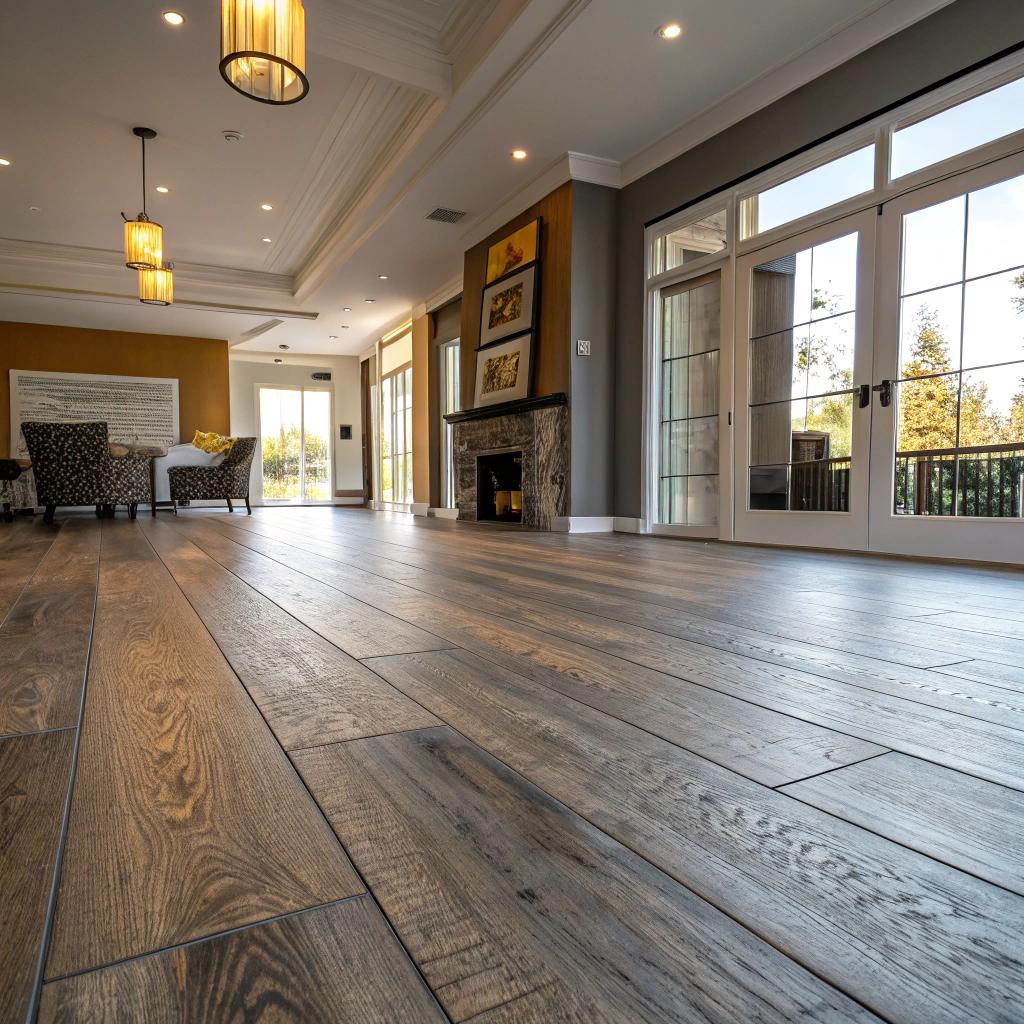
- Pick warm wood-tone LVP instead of industrial gray if that suits your style better.
- Use textured, matte-finish tile that resembles stone for a bathroom instead of shiny white squares.
- Choose low-pile carpet in calming, home-like colors rather than harsh patterns.
- Combine flooring with warm lighting, artwork, and soft furnishings so the overall feel stays cozy.
Senior-friendly design does not have to feel clinical. It just needs to quietly support balance, comfort, and dignity in daily life.
You might even see on your tour that newer senior communities have moved away from that old institutional look. Many now use wood-look flooring, soft colors, and more residential details, which can give you some inspiration.
Practical checklist for your next tour
You can keep this as a mental or printed checklist when you walk through any facility, model home, or showroom that focuses on seniors.
Safety
- No sudden steps in key walking paths
- Minimal or very flat transitions
- Textured or matte surfaces, especially in wet areas
- Good lighting without strong glare on glossy floors
Comfort
- Try standing for a minute or two on the main flooring, if appropriate
- Listen for noise from carts, chairs, and footsteps
- Pay attention to how your own joints feel walking a long corridor
Durability & maintenance
- Look at corners and high-traffic paths for wear patterns
- Ask how long the current flooring has been in place
- Ask what type of cleaning products and tools they use
- Check for stains near dining or kitchen areas
Visual clarity
- Look for strong reflections or shiny spots
- Notice where patterns change and how your eye reacts
- Check whether stairs and steps are clearly marked
If you bring an older family member with you, pay attention to what they hesitate over, not only what they say. Body language can reveal more than comments.
Cost and trade-offs you should be honest about
Sometimes people pretend there is a perfect flooring that is safe, soft, quiet, cheap, beautiful, and lasts forever. There is not.
You usually trade among:
- Upfront cost
- Maintenance effort
- Feel underfoot
- Appearance
- Risk level for falls and injuries
For example:
- LVP is often a good balance of appearance, cost, and safety, but very cheap versions can feel plastic or wear out faster.
- Tile is durable and clean but harder and riskier during a fall.
- Carpet is soft but brings more cleaning work and can catch mobility devices.
When you book a tour and see things in real use, you get a clearer picture of where others have made those trade-offs and what they regret. You might hear things like:
- “We loved the look of this tile, but we would not choose it again for residents with mobility issues.”
- “We replaced thick carpet with low-pile, and falls decreased.”
- “We now only choose matte finishes because glossy floors caused confusion for some residents.”
That kind of feedback is very valuable when you are planning your own renovation.
Small changes that can boost safety without a full remodel
Maybe you are not ready for a full flooring project. A tour can still give you ideas for smaller tweaks at home.
Some smaller, but helpful, changes:
- Secure any loose rugs with strong non-slip backing or remove them entirely from main pathways.
- Add non-slip strips in bathtubs and on bathroom floors.
- Use contrasting tape on stair edges.
- Add more lighting in hallways and near transitions between rooms.
- Shift heavy furniture so walking paths are clear and straight.
You might notice during the tour that many communities avoid area rugs in hallways and rely on consistent flooring instead. That is something you can copy right away at home without touching the main floor material.
How to judge what you see without getting overwhelmed
Tours can be busy. People walk by, staff talk, your guide might focus on different things than you care about. It is easy to get overwhelmed.
You do not need to analyze every square foot. Focus on three questions:
- Where are people walking the most, and what flooring do they use there?
- Where are falls or spills most likely, and how have they handled those zones?
- Which areas feel calm and confident to walk through, and which feel tense?
If you leave with just a few clear impressions, that is enough. For example:
- “I liked how the vinyl felt in the hallways and how quiet it was.”
- “The patterned carpet in the activity room looked busy and confusing.”
- “The bathroom floor texture looked safe and still easy to mop.”
Those impressions can guide your choices more than any technical brochure.
Q & A: Common questions about touring for senior-friendly flooring
Is it worth booking a tour just for flooring ideas?
Yes, if you are making major changes for an older adult or planning to age in place. Seeing flooring in a real senior-focused setting gives you practical insight you will not get from samples or photos.
What if the community I tour has different budgets or needs than I do?
That will almost always be true. Treat the tour as a learning opportunity, not a catalog you must copy. Focus on principles: slip resistance, transitions, glare, comfort, and ease of cleaning. You can adjust materials and finishes to match your own budget and style.
Should I bring my contractor or designer on the tour?
If they are open to it and schedules allow, yes. They can spot technical details like how flooring is installed at thresholds or how underlayment affects noise. At the very least, take photos and notes to show them later.
What if my parent or relative resists “senior” design choices?
This happens a lot. Try framing the discussion around comfort and independence, not age. For example: “This floor will be easier on your knees” or “This surface will make it safer to get to the bathroom at night,” instead of “This is for seniors.”
Is one flooring type best for all seniors?
No. Needs vary. Someone with a walker might do best with smooth, firm LVP. Someone unsteady who often falls might need softer carpet in key zones. Memory issues or visual changes also affect what patterns and colors work best. Tours can help you see a range of solutions and pick what matches your situation.
How often do senior communities update their flooring?
Many update high-traffic areas every 7 to 15 years, sometimes sooner if a product fails or causes problems. When you tour, ask how long the current floor has been in place and why they chose that timeline. That can help you set realistic expectations at home.
What is the single most useful question to ask on a tour?
A very simple one: “If you were renovating this place today, what flooring would you choose here, and what would you change?” The candid answers to that question can guide your decisions far more than any brochure.