
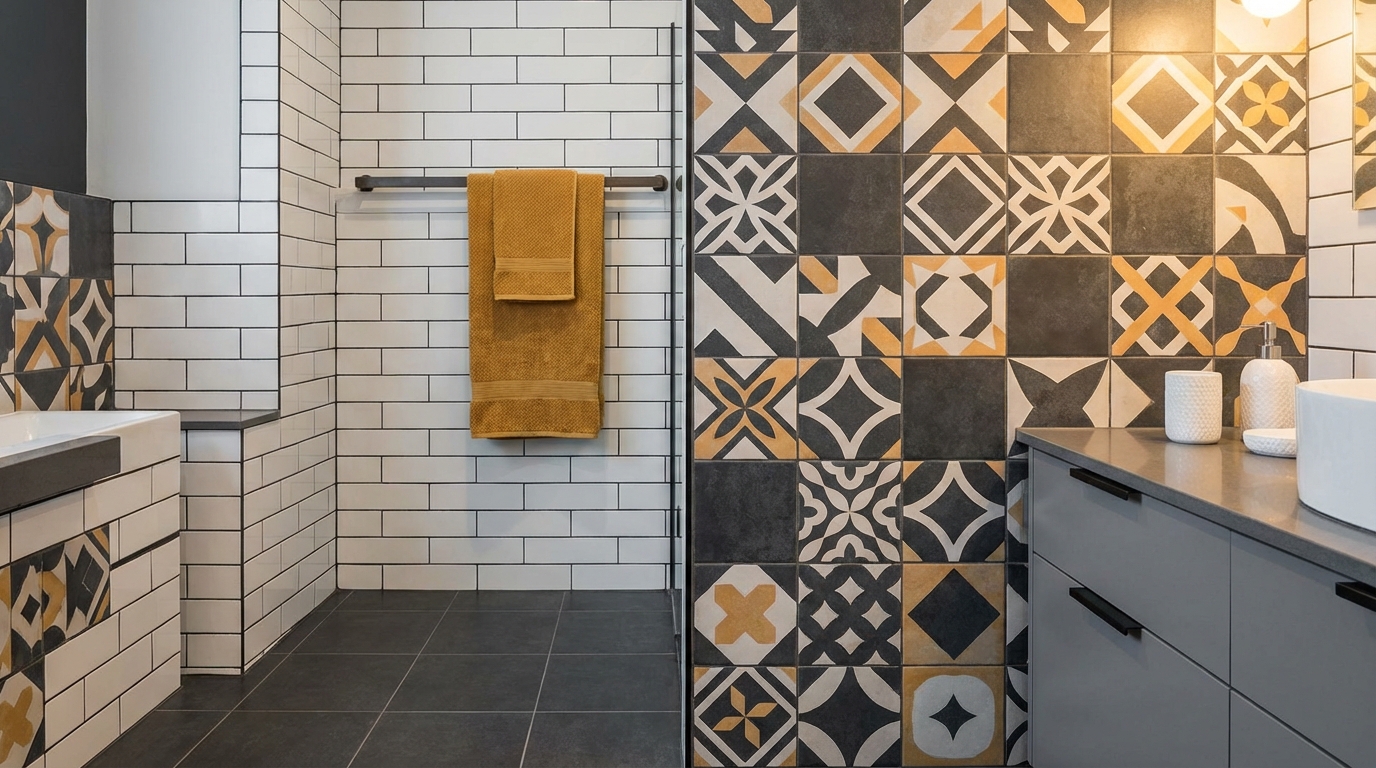
So, you are trying to figure out which bathroom tile trends actually help sell houses and not just look good on Pinterest. The short answer is: neutral, light, clean-lined tile in larger formats and simple patterns sells houses fastest and for the best price.
Buyers want bathrooms that feel clean, bright, and easy to maintain. If your tile choices scream “very personal taste” or “lots of grout to scrub,” buyers mentally subtract from their offer. If the bathroom feels like a spa and looks current but not trendy, they mentally add.
Things you need to know:
- Neutral colors (whites, light grays, beiges, and “greige”) are safest for resale.
- Larger format tiles (12×24 and up) feel more modern and mean fewer grout lines.
- Matte or satin finishes tend to be better for floors; glossy can work well on walls.
- Simple patterns and layouts sell better than loud or complex designs.
- One “feature” area is usually enough (niche, accent wall, or floor), not all three.
- Buyers care a lot about grout color, grout size, and how clean everything looks.
- Good tile work often returns more in perceived value than it costs, if you do not over-personalize.
- Trendy colors date fast; trendy shapes and textures age a bit slower.
Most buyers want to move in and not touch the bathrooms for at least 5 years.
If a buyer feels they must “fix” your tile, they discount the price in their head before they even make an offer.
You are not designing your dream bathroom, you are designing a product that needs to appeal to strangers.
Neutral tile gets more showings, and more showings usually mean better offers.
Think: “clean and current,” not “statement piece.”
Why bathroom tile choices affect how fast your house sells
You are not just choosing tile. You are shaping three things that buyers react to in seconds:
- How clean the bathroom feels.
- How large the bathroom feels.
- How soon they will need to spend more money after moving in.
If the tile feels dark, busy, or old, buyers see work and cost.
If the tile feels bright, simple, and modern, buyers feel relief.
Let me share a quick example. A mid-priced home listed with a dated bathroom (small beige tile, dark grout, old tub) sat for 60+ days. Same house, same layout. Owners pulled it off the market, spent about $7,500 on a mid-level tile refresh and fixtures, relisted three months later, and accepted an offer 4% above their earlier highest offer within 10 days.
That does not mean you must spend that much. It means the tile changed how buyers valued the whole house.
From a practical point of view, tile controls:
- How light bounces in the room.
- How much maintenance buyers think they will have.
- How “old” or “new” the house feels, regardless of the actual age.
Tile colors that sell: what works and what backfires
Safe, buyer-friendly color families
Here are color directions that usually help resale:
- Soft white: Think warm white, not stark hospital white. Great for walls and showers.
- Light gray: Soft, not charcoal. Works for floors and feature walls.
- Beige and greige: Warm and neutral, especially if the rest of the house is warm-toned.
- Very pale taupe or stone: For a spa-like, natural feel.
Pick one main neutral and repeat it in a couple of places, instead of mixing 5 different colors.
A simple pattern that works in many homes:
- Large light tile on the floor (light gray or warm beige).
- White or off-white tile on shower walls.
- Small accent in a shower niche or behind the vanity.
Bold colors: when they hurt resale
Deep blue subway, emerald green hex, black floors. These show up on social feeds a lot. In person, they scare a chunk of buyers.
Where they hurt:
- Small bathrooms: Dark tile can make them feel tight and gloomy.
- Lower price ranges: Buyers often want safe, not unique.
- Areas with conservative tastes: Strong color can feel risky.
You can still get some personality, just place it carefully:
- Use color in towels, art, or a shower curtain instead of tile.
- If you must add color in tile, keep it to a niche or a thin band, not an entire wall.
How many colors in one bathroom?
As a basic rule for selling:
- 1 main tile color.
- 1 accent tile at most.
- 1 grout color that ties them together.
Once you mix three or four tile colors, buyers get confused. Confused buyers hesitate.
Tile sizes and formats that feel current
Larger format tiles: why buyers like them
Most modern bathrooms in listings today use larger tiles:
- 12×24 inch rectangles.
- 24×24 inch squares.
- Long planks (6×24, 8×32) that mimic stone or wood.
They work well for resale because:
- They reduce grout lines, which looks cleaner and feels easier to maintain.
- They make small bathrooms feel bigger and less busy.
- They read as current in listing photos.
If you are updating to sell, 12×24 is almost always a safe format for both floors and shower walls.
Where small tiles still make sense
Small tiles are not “bad.” They just need the right spot.
They work well for:
- Shower floors: 2×2 or mosaics give more grip and help with sloped surfaces.
- Niches: A small pattern for a subtle highlight.
- Feature strip or band: A vertical strip in a shower.
If you go with small tiles on large surfaces (walls, main floor) you risk a “busy” look and lots of grout, which can feel dated and harder to clean.
Rectified vs non-rectified edges
Quick note that matters when buyers look close.
- Rectified tile has machine-cut edges and allows thinner grout lines.
- Non-rectified has slight curves or variations and needs thicker grout.
Thinner grout joints feel more modern, but they need a good installer. Poor work with tight joints stands out.
Patterns and layouts that help sell your house
Simple layouts that buyers trust
For resale, the layout style can be simple. You do not need tile artwork.
Common choices:
- Stacked (grid) layout: Tiles lined up directly on top of each other for a clean, modern look.
- Traditional brick / running bond: Like brickwork, staggered joints.
- Subway-style for smaller rectangles: Classic and familiar.
If your house leans modern, stacked 12×24 works well.
If your house leans traditional, brick pattern feels natural.
Herringbone and chevron: use with care
These patterns look great in photos but can be risky for resale if overused or done poorly.
Potential issues:
- They increase labor cost, which you may not recover.
- They draw a lot of attention. If alignment is off, buyers notice.
- They feel very specific in style, which narrows your buyer pool.
If you like them, focus them in a small feature:
- Behind the vanity mirror.
- Inside a shower niche.
One feature, not five
To keep buyers comfortable:
- Pick one focal point: the shower wall, the floor, or the vanity wall.
- Keep everything else quiet and supportive.
If the floor is patterned, keep walls plain. If the niche has bold mosaic, let the rest of the shower stay simple.
Too many focal points make the space feel confusing and smaller in photos.
Material types: what sells, what does not
Porcelain and ceramic: safe workhorses
For most resale situations:
- Porcelain is hard, dense, less porous, and great for floors and wet areas.
- Ceramic works well on walls, and some types work for floors if they have the right rating.
Buyers rarely ask the difference. They react to:
- How it looks in person and in photos.
- How smooth the install looks.
- How easy it seems to clean.
From a selling perspective, a mid-priced, nice-looking porcelain tile often gets similar buyer reaction to much more expensive stone.
Natural stone: when it helps and when it hurts
Marble, travertine, limestone. They can make a bathroom feel high-end, but they also telegraph “maintenance” to many buyers.
Upsides:
- High-end feel in luxury markets.
- Great if the rest of the house already has stone features.
Downsides:
- Needs sealing and special cleaners.
- Shows etching and staining faster.
- Can feel out of place in lower-priced homes, where buyers focus on durability and low upkeep.
If you are not selling a luxury property, a porcelain that imitates stone often gives you 80% of the look with easier care.
Wood-look tile
Wood-look porcelain planks can help tie the bathroom to wood floors in the rest of the house.
They can work well if:
- The pattern is not too busy or fake looking.
- The color matches or blends with nearby flooring.
- You use a layout that matches how real wood might be installed.
For resale, pick subtle wood effects, not high-contrast grain.
Finish and texture: glossy, matte, or something in between
Floor tile finishes buyers like
For floors, you want:
- Matte or low-sheen to reduce slip risk and hide water spots.
- Some texture in wet areas like shower floors for grip.
Very glossy floor tile may look shiny but raises flags about slipping, especially for older buyers or families with kids.
Wall tile finishes that photograph well
For walls and showers:
- Glossy white or light tile reflects more light, helps small spaces look larger.
- Satin or soft matte hides minor imperfects in the wall and grout.
A balanced approach that works often:
- Matte or low-sheen on floors.
- Glossy or satin on shower walls and vanity wall.
Grout: the small detail that changes everything
Grout color choices that help resale
Grout is what often makes a “nice” bathroom feel either fresh or tired.
Go for:
- Light gray grout with white or light tiles. Hides some dirt but still looks bright.
- Color-matched grout that blends with the tile for a calm, clean look.
Avoid:
- Stark white grout on floors. It shows every speck.
- Very dark grout with light tile unless you want a strong grid effect.
Grout line width
Buyers notice when grout lines are wide and uneven.
For a modern, clean feel:
- Use narrower grout joints where the tile allows (often 1/16″ to 1/8″ for rectified tiles).
- Keep the lines consistent and straight.
If your existing tile is fine but the grout looks bad, re-grouting or professional grout cleaning and recoloring can significantly change buyer perception for much less than a full retile.
Trends that actually help resale vs ones that age quickly
Current trends that buyers still like
These feel current but not extreme right now:
- Large-format neutral tiles on floors and shower walls.
- Vertical stacked subway on one accent wall.
- Subtle marble-look porcelain in light tones.
- Small hex or penny tile only for shower floors or small accents.
- Soft texture on large tiles that mimic stone or concrete.
Trends that can hurt resale when overdone
These can age fast or split buyer opinion:
- Strong patterned cement-look tiles over the whole floor.
- Very dark floors with very light walls, if the room has little natural light.
- Highly saturated colors (deep teal, bright orange) as the main tile.
- Metallic or mirrored tiles in large areas.
- Extremely glossy large black or dark gray tiles that show every spot.
If you like these looks, you can keep them to a removable element, like accessories, paint, or small accent areas that a future buyer could change without gutting the room.
How much tile to add: full remodel vs targeted updates
If you are doing a full bathroom gut
When you are replacing everything, use tile to create a calm, spa-like shell, then let fixtures and lighting do the rest.
A solid strategy:
- Tile the floor with a large-format neutral.
- Tile the shower walls in matching or coordinating large-format tile.
- Use a small coordinated mosaic only on the shower floor and maybe in a niche.
- Keep paint and vanity simple to match.
This approach gives you a consistent look that photographs well and appeals to a broad range of buyers.
If you are doing a partial update
You might not need to retile everything.
Focus on:
- Shower or tub surround if it is obviously dated.
- Floor tile if it is chipped, cracked, or strongly colored.
- Grout refresh if the tile itself is decent.
You can often leave older but neutral floor tile and just refresh the shower walls and fixtures, then stage with new textiles and a fresh coat of paint.
When not to retile
Sometimes your best move is to leave the tile and upgrade around it:
- If the tile is neutral, not damaged, and not wildly out of style.
- If your budget is tight and other rooms (kitchen, major systems) need the money more.
In those cases, deep cleaning, re-caulking, new lighting, and a modern vanity can lift the space without touching the tile.
Cost vs resale value: what the numbers suggest
You do not control the market, but you can control how your bathroom compares to others at your price point.
Here is a simple way to think about cost and payoff:
| Project type | Typical spend (ballpark) | Common buyer reaction |
|---|---|---|
| Grout clean & re-caulk only | Low (hundreds) | “Clean, well cared for.” |
| New floor tile only (small bath) | Low to mid (low thousands) | “Updated, move-in ready.” |
| New shower/tub surround tile only | Mid range | “Big upgrade, feels new.” |
| Full tile remodel (floor + shower) | Higher (varies by market) | “Feels like a new build.” |
National data often shows that mid-range bathroom remodels recoup a moderate share of cost at resale. The key is that in real life, a clean, modern bathroom can help your house sell faster and prevent painful price drops after weeks on the market.
You want to be competitive with other listings buyers see at your price, not ahead of them by a huge cost margin that you will not get back.
Matching tile to your house style and buyer type
What style is the rest of your house?
Your bathroom should not feel like it belongs to a completely different house.
Basic matches that work:
- Traditional house: Soft neutrals, marble-look tile, classic subway, warm metal fixtures.
- Modern or contemporary: Large-format, simple lines, stacked layouts, black or chrome fixtures.
- Farmhouse or transitional: White subway, neutral floors, black or brushed nickel fixtures.
If you are unsure, walk through model homes in your area in your price range and look at their bathrooms. Those builders spend a lot of time testing what sells. You can copy the general approach, not every detail.
Who is likely to buy your house?
Your local agent can help answer this, but in general:
- First-time buyers often care about “no projects” and low maintenance.
- Move-up buyers look for a step up from their current bathroom without screaming “over the top.”
- Luxury buyers expect higher-end finishes, larger showers, and strong detailing.
In most cases, neutral tile with quality installation helps all of these groups. The main difference is how far you go with material quality and how much tile area you cover.
Common tile mistakes that scare buyers away
Too many materials and patterns
One bathroom with:
- Wood-look floor tile.
- Marble-look shower walls.
- Patterned mosaic accent band.
- Bold glass tile in a niche.
might look like effort, but buyers often see confusion.
Try to rank your choices this way:
- One main “quiet” material that covers most of the surfaces.
- One smaller “special” material.
Anything beyond that, start asking if it truly adds or just distracts.
Poor installation quality
Buyers notice:
- Uneven grout lines.
- Lippage (tiles not level with each other).
- Cracked corners or gaps in caulk.
- Tile edges without proper trim pieces.
Even mid-priced tile looks better than expensive tile if it is installed straight, level, and clean.
If you are hiring help, ask to see photos of previous bathrooms. If you are doing it yourself, pick simpler layouts and watch detailed tutorials before you start.
Ignoring safety and comfort
A bathroom that looks great but feels risky is a problem.
Common issues:
- Very slippery floor tiles, especially in larger sizes with high polish.
- No grab bar areas or at least blocking for future grab bars in showers for older markets.
- Dark tiles in a space with poor lighting, leading to a cave feeling.
Buyers do not use fancy design words; they just say “It feels uncomfortable” and move on.
Step-by-step plan to pick resale-friendly bathroom tile
Step 1: Look at your competition
Before you buy anything:
- Check active listings in your neighborhood in your price range.
- Save 10 bathroom photos that you think look better than yours.
- Note their colors, tile sizes, and where they use accents.
Your goal is not to copy exactly but to avoid falling below what buyers will see around you.
Step 2: Decide your “one main neutral”
Pick your core neutral first. For example:
- Warm white.
- Light beige.
- Light gray.
This will likely be either the wall tile or the floor tile that covers the largest area.
Make sure it works with:
- Your vanity color or the one you plan to install.
- Your wall paint (or choose paint after the tile).
Step 3: Pick your tile sizes
Common, safe setup:
- 12×24 porcelain on floors, laid straight or in a staggered pattern.
- Same tile or a close cousin on shower walls.
- 2×2 or small mosaic on the shower floor.
If your bathroom is very small, still aim for the largest tile that can fit comfortably without a lot of small slivers at the edges.
Step 4: Decide if you need an accent
Ask yourself:
- Is this bathroom large enough that a feature wall will add interest?
- Would a simpler “all one tile” layout look calm and high-end instead?
If you add an accent:
- Keep it in the shower niche or one wall, not scattered everywhere.
- Pick something that is a cousin of your main tile color, not a loud contrast.
Step 5: Choose grout and layout
Once you pick tile, decide:
- Grout color aimed to blend rather than scream.
- Layout type (stacked or staggered) that fits your house style.
If you are overwhelmed, tile showrooms often have mockups of tile + grout. Look for examples that resemble the feel you want and copy the pairings.
Small bathroom vs large bathroom tile strategies
Small bathrooms
Goals:
- Make it feel bigger and brighter.
- Keep patterns subtle.
What often works:
- Light-colored large-format floor tile continuing into the shower if possible.
- Same wall tile in the shower and on any other tiled wall area.
- Clear glass shower doors instead of heavy curtains when budget allows.
Avoid:
- Strong floor patterns that cut the space visually.
- Dark tile on half the walls and light on the other half unless you have great lighting.
Large bathrooms
In larger spaces, you can:
- Use more texture without feeling cramped.
- Tile more wall area to get a spa-like effect.
Still, do not overdo patterns. Buyers want to feel calm and comfortable, not overwhelmed.
Quick reference: tile choices that usually help sell houses
Here is a simple cheat sheet.
| Element | Resale-friendly choice | Risky choice for resale |
|---|---|---|
| Floor tile color | Light gray / beige / greige | Bright color or very dark black |
| Floor tile size | 12×24 or similar large-format | Tiny tiles across the whole floor |
| Wall tile | White or off-white, simple layout | Multiple bold colors and patterns |
| Accent | One niche or one wall, subtle | Accents in several places at once |
| Material | Porcelain / ceramic | High-maintenance stone in low-price areas |
| Grout | Light gray or color-matched | Stark white floors or heavy dark lines |
One final practical tip to apply today
Before you buy a single tile, go to a local tile store or big-box store, grab samples of your top three tile options plus grout sticks, and bring them home. Lay them on the bathroom floor and lean them against the walls. Look at them at three times of day: morning, afternoon, and evening with lights on.
If the combo still feels clean, calm, and bright at all three times, you are on the right track for a bathroom update that will help your house sell.