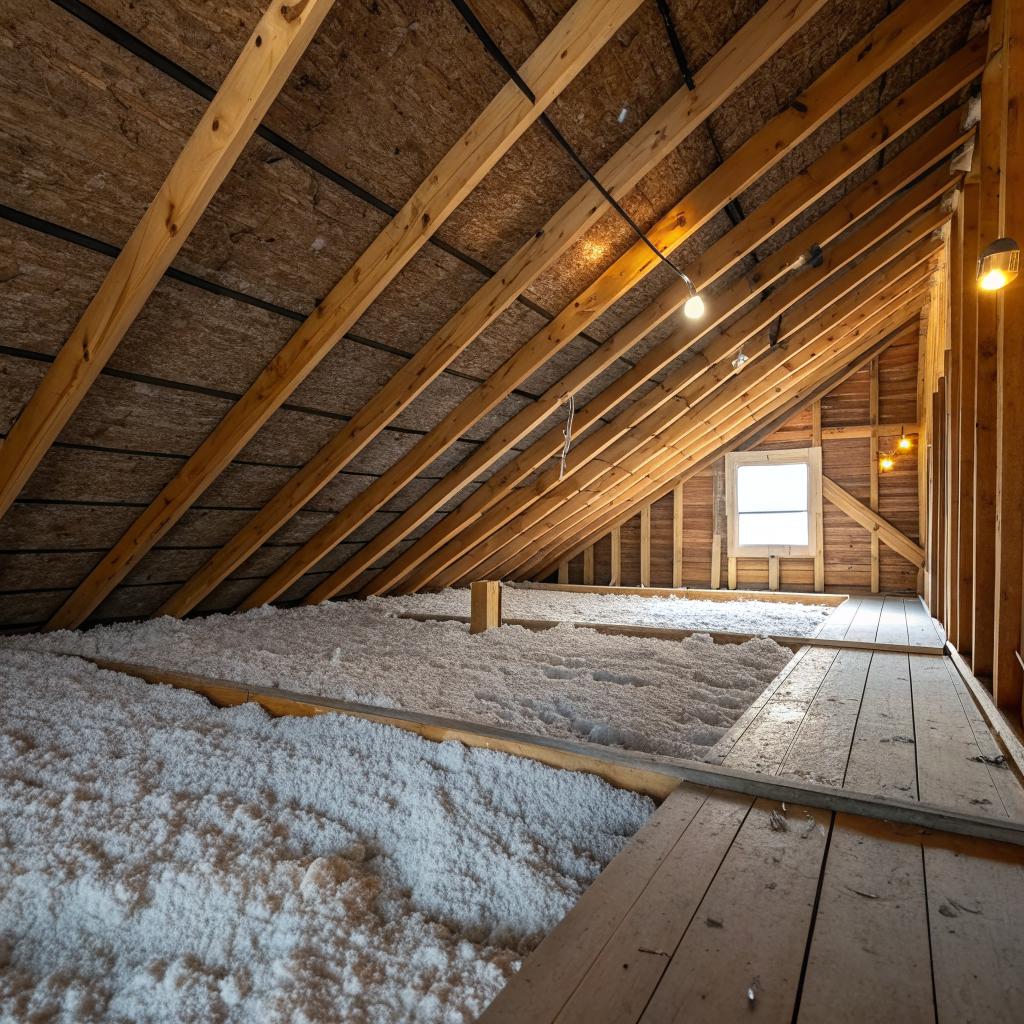
So, you are trying to figure out attic insulation in Houston, Texas for a renovation home and how it fits with the rest of your project. The short answer is that you need enough insulation with the right materials for our hot, humid climate, plus good air sealing and ventilation, or you will waste money on cooling and probably feel uncomfortable in the house.
Most people think of insulation as something that keeps heat in. In Houston, it works the other way around most of the year. You are trying to keep heat out, protect your air conditioner from working nonstop, and control moisture so you do not end up with a clammy house and higher bills. If you are already touching floors, walls, or ceilings in a renovation, the attic is one of the most cost-effective places to get real comfort gains.
Here is the quick version before we get into details.
- Houston attics get brutally hot and humid, so insulation choices are different from cold states.
- R38 to R49 total attic insulation is usually the target for older homes here.
- Air sealing is as important as the insulation itself.
- Radiant barriers help a lot in Houston’s climate, especially with shingle roofs.
- Attic work affects flooring, ceilings, and even how your renovation looks and feels.
- Ventilation, duct placement, and recessed lights can ruin good insulation if ignored.
- Sometimes “more insulation” is not the fix; wrong installation can be worse than thin insulation.
What makes attic insulation in Houston different
If you search national guides, you will see a lot of advice focused on cold winters. That does not fully match Houston.
Houston has:
- Long, hot seasons with strong sun
- High humidity almost year round
- Mild winters where heating is short and uneven
So inside an attic here, summer temperatures can hit 130–150°F. Your roof deck is baking in the sun. Your ductwork is often up there, trying to move cold air through an oven.
In that situation, the attic insulation is mostly trying to:
- Reduce how much radiant heat and hot air reach your ceiling and ducts
- Slow heat entering the living space so the AC has breathing room
- Keep moisture from moving into cooler parts of the house and condensing
If you remember only one thing, remember that in Houston, attic insulation is about heat rejection and humidity control, not just “keeping warm”.
That is why you hear more about radiant barriers, roof coatings, and sealed attics here than in, say, Minnesota.
If you want to dig deeper into options that fit our climate, a good starting point is to look at local providers of attic insulation Houston Texas, since they tend to design around heat and humidity instead of snow and ice.
How attic insulation affects a renovation home
If you are renovating, you are in a better position than someone in a finished home. You already have:
- Opened ceilings or walls in some spots
- Trades on site who can run new ducts or move lights
- Budget carved out for things that are not “pretty” but meaningful
Attic insulation ties into a few renovation areas you might not expect:
Comfort under new floors
If you are redoing flooring on the top story, the surface temperature of the floor depends on how much heat is pressing down from above through the ceiling. Even slight changes in ceiling temperature change how the room feels at ankle level.
If your attic is 140°F and the insulation is patchy, a luxury vinyl plank or engineered hardwood floor under that area can feel:
- Warm and stuffy in summer
- Uneven in temperature from one side of the room to another
Better attic insulation means:
- More even floor temperatures
- Less expansion and contraction stress on floating floors from heat swings
It is not magic, but it does help the flooring you paid for feel more stable and comfortable.
Ceiling height, lighting, and insulation depth
Renovations often change:
- Ceiling heights
- Recessed light layouts
- Crown molding, ceiling treatments, or beams
The more features you poke into the ceiling, the more you interrupt the insulation. Every recessed light, tray ceiling, or decorative beam can be a thermal weak point.
Whenever you cut or carve into a ceiling plane, ask yourself: “Where will the insulation go now, and can air leak through this detail?”
Some light fixtures need special covers or “IC-rated” housings so you can safely bury them in insulation. Many older lights in renovation homes are not rated for that, which limits insulation thickness unless you replace them.
Renovation staging: When to deal with the attic
I think a smart order for most Houston renovation projects looks something like this:
- Plan insulation type and target R-value.
- Decide on attic ventilation strategy.
- Run or move any new wiring, cans, or ducts.
- Air seal penetrations in the ceiling plane.
- Add insulation and radiant barrier last, so no one tramples it.
If you insulate too early, electricians, plumbers, and low-voltage contractors tend to damage or move it. Then the final result looks good on paper but not in reality.
How much attic insulation does a Houston home need?
For existing homes in this area, most energy guidelines suggest an attic insulation level around R38 to R49. Renovation homes often start with far less, especially if the house was built before the 1990s.
What R-values mean in real life
R-value is just a measure of resistance to heat flow. Higher is better, but it is not linear in terms of benefit. Going from R0 to R19 helps a lot. From R19 to R38 is also a good jump. After that, each step does less.
For Houston:
- R19 or less: Very weak for an attic here. You will feel the heat.
- R30: Better, but still not ideal, especially with dark shingles.
- R38: Solid baseline for most older homes.
- R49: Good target if you are already opening things up during a renovation.
You do not always need to tear out old insulation. Often you can:
- Air seal the ceiling
- Top up loose-fill or batts until you hit the desired R-value
Typical Houston attic insulation materials and R-values
Here is a simple comparison of common options. The numbers are approximate and depend on brand and install quality, but they work as a reference.
| Type | Typical R per inch | To reach about R38 | Good fit for Houston? |
|---|---|---|---|
| Fiberglass batts | R-2.9 to R-3.3 | 11 to 13 inches | Yes, if carefully installed |
| Blown fiberglass | R-2.5 to R-2.9 | 13 to 15 inches | Yes, common and practical |
| Blown cellulose | R-3.2 to R-3.7 | 10 to 12 inches | Yes, good coverage, watch moisture |
| Open-cell spray foam | R-3.5 to R-3.8 | Thicker layer on roof deck | Yes, for sealed attics |
| Closed-cell spray foam | R-6 to R-7 | Thinner layer, higher cost | Sometimes, more for special cases |
Radiant barriers and Houston heat
In a hot, sunny climate like Houston, radiant heat from the roof is a huge part of the problem. Insulation helps, but the roof deck itself can be extremely hot.
A radiant barrier is usually a reflective foil or coating applied to:
- The underside of the roof deck
- Or laid on top of the existing insulation, shiny side up
It reflects a large share of the radiant heat back toward the roof, so less reaches the attic space. People argue over the exact numbers, but many homeowners notice:
- Lower attic temperatures, often 15–30°F cooler
- Reduced runtime for the AC in peak afternoon hours
In Houston, a radiant barrier is not a luxury add-on; in many older renovation homes with dark roofs, it is one of the only realistic ways to tame a “blast furnace” attic.
For renovation projects, adding a radiant barrier at the same time as attic insulation often gives a better payoff than just loading more inches of traditional insulation on the ceiling.
Choosing between vented and sealed attic approaches
You will see two basic philosophies for attics:
1. Vented attic with insulation on the ceiling floor
This is the traditional setup.
Key points:
- Insulation lies flat on the attic floor above the ceiling.
- The attic space is “outside” the thermal boundary.
- Soffit vents bring air in, ridge or roof vents exhaust hot air.
Pros:
- Less costly for most renovation homes
- Easier to add to existing construction
- Works well with blown-in insulation and radiant barrier on deck
Cons:
- Ducts in the attic still suffer from heat if not well insulated
- Every ceiling penetration can leak air
2. Sealed / conditioned attic with insulation on the roof deck
In this approach, the insulation moves from the attic floor to the underside of the roof. Spray foam is common for this.
Key points:
- The attic becomes part of the conditioned envelope.
- Ducts live in a much calmer temperature zone.
- Vents are usually closed off or removed.
Pros:
- Can greatly improve duct performance
- Reduces heat load on the top floor
Cons:
- Higher cost than just blowing more insulation on the attic floor
- Needs careful moisture planning and code compliance
For many Houston renovation homes, a well-done vented attic with strong air sealing, proper depth of insulation, plus a radiant barrier, hits a good balance of comfort and cost.
Air sealing: the step people skip
You can have R49 in your attic and still feel uncomfortable if the ceiling leaks air everywhere. In a hot climate, warm attic air can sneak into the house, and your cool air can escape upward.
Common leak spots:
- Recessed lights and ceiling fans
- Attic hatches and pull-down stairs
- Plumbing and electrical penetrations
- Gaps at wall top plates and chases
If you are renovating, this is the perfect time to:
- Seal gaps with foam or caulk before insulation goes in
- Add weatherstripping and insulation to the attic hatch
- Upgrade leaky recessed fixtures to airtight, IC-rated versions
Think of insulation as a thick blanket and air sealing as the windbreaker over it. In Houston humidity, you really need both.
Ignoring air leaks is one of the fastest ways to waste money on insulation.
Moisture and humidity concerns in Houston attics
Houston homes fight moisture from two sides:
- Humid outdoor air
- Cool, dry air from the AC inside
If warm, moist air sneaks into cooler parts of the structure, it can condense on surfaces. That might be:
- On the back of the ceiling drywall
- Inside a duct line
- On the underside of a roof deck, in some cases
Good attic insulation and air sealing help keep surfaces from dropping to dew point and reduce the amount of humid air that can move through.
Things to watch in renovation homes:
- Bathroom vents that dump into the attic instead of outside
- Kitchen vents that stop in the attic space
- Disconnected ducts or unsealed boots through the ceiling
If you are redoing bathrooms or kitchen, push those fan ducts all the way outside. It is a small extra step that pairs nicely with attic insulation work.
How attic insulation interacts with flooring and finishes
Since your renovation likely involves flooring and maybe custom finishes, it might help to think through how the “invisible” attic work changes how those finished surfaces perform.
Temperature swings and material movement
Most flooring reacts to temperature and humidity:
- Engineered wood and solid wood expand and contract.
- Vinyl and laminate can soften or expand slightly at high heat.
If the ceiling below a hot attic sees large temperature swings, the flooring in that room can:
- Show more gapping over time near exterior walls
- Have slight cupping or buckling if humidity also swings
Better insulation and air sealing lead to smaller swings, which is friendlier to those materials.
Sound control between floors
If your attic is above a bedroom, office, or media room, you might also care about sound. Attic insulation helps some with:
- Rain noise on the roof
- Outdoor noise coming through the roof assembly
It does not replace proper soundproofing, but denser materials like cellulose do somewhat better at muffling than loose fiberglass alone. If you are already paying for attic work, you can ask for options that give small acoustic benefits too.
Common mistakes in Houston attic renovations
Renovation projects get busy. With flooring, layout changes, paint colors, and fixtures to decide, the attic often gets treated as an afterthought. That is how these mistakes creep in.
1. Insulating without checking ventilation
People add more insulation but do not check if:
- Soffit vents are clear, not blocked by old insulation or paint
- There is a continuous ridge or roof vent path
- Baffles are in place to keep air pathways open at the eaves
Result: the attic runs even hotter, and moisture can stagnate.
2. Covering can lights or boxes that are not rated for it
Older recessed lights often need space around them. Covering them with insulation:
- Can create a fire risk
- Can shorten bulb or fixture life
The fix is to:
- Replace them with IC-rated, airtight fixtures
- Or add approved covers that create a safe box around them before insulating
3. Ignoring ducts in the attic
If your ductwork runs through the attic, its condition matters as much as the insulation. In a renovation, at least:
- Check for damaged insulation on ducts
- Seal obvious air leaks at joints with mastic
- Confirm that flex ducts are not kinked or sharply bent
There is not much point in perfect attic insulation if half your cool air leaks into the attic or picks up heat before it reaches the rooms.
4. Using vapor barriers in the wrong place
Some products come with attached vapor barriers. In a hot, humid climate, misplacing a vapor barrier can trap moisture.
This part does get a bit technical, but the safe rule during a renovation is:
- Ask local pros or check regional guidance before adding plastic sheeting or foil layers beyond what is standard for your assembly
In many Houston attics with fibrous insulation on the ceiling plane, you do not need an extra plastic layer under the drywall.
Budget planning: what attic insulation might cost
Costs vary, but for a rough idea on a typical Houston renovation home, assuming a vented attic:
| Scope | What it includes | Relative cost level |
|---|---|---|
| Basic top-up | Blown insulation over existing, minimal prep | Lower |
| Top-up with air sealing | Seal key penetrations, then add blown insulation | Medium |
| Full upgrade + radiant barrier | Air sealing, attic hatch work, baffles, blown insulation, radiant barrier | Medium to higher |
| Sealed attic with spray foam | Foam on roof deck, vents closed, sometimes duct changes | Higher |
For renovation planning, it often makes sense to:
- Allocate a clear attic budget line item rather than bury it in “misc” HVAC costs
- Decide early which tier you want so trades do not work against that plan
DIY vs hiring help for Houston attic insulation
Some renovation homeowners like to do part of the work themselves. That can be fine, but not all pieces are equal.
Tasks many people can handle with some care:
- Air sealing small gaps with caulk or foam
- Adding weatherstripping to attic hatches
- Installing basic baffles at soffits before blown-in insulation
Tasks that often need pros:
- Large amounts of blown-in insulation across tricky attics
- Spray foam on roof decks or walls
- Radiant barrier installs on steep or complex roofs
- Reworking ducts that run through the attic
There is also the comfort and safety angle. Attics in Houston get very hot. Working up there for long periods is not pleasant and can be risky in the warmer months.
What to ask an insulation contractor during a renovation
If you bring in a contractor as part of your project, you will get better results if you ask focused questions rather than just asking for “more insulation.”
Here are some direct questions you can use:
- “What R-value do you recommend for this attic, and why that number?”
- “How will you handle air sealing before putting insulation in?”
- “Will anyone be working in the attic later, and how will you protect the insulation from damage?”
- “Can you keep my soffit vents clear and install baffles where needed?”
- “How do you handle recessed lights and other heat sources under the insulation?”
- “Where do my ducts run, and do they need extra insulation or sealing?”
If the answers feel vague or rushed, that is a hint to slow down or get another quote. You do not need fancy jargon. Just clear, specific plans.
Linking attic work with the rest of your renovation
This is where a lot of people make things harder than they need to. They treat the attic as a separate project. You can tie it directly to what you are already doing.
Some practical combinations:
- New flooring on the top floor + check ceiling levelness + attic insulation plan
- New recessed lighting layout + swap to airtight housings + air sealing + insulation
- New HVAC system + duct assessment in attic + insulation and radiant barrier
- Bathroom remodel + vent routing to outside + attic air sealing over that bath
If you think about comfort in the same breath as design, you end up with a home that not only looks better but also feels calmer, quieter, and more balanced from room to room.
Signs your Houston renovation home needs attic insulation attention
If you are not sure whether the attic deserves a chunk of your renovation budget, look for these signs:
- Noticeable temperature differences between floors
- Top floor bedrooms that get hot in the afternoon, even with AC running
- AC cycles that feel long and frequent on summer afternoons
- Drafty feel near can lights or ceiling fixtures
- High energy bills compared to similar homes
- Attic insulation that looks patchy, compressed, or well below the top of joists
If you go up there and see joists clearly, you almost certainly need more insulation.
Simple step-by-step plan for a Houston attic during renovation
To keep it practical, here is a sequence you can follow or hand to your contractor. It is not perfect, but it is realistic for many projects.
- Walk the attic and take photos before work starts.
- Decide on vented vs sealed attic. Most will choose vented.
- Clear pathways and check soffit vents for blockage.
- Mark all ceiling penetrations from below: lights, fans, chases.
- Seal those penetrations from above with foam, caulk, or proper boxes.
- Upgrade recessed lights or install covers where needed.
- Install baffles along eaves to protect air flow.
- Add or repair attic hatch insulation and weatherstripping.
- Install radiant barrier on roof deck if you are going that route.
- Blow or place insulation to the target depth and check coverage.
- Do a final walkthrough to confirm no vents are blocked and ducts are intact.
If your renovation includes flooring, paint, and trim, running this attic sequence in parallel with the rough-in stages keeps everything aligned.
Quick questions people usually ask about Houston attic insulation
Do I really need R49 in Houston, or is that overkill?
For a small, tight home with good shading, R38 is often fine. For larger or older renovation homes with darker roofs, R49 gives more comfort margin on extreme days. It is not “overkill,” but the benefit from R38 to R49 is smaller than from R19 to R38, so you can decide based on budget.
Is spray foam in the roof deck always better?
No. It can be great for specific cases, like when ducts are all in the attic and you want a sealed envelope. But it costs more and needs proper design for moisture and fire safety. For many renovation homes, a vented attic with blown insulation plus a radiant barrier is a more balanced choice.
Will a radiant barrier hurt my roof shingles?
On the underside of the roof deck, radiant barriers generally have little effect on shingle life when installed correctly. The roof is already designed for high temperatures. Many major manufacturers allow them. The more relevant question is whether the attic ventilation and assembly are set up correctly so moisture does not get trapped.
Can I just roll out some batts myself and call it good?
You can, but if you skip air sealing, ignore baffles, or stuff batts around lights and vents, the performance drop can be big. If you want to go DIY, spend time learning about proper installation. Otherwise, a basic pro job with air sealing usually beats a thicker but sloppy DIY install.
Is attic insulation really going to affect how my new floors feel?
Not in a dramatic, instant way, but yes, it changes the room’s temperature swings and humidity behavior. That, in turn, affects how comfortable those floors feel to walk on and how stable they stay over time. It is more like background support than a star feature, but it matters.
If I fix only one thing in the attic during my renovation, what should it be?
If you have to pick just one, I would say seal and insulate the attic hatch and the most obvious ceiling penetrations, then top up insulation in the thinnest areas. It is not perfect, but it is a solid compromise between cost, complexity, and benefit.
What part of your own renovation do you think will affect comfort the most: the visible changes like flooring and fixtures, or the hidden work in the attic that controls heat and air movement?