
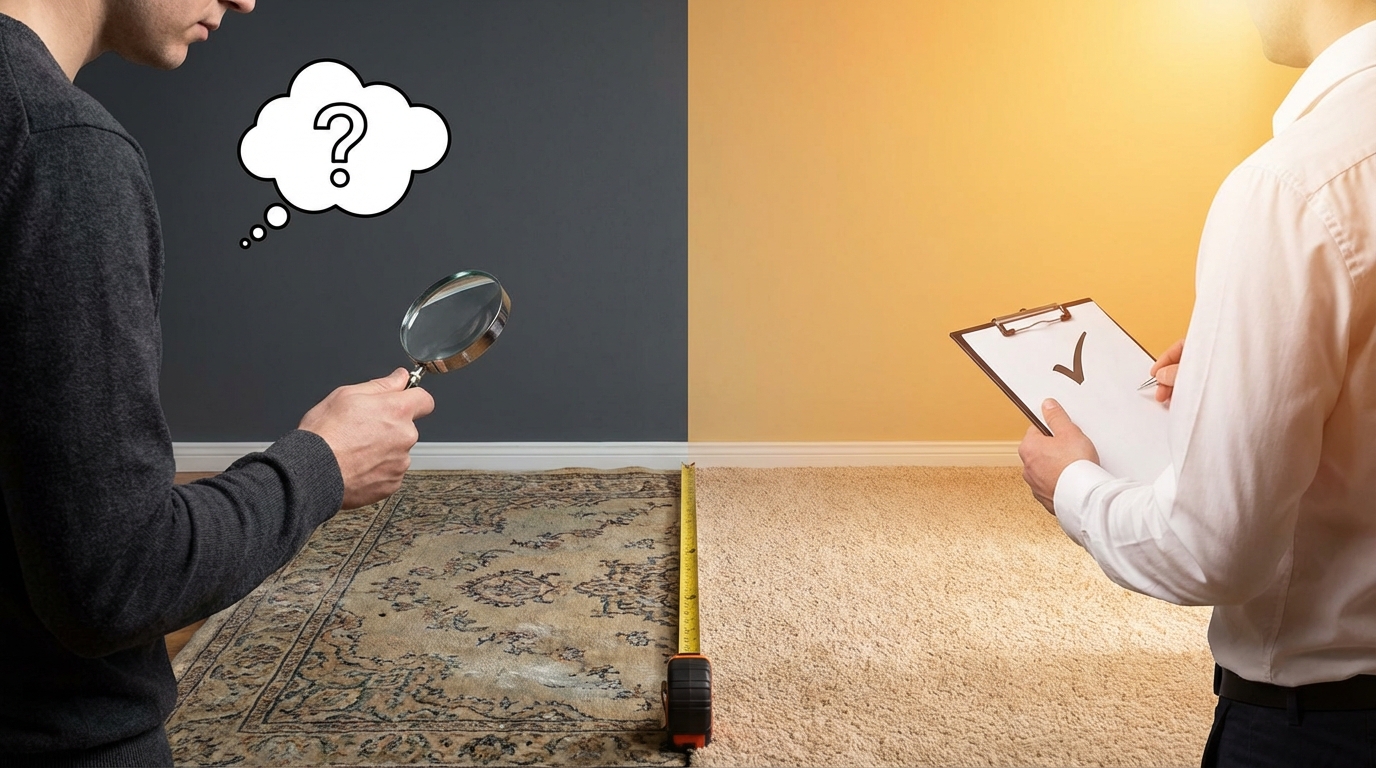
So, you are wondering if new carpet actually increases your home’s appraisal value. The short answer is: new carpet can help your appraisal a bit, but usually as part of overall condition, not as a big stand‑alone value booster.
Appraisers do not add a flat number just because you replaced carpet. They look at total condition, market expectations in your area, and how your home compares with similar properties. New carpet can lift perceived condition, support a higher value within a range, or keep you from getting hit with negative adjustments. It rarely turns a 300,000 house into a 320,000 house on its own.
Things you need to know:
- New carpet helps more with buyer appeal than with hard appraisal math.
- Appraisers value overall condition and quality, not single items in isolation.
- In many markets, buyers prefer luxury vinyl, laminate, or hardwood over carpet.
- Bad, worn, or stained carpet can drag your value down or limit your value range.
- Carpet upgrades usually give partial return, not dollar‑for‑dollar payback.
- Spending 1,000 to 3,000 on carpet can be smarter than dropping 10,000 in the wrong place.
- Appraisers work from recent comparable sales, not from your receipts or what you paid for the carpet.
- Condition, cleanliness, and smell from carpet strongly affect buyer and appraiser reactions.
How appraisers actually think about carpet
Most homeowners think appraisers walk through, see new carpet, and then say something like:
> “Nice. New carpet. Let me add 5,000 to the value.”
That is not how it works.
Appraisers work from recent sales of similar homes, then adjust for differences. They are mostly asking:
– What did 3 to 6 comparable homes sell for in the last few months?
– How does your home rank against those in size, location, condition, features, and updates?
New carpet fits into just one bucket: condition.
If your home is similar to three recent sales, but your carpet is destroyed, smells like pets, and is 15 years old, while the others had clean, newer floors, the appraiser will likely adjust your value down for “inferior condition.”
If you replace that old carpet with clean, neutral, decent quality carpet, the appraiser might:
– Remove that negative adjustment, and
– Place your value toward the upper half of the range, not the bottom.
> So the real gain is usually avoiding a penalty, not getting a special bonus.
Value range vs exact number
Appraisal is not an exact science. Appraisers work with ranges.
For example, based on comparable sales, your home might reasonably land anywhere from 290,000 to 305,000. If:
– The comps had clean modern floors
– Your home had stained, dated carpet
You might get pushed to 292k instead of 303k.
Change the carpet and clean everything up, and now the appraiser feels comfortable near the top of the range.
Same neighborhood. Same floor plan. Same square footage. But you gain 8,000 to 10,000 inside the range simply because your home aligns better with what buyers and the market expect.
How much does new carpet actually add to an appraisal?
No honest appraiser will tell you that “Carpet adds exactly X dollars.” It is context driven.
But you can think in rough buckets.
1. When carpet is terrible and you fix it
If your existing carpet:
– Is torn or heavily worn
– Has big stains
– Smells like smoke, pets, or mildew
– Looks obviously old in photos
Then you are not starting at “normal” value. You are starting below.
In that case, putting in new, basic, neutral carpet might:
– Remove a negative adjustment of, say, 3,000 to 8,000 compared with comps that have decent floors.
– Keep buyers from walking out or lowballing you.
> In this case, new carpet does not “add” value. It restores lost value.
2. When carpet is fine, but you upgrade it
If your carpet is:
– Clean
– Faded but not destroyed
– Maybe 8 to 10 years old
– Neutral but not trendy
And you rip it out to install higher grade carpet right before appraisal, you often get very limited measurable gain.
The appraiser might observe “slightly superior condition” to some comps, but they cannot adjust 10,000 just because you bought high‑end carpet. Most markets will not support that.
Instead, what happens is:
– Buyers like the feel and look more.
– The home may get more attention and stronger offers.
– The appraiser, working from a stronger contract price and clear demand, can often support a higher value within the range.
But again, that is not “carpet added 10,000.” That is “overall appeal helped you sell higher, which gave the appraiser market proof.”
3. When carpet competes with hard surface flooring
In many markets, buyers prefer hard surfaces in main living areas:
– Luxury vinyl plank (LVP)
– Laminate
– Engineered wood
– Solid hardwood
If nearby sales at the high end of the price range have those materials in living areas, and you replace old carpet with new carpet instead of hard surface, you might still lag.
New carpet may feel better than old carpet. But compared to comps with LVP or wood:
> Your home could remain slightly inferior in flooring quality, even if your carpet is brand new.
In that case, new carpet protects you from looking neglected, but it will not fully match the value impact of switching to hard surface in key rooms.
Carpet vs other flooring: what the market usually rewards
Here is where appraisers and buyers quietly agree: not all flooring is seen equally.
Below is a simplified comparison for a typical mid‑priced suburb home in the US. Your local market might differ, but this gives a general picture.
| Flooring type | Typical buyer reaction | Rough cost per sq ft (installed) | Impact on appraisal potential |
|---|---|---|---|
| Old, stained carpet | Negative. “This feels dirty. Needs work.” | 0 (it is already there) | Can push value to lower end of range; may cause negative condition adjustment. |
| Basic new carpet (polyester) | Neutral to positive. “Move‑in ready enough.” | 2 to 4 | Removes negative adjustment. Often supports “average” condition. |
| New mid‑grade carpet (better pad) | Positive. “Feels nicer underfoot.” | 3 to 6 | Might justify slight condition bump vs older but decent carpet. |
| Luxury vinyl plank (LVP) | Strong positive in many markets. | 4 to 7+ | Can support superior condition rating vs all‑carpet homes. |
| Hardwood or quality engineered wood | High positive. Often a strong selling feature. | 6 to 12+ | Can push value closer to top of range if comps support it. |
The key pattern:
– New carpet fixes a problem.
– Hard surface flooring often adds perceived quality.
Appraisers see this in the sales data. Homes with certain flooring types in main areas often command better prices, if everything else is similar.
Where new carpet helps the appraisal most
Let us break out a few real‑world situations where new carpet really pulls its weight.
1. Pre‑sale refresh on a tired but solid home
Imagine a 20‑year‑old house with:
– Original light beige carpet
– Visible traffic paths in hallways
– A few pet stains
– Slight odor when you walk in
The house is solid. The layout is fine. Kitchen and baths are older but clean.
In this case, replacing carpet with neutral mid‑tone carpet can:
– Make the home feel “cared for”
– Remove obvious visual distractions in the listing photos
– Help the appraiser label condition as “average” instead of “below average”
> Appraisers constantly compare your home to what buyers in your area expect for your price point.
If most competing listings at that price show fresh floors, and yours does not, you lose ground. New carpet is one of the cheaper ways to keep up.
2. FHA / VA buyers and health or safety concerns
For FHA or VA loans, appraisers also look for health and safety issues.
Bad carpet can raise questions if:
– It is moldy
– It smells like strong pet urine
– It looks heavily contaminated
You might be forced to repair or replace it as a condition of the loan. In that situation, replacing the carpet:
– Clears the condition from the appraisal report.
– Keeps your sale from stalling or falling apart.
You do not really “gain” value here. You remove a blocker.
3. Rental conversions or investor flips
If you are converting a rental back to owner‑occupied use, or you are flipping a property, flooring is one of the top three things buyers scan.
In many price brackets, a clean set of:
– LVP in living and wet areas
– Neutral carpet in bedrooms
Is a strong and cost‑effective combo.
If the comps for remodeled homes in your area show that setup, then matching that pattern with your own carpet and LVP mix sets you up for the upper end of the justified range, as long as the rest of the work is comparable.
Appraisers do not reward you for being wildly different from the market. They reward you for matching what already sells well.
Common myths about carpet and appraisal value
Let us knock down some of the common stories that float around.
Myth 1: “I spent 8,000 on carpet, so the appraiser will add 8,000 to the value.”
Cost does not equal value.
You might spend:
– 8,000 on premium carpet and pad
– 3,000 on basic, neutral carpet
From the appraiser’s perspective, the gap between those two might not show up in a measurable way if buyers in your area do not pay extra for the difference.
> Appraisers are not doing cost accounting. They are matching your home to real closed sales.
Think of your carpet spend more like marketing and positioning, not like a direct investment with guaranteed return dollar for dollar.
Myth 2: “Appraisers do not care about cosmetic items like carpet.”
They do care, just not the way many sellers imagine.
A single appraiser cannot say, “I personally like hardwood, so I will give more value to that.” They need sales to back up any adjustment.
But condition and cosmetic appeal absolutely affect:
– The condition rating (C1 to C6 in many appraisal forms)
– Whether your home looks superior, average, or inferior to comps
– How your home stands up to buyer expectations in that area
If every closed sale at your price level in the past 6 months had updated flooring and fresh paint, and your house has 20‑year‑old carpet with heavy wear, calling you “similar condition” would be inaccurate.
That is where carpet matters.
Myth 3: “New carpet by itself will push my home into a higher price tier.”
A 250,000 neighborhood does not become a 300,000 neighborhood just because you replaced the carpet.
Most of your value is driven by:
– Location
– Size and layout
– Overall quality and condition
– Recent closed sales nearby
Carpet sits in that “condition” bucket. It can help you:
– Reach the top of your realistic range, or
– Avoid falling to the bottom
But it rarely changes the entire range.
Myth 4: “Carpet is always bad; I should rip all of it out.”
Not always true.
Many families still like carpet in:
– Bedrooms
– Playrooms
– Finished basements
What often turns people off is:
– Wrong color (bright, dark, or taste‑specific)
– Heavy wear or stains
– Smell
Replacing with simple, soft, neutral carpet in bedrooms can be far more budget friendly than tiling or adding hardwood everywhere, and buyers are usually fine with that in those rooms.
How appraisers look at condition and flooring together
Appraisers often classify overall condition into categories like:
– C1: Brand new
– C2: Recently renovated, like new
– C3: Well maintained, minor wear
– C4: Some deferred maintenance, clear wear
– C5/C6: Serious issues
Flooring feeds right into those categories.
Example: Two similar homes, different flooring
Imagine two homes in the same subdivision:
Home A:
– New LVP in living areas
– New carpet in bedrooms
– Fresh paint
– Clean, tidy, neutral design
Home B:
– Original carpet with visible stains
– Scratched vinyl in kitchen
– Strong pet odor in the hallway
– Same square footage and layout
Recent sales show that:
– Homes like A sell around 320,000
– Tired homes like B sell around 300,000 to 305,000
If your home started as a “B” and you invest 5,000 in new carpet throughout, maybe fresh paint as well, you move closer to “A” in the appraiser’s eyes.
> You are not being rewarded for carpet alone. You are closing the condition gap.
The appraiser can now support a value nearer to 315,000 or 320,000 because the market data for similar condition homes backs it up.
Where new carpet does very little for value
There are also situations where carpet replacement does not change much for appraisal purposes.
1. High‑end markets that reject carpet in main areas
In some higher price brackets, buyers expect:
– Hardwood or high‑end LVP in all main living spaces
– Tile or similar in kitchens and baths
If you have wall‑to‑wall carpet in those main spaces and you just replace carpet with nicer carpet, you might still lag behind the comps that show wood.
Your listing might sit longer, or bring slightly lower offers, because it does not feel like the “standard” for that segment.
The appraiser sees those closed sales with wood floors and has to compare your home to those. New carpet might keep them from calling your condition poor, but your flooring quality could still be a step below.
2. When the rest of the home is very dated
If you have:
– Original oak cabinets from the 1990s
– Laminate countertops with chips
– Old fixtures
– Popcorn ceilings
– Dated tile in the bathrooms
Putting in brand new carpet helps with cleanliness and smell, but it does not erase the age of the rest of the finishes.
You still may land in a “dated but clean” bucket. That bucket has its own price range based on recent data.
Carpet is not a magic shortcut around everything else buyers and appraisers see.
3. When existing carpet is already in good condition
If your carpet:
– Is less than 5 to 7 years old
– Looks clean and neutral
– Has no odors
Ripping it out for slightly nicer carpet is rarely a strong value play right before an appraisal.
You do not get points for fixing something that was not broken.
Should you replace carpet before an appraisal?
Now we get to the practical question you probably care about: what should you actually do?
The best way to think about it is:
> Replace carpet if its current state would make a reasonable buyer hesitate or lower their offer.
Ask yourself a few blunt questions:
– Would I feel comfortable walking barefoot on this carpet if I were the buyer?
– Does any room smell off when the door is closed for a day?
– Do obvious stains show up in photos?
– Would I describe it as “tired” or “old” if I saw it in someone else’s home?
If your honest answer is “yes, it would bother me,” it will probably bother buyers and influence their offers. That eventually influences your appraisal.
Low‑cost upgrades before you touch carpet
Before dropping thousands on new carpet, check whether cheaper steps might give you most of the benefit:
- Professional deep cleaning of carpet (100 to 300 depending on size).
- Ozone or enzymatic treatments to reduce pet smell or smoke.
- Paint touch‑ups or repaint key rooms in a neutral color.
- Declutter and remove large, worn rugs that make floors look worse.
If a deep clean and smell treatment leave the carpet looking and smelling acceptable, you might stop there.
If not, then replacement is on the table.
Where to replace carpet first if budget is limited
If you cannot afford to redo all floors, focus on the spaces that create the first impression and the spaces that buyers spend the most time thinking about.
Priority order often looks like this:
- Living room / family room (if carpeted)
- Main hallway / entry area
- Primary bedroom
- Other bedrooms
- Low‑traffic guest rooms, bonus rooms, basement areas
If you can get fresh carpet into the main visible areas and leave older but clean carpet in secondary rooms, that is still a major improvement.
Practical numbers: cost vs likely impact
Let us talk numbers so you can think about return.
Typical carpet costs
These ranges vary by region and room shape, but they give a ballpark:
– Budget carpet with basic pad: 2 to 3 per sq ft installed
– Mid‑grade carpet with better pad: 3 to 5 per sq ft installed
– Higher‑end carpet: 5 to 8+ per sq ft installed
So:
– 800 sq ft of carpeted area at 3 per sq ft is around 2,400
– The same area at 5 per sq ft is around 4,000
Possible value effect in a sales context
Remember, these are broad examples, not promises.
Case 1: Worn carpet, no change
– Buyer offers: 290,000 (they build in flooring replacement cost plus hassle)
– Appraiser sees tired carpet, supports 290,000 based on similar tired sales
Case 2: New mid‑grade carpet
– Buyer offers: 305,000 because home feels “move‑in ready”
– Appraiser compares to other clean, updated‑condition sales and supports 305,000
You spent 2,500 on carpet but got 15,000 stronger price plus less negotiation on flooring credits.
Again, the market, not the appraiser alone, did most of the work. The carpet helped you win better offers, which gave the appraiser stronger numbers to support.
How to pick carpet if you care about appraisal value
You do not need fancy carpet. You need the right carpet for buyers in your segment.
Color and style that tends to work
A few simple guidelines:
- Pick a neutral color: light gray, warm gray, or light taupe often works.
- A subtle fleck pattern can hide dirt better than a solid color.
- A low to medium pile that feels comfortable but not shaggy.
Avoid:
– Very dark colors that show lint and dust
– Bright or bold colors that reflect personal taste
– Patterns that will date quickly
> Think “hotel neutral,” not “designer statement.”
Pad matters more than most people think
Buyers feel the difference underfoot. A mid‑grade pad under standard carpet usually feels better than cheap pad with expensive carpet.
From an appraisal standpoint, there is no line that says “extra 1,000 for premium pad,” but the improved feel supports the overall sense of quality and care.
Match the rest of the home
If your home is:
– Small starter home: basic or mid‑grade carpet in bedrooms is fine.
– Move‑up or higher: buyers might expect carpet only in bedrooms, with harder surface elsewhere.
Check your local online listings:
– Filter for recent sales similar to your home.
– Look at photos of flooring in sold properties.
– Mirror the common pattern you see in the best‑selling examples.
You are not building your dream house. You are matching buyer expectations so appraisers can clearly see how your home fits the local picture.
How carpet affects the appraiser’s impression during inspection
Appraisers are human. They walk, see, and smell the house.
They will not ignore market data in favor of feelings, but their sense of condition starts with the first steps inside.
If the carpet is:
– Sticky
– Smelly
– Visibly damaged
That first impression can tilt the entire assessment of condition downward.
On the other hand, if the home smells neutral, the floors look clean and consistent, and the carpet in bedrooms feels decent underfoot, the appraiser is more comfortable assigning condition in line with the better comps.
> Condition is not just what you replaced. It is how the entire house “reads” in 20 to 30 minutes.
This is why fresh carpet, deep cleaning, and decluttering work together. They shape that quick judgment in your favor.
Carpet, appraisals, and refinance vs sale
Your strategy might shift a bit depending on whether you are selling or refinancing.
Refinance scenario
If you are staying in the home and refinancing:
– You do not get buyer offers to pull value upward.
– The appraiser leans more heavily on closed sales and their own condition judgment.
If your carpet is bad enough to clearly drag condition down compared with nearby homes, replacement may still help bump you closer to the top of your realistic range.
But if the carpet is just a bit dated and you are not planning to sell soon, spending thousands just for a refinance appraisal often does not make much sense, unless you are very close to a loan‑to‑value threshold (like 80 percent) where a small value bump affects your mortgage insurance or approval.
Sale scenario
When selling, buyers and appraisers work together:
– Buyers decide what to offer based on their reaction to your home.
– The appraiser checks whether that price fits the market data.
In that case, flooring that triggers better offers can matter more than in a refinance.
If you can spend 2,000 to 3,000 on carpet and set up a 5,000 to 15,000 stronger contract price supported by comps, that is usually a smart play.
How to talk about new carpet with the appraiser
During the appraisal inspection, you can help without trying to “sell” the appraiser.
Keep it factual:
– Have a simple list of recent updates with dates and rough costs.
– You can include “New carpet installed in 3 bedrooms and hall, October 2025, approx. 2,700.”
You are not telling them what the value should be. You are giving context on condition improvements.
Appraisers often appreciate clear, short lists like:
> – Interior paint, main level, 2024
> – New carpet in bedrooms, 2025
> – LVP installed in living room, 2025
They will still rely on sales data, but this helps them accurately describe your home and condition level in the report.
When new carpet beats a price reduction
Sometimes sellers struggle with this decision:
– Drop the price, or
– Spend money on carpet and hold the price
Here is a simple way to think about it.
If buyers see your house and consistently say:
– “We like it, but the carpet is bad. We would need to replace it.”
Then your choices are:
- Lower price enough that buyers feel they are getting a deal despite the work, or
- Do the work and keep more of your asking price.
If carpet would cost 3,000 to replace, buyers might ask for a 5,000 to 7,000 reduction because they add cushion for hassle and risk.
By spending 3,000 now, you might protect 5,000 or more in sale price, and make the appraisal easier because you are no longer below the condition of the comps.
Simple decision checklist before you replace carpet for appraisal
Here is a practical way to decide your next step:
- Walk through like a buyer.
- Look at floors in photos on your phone, not just with your eyes. Bad carpet shows up more in photos.
- Get a cleaning quote.
- If a deep clean plus odor treatment costs 300 and makes carpet presentable, that might be enough.
- Get a basic carpet quote for key rooms only.
- Check how much to replace only the worst, most visible areas.
- Compare with your price range.
- Look at recent nearby sales online. How do their floors look compared to yours?
- Ask your agent (if selling).
- Which is more realistic in your market: buyers replacing themselves or expecting you to do it?
If you keep seeing the same answer from your own walk‑through, the photos, your agent, and the comps (“Your carpet stands out in a bad way”), that is your sign.
One practical tip: before you spend on carpet, stand at your front door, record a 60‑second video walk‑through of the main areas, then watch it on your phone with the volume off. If the carpet jumps out as the first or second thing you notice visually, buyers and the appraiser will see it too. Fix whatever stands out most in that video first.