
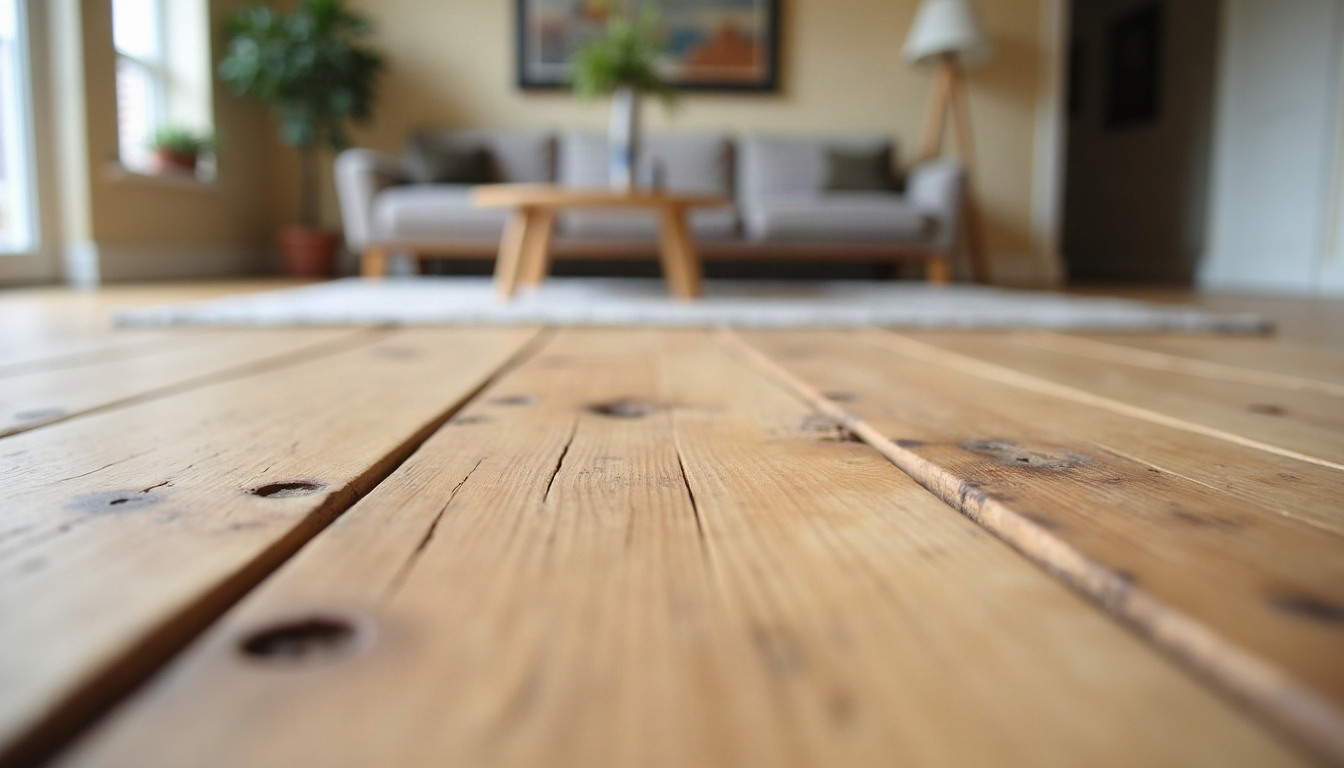
A new house gives you a choice that a renovation rarely does: you can pick the floor on paper, before anyone has framed a wall around it. That freedom is also a trap. If you’re comparing custom home builder washington DC options, the conversation runs from plans to structure to windows, and flooring often ends up as a line on the schedule instead of a real decision.
Three floors come up again and again when people want something gentler on the planet that still holds up to daily life: bamboo, cork and reclaimed wood. Each has a real environmental story and a real catch, and the catches are less about the material itself than about adhesives, finishes and water. The factor that decides most of it is moisture: how dry the house is when the floor arrives, and how far the indoor air swings between a humid summer and a heated winter. I’ll take the three one at a time and stay honest about the trade-offs.
The short answer: choose cork for rooms where you stand a lot or want quiet, strand-woven bamboo for hard-wearing main living areas over a dry, stable subfloor, and reclaimed wood where you want a floor with a past and can live with an uneven look. Decide before the subfloor is detailed, not after the walls are painted.
Spec sheet: bamboo, cork and reclaimed wood as main floors in a new custom home
| Option | Water resistance | Wear and scratches | Comfort and sound | Sourcing and finish | Cost band | Best for |
|---|---|---|---|---|---|---|
| Strand-woven bamboo | Fair | Good | Fair | Usually made overseas; resin and finish vary by maker | $ | Busy living areas and open plans |
| Cork | Fair | Fair | Excellent | Bark harvested without felling the tree; sealed with a surface finish | $$ | Bedrooms, studies, kitchens where you stand |
| Reclaimed wood | Poor to fair | Good | Fair | Salvaged boards; ask about drying, cleaning and old coatings | $$$ | Great rooms, dining rooms, entries |
Strand-woven bamboo: the hard-wearing choice
Bamboo is a grass, not a tree, and it regrows quickly after harvest. That is the heart of its green reputation. The planks that hold up best are strand-woven: the fibers are shredded, bonded with resin and pressed into dense blocks, then milled into boards. The process is why the floor is so hard. It is also where the environmental story gets complicated, because the resin and the finish do a lot of the work. Most bamboo flooring is made overseas and travels a long way to a job site in the U.S., and that belongs in the ledger too.
Best for
Busy main-level rooms with a dining table, pets and a steady stream of shoes. Dense boards resist the dents that soften many hardwoods, and a single continuous floor looks calm running through a kitchen, dining area and living room. Natural-color boards are generally harder than the darker, carbonized ones, because the heat treatment that darkens the fibers also softens them. Ask the maker which one you’re holding.
Watch out for
Dense doesn’t mean stable. Strand-woven bamboo still moves with humidity, and in a house that swings from sticky summers to dry, heated winters, gaps and cupping appear when boards go down too wet, too dry or before the heating and cooling are running. Adhesives in pressed boards can also give off fumes for a while after installation. Ask the maker for its emissions documentation and actually read it. A green label on the box tells you very little by itself.
Cork: the warm, quiet choice
Cork comes from the bark of the cork oak. The bark is stripped without cutting the tree down, and it grows back, which makes cork one of the more honest renewable materials in building. Flooring is made from granules of bark pressed with a binder into planks or tiles and sealed with a finish. Underfoot it feels springy and a little warm, and it takes the echo out of a room, which matters in a modern open plan with hard surfaces everywhere else.
Best for
Bedrooms, a home office, a kitchen where you stand at the counter for an hour at a time, and any room above another where footsteps carry. Cork is a natural insulator, so it feels less cold on a winter morning than tile or stone. When the surface wears, it can be recoated, which keeps the floor in place and out of the dumpster. That is the same instinct I bring to every flooring question: before replacing a floor, ask whether it can be kept and refreshed.
Watch out for
Cork compresses, so narrow chair and table legs leave dents unless you fit wide felt glides. Strong sun fades it over time, a point worth weighing if the design includes large windows. Water is the other limit. The cork shrugs off a damp mop, but the seams and the board core beneath it do not like standing water, so a leak that sits can cause swelling. And because cork insulates, check what the maker allows before putting it over radiant heat.
Reclaimed wood: the floor with a past
Reclaimed boards come out of old barns, mills and houses and are milled into flooring. The appeal is plain: no new tree is cut for the floor, and every board carries nail holes, saw marks and color variation that you can’t order from a catalog. It is also the most variable of the three, so what you see in a sample is a hint of the floor, not a promise.
Best for
A dining room, a great room or an entry where the floor is meant to be the feature. A varied surface hides daily wear well, because new scratches blend into the character already there. If your lot has an older building coming down, ask whether any of its boards can be saved and reused in the new house. The most sustainable board is the one that already exists, though salvage from your own site is a bonus rather than something to count on.
Watch out for
Variation cuts both ways. Thickness and width can differ from board to board, so installers sort and trim, and you should order extra for waste. Moisture content matters more here than anywhere: ask how the boards were dried and conditioned for indoor use, and whether they were treated for pests. Old boards can also carry old paint or coatings, and older paint can contain lead. Ask the supplier how the boards were tested and cleaned, and leave any cutting or sanding of coated boards to professionals who know how to handle it. The word “reclaimed” is used loosely, so a pile of old wood without any paperwork is not a plan.
Which one fits your new build
Match the floor to the room and the sun, not to the sample you liked best in the showroom. These rules cover most of the cases:
- If you stand a lot or want a quiet room, as in a bedroom, study or kitchen, choose cork.
- If the floor will carry daily traffic, pets and a dining table, choose strand-woven bamboo, and ask about its resin before you commit.
- If you want one floor with visible history and can live with variation, choose reclaimed wood.
- If a room gets hours of direct sun, choose bamboo or reclaimed wood over cork, which can fade.
- If radiant heat is in the plan, choose only a floor the maker approves for it, and settle that before the subfloor is detailed.
Before you buy
A good builder will walk you through the schedule, the subfloor and each manufacturer’s installation requirements before anything is ordered, and will want your flooring choice early because it shapes the layers beneath it. Use that conversation. These are the steps that save the most trouble:
- Order samples of every finalist and live with them for a week. Look at them in morning and evening light, set a chair leg on the cork, and ask what the board edges and finish will look like once the boards are laid together.
- Ask where flooring falls in the schedule. The house should be closed in, dry and running its heating and cooling before wood or cork arrives, and the installer should say how long the material needs to sit in the house first.
- Get the maker’s installation guide in writing. It lists the moisture limits for the subfloor, the adhesives and underlayments it accepts, and whether it can go over radiant heat.
- Ask for the safety data sheet on adhesives and finishes, and ask how long the house should be ventilated afterward. This is the practical side of indoor air.
- Order extra for cuts and waste, more of it for reclaimed boards, and keep a few spare boxes from the same lot for future repairs.
- Leave the moisture testing of the slab or subfloor to the builder and the flooring installer, and ask to see the readings.
If it were my own new house, I’d put cork in the bedrooms and the study, give the one room where everyone gathers a reclaimed-wood floor if I could get the paperwork on where it came from, and use bamboo only after reading the maker’s emissions information. Whatever you choose, the quiet win is deciding early and getting the house dry before a single board comes through the door.