
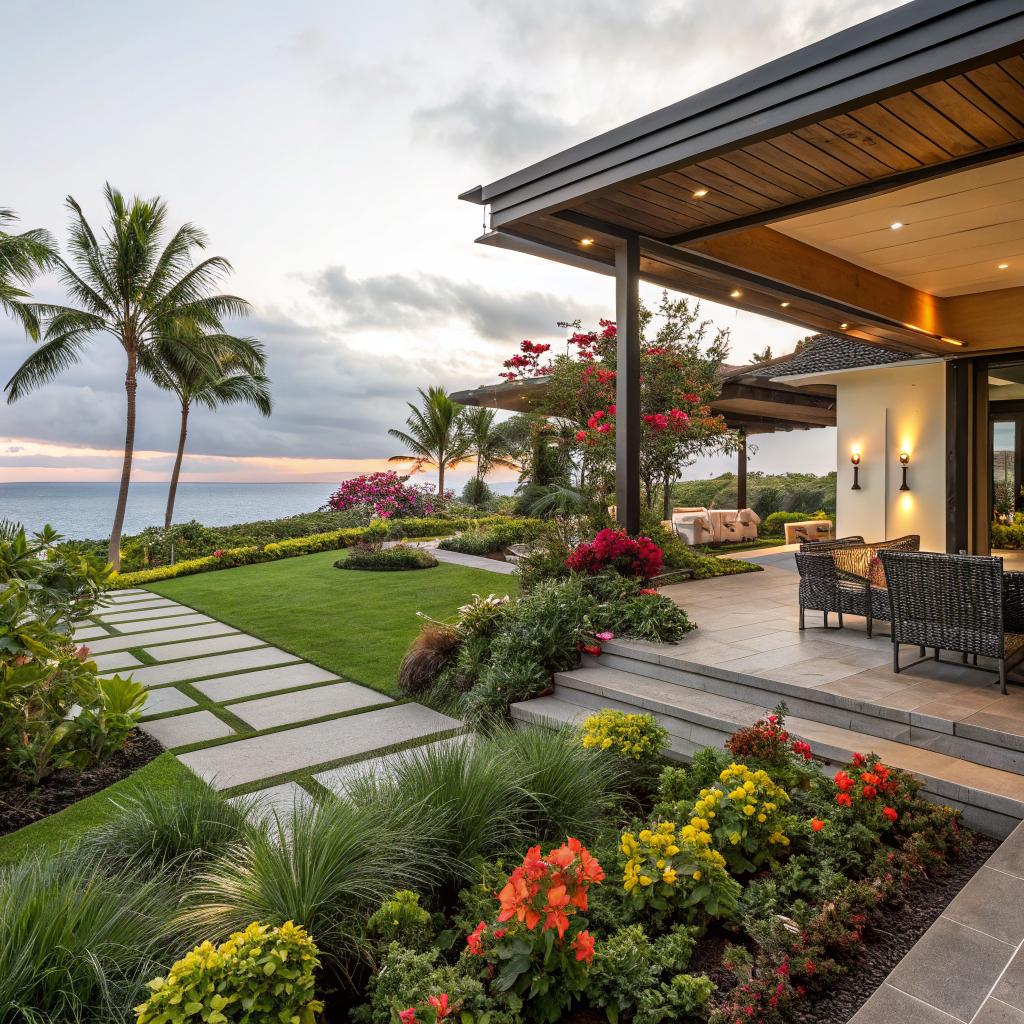
So, you are trying to figure out how Oahu landscaping services actually elevate your outdoor space and whether they are worth it if you care about your home, renovation plans, and even your flooring projects. The short answer is that good Oahu landscapers reshape how your yard works, looks, and feels, so your home improvement dollars go further inside and outside.
They do this by working with the island climate, soils, and slope of your lot, then tying your yard into the way you use your house: where you walk, where water flows, where you want shade, and how everything connects to doors, lanais, and interior flooring. A well planned yard protects your foundation, helps keep dirt and moisture off your floors, improves comfort, and adds real resale value. A rushed DIY lawn usually does none of that.
- Professional landscaping in Oahu is about water, shade, and soil control, not just plants.
- Your outdoor design should match your flooring, doors, and traffic paths inside the home.
- Local pros know which plants survive salt, wind, and sun without constant repairs.
- Smart grading and drainage protect your foundation, patios, and indoor flooring.
- Outdoor spaces can raise resale value and reduce long term maintenance costs.
Oahu landscaping services that understand both design and construction can turn a plain yard into something close to an extra room, which matters if you are already spending money on new floors or a remodel inside the house.
How Oahu’s climate changes the whole landscaping game
If you live on Oahu, you already know the weather is not gentle on exterior surfaces. Sun is strong. Rain can be short but heavy. Some areas are very dry, others stay damp. Add salt air, trade winds, and sloped lots, and your yard is always in motion, even if you ignore it.
Many people underestimate how much this affects the inside of the home too. For example:
- Bad drainage outside often shows up first as hairline cracks near baseboards or tile.
- Loose soil near doors tracks inside and slowly scratches hardwood, vinyl, or tile finishes.
- Standing water close to a slab can push humidity up inside, which flooring really hates.
So when a pro comes out to design your yard, they are not just thinking about where to place a palm tree. They are looking at:
- How water runs during a storm
- Where roots might grow near pipes or footings
- What kind of soil sits next to your foundation and patios
- Wind exposure on lanais and entryways
- The sun pattern through the day and through the year
Good landscaping is as much about controlling water, roots, and foot traffic as it is about plants and views.
If your goal is a long lasting floor or a clean entryway, these details matter more than picking a pretty flower.
Connecting your outdoor design to your flooring and interior renovation
This is where many homeowners stop too early. They redo their floors or remodel a kitchen, but leave the yard as an afterthought. Later they realize something simple: the outside keeps working against the inside.
Think about your main entry. If there is no clear outdoor path, no planting that directs people, and no transition zone, you tend to bring in:
- More dirt and sand on shoes
- More water on rainy days
- More UV light bouncing in from hard surfaces
All of that slowly wears down flooring and finishes.
Creating an “outdoor foyer” that protects your floors
Many Oahu landscapers will design what is basically an outdoor foyer without calling it that. The idea is to have a short “buffer zone” before the door.
This can be:
- A paved walkway that is level and easy to walk on
- A small covered area or pergola that slows people down
- Texture changes underfoot to knock dirt off shoes
- Low planting that visually frames the entry, so people stick to the path
This little area helps your indoor flooring more than a fancy doormat ever will. It reduces grit on hardwood and sand on tile. It also makes it easier to add a built in shoe storage area just inside, because the exterior already suggests “pause here before going inside.”
Matching outdoor hard surfaces with indoor flooring
You do not have to match them perfectly. In fact, that can feel forced. But it helps a lot when the tone and texture flow in a simple, calm way.
For example:
| Indoor Flooring | Outdoor Surface That Works Well With It | Why It Works |
|---|---|---|
| Light porcelain tile | Light pavers or concrete with a subtle broom finish | Reduces glare, keeps a similar brightness, but adds grip |
| Medium tone engineered wood | Natural stone or darker concrete with warm undertones | Creates a soft contrast that feels connected, not harsh |
| Luxury vinyl plank in gray tones | Cool-toned pavers or exposed aggregate | Maintains a modern feel and hides outdoor dirt better |
| Polished concrete interior | Stamped or lightly textured exterior concrete | Feels like a continuation of the same idea, with more traction |
When a landscape designer knows what flooring you have, they can choose outdoor finishes that:
- Do not clash in color
- Make the threshold less visually jarring
- Handle water and heat without becoming slippery
A good rule is that the floor outside should feel like a cousin to the floor inside, not a stranger and not a twin.
Why local knowledge matters so much on Oahu
You can look at photos online and think, “Those plants look nice, I want that.” But if those plants hate salt air or do not like your side of the island, you are signing up for constant replacements.
Local pros bring a few key things:
- Experience with microclimates: windward vs leeward, wetter valleys vs dry slopes
- Understanding of which plants become invasive and which stay in control
- Awareness of water restrictions and irrigation costs
- Familiarity with building codes for retaining walls, fences, and grade changes
And that last part matters for your structure and floors. For example, a poorly built retaining wall can shift and send water toward your foundation. That will not show up as a problem on day one. It might show up years later as moisture issues, floor movement, or stubborn door frames.
Realistic plant choices that look good all year
On Oahu, the goal is often to have a yard that can handle:
- Salt spray near the coast
- High sun exposure in open areas
- Trade winds that stress weak plants
- Short, heavy rain events that cause runoff
Pros who work here all the time already know which plants can handle this and which only look nice in photos.
They might suggest:
- Drought tolerant groundcovers instead of large lawn areas
- Plants with strong root systems where erosion is a risk
- Species that stay more compact so you do not fight constant trimming
- Native or local-friendly plants that support birds and insects
If that sounds a bit boring at first, keep in mind that a stable, low drama yard means fewer surprises that can harm your deck, fence, or foundation.
How Oahu landscaping services reshape your daily routine
Let us get more practical. What changes when a professional redesigns your yard?
1. Walking paths that make sense
Think about how you move around your property:
- From the driveway to the front door
- From the kitchen to the grill
- From the living room to the yard where kids or pets play
- From the back door to the trash area or side gate
If there is no clear path, people create their own. Those “desire lines” usually cut across grass, soft soil, and areas that turn muddy in the rain.
Over time that means:
- More dirt on kitchen and hall floors
- Worn patches in the yard that look messy
- Potential tripping hazards where the ground is uneven
Landscapers fix that by setting hard surfaces where you already walk anyway. They line up paths with doors, stairs, and sightlines.
The best yard paths do not feel like a design statement; they just quietly match the way you already live.
2. Shade and wind control that protect your home
Flooring and finishes inside your home suffer under strong UV. A window receives full sun for hours every day, and suddenly one part of your hardwood or vinyl starts fading faster.
Outside shade can help with that. Strategic trees, trellises, or pergolas can:
- Block harsh afternoon sun on big glass doors
- Reduce heat on patios and lanais, making them more usable
- Cut glare that bounces into the home from bright concrete
At the same time, you do not want too much shade trapped close to exterior walls, because that can invite moisture problems. A pro is usually careful about distance from the house and drafts.
3. Outdoor spaces that extend your usable square footage
This is where value comes in. On an island where space is limited, a well designed lanai, seating area, or outdoor kitchen is almost like adding a room.
If you already invested in nice floors and interiors, having a great patio means you actually enjoy that investment more. You have more viewpoints out of your windows, more ways to host people, and more flexible space.
Common additions that landscapers handle or coordinate:
- Paver or stone patios
- Outdoor kitchens or grilling stations with proper footing
- Fire pit areas with safe clearances
- Low walls that also serve as seating
- Lighting for steps and seating zones
Nothing here is magic. But when it is planned as a whole, the outside starts to feel intentional instead of random.
Drainage, grading, and why your foundation cares
Many homeowners are bored by this topic, which is fair, but this is where money is either saved or wasted.
Water wants to move. On Oahu, when heavy rain hits, your yard becomes proof of that. If the ground slopes toward your house or holds water near it, you should pay attention even if there is no leak yet.
Professional Oahu landscapers will usually:
- Check the slope of soil away from your structure
- Look for areas where water pools after rain
- Study how downspouts release water
- Plan swales, drains, or dry creek beds to guide flow
You might feel tempted to skip this part to save money and just focus on “pretty things.” That usually backfires.
Here is a simple way to link this to your flooring project:
| Outdoor Issue | Common Indoor Symptom Over Time | How Landscaping Can Help |
|---|---|---|
| Soil sloping toward the house | Cracked grout, warped baseboards, musty smell on lower level | Regrading soil, adding swales or drains, redirecting runoff |
| Downspouts dumping near foundation | Soft or hollow spots in flooring near exterior walls | Extending downspouts, installing splash blocks or underground drains |
| Heavy foot traffic through wet or muddy areas | Scratched hardwood or vinyl near doors, frequent mopping | Adding hard paths, stepping stones, or gravel walks |
| Exposed roots or eroded slopes | Movement or cracks in exterior slabs, stress on retaining walls | Retaining structures, root-friendly plantings, erosion control |
This is one of those times where you might disagree and say, “I just wanted a nice yard, not a construction project.” That feeling is understandable, but water does not care how you feel. It will take the cheapest path, every time. Landscaping that ignores water usually leads to repair work later.
Maintenance: what changes when pros set the foundation
Landscaping is not a one-time event. Even the best design will need trimming, cleaning, and the occasional plant replacement. The point of hiring good people is not to avoid all work forever. It is to avoid constant fighting with your yard.
Less guesswork, fewer random purchases
Without a plan, many people wander through plant nurseries and buy things one at a time. A shrub here, a palm there, some random groundcover. After a few years, the yard feels messy and patchy.
A professional setup gives you:
- A plant palette that fits your sun and soil
- Clear bed lines that are easy to edge and mow around
- Irrigation that matches plant needs instead of soaking everything equally
- Hard surfaces in the right places so mowing takes less time
Over time, that means you are spending your maintenance hours on predictable tasks, not trying to fix one emergency after another.
Protecting decks, fences, and outdoor flooring
If you have wood decks, composite boards, or tiled lanais, the surrounding plants matter more than people think.
Problems that show up when landscaping is not planned:
- Vines attaching to railings and trapping moisture
- Splashing soil staining deck boards and pavers
- Tree litter building up in corners and causing algae or mold
- Roots lifting pavers or cracking small slabs
Pros avoid these by:
- Leaving enough space between plant beds and structures
- Choosing species that drop less sticky or staining debris near seating areas
- Setting hard edges to keep mulch off decks and paths
- Placing trees far enough from paving to reduce root issues
This all sounds very tidy, but it is not about perfection. It is about reducing friction so you can actually enjoy that deck or lanai instead of constantly scrubbing or re-leveling it.
Design styles that actually work on Oahu
You might have a style in mind from magazines or social media, so let us talk about what tends to work well in this climate and what starts looking tired quickly.
Clean modern with warm touches
A lot of Oahu homes, especially those going through renovation, lean toward modern interiors: smooth flooring, lighter walls, simple lines.
Outside, that often pairs well with:
- Simple concrete or paver patios, not too busy in pattern
- Groups of plants repeated in a rhythm, instead of one of everything
- Plenty of green foliage with a few controlled color spots
- Low, linear planters or retaining walls
The risk with modern design is going too cold or lifeless. A good landscaper will usually add warmth through:
- Wood accents like benches or privacy screens
- Soft groundcovers between pavers
- Subtle lighting that adds a glow at night
Relaxed tropical without chaos
Many people move to Oahu expecting a lush tropical yard, then realize they do not want a jungle to maintain.
A balanced approach might feature:
- Layered planting: taller backdrop trees, mid-height shrubs, low groundcovers
- Curved bedlines that are still easy to mow and edge
- Accent plants like ti, plumeria, or hibiscus grouped instead of scattered
- Simple lawn areas only where you actually use them
Too many different plants can feel busy and hard to maintain. Pros often repeat the same few species along paths or fences to create a rhythm. Your eyes and your garden tools both appreciate that.
Small yards and courtyards
Some Oahu properties do not have huge yards. That is fine. In small spaces, design choices matter even more.
A few strategies that work well:
- Use vertical space: trellises, wall planters, narrow trees
- Scale furniture and features to avoid crowding
- Choose flooring that visually enlarges the area, like larger pavers
- Integrate storage benches or built-in seating to save room
When inside flooring flows visually through big sliders to a small patio, that patio can feel much larger. A clean, well-planned small yard can often feel better than a larger, messy one.
Budgeting: where the money tends to go and how to think about it
Cost is usually the point where people hesitate. They might wonder if they should just seed some grass and skip the rest. Sometimes that makes sense, but very often it does not, especially if the home itself is already getting upgrades.
Here are the areas that tend to drive costs:
- Hardscapes: patios, walls, steps, and paths
- Drainage work and grading
- Irrigation systems
- Lighting
- Planting, especially larger specimen trees or palms
One way to look at it is to connect each piece to something you care about. For example:
- Patios and paths: comfort and daily use
- Drainage and grading: protecting your home and flooring
- Irrigation: long term plant health and less manual watering
- Lighting: safety and usable evenings
- Plantings: beauty, cooling shade, privacy
If your budget is tight, it often makes sense to prioritize:
- Correcting drainage and grading
- Creating main paths and one clear outdoor living area
- Basic irrigation and a core set of plants, leaving room for future additions
This is more practical than spending the whole budget on plants without fixing how water moves or where you will actually sit.
Practical steps if you are planning both flooring and landscaping
If you are renovating floors and outdoor spaces in the same rough time frame, a bit of coordination helps.
Step 1: Decide your main indoor-outdoor connection points
Ask yourself:
- Which doors do you use most: front, back, side, or sliders?
- Where do you imagine sitting outside with a drink or meal?
- Where do kids or pets typically run in and out?
Share this information with both your flooring installer and your landscaper. They can plan thresholds, door sills, and outdoor surfaces with that traffic in mind.
Step 2: Lock in flooring height relative to outdoor surfaces
This is easy to forget. You want:
- Enough step down from inside to outside for rain protection
- No awkward, tiny steps that are easy to trip on
- Surface transitions that feel natural when you step across them
Landscapers often adjust soil and set patio heights. Flooring teams handle subfloors and finished heights. When they talk, you avoid future headaches.
Step 3: Choose materials that can share a similar tone or temperature
If your interior floor is warm and natural, maybe avoid very cool, stark gray concrete outside. If your interior is ultra-modern and cool, you can still warm things outside with wood tones or planting, but huge color clashes can feel jarring.
A quick way to test: hold sample pieces next to each other in natural daylight, not in a showroom. See how they look at the actual times of day you use the space.
Common mistakes Oahu homeowners make with their yards
Here are a few patterns that come up a lot:
- Planting too close to the house, then fighting moisture or root issues later
- Choosing plants that need far more water than they expected
- Installing pavers or stepping stones without proper base prep, leading to sinking
- Skipping lighting, so the yard is rarely used at night
- Trying to copy mainland yard designs that do not fit Oahu’s climate
If you are honest, you might recognize at least one of these in your own yard already. That is normal. The point of bringing in experienced people is to stop repeating the same pattern.
How to tell if your outdoor space is “working” for you
One of the simplest tests for a good landscape is this question: are you using it?
Ask yourself:
- Do you sit outside at least a few times a week because you want to, not just for chores?
- Do guests naturally follow clear paths and know where to sit?
- Does your yard feel like an extension of your living space, or like a separate, slightly annoying project?
- Are you spending more time enjoying than fixing surprises?
If the answer to most of those is no, there is room for improvement, even if the yard already looks decent in photos.
Quick Q&A to wrap things up
Is professional landscaping on Oahu really worth it if my budget is tight?
If your home is small or mid-range, you might feel like landscaping is a luxury. It does not have to be. You can start with a focused project: fix drainage issues around the house, build one good path, and improve one outdoor living spot. That alone can protect your floors, reduce mud, and give you a comfortable area to use. You can add more plants and details over time.
Should I finish my flooring before or after the yard work?
There is no single right order, but generally, it helps to have at least the rough outdoor grading and layout planned before finalizing interior floor heights and door thresholds. You do not want landscapers bringing heavy equipment over brand new, delicate flooring. So plan together, and schedule the messier exterior work before the final interior finishes when possible.
What is the biggest hidden benefit of good landscaping for homeowners?
Many people expect better looks and maybe higher resale value. Those are real. The quiet benefit is lower stress. Fewer drainage scares during storms, less dirt tracked inside, and fewer awkward trips across uneven ground. Your home just works better day to day, and that does more for your quality of life than a lot of showy upgrades.
What is the one outdoor issue around your home that bothers you the most right now, and how might a change in your yard layout fix it instead of just covering it up?