
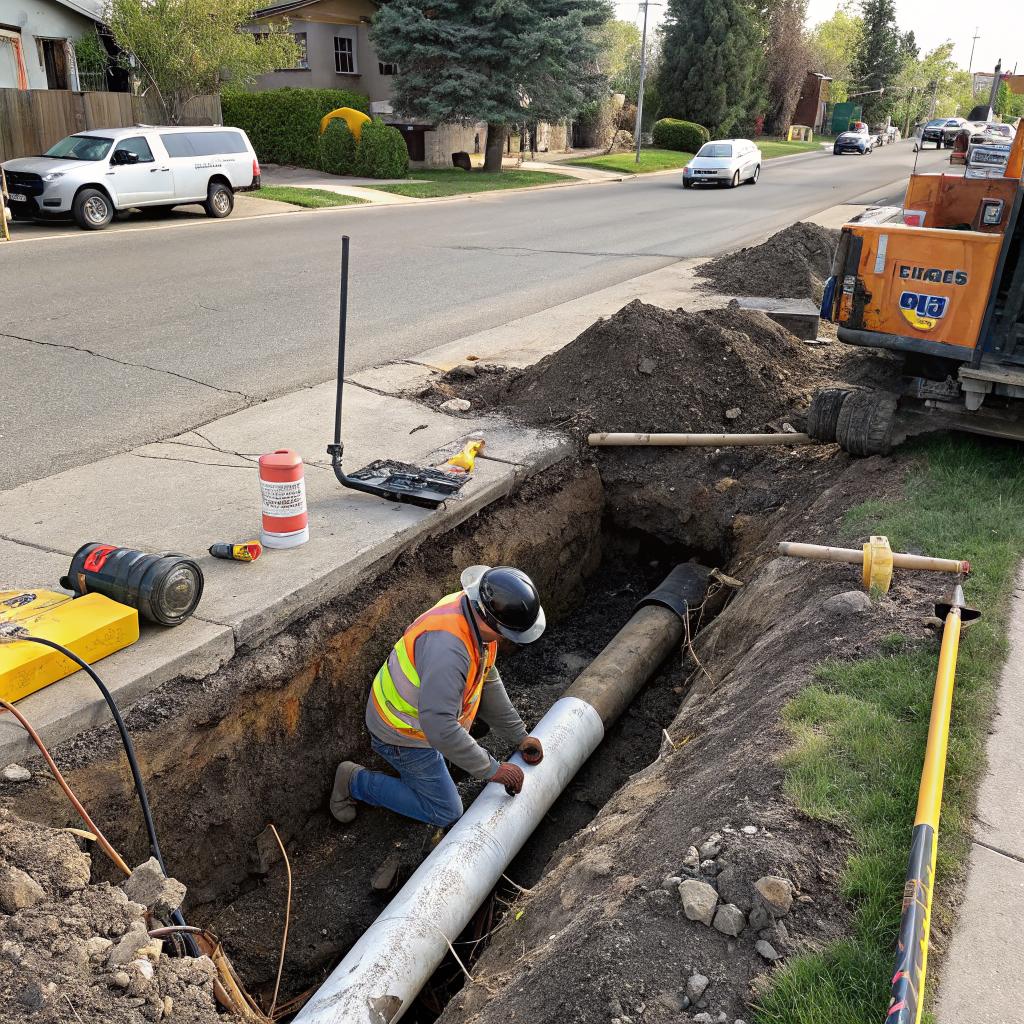
So, you are trying to figure out how sewer line repair in Arvada fits into your remodel, and what you should know before you start tearing up floors or planning that new bathroom. The short answer is that you need to check the condition of your sewer line early, budget for possible repair or replacement, and coordinate plumbing work with any flooring or layout changes so you do not redo work twice.
If you are planning a remodel, especially anything that adds or moves bathrooms, laundry, or a kitchen, the sewer line is not a side detail. It is the backbone that makes all that new tile, LVP, or hardwood actually usable. A bad line under a brand new floor can ruin your project, and I mean that literally. Sewage backups do not care how much you spent on your plank flooring. So if you are working in Arvada, with its mix of older homes, clay or cast iron pipes, and tricky soil, you need a basic plan for the sewer side of things before you finalize design boards or flooring samples.
Here are the core things to keep in mind before you get deeper into your plans.
- Get the sewer line inspected with a camera before major remodeling.
- Know the age and material of the existing pipe.
- Plan the plumbing layout before you choose final flooring.
- Budget for possible repair or replacement if your home is older.
- Coordinate schedules between your plumber and your flooring contractor.
- Understand local Arvada conditions like soil movement, tree roots, and code.
- Decide early between spot repair, trenchless methods, or full replacement.
- Protect finished floors from heavy equipment, water, and debris.
You do not have to become a plumber. But you should have a clear map of what is happening under your floors before you cover them with thousands of dollars of materials.
Why sewer work matters so much for remodelers
Remodelers, both homeowners and contractors, often focus on what you see: cabinets, tile, baseboards, trim. Sewer lines sit hidden underground, so they are easy to ignore until they fail.
For readers who care about flooring, this is where it connects directly to your world. A leaking or sagging sewer line can:
- Soak subfloors from below.
- Cause slab movement that cracks tile or grout.
- Create moisture that warps hardwood or makes LVP buckle.
- Force you to cut into finished floors to access the pipe.
If you remodel without checking the sewer line, you risk paying for the same floor twice: once to install it, and again to repair it after a backup or collapse.
And in parts of Arvada with older clay or cast iron pipes, that risk is not just theoretical. I have seen projects where a brand new basement finish had to be ripped out just months later because of a sewer collapse that could have been seen on a pre-remodel camera inspection.
Start with a camera inspection before you touch the floors
So, you are trying to plan new flooring and maybe move some fixtures, and you are wondering where sewer line repair fits into that. The answer is: right at the beginning.
You should get a camera inspection done before you:
- Finish a basement.
- Move or add bathrooms.
- Convert a garage or add an ADU.
- Spend serious money on new flooring over a slab or old subfloor.
For Arvada homeowners and contractors, a basic sewer camera inspection is relatively inexpensive compared with the rest of a remodel. You get:
- A video of the line from the house to the main.
- The pipe material (often clay, cast iron, or PVC).
- Any low spots where water sits.
- Root intrusion or cracks.
- Offsets at joints or previous poor repairs.
At this early stage, you do not need to know every plumbing term. You just need to ask the plumber to tell you, in plain language, if the line looks healthy enough to support the new bathrooms, laundry, or kitchen you have in mind.
If you want a local example, you can look into sewer line repair Arvada options and see what kind of camera inspections are common before major projects.
Know your pipe material and age
Pipe material matters more than many remodelers think. It sets the risk level for future problems.
Here is a simple comparison that applies to a lot of Arvada housing stock.
| Pipe material | Typical era in Arvada homes | Common problems | What remodelers should think about |
|---|---|---|---|
| Clay | Older homes, mid-1900s | Root intrusion, cracked joints, offsets | High risk with trees; plan for repair or replacement during major remodels |
| Cast iron | Mid to late 1900s | Rust, scaling, internal narrowing, eventual failure | Camera inspection is crucial; may be nearing end of life |
| Orangeburg (fiber pipe) | Some mid-century installs | Collapses, deformation | Often needs full replacement, not just patching |
| PVC | Newer work and replacements | Occasional bad joints or low spots | Usually fine, but the layout and slope still matter |
If you are working on an older Arvada home, especially one with big mature trees, assume that clay or Orangeburg might be present until proven otherwise. That does not mean every old pipe is failing, but the risk is higher.
For larger remodels, ask yourself a blunt question: “If this sewer line fails 2 years after I finish, can I live with tearing out my new floor to fix it?”
If the answer is no, that is a sign that you should seriously consider proactive repair or replacement when the house is already under construction.
How sewer layout affects your remodel design
You might be looking at your floor plan and thinking only in terms of walls and furniture. The sewer line quietly shapes more of your layout than you might expect.
Fixture locations and slope
Sewer lines need consistent slope for gravity to do the work. In practice, this means:
- New bathrooms or laundry rooms that are far from the main line might need more digging, more pipe, or different routing.
- Basement bathrooms often need a pump if the main sewer is higher than the basement slab, or careful planning if gravity will work.
- Low spots in long runs under a slab can trap waste and lead to clogs down the line.
This is where coordination with flooring comes in. If the plumber suggests rerouting a main line, ask how that will intersect with:
- Joist directions if you have a framed floor.
- Slab cuts if you are on concrete.
- Transitions between tile, LVP, and other materials.
Sometimes a small adjustment to the bathroom layout saves a huge amount of digging and patching. Perhaps moving a toilet 12 inches closer to the main stack or aligning a shower drain over an accessible joist bay avoids cutting into a wider area of floor.
Subfloor and underlayment choices
Sewer work can also affect what is under your finished floor. For example:
- If the main sewer line needs to be re-routed in a basement slab, you will be cutting channels in the concrete. That patch area may behave a bit differently later.
- For framed floors, if you sister joists or adjust framing while running new pipe, you may need to adjust the subfloor or underlayment to keep the floor flat for tile.
- On projects that use large-format tile, even minor unevenness from trenching and patching can cause lippage.
So when your plumber talks about cutting and patching, connect that with how your flooring installer will get everything flat again.
Choosing between repair methods during a remodel
If the inspection shows problems, you are usually looking at three broad paths:
- Spot repairs at bad sections.
- Trenchless methods like lining or pipe bursting.
- Full replacement of the line.
Each one affects your remodel and flooring choices differently.
Spot repairs
Spot repair is where the plumber cuts out only the failed section and replaces it. It sounds simple, and often it is, but in a remodel context you want to ask a few questions.
- Are there multiple weak spots that might fail later?
- Does the spot repair require cutting through areas that will soon have finished floors?
- Is the repair near a foundation wall or under a structural area?
If a single small defect is near an unfinished area, spot repair can work well. If the camera shows several areas that look marginal, patching only one may be false savings, especially before an expensive remodel.
Trenchless repair and flooring
Trenchless methods can sound ideal. No full yard trench, less mess. For remodelers, they are often appealing because you want to avoid ripping up a brand new driveway or yard.
The catch is that access points still matter. A liner or pipe bursting job needs places to start and end the work. Those access pits may be:
- In the yard.
- In a basement slab.
- Near the foundation wall.
If you plan flooring over a basement slab, timing is critical. You want to:
- Complete trenchless work and any pits.
- Patch and let the slab cure or settle.
- Then install your flooring.
If a contractor suggests trenchless work after the floors are in, ask hard questions about where access pits will go and whether any of your new surfaces are at risk.
Full replacement during a major remodel
On big remodels, especially in older Arvada neighborhoods, full replacement can actually be more predictable. It hurts the budget, yes, but you get a new line with a known life span and modern materials.
From a remodeler’s view, full replacement has a few advantages:
- You can coordinate trenching with other site work.
- You can solve slope issues that were baked into the original construction.
- You reduce the risk of surprise failures during or after the project.
For flooring-focused work, a new sewer line under a carefully prepared slab or subfloor means you are not putting your high-end surfaces on top of a failing system.
Timing: when to do sewer work during a remodel
Think about timing in three main phases.
Phase 1: Before demolition or layout finalization
This is where you schedule:
- Camera inspection.
- Basic layout conversations with the plumber.
- Rough budget range for any sewer work.
At this stage, you are not cutting anything yet. You are using information to adjust your plan. Sometimes a single sewer issue changes where you put a bathroom or how far you extend a new living space.
Phase 2: Rough-in period
During rough-in, structural and under-floor work happens. This is the best time for:
- Replacing or repairing any sections of sewer under future finished floors.
- Rerouting lines for new fixtures.
- Cutting and patching slabs or subfloors if needed.
From a flooring standpoint, this is when you want any messy or heavy work that could crack tile or scratch planks to happen. Pay attention to:
- Moisture levels after concrete patches.
- Flatness of the floor in tile areas.
- Protection for any partially installed flooring nearby.
Phase 3: After rough inspection but before finishes
Once the rough plumbing passes inspection, you can start insulation, drywall, and then flooring. It can be tempting to rush here, but give any slab repairs enough time. Concrete that looks dry on the surface may still have moisture inside that can affect flooring adhesives.
How sewer problems show up during remodeling
Sometimes you discover sewer issues only after you start opening things up. Here are common signs that hint at trouble.
- Old repairs or strange patches in the slab, especially near the main stack or bathrooms.
- Sections of old cast iron or clay pipe inside the house that look heavily corroded.
- Persistent sewage smell in one area, even after cleaning drains.
- Floors that sag or feel soft near plumbing walls.
For flooring-focused projects, one red flag is unexpected moisture when you pull up old floor coverings. If you see:
- Dark or damp spots in the subfloor around toilets, tubs, or main stacks.
- Efflorescence (white powder) on a basement slab near a drain line.
it might not only be a surface leak. It could be a sign of deeper issues.
Protecting existing or new flooring during sewer work
Sometimes you need sewer work in a house that already has finished floors, or you have staging where part of the floor is done and part is not. Then the goal is protecting what you have.
Practical steps that help:
- Use heavy, non-slip floor protection panels in traffic paths for plumbers and equipment.
- Set a clear path from the entry to the work area that avoids delicate floors when possible.
- Cover return air vents so dust and debris from cutting concrete do not spread everywhere.
- Keep wet cutting and mixing outside when possible to avoid splatter.
If you are the one planning the workflow, resist the urge to install your most fragile flooring early. For example, install sheet vinyl or LVP in heavy traffic utility areas later in the schedule, after sewer and other rough work is finished.
Budgeting for sewer work in Arvada remodels
You cannot price exact jobs in a general article like this, but you can build a realistic mindset.
Set a “sewer contingency” for older homes
For homes older than, say, 40 or 50 years, with original sewer lines, it is simply smart to set aside a portion of your remodel budget for possible sewer work. Not because it is guaranteed, but because the odds are not low.
You might think, “I would rather not set aside money for something that might not happen.” That is understandable. But then think about the opposite case: you spend nearly all your funds on visible finishes, and then a sewer collapse appears once you start using the new bathroom.
A small buffer for sewer work can protect your flooring budget. It lets you solve hidden issues without sacrificing the quality of what you walk on every day.
Compare short-term savings with long-term risk
Many remodelers, both homeowners and contractors, feel pressure to keep the initial quote low. That sometimes leads to deferring sewer work even when the camera shows concerning sections.
Ask yourself:
- How likely is future failure based on the inspection?
- What finished areas would be at risk if the line fails?
- Would I be able to live with cutting the new tile or hardwood if that happens?
If a failure would mean tearing out a high-end shower or a full main-floor floor system, then the value of proactive repair is higher than it looks on paper.
Local Arvada factors remodelers should think about
Every region has its own quirks. Arvada is no different.
Soil movement and settlement
Front Range soil can move with moisture and freeze-thaw cycles. Over time, this can create low spots or offsets in sewer lines. For remodelers, this means:
- A line that looks “just a bit off” on camera might keep getting worse.
- Previous small repairs may have been band-aids for movement, not full fixes.
- Floors over problematic soil may also show cracks or unevenness.
You do not need to be a geotechnical expert, but if you see several signs of movement in the structure, take sewer issues more seriously.
Tree roots and older neighborhoods
In areas with mature trees, roots are a frequent reason for sewer issues. Clay pipe with joints is especially vulnerable. When planning a remodel:
- Note where large trees are in relation to the sewer path.
- Ask the plumber if the camera shows root intrusion at multiple joints.
- Think about future root growth, not just current blockages.
If the line is full of roots, repeated cleaning is a temporary fix. It is like sanding down a rotten board without replacing it. That can be acceptable if you are not investing heavily in finishes, but for big remodels it may not be wise.
Code considerations and remodel permits
When you pull remodel permits that include plumbing, inspectors care about:
- Proper venting and slope for new lines.
- Correct materials and transition fittings.
- Cleanouts with proper access.
For flooring, cleanout placement matters too. You do not want a big, awkward cap in the middle of a nice tile floor if it can be tucked into a closet or mechanical room instead. Think about serviceability while you still have layout flexibility.
How all this connects to flooring choices
If your main focus is flooring, you might wonder whether all this sewer talk is a distraction. It is not. The two are more linked than they appear.
Moisture risk under different floor types
Here is a simple way to think about risk levels if a sewer leak happens under or near the floor.
| Floor type | How it reacts to sewer leaks or moisture | Repair impact |
|---|---|---|
| Solid hardwood | Cups, warps, stains deeply | Frequently needs full replacement of affected sections |
| Engineered hardwood | Delamination, swelling of layers | Sections often not repairable once saturated |
| Laminate | Edges swell and stay damaged | Usually needs plank replacement in affected area |
| LVP / LVT | Holds up better to moisture, but subfloor may still suffer | Easier to pull and reinstall, but subfloor repairs add cost |
| Ceramic / porcelain tile | Tile itself is durable, but slab or backer can crack or saturate | Repairs can be messy and labor-heavy if beneath tile |
If you are installing one of the more moisture-sensitive surfaces, the value of a solid sewer line goes up. With tile, the main worry is the cost and mess of demolition to access the failed line.
Subfloor structure and access
On framed floors, some remodelers like to use thick underlayments, heating mats, and multiple layers of subfloor to get a rock-solid surface for tile. That can work well. Just remember it also:
- Makes future access from above harder.
- Raises the floor height, which affects where you can reasonably cut later.
So again, better to fix sewer issues first, while access is easy and layers are fewer.
Practical checks you can do on every project
Here is a simple checklist you can use on each remodel involving plumbing and flooring. Nothing fancy, just practical steps.
- Ask: “How old is the house and sewer line?”
- Schedule a camera inspection if the line is older or unknown.
- Review the video with the plumber and ask plain-language questions.
- Decide if any sections under future finished areas need repair or replacement.
- Plan fixture locations in a way that respects existing or new sewer layout.
- Sequence work so sewer and drain rough-in happens before floor prep.
- Verify that slab or subfloor patches are flat and dry before flooring install.
- Protect any finished flooring from tools, traffic, and moisture during plumbing work.
A simple rule: if you are changing floors or adding plumbing fixtures, at least ask the sewer question. Do not assume the old line will quietly support a much busier house.
Common questions remodelers ask about sewer lines
Do I really need a sewer inspection if all my drains “work fine” right now?
You might not, but “working fine” only tells you about today. A camera inspection tells you what the pipe looks like inside. Especially if you are finishing a basement or adding bathrooms, that extra information is valuable. It is not about panic, it is about not being blind.
Can I just handle sewer issues later if they come up?
You can, but later often means more damage because everything is closed up and covered. Fixing a line under bare concrete is cheaper and easier than under finished tile and custom cabinetry. The more finished the space, the more future repairs cost in both money and frustration.
Is trenchless repair always better for remodels?
Not always. Trenchless repair is helpful in many cases, especially where you want to protect a yard or driveway, but it depends on line condition, layout, and access points. If the pipe is completely collapsed in sections, or if the layout is poor, traditional replacement may still be the better fix. Ask the plumber to explain tradeoffs, not just the method they prefer.
How do I balance my flooring budget with potential sewer costs?
One approach is to decide your must-haves for flooring, then hold back a percentage of the overall budget until after the sewer inspection. If the line is in good shape, you can release that money into better finishes. If not, you already have a place to pull from without gutting your floor choices.
What is one thing I should do before my next remodel that involves plumbing and flooring?
Schedule a sewer camera inspection early, before you finalize layout and flooring selections. And when you watch the video, do not be shy about asking “Is this line strong enough for the next 20 to 30 years of use after I redo this space?” If the answer feels hesitant, it is worth pausing and planning around that before you move ahead.