
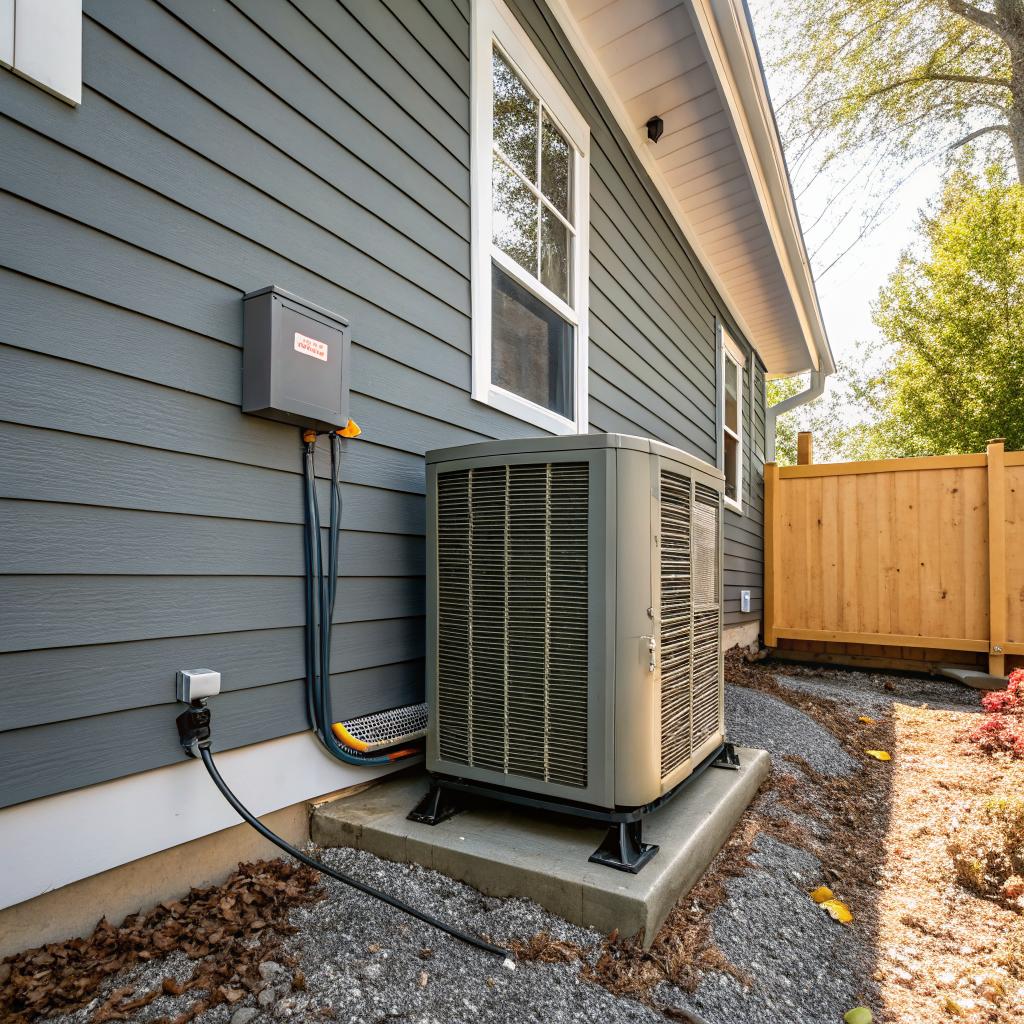
So, you are trying to figure out how AC replacement in Brighton, MI fits into your home renovation project, and how it connects with the rest of your upgrades like new flooring and layout changes. The short answer is that you should plan your AC replacement early, size it correctly for your new space, and coordinate it with electrical, insulation, and flooring work so everything lines up and you do not tear things up twice. If you already know you need new equipment, talking to a local specialist like AC Replacement Brighton MI early in the planning stage usually saves money and headaches.
Think of your renovation as one connected system instead of a set of random projects. When you move walls, change flooring, add insulation, or finish a basement, your cooling needs change too. That affects what size AC you need, how ducts run, where returns go, and even where vents land in finished floors. If you do not think about that until after the drywall is up and the flooring is installed, you can end up cutting new holes, re-routing ducts, and spending more than you planned.
- Plan AC replacement during design, not at the end
- Match AC size to your new layout and insulation, not your old one
- Coordinate ductwork and vents with flooring plans and ceiling layouts
- Use proper load calculations, not just square footage guesses
- Budget for electrical upgrades if your panel is older
- Decide early where you want equipment and outdoor units to sit
- Consider air quality, humidity control, and noise, not just temperature
Why AC planning matters in a renovation
People often leave heating and cooling until late in a renovation. It feels like a “mechanical thing” that happens after all the fun design choices. That is usually a mistake.
Once you move walls, add a second floor, finish a basement, or swap carpet for hardwood, your house behaves differently. Rooms might heat up faster from sun, or cool down slower because airflow changed. What used to be “fine” can feel uneven or noisy after the remodel.
AC that worked before the remodel can start to feel weak, loud, or uneven once you change the way air moves and how heat builds up in different rooms.
If you are already ripping up floors, opening ceilings, and revising electrical, this is the best time to get the AC right. Ducts can be moved more cleanly, new returns can be added, and vents can be placed so they do not fight with furniture or floor registers.
When in your renovation should you replace the AC?
The timing is more practical than people think. You do not want your AC installation crew walking over your new flooring with heavy tools if you can avoid it.
Rough order of work
Every project is a bit different, but a typical order that keeps things simpler looks like this:
- Design and planning (layout, flooring, insulation, window upgrades)
- HVAC design and load calculations based on the new plan
- Demo of walls, ceilings, old flooring if needed
- Framing, new walls, and any structural changes
- Rough electrical and plumbing
- Rough HVAC: ducts, vents, returns, line sets, and equipment locations
- Insulation and air sealing
- Drywall and painting
- Flooring installation
- Final HVAC: set equipment, connect, charge, test, and balance airflow
There is some flexibility, but placing AC replacement roughly in that pattern keeps the messy, noisy work away from your final finishes. The main thing is to make the HVAC plan before drywall and flooring are locked in.
How your new layout affects AC sizing
Many older houses around Brighton have AC units that were sized by guesswork. Someone looked at square footage, picked a tonnage from a chart, and that was it. When you renovate, that old rule of thumb becomes even less helpful.
Here is what changes cooling needs during a renovation:
- New windows or doors, especially larger glass areas
- Better insulation or air sealing
- Wall removals or new open concept spaces
- Finished attics or basements
- New rooms above garages
- Different flooring that changes how heat feels underfoot
All of those change how much heat your AC has to remove. So it makes sense to do a proper load calculation on the future design, not the current house.
The right AC size comes from how your house is built, how it is insulated, and how the sun hits it, not just the square footage number on the listing.
Rules of thumb vs real calculations
A real load calculation looks at things like:
- Wall assembly and insulation levels
- Window type, size, and direction
- Roof color and attic venting
- Number of people in the home
- Appliance and lighting heat
- Air leakage
It sounds like a lot, but most good HVAC companies do this with software in under an hour once they have your renovation specs. It leads to smaller, more accurate systems more often than not.
How AC ties in with flooring and layout changes
Since this is going on a renovation and flooring site, let us be honest about something. AC and flooring have a bit of a love hate relationship.
Vents, registers, and returns can hurt or help your layout. When you install new flooring, you are often cutting in new floor registers or changing old ones. That is the best time to fix awkward vent locations that blow on your face at the sofa or undercut a cabinet.
Common AC and flooring conflicts
I have seen these problems quite a few times:
- Supply vents in the wrong place after a wall is removed, blowing into open space instead of the occupied area
- Floor registers right where you want an area rug or built in shelving
- Returns only in hallways, leaving bedrooms stuffy
- Vents near large floor to ceiling windows that cause condensation or temperature swings
- Half covered vents after new floating floors raise the floor height slightly
Instead of working around them again, use your renovation to fix the layout:
- Shift vents to align with the new furniture plan
- Add more returns in larger rooms for better air flow
- Coordinate vent trims with your new flooring type and color
When you are planning new flooring, treat vent locations as part of the design, not an afterthought you cut around at the last minute.
Flooring type and comfort
Different floors affect how you feel at a given thermostat setting. That surprises people sometimes.
| Flooring Type | How it usually feels with AC | What to keep in mind |
|---|---|---|
| Hardwood | Cooler underfoot, but comfortable | Cold supply air near long runs of glass can feel drafty on bare feet |
| Luxury vinyl plank | Moderately cool | Works well, but make sure vents do not blow directly on joints in floating floors |
| Tile | Very cool, especially in basements and baths | Rooms can feel colder than the thermostat reads; vent location matters |
| Carpet | Warmer underfoot | Room may need a slightly lower set point to feel as fresh as a hard surface room |
Is this a reason to change your AC size? Usually not. But it does affect comfort. If you move from wall to wall carpet to large areas of tile or vinyl, you may find your old register placement or airflow balance is no longer ideal.
Single stage, two stage, or variable: what makes sense?
Modern AC units come in three broad types. The naming is not very exciting, but the difference in comfort can be. Especially in a renovated home with different window and insulation patterns.
| Type | How it runs | Pros | Cons |
|---|---|---|---|
| Single stage | On or off, full power | Simple, usually cheaper | More temperature swings, louder, less humidity control |
| Two stage | Low and high power | Better comfort, runs longer at low speed, improved humidity | Higher cost, needs proper sizing |
| Variable speed | Many power levels, adjusts constantly | Most even temperatures, quietest, best humidity control | Highest cost, needs good design and install |
If you are opening up spaces, building large great rooms, or adding big windows, two stage or variable tends to feel more stable through the day. Especially during those hot, humid Michigan stretches.
What is realistic for most Brighton renovations?
I think for many mid sized renovations, a well installed two stage unit hits a good balance. You get better comfort over the old single stage units but without quite the premium of top tier variable systems. That said, in a high end whole house renovation with new windows, insulation, and careful sealing, a variable system can actually be sized smaller and run longer, which helps both comfort and long term operating cost.
Ductwork: keep or replace during renovation?
This is where many projects either jump in cost or save a lot of future trouble.
Existing ductwork in older Brighton homes often has one or more of these issues:
- Undersized or oversized trunks and branches
- Long, sagging flex duct runs
- Poorly sealed joints leaking conditioned air into attics or crawl spaces
- Inconsistent airflow to far rooms
If you are tearing open ceilings or walls anyway, you have a rare chance to fix these without extra drywall repair.
When it makes sense to keep existing ducts
- Ducts are metal, in good condition, and properly sized
- No major layout changes, so room loads are similar
- Static pressure tests come back within recommended ranges
In that case, a good cleaning, sealing, and maybe a few balancing dampers can go a long way.
When it is better to rework ducts
- You are adding or removing major walls
- You are finishing a basement or attic for regular use
- Some rooms are always hot or cold relative to others
- Ducts run through unconditioned attics with little or no insulation
Reworking ducts is not glamorous, and it does eat some budget. But it directly affects how your new space feels. If you have spent a lot on new floors, cabinets, and tile, living with a hot master bedroom or a sticky basement game room tends to get frustrating fast.
Indoor air quality in a renovated home
New finishes, paints, stains, and flooring often off gas more than older ones. At least for a while. If you are also tightening up the house with new windows and insulation, you trap more of that indoors.
So, when you replace your AC during a renovation, you have a few chances to improve indoor air quality at the same time.
Filters and IAQ options
Some practical upgrades to think about:
- Better quality filter cabinet that can take a 4 inch media filter
- Dedicated fresh air intake tied into the system (with proper controls)
- Dehumidification in humid months
- Possibly an ERV or HRV if you are doing a big energy focused renovation
None of these have to be crazy high tech. Even a good filter and balanced humidity make a noticeable difference in comfort and how your new finishes feel over time.
If you are sealing up the house and adding new finishes, think about how fresh air will get in and how you will control humidity, not just temperature.
Electrical and panel considerations
Older homes often have 100 amp panels that are already loaded with kitchen and bath upgrades. A new AC system, especially a larger or more advanced one, can strain that capacity.
What to check with your electrician
- Your current panel size (100 amp vs 150 vs 200)
- Existing large loads like EV chargers, electric ranges, or hot tubs
- Available slots for new breakers
- Wire size to the outdoor unit location
Doing this check at the design stage keeps you from getting to AC install day and hearing that you now need a surprise panel upgrade. Again, if the walls are open, running new lines or upgrading the panel is much simpler and cleaner.
Outdoor unit placement during renovation
Renovations are often a chance to move the outdoor unit to a better spot. Maybe you are building a new deck, or you just want less noise near a bedroom window.
Some simple things to think through:
- How close the unit is to sleeping areas or patios
- Clear airflow around the unit (no tight corners or piles of landscaping)
- Distance to the indoor coil and line set route
- Future access for maintenance and repair
Sometimes I see units tucked behind new privacy fences or buried in shrubs. They look tidy at first, but they run hotter and are a pain to service. A small concrete pad or proper mounting brackets, with clear space around the unit, goes a long way.
Budgeting AC replacement alongside other renovation work
AC replacement is rarely the star of a renovation, but it still takes a solid chunk of the budget. Planning ahead helps you avoid having to cut corners at the end when funds are tight.
Typical cost ranges for AC replacement in a renovation context
These are rough ballpark figures, not quotes, but they can help you plan:
| Scope | What is included | Relative cost level |
|---|---|---|
| Equipment swap only | New condenser and coil, reuse existing ducts and lines, minimal changes | Lowest |
| AC + some duct changes | New equipment, modify ducts in open areas, add or move a few vents | Medium |
| Full HVAC redesign | New equipment, new or majorly reworked ducts, zoning, IAQ upgrades | Highest |
Most active renovations fall in the middle row. The exact number depends on house size, complexity, and how ambitious your comfort goals are.
Coordinating with your GC, HVAC, and flooring contractor
On paper, everything fits nicely into a schedule. In real life, crews overlap, materials arrive late, and someone always has a question about where something should go.
The easiest way to keep AC replacement from turning into a mess is to put the HVAC contractor in the loop with the general contractor and flooring installer early. Not at the last second.
Decisions to settle early
- Final equipment size and locations
- Rough duct layout, including supply and return locations
- Floor register types and sizes so flooring can be cut correctly
- Thermostat locations relative to new walls and windows
You do not need a full engineering drawing for a normal house, but a simple plan sketch with confirmed locations avoids a surprising amount of chaos later.
Signs your existing AC should be replaced during renovation
Sometimes people are on the fence. They have an older AC unit that still runs, and they are tempted to wait. That is not always wrong, but in a renovation context it often makes less sense to keep limping along.
Red flags that point toward replacement
- Unit older than 12 to 15 years
- Uses R-22 refrigerant
- Frequent repairs over the last few summers
- Short cycling or uneven cooling
- Visible rust, corrosion, or coil damage
If two or three of those apply, it is usually more logical to replace now while things are open. Waiting a couple of years might leave you tearing into finished work to pull lines or adjust ducts that you could have handled cleanly during the renovation.
How long AC replacement usually takes in a renovation
This is one of the most common questions. People want to know how much it will disrupt everything else.
Time ranges for common scopes
| Scope of work | Typical time on site |
|---|---|
| Equipment swap only | 1 day |
| New AC + moderate duct changes | 1 to 3 days |
| Full system with extensive duct rework | 3 to 5 days, sometimes split over stages |
On a renovation, that work might be broken into rough in and finish visits, to fit around framing, drywall, and flooring. That is where communication between trades matters more than people expect.
Questions to ask your AC contractor before you start
If you are in Brighton or nearby, you have plenty of options for HVAC companies. Not all will think deeply about renovation impacts though. Some will treat it like a simple replacement and ignore your new layout.
A short list of questions can help you tell who is really paying attention to your project.
- Will you run a load calculation based on the new plans and insulation levels?
- How will you coordinate duct changes with my new floor plan and flooring type?
- Can we review vent and return locations before drywall and floors go in?
- What type of filter cabinet and thermostat are you planning to use?
- What is your plan for protecting finished flooring when you come back for the final set and start up?
If a contractor brushes those off or gives very vague answers, that is not a great sign. Good ones are usually happy to walk through those details, even if briefly.
Common mistakes to avoid with AC replacement during renovation
It might help to see the problems that come up again and again. That way you can avoid them without learning the hard way.
- Picking AC size only from house square footage without a load calculation
- Installing all new finishes, then realizing ducts need to be moved or added
- Placing thermostats on exterior walls or in direct sun
- Leaving all returns in a central hallway instead of adding room returns
- Ignoring how new windows and open layouts affect sunlight and air flow
- Skipping duct sealing and then wondering why some rooms are weak on air
Just avoiding those six points puts you ahead of many similar projects.
Short Q&A to wrap things up
Can I keep my old AC if I am only changing flooring and paint?
If that is truly all you are doing, and the AC is in good shape and sized well, you can. Once you start moving walls, adding insulation, or finishing new spaces, a recheck of size and airflow is smart. Flooring by itself usually does not force a replacement, but it can be a good moment to fix bad vent layouts.
Is a bigger AC better for an open concept renovation?
Not really. A bigger unit will cool the air faster but remove less humidity and cycle on and off more. That can leave rooms sticky and uneven. Better duct design and a two stage or variable unit sized from a proper load calculation are more helpful than just going larger.
Should I replace ducts at the same time as the AC?
Only if they are undersized, damaged, badly laid out, or you are changing the layout enough that air flow patterns will be different. If ducts are solid and test well, keeping them and just sealing and balancing is fine. Renovations give you a good chance to check instead of guessing.
How do I protect my new floors during AC installation?
Ask your HVAC contractor what floor protection they use. Many will bring floor runners or rigid covers. If they do not, you can put down your own temporary runners and insist traffic stays on those. It is not overreacting. Heavy tools and sheet metal can scratch new floors quickly.
What is the one thing I should not skip in AC planning for a renovation?
If I had to pick one, I would say a proper load calculation tied to your new layout and insulation plan. From that, good sizing, duct choices, and equipment options all follow. Skipping that step is where most long term comfort issues start.