
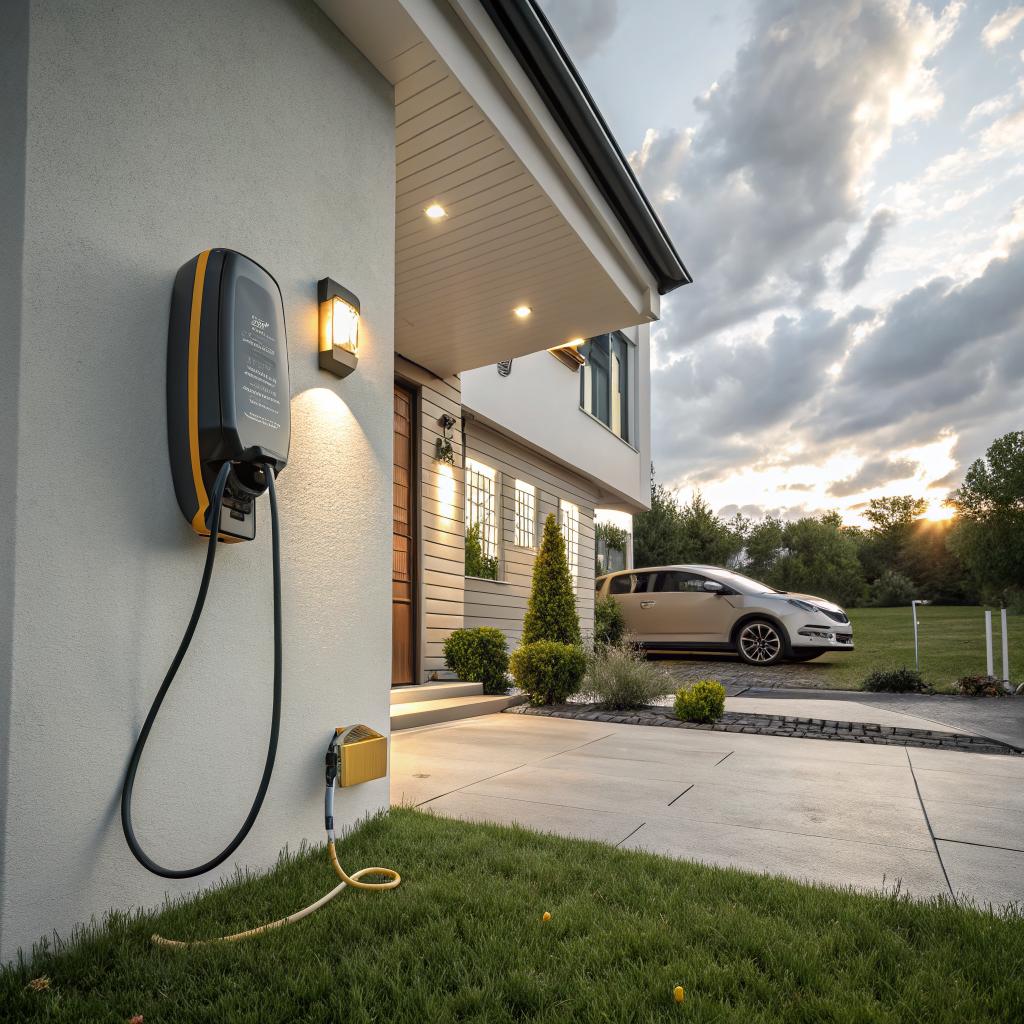
So, you are trying to figure out how EV charger installation in Colorado Springs fits into a modern home, especially if you are already thinking about renovations and new flooring. The short answer is that a home EV charger is very doable in most Colorado Springs houses, but you need to plan the electrical work, panel capacity, and even a few design details before you start tearing up floors or finishing your garage. For many homes, a licensed electrician can install a Level 2 charger in a day, but the smart approach is to treat it like any other major upgrade to your home systems and not as a last-minute add-on.
To give a bit more context, EV charging is no longer a niche upgrade. If you are putting money into new flooring, a nicer garage, or a finished basement, the electrical system should keep up with how you actually live now, not just how the house was built 20 or 30 years ago. In Colorado Springs, that usually means thinking about cold weather, panel size, code rules, and where your car actually parks. It is not complicated, but it is not just “plug and play” either.
For many homeowners, the best starting point is a quick call or visit with a local electrician who handles EV charger installation Colorado Springs projects on a regular basis, because they already know the local codes, power company requirements, and common issues in older neighborhoods.
Things you need to know
- Most modern homes can support a Level 2 charger, but older electrical panels may need an upgrade.
- Where you place the charger affects cable length, safety, and how your garage or driveway functions.
- Flooring and finishes in the garage or carport matter, because charging cables, snow, and water all meet there.
- Colorado Springs weather affects charging habits, especially in winter.
- Permits and inspections are usually required for a permanent EV charger circuit.
- There is a difference between a plug-in charger and a hardwired charger, both for speed and code.
- Panel capacity planning now can save you money later if you add more EVs or other electric appliances.
Why EV charger planning belongs in your home renovation
If you are already planning new flooring, cabinets, or a full garage refresh, it is actually the perfect moment to think about where the EV charger will live. Running new conduit, moving outlets, cutting drywall, or drilling through concrete is much easier before everything is finished and spotless.
EV charging is not just an electrical upgrade, it is a layout decision that affects how you park, walk, store things, and move around your garage every single day.
For example, if you plan epoxy flooring or luxury vinyl in a garage converted to a mixed-use space, you need to know where the charger cable will hang and where you might coil it so it does not damage the floor or create a tripping hazard. I have seen garages with beautiful new floors where the owner then drags a heavy charging cable across the same spot every night. The finish wore down in a few months.
Also, some people decide to move walls, add mudrooms, or build storage along the side of the garage. If the electrician has already run a circuit to a bad spot, you are stuck working around it. So it makes sense to plan layout, charging location, and storage together.
Quick overview of EV charger levels
Before going deep into Colorado Springs specifics, here is a quick refresher on the common EV charging options at home.
| Type | Typical power | Charging speed | Common use |
|---|---|---|---|
| Level 1 | 120V, 12–16 amps | 2–5 miles of range per hour | Backup, low daily mileage, overnight trickle |
| Level 2 (plug-in) | 240V, 24–40 amps | 20–35 miles of range per hour | Most modern homes, daily charging |
| Level 2 (hardwired) | 240V, 40–80 amps | Up to 40+ miles of range per hour | Faster home charging, multi-EV families |
| DC Fast Charging | 400V+ DC, very high power | 60–200+ miles in 20–45 minutes | Public stations, not for typical homes |
For a modern house in Colorado Springs, Level 2 is what most people actually want. Level 1 is slow, and DC fast chargers are overkill and usually not practical for residential neighborhoods.
How your electrical panel affects EV charging
The part that trips people up is not the charger itself, but the electrical panel. Many Colorado Springs houses, especially older ones, were built with 100 amp or 125 amp panels. That was fine when the biggest loads were an electric range and maybe a dryer. Now, with EVs, hot tubs, heated floors, and larger HVAC systems, that capacity can feel cramped.
If your panel is already close to full, an EV charger can be the upgrade that finally forces you to address the whole electrical system instead of just squeezing in one more breaker.
Signs you may need a panel upgrade
Here are a few signs that your panel is not ready for a high-amp EV charger:
- You have a 100 amp main breaker and electric heat, electric water heater, or multiple large appliances.
- Your breakers are already doubled up or “tandem” in several spots.
- You still have an older fuse box or a panel brand that electricians dislike for safety reasons.
- Lights dim when large appliances start.
An electrician can perform a load calculation for your house. They will look at square footage, appliances, HVAC, and then the EV charger you want. That gives a clear answer instead of guessing.
Thinking ahead: more than one EV
Right now you might only have one electric car. In a few years, maybe the second car in the driveway is electric too. Or a plug-in hybrid. It is very common now for families to go from one to two EVs faster than they expected.
If you upgrade your panel, or even just run one new circuit, it is worth asking the electrician how hard it would be to add a second charger later. Sometimes adding a larger subpanel in the garage is a smarter move than filling your main panel to the last breaker spot. It is not just about power, it is about layout and serviceability.
Where to put the charger in a modern home layout
The “right” spot for an EV charger is not the same in every house. The car model, door locations, driveway slope, and storage plan all matter. And yes, flooring choices play into this as well.
Common charger locations
- Attached garage side wall near the driver door
- Front wall of the garage, near where the car hood is when parked
- Detached garage or shop, often with conduit run along an exterior wall
- Outdoor mounting on a pedestal or wall by the driveway
You want the cable to reach the charge port without being stretched tight, but not so long that it lies in loops all over the floor. If you are planning any new flooring, like coated concrete or tiles, think about:
- Where the cable will naturally fall when plugged in
- Where people walk with groceries, sports gear, or kids
- Where water from snow, rain, or car washing tends to pool
I once saw a setup where the charger was mounted right above a step into the house. Every time the owner plugged in, the cable drooped across that step. It took exactly four days before someone tripped. That kind of detail sounds minor, but in a finished space with nice flooring, it is annoying and unsafe.
Think of the charger cable like a permanent extension cord that you will use almost every day. If you hate where it lies on the floor, you will feel that regret constantly.
Garage flooring and EV charging
If you are thinking about epoxy, polyaspartic, or other coatings in your garage, a few practical points help:
- Ask the installer how the floor handles hot tires, drips from the car, and heavy cables dragging.
- Plan a small area near the charger where the cable will rest, and maybe accept that as the “wear zone.”
- Consider light color flooring, because it makes it easier to see the cable, dirt, and snow melt.
For concrete that you intend to leave unfinished, the charger cables are usually less of a concern, but you still want to avoid creating permanent scuff marks right where you care most about the visual look.
Indoor vs outdoor EV charger setups
Colorado Springs has fairly cold winters, some hot summer days, and a lot of sun. That mix affects where you might prefer to mount the charger.
Indoor placement
Most people with attached garages prefer indoor installation, because:
- The charger is protected from snow, hail, and UV exposure.
- Charging cables are less likely to freeze or become stiff.
- Security is better, since the charger is not out on the street.
The main tradeoff is that you might need a slightly longer conduit run inside walls, especially if the panel is on the far side of the house.
Outdoor placement
An outdoor charger on a wall or pedestal works if:
- You have no garage or it is full of storage and workshops.
- You prefer to keep the car outside most of the time.
- The driveway layout gives a clear, reachable spot near the car parking zone.
Modern chargers are rated for outdoor use, but you still have to think about snow banks, plows, and even kids playing outside. You do not want the charger mounted where a snow blower can blast ice at it all winter.
Permits, codes, and local rules in Colorado Springs
Most permanent EV charger installations are not a DIY project. Colorado Springs, like most cities, requires permits for new 240V circuits and for any panel upgrades.
A licensed electrician will handle:
- Pulling the proper permit for the charger circuit and any panel work
- Running correctly sized wire and conduit
- Using the right type of breaker and disconnect if required
- Bonding and grounding to current code
- Scheduling inspection once the work is done
Some homeowners think of it as “just another outlet”, but the current levels for Level 2 charging are serious. If you are parking a car on top of that wiring every day, and your family walks around it, it is worth doing properly.
How EV chargers affect your daily routine
One thing that is easy to underestimate is how much charging habits affect how you move through your house. It is not only about cars and electricity, it is about routine.
- Do you come home through the garage or the front door?
- Do you often carry groceries or kids on that same route?
- Do you work from home and top off the battery during the day?
- Do you share one charger between two cars?
If you share a charger, the cable might need to reach both parking spots. That will affect where you mount the unit and where you plan storage cabinets or tool racks. If you always walk behind the car to reach a freezer or workbench, you do not want the charging cable to cut across that path.
Many modern homes now treat the garage as a kind of transition space. Mudroom bench, storage, maybe even a small gym area. The charger should fit that picture, not fight it.
Cost ranges and what affects them
Costs in Colorado Springs vary, but they usually break down into three parts: the charger unit, the electrical work, and optional upgrades like panel replacements.
Charger unit
Most Level 2 home chargers run in a moderate price range. Some car makers bundle a charger with the vehicle, others offer a discount on a preferred brand. The main differences between models are:
- Maximum charging speed (amps)
- Wi-Fi or app control
- Cable length
- Plug-in vs hardwired
Be honest about how much the “smart” features matter to you. Many people end up using only a few basic functions, like setting a charge schedule or checking if the car is plugged in.
Installation work
The installation cost depends on:
- Distance from the panel to the charger
- Whether the cable run is through finished spaces or open walls
- Need for trenching or outdoor conduit
- Permits and inspection fees
A charger located on the same wall as the panel is almost always cheaper than one across the house or on a detached garage. If you are already opening walls for a renovation, ask the electrician to coordinate timing so they can run wiring before drywall or flooring goes in.
Panel upgrades
This is the big variable. If your existing panel has enough capacity and space, you may only need a new breaker and wiring. If not, a full panel upgrade to a larger service can be a bigger project, but it also sets you up for:
- Future EV chargers
- Induction ranges or larger ovens
- Heat pump systems
- Finished basements with more circuits
Some homeowners feel frustrated about spending money on things they cannot see, like a panel upgrade, when they really want nicer floors or cabinets. The counterpoint is that those visible upgrades depend on electricity being safe and reliable behind the walls.
Smart chargers, schedules, and local power use
Many EV chargers now support timed charging and load management. In Colorado Springs, this matters if your utility has time-based rates or if you are concerned about household peak use.
Features to look at honestly:
- Scheduled charging so most power is used at night
- Load sharing between two chargers on the same circuit
- Integration with solar panels, if you have them
- Notifications for charging errors or interruptions
Some people love apps and graphs. Others just want to plug in and not think about it. Either approach is fine. But if you pay more for “smart” features, it is worth actually using at least a couple of them.
EV charging and home value in Colorado Springs
There is debate about how much a home EV charger adds to resale value. It is probably not something that adds a big number on its own, but it does change how people feel about the house as a whole, especially buyers who already own or expect to own an EV.
Think about it this way. Would you be more inclined to buy a house that already has a modern panel, good lighting, updated flooring, and an EV-ready garage? Or one that needs all of that work just to meet your daily life?
An EV-ready home does not guarantee a higher sale price on its own, but it can help your house stand out as “ready for normal life” instead of “one more project.”
Colorado Springs has a mix of older and newer neighborhoods. In areas with many newer builds, EV chargers are becoming more common. In older parts of town, a well thought out charger installation can make a house feel updated in a quiet but real way.
How EV charging interacts with other renovation choices
Since this is on a site about home renovation and flooring, it is worth tying all of this back to the rest of the decisions you are making.
Lighting and outlets in the garage
When adding a charger, it is a good time to ask yourself:
- Are the existing garage lights bright enough and in the right places?
- Do you need more standard outlets for tools, vacuums, or freezers?
- Do you want switches near the entry door, not hidden behind the car?
An electrician already on site can often add a couple of circuits or outlets with less effort while they are running the EV wiring. That is easier than calling them back a year later when you realize the layout is annoying.
Storage systems, cabinets, and wall panels
Many modern garages use wall storage systems, slat walls, or hanging rails. If you want a clean look, plan the charger placement before you mount storage panels. The charger can either sit inside a gap in the system or be offset to a simple part of the wall.
This is where flooring, wall finishes, and electric work all intersect. If you want a cohesive look, do a quick sketch or mockup of:
- Where the car parks
- Where the charger goes
- Where cabinets or shelves go
- Where the main walking paths are
It sounds a bit fussy, but that half hour of planning often prevents constant annoyances later.
Basement and main-floor power loads
Some houses route power to the garage through a panel that also feeds a finished basement or a large main-floor area. If you are planning heavy power use downstairs, like a home theater, multiple fridges, or electric radiant floor heat, mention that during the charger planning.
Electricity does not care about your floor plan. Loads add up. The electrician should see the full picture, not just the car charger, so they can size conductors and breakers sensibly.
Common mistakes to avoid with EV charger installation
Even thoughtful homeowners sometimes hit the same snags. A few mistakes come up again and again:
- Mounting the charger too far from the car’s charge port, so the cable is always stretched
- Ignoring panel capacity until after buying a high-amp charger
- Putting the charger where stored items or trash bins slowly block it over time
- Skipping permits to “save time” and then running into problems when selling the house
- Choosing the cheapest cable run path without thinking about daily use
A quick walk-through with the electrician while you stand where the car will park and pretend to plug it in is surprisingly useful. It feels a little silly, but it often reveals practical issues that a blueprint will not show.
Frequently asked questions about EV chargers in Colorado Springs homes
Do I really need a Level 2 charger, or is Level 1 enough?
If you drive only a short distance each day, a Level 1 trickle charger might cover your needs, but many people in Colorado Springs have commutes, errands, and weekend trips that add more miles. Level 2 gives a comfortable buffer so you are not worrying if the car will be ready in the morning, especially after a late night return.
Will an EV charger increase my electric bill a lot?
Your bill will go up, because you are adding energy use to fuel the car. Some of that might replace what you used to spend at gas stations. The exact number depends on how much you drive, the car’s efficiency, and your utility rates. Many owners find that the monthly cost is more predictable and often lower than buying gasoline, but it is not zero.
Can I run a charger from a dryer outlet with an adapter?
Some cars and chargers support temporary solutions like using a NEMA 14-30 dryer outlet. This can work in limited cases, but it is not a solid long-term plan for most homes. Sharing a single outlet between a dryer and a car, unplugging and replugging, and relying on adapters can lead to wear or mistakes. A dedicated circuit is usually worth the cost.
Will a charger installation damage my new flooring?
If you coordinate timing properly, it should not. The electrician should run wiring, drill any needed holes, and mount the charger before floor coatings or new materials go in. If the floor is already finished, you can still do the work, but you might need protective coverings, and there is a small risk of scuffs. Communicate clearly about what surfaces you want protected.
What happens if I move to a new house later?
Many chargers are either plug-in or installed so they can be removed with some effort. You can usually take the unit with you and leave the wiring and breaker behind. That wiring can be a selling point, since the next owner can add a new charger faster. It is a good idea to ask the electrician to label everything clearly in the panel for future clarity.
Is an EV charger worth it if I only have one EV and street parking?
This is where there is no single right answer. If you almost always park on the street and do not have a consistent spot on your own property, a permanent charger may not fit your life yet. Some people in this situation rely on public chargers or workplace charging. But if you have a driveway or even a small off-street pad, an outdoor charger might still make sense.
How do I choose between plug-in and hardwired chargers?
Plug-in chargers connect to a suitable 240V receptacle and can be removed more easily. They are convenient and flexible. Hardwired chargers can support higher amperage and feel more permanent, which some people prefer. If you are not sure, a plug-in charger on a dedicated circuit is often a reasonable middle path.
What should I ask an electrician before hiring them for EV charger work?
You can try questions like:
- How many EV charger installations have you done in Colorado Springs?
- Do you handle permits and inspections, or do I need to?
- Will my current panel support the charger I want?
- Can we walk through the layout and cable path together before you start?
- What would it take to add a second charger in the future?
If they rush through those questions or brush off your concerns about layout and daily use, that is a sign to pause. An EV charger is not just a breaker and a box on the wall, it is part of how your modern home actually works day to day.