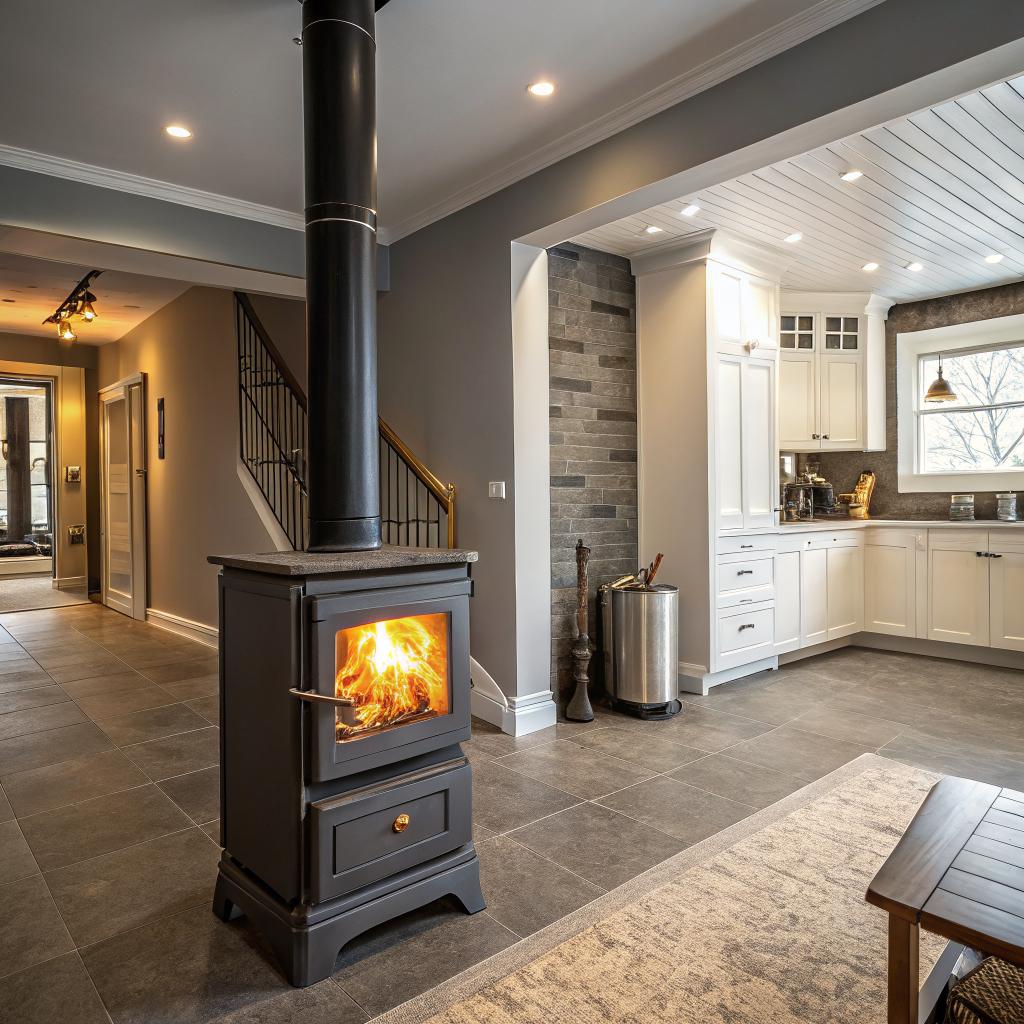
So, you are trying to figure out how furnace install in Brighton MI fits into a cozy, renovated home without wrecking your new floors, layout, or budget. The short answer is that you need a properly sized high efficiency furnace, planned around your new floor plan and finishes, installed by a local pro who understands Brighton homes and their winters.
Most people think of the furnace as something that just lives in the basement and blows warm air. But in a renovated home, it affects room layouts, ceiling height in the basement, noise, energy bills, and even how your new hardwood or luxury vinyl feels under your feet. If the system is wrong, your beautiful new space will still feel cold, uneven, or noisy. So the goal is simple: match your thermal comfort to the same standard as your new finishes.
- Furnace sizing has to match your new insulation, windows, and layout.
- Duct design affects room temperature, noise, and even where you can run flooring.
- Brighton winters require good cold-climate planning, not just generic furnace swaps.
- The timing of install matters if you are replacing subfloors, walls, or ceilings.
- The right contractor keeps your new flooring and finishes safe during the work.
- Better equipment can lower bills and protect floors from humidity swings.
- Permits and inspections are not a formality if you care about resale and safety.
How furnace install fits into a renovation project in Brighton MI
If you are renovating, you are probably thinking more about tile and cabinets than ductwork. That is normal. But the furnace and ducts are like the bones in the walls and floors. You do not see them, but they decide where registers go, how clean your air feels, and even where furniture can sit without blocking vents.
With a project in Brighton, you also have to think about real winter conditions. We are not talking about a mild climate where a mistake just adds a small cost. A poorly planned furnace install here can mean frozen rooms, annoying cold spots, and a system that runs non stop in January.
If you are tearing out walls, ceilings, or subfloors, the right time to think about your furnace is before the drywall and final flooring go in, not after.
So, how does this actually look in practice?
Start with your renovation plan, not the furnace brochure
Before choosing a furnace, you should look at your renovation drawings or at least a rough layout:
– Are you opening walls and going more open concept?
– Are you finishing a basement or attic that was not conditioned before?
– Are you replacing single-pane windows with double or triple pane?
– Are you adding insulation in walls or the attic?
These choices change your heating load. Many older Brighton homes had undersized insulation and leaky windows. If you improve that, the required furnace size might actually go down, not up.
A good installer will ask for your renovation plans, new square footage, and insulation upgrades before giving a firm quote or picking a furnace size.
If a contractor does not care about those details and just wants to throw in “what you had before,” that is a red flag.
Choosing the right furnace type for a renovated Brighton home
You will see a lot of options and jargon when you start looking at equipment. You do not need to become an HVAC technician, but it helps to understand the main differences.
Single stage vs two stage vs modulating
Single stage units run at full power or not at all. They are cheaper, but in a renovated home where you probably want quiet, steady comfort, they can feel a bit rough. Rooms warm up fast, then cool, then warm again.
Two stage and modulating furnaces can run at lower power most of the time and only go to full power when it is very cold. This often gives:
– More even room temperature
– Quieter operation
– Less stress on ducts
– Better comfort in rooms far from the furnace
Here is a quick comparison.
| Furnace Type | How it runs | Comfort level | Typical cost | Good fit for renovated homes? |
|---|---|---|---|---|
| Single stage | On at 100% or off | Basic, more temperature swings | Lowest equipment cost | Only for tight budgets or smaller homes |
| Two stage | Low and high heat settings | Smoother, fewer drafts | Mid range | Strong choice for most renovated homes |
| Modulating | Many small steps in output | Most stable comfort and quiet | Highest upfront cost | Best when you care a lot about comfort and bills |
If you just spent serious money on insulation, windows, and floors, it often makes sense to pair that with at least a two stage furnace. It keeps the thermal feel of the house closer to the level of the visual finish.
High efficiency vs standard efficiency
In Brighton, you will often hear about 80% vs 90%+ AFUE furnaces.
– 80% means about 80% of the fuel becomes heat in the home.
– 90%+ means at least 90% ends up as heat, sometimes 95% or more.
High efficiency units usually vent with PVC pipe through a side wall and have a condensate drain. Standard units usually vent out a chimney.
For a renovated home, high efficiency has some practical perks:
– Lower gas bills in cold winters
– Less heat lost through the vent
– Often quieter operation
– More flexible venting, which can help with some remodel layouts
There can be a tradeoff, though. You might need to run new vent and drain lines, which can affect finishes if the planning is late.
Sizing your furnace for Brighton winters and your new layout
People often think bigger is safer. That is not always true with furnaces, especially in a renovated house.
Oversized units can:
– Short cycle (turn on and off too fast)
– Create uneven heating
– Wear out faster
– Make more noise through ducts
Undersized units can:
– Struggle on the coldest days
– Run nearly all the time
– Leave far rooms colder than you like
The right size for a furnace should be based on a load calculation that uses your real square footage, insulation, windows, and layout, not just a guess or the size of your old unit.
If you removed air leaks, added spray foam, or installed better windows, the new size might be lower than your old furnace. That is actually a good sign.
Why your renovated layout matters for ductwork
If you knocked out walls for an open concept or shifted bedrooms, the old duct runs might no longer line up with the way you use the house.
Duct questions to ask:
– Do supply registers still end up in the right places after walls moved?
– Are returns spread out, or are they still all in the hallway?
– Are you adding new rooms, like a finished basement or bonus room, that need new runs?
– Do low ceilings or exposed beams affect where ducts can go?
Renovations can be a chance to fix old duct mistakes.
For example, if your old living room was always colder and it is now part of a large open space with new flooring, this might be the time to:
– Increase duct size to that area
– Add an extra supply register
– Adjust damper settings
– Add a return in that room
Protecting your new floors during furnace install
Since this is for homeowners who care about renovation and flooring, it is worth being blunt here. HVAC work can be rough on floors if not managed well.
Things to watch:
– Heavy equipment moving through finished areas
– Boots with grit scratching hardwood, vinyl, or tile
– Metal ducts and tools set on bare flooring
– Dust and debris from cutting or drilling above finished floors
If you already have your new flooring installed, talk to the contractor before the job starts.
Reasonable expectations:
– Use of floor protection in traffic areas
– Controlled cutting zones away from finished spaces
– No dragging equipment across floors
– Cleanup of dust and debris before they leave
If you are still planning the project, an easier path is to schedule the furnace install while subfloors are still exposed, before the finished flooring goes in. That way, there is less risk from dropped tools and dust, and ducts can run exactly where they need to go under floors or behind walls.
Where a local Brighton company fits in
For a project like this, local experience helps. You want someone who understands:
– How cold Brighton winters actually feel
– Local building codes and inspection habits
– The typical layouts of Brighton houses and subdivisions
A local provider who regularly handles Furnace Install Brighton MI work will usually have seen your style of home already: older ranches, split levels, colonials, or newer builds with finished basements.
You do not need a nationwide brand. You need a crew that knows how your township handles permits, how certain neighborhoods were built, and what tends to go wrong with local duct setups.
Timing your furnace install during a remodel
Contractors often clash over scheduling. Flooring wants quiet, clean conditions. HVAC wants access to open walls and ceilings. You are stuck in the middle.
A simple staging plan can help:
Good sequence for many projects
1. Demolition
2. Framing changes (moving walls, opening rooms)
3. HVAC rough-in (furnace replacement, duct changes, new runs)
4. Electrical and plumbing rough-in
5. Insulation
6. Drywall
7. Painting and trim
8. Flooring install
9. Final HVAC setup, register covers, thermostat, testing
This is not perfect in every case, but it keeps heavy HVAC work away from finished floors.
If your old system is dead in winter, you might need a different approach, with temporary heat or a faster replacement. But for most planned renovations, you get a better result if the furnace and duct changes are handled when the house is still open and messy.
How your furnace affects indoor comfort beyond just heat
People often think of flooring as something you can see and touch, and the furnace as a hidden mechanical device. There is more overlap than it seems.
Temperature and how your floors feel
Even with radiant-like flooring, most homes in Brighton rely on forced air heat. If the system is unbalanced, you can feel:
– Warm air trapped near the ceiling
– Cold air pooling over tile or vinyl
– Uneven comfort between floors
On wood or laminate, cold drafts along the floor can feel harsh, especially in open concept living rooms where there are wide spaces for air to move.
A good furnace and duct plan can:
– Direct warm air where you sit and walk, not just toward the ceiling
– Reduce cold spots near big windows or exterior doors
– Keep temperatures more stable, which also helps wood flooring with expansion and contraction
Humidity and its impact on floors
High efficiency furnaces, good air sealing, and better insulation can change how dry or humid your house feels.
Dry air can:
– Shrink wood planks
– Open up gaps in hardwood or engineered wood
– Make static worse on carpets
– Feel colder at the same temperature
Overly humid air can:
– Swell wood
– Cause cupping in some flooring products
– Encourage mold in damp corners
A modern furnace system can include:
– A whole-house humidifier
– Better filtration
– A smart thermostat that controls humidity along with temperature
These additions are not just comfort upgrades. They protect your investment in flooring, millwork, and even paint.
Cost ranges for furnace install in Brighton MI renovations
Costs vary with size, brand, duct changes, and how complicated your home is. But it helps to have some ranges to think about, even if they are rough.
| Installation scenario | What is involved | Typical cost range (rough) |
|---|---|---|
| Basic furnace swap | Replace similar size unit, minimal duct work, same vent style | Lower end, often the least expensive option |
| High efficiency upgrade | New 90%+ unit, new PVC venting, some drain work | Moderate to higher, but lower bills later |
| Full remodel integration | New furnace, duct changes, new runs for added rooms | Higher range, but also more comfort improvement |
| System with zoning | Furnace plus multiple zones and separate controls | Highest range, more control for complex layouts |
These are not quotes. Every project is different. But it helps to realize that a project with major duct changes will not land at the same price as a simple swap.
What to ask potential furnace installers
You do not need to treat this like an interrogation, but a few questions can reveal a lot about how a contractor works.
Questions that matter more than brand names
Ask things like:
– How do you size the furnace for a renovated home?
– Will you look at our renovation plans before quoting?
– How will you protect our new or future floors?
– Can you show examples of projects where you worked during a remodel?
– Who handles the permit and inspection?
– How will the new layout affect duct runs and registers?
If they say things like “We always put in this one size” or “We will just match what you have,” that suggests they are not paying attention to your specific house.
Common mistakes when combining furnace install and renovation
It is easy to get pulled in many directions during a remodel. Heating can slip down the priority list. That is where mistakes creep in.
1. Waiting until after drywall and floors to think about the furnace
Once ceilings, walls, and floors are in, there is much less flexibility. Duct changes suddenly mean cutting new work that was just finished. That is frustrating and costly.
Better approach: get HVAC layout and capacity sorted early, even if the actual furnace install happens later.
2. Ignoring room-by-room comfort
Some estimates only think in terms of total square footage and a single thermostat. But homes have:
– North facing rooms that run colder
– Large windows that lose more heat
– Rooms over garages that feel chilly
You want an installer who thinks in rooms, not just in “square feet.”
3. Forgetting about future spaces
If you plan to finish the basement or attic later, mention that now. It might be worth:
– Installing a slightly larger duct trunk now
– Leaving taps for future runs
– Planning a zone for that space later
This can cost far less than reworking the system in a few years.
How a new furnace interacts with your flooring choices
It might feel strange to link HVAC and flooring, but they share the same rooms, so they affect each other more than it seems.
Hardwood and engineered wood
These products move a bit with changes in temperature and humidity. A furnace that produces very dry air and a house with no humidity control can cause:
– Gapping in boards
– Creaking floors
– Extra wear on finishes
A more stable indoor climate, with a well controlled furnace and maybe a humidifier, can:
– Keep boards more stable
– Reduce seasonal gaps
– Extend the life of the finish
Laminate and luxury vinyl plank
These floors are more tolerant but still respond to environment. Rapid swings in heat, especially from unbalanced ducts, can:
– Make some areas feel warmer or colder underfoot
– Highlight cold spots where air does not circulate
A properly sized and balanced furnace system gives a more even feel across large open areas where these floors are popular.
Tile and stone
Tile can feel cooler underfoot, especially in basements and on slab foundations. If the furnace does not distribute heat well, you can end up with tile areas that feel uncomfortably cold even when the thermostat reads a normal number.
Better duct placement and enough supply registers near tile-heavy areas can reduce that problem. In some remodels, people pair the furnace with small radiant zones in key tile areas, like bathrooms, to smooth things out even more.
Noise and how it affects your renovated spaces
Nobody spends money on a quiet, open living area and then wants a furnace that roars to life or rattles ducts.
Furnace noise often comes from:
– The blower being too strong for the ductwork
– Poor duct support or loose panels
– Tight turns or restrictions in supply runs
– Old metal that pops with expansion and contraction
In a renovation, you sometimes have a rare chance to fix these:
– Adjust duct sizing during open-wall stages
– Re-route noisy runs away from bedrooms
– Add sound dampening in key areas
– Choose a furnace with a quieter motor and staged operation
Here is a quick way to think about noise and upgrades.
| Noise issue | Likely cause | Potential fix during renovation |
|---|---|---|
| Whooshing vent sound | Airflow too fast through small ducts or grilles | Increase duct size or grille size, balance dampers |
| Metal pops and bangs | Expansion and contraction of poorly supported ducts | Add supports, adjust layout, use flexible connectors |
| Furnace rumble in living space | Unit too close or lacking isolation | Relocate unit, add vibration isolation, close off mechanical room better |
| Constant loud blower | Single stage blower always at full speed | Upgrade to two stage or variable speed blower |
When you are already reworking walls and ceilings, many of these fixes are more realistic than in a finished, untouched house.
Permits, inspections, and resale value
Some homeowners roll their eyes at permits, but for a furnace install tied to a renovation, skipping them is risky.
Permits and inspections check:
– Safe venting of combustion gases
– Correct gas line sizing and connections
– Proper clearances from combustibles
– Secure and sealed duct connections
If you ever sell, buyers or their inspectors may ask:
– Was the furnace installed with permits?
– Who did the work?
– Are there records of the installation?
For a renovated home that you have clearly invested in, having clean answers here supports the overall value. It matches the message that the house was upgraded carefully, not just made to look pretty on the surface.
Realistic expectations for comfort after the install
No system is perfect, and Brighton winters can be harsh. So it helps to be realistic.
Good outcomes you can expect with a thoughtful design:
– Rooms heat more evenly than before
– The system cycles more calmly, without large temperature swings
– Noise level from the furnace and vents feels lower
– Thermostat changes actually match how the home feels
– Your new floors do not suffer from extreme dryness or humidity swings
Some things still have limits:
– Large glass walls will still feel cooler than interior walls
– Upper floors often run a bit warmer than basements without zoning
– Open lofts can be trickier, though a good design helps
If an installer promises perfection or “never any cold spot at all,” it might be overselling. You want steady, noticeable improvement, not marketing language.
Common questions about furnace installs in renovated homes
Can I keep my old ducts and just change the furnace?
Sometimes, yes. If your renovation did not change layout much, and the old system heated fairly well, a simple furnace upgrade might be enough. But if you opened walls, finished new areas, or had rooms that were always uncomfortable, it is often smart to adjust ducts at the same time.
Do I really need a high efficiency furnace in Brighton?
Need is a strong word. You can heat a house with a standard unit. But high efficiency units usually make sense here because of the length and depth of winter, especially if gas prices rise. Over the life of the furnace, the difference in monthly bills can be significant. For many renovated homes, the comfort and operating cost gains justify the higher upfront price.
Will a new furnace protect my new floors?
Not directly, but a better system can help. If it manages humidity and keeps temperatures more stable, your floors live in a more gentle environment. That reduces the stress on wood, laminates, and even some adhesives. It is not floor insurance, but it is part of a healthier overall home.
What if my renovation budget is already stretched?
Then you might phase the work. For example:
– Replace the furnace now with a model sized for the future layout.
– Make small duct tweaks in key problem rooms.
– Leave more complex zoning or advanced controls for later.
Just be honest with yourself. Saving a bit now on a poorly planned system can mean higher operating costs and uncomfortable rooms for years, which is a bit of a shame in a nicely renovated home.
Is it better to wait until after the remodel to replace the furnace?
If the furnace is new and sized well, yes, you might not need to change it yet. But if it is older, unreliable, or already borderline for your space, waiting can create hassle later. Many homeowners regret having to tear into newly finished areas to fix what could have been handled during the remodel stage.
If you think about your furnace and heating as part of the design, not an afterthought, your renovated Brighton home can feel as good as it looks.