
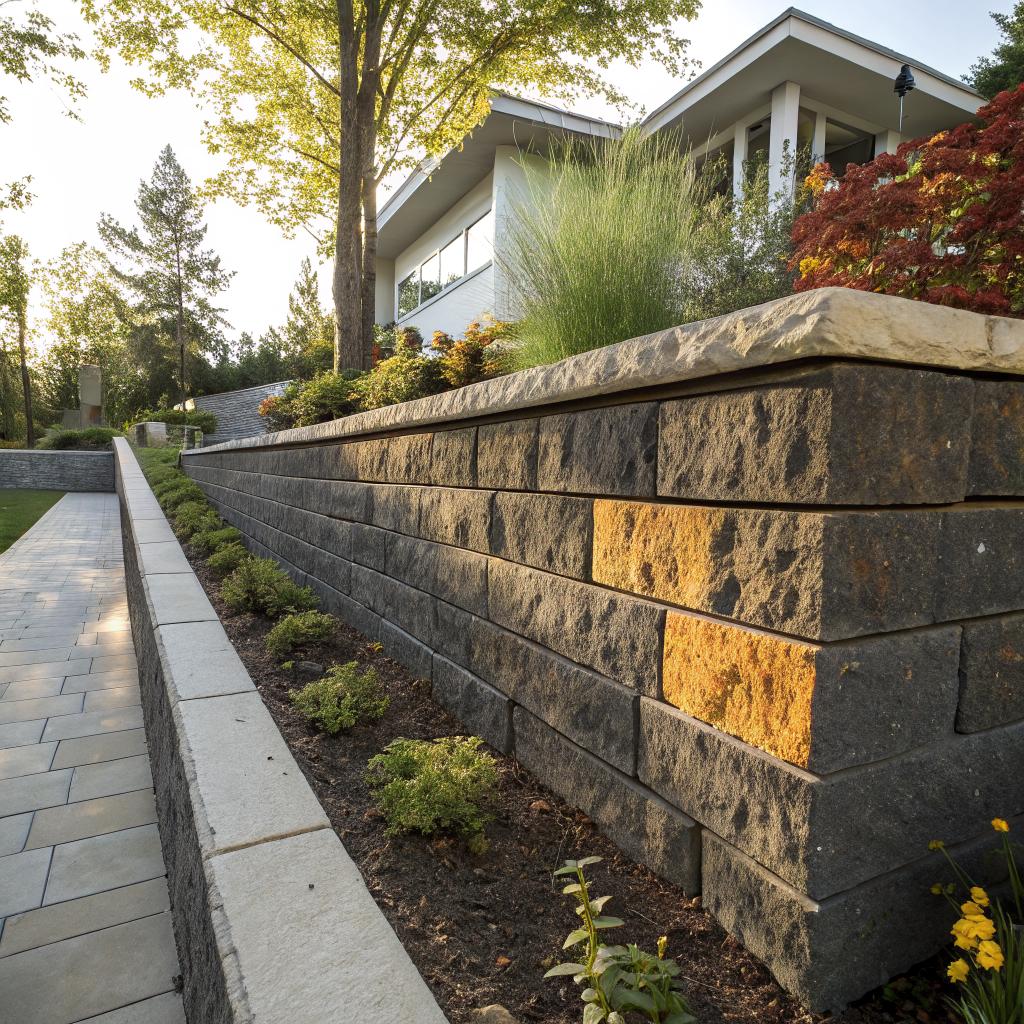
So, you are trying to find retaining wall Appleton ideas to elevate your home. The short answer is that you should match the wall style to your house, pick the right material for our Wisconsin climate, plan drainage carefully, and tie it into your outdoor flooring or patio so it feels like one complete space, not an afterthought.
Most people think of a retaining wall as just something that holds dirt back. It does that, of course, but it also shapes how your yard works and how your outdoor flooring and walkways feel. If you get it right, the wall can feel like part of the architecture of your home. If you get it wrong, it feels like a random concrete ledge you are stuck with for the next 20 years.
Here are the main things you need to know before you start planning.
- Retaining walls need proper drainage or they will fail, crack, or lean.
- The material you choose affects both looks and long term maintenance.
- Good walls feel connected to your patio, steps, and outdoor flooring.
- Local codes and height limits matter more than people think.
- Lighting and small design details make a big difference once the sun goes down.
- DIY is realistic for short, simple walls; taller walls usually need a pro.
If you want to see what local projects look like, this retaining wall Appleton page can give you some visual ideas, but let me walk through the choices step by step first.
What do you actually want the retaining wall to do?
Before you talk about stone colors or patterns, you need a clear job for the wall. Otherwise the design gets messy fast.
Ask yourself a few basic questions:
- Are you holding back soil on a slope, or just building a raised planting bed?
- Do you want more flat yard space for kids, a seating area, or a fire pit?
- Is the wall mainly for looks, or is it solving a drainage or erosion problem?
- Do you want the wall to double as seating along a patio?
- Will it connect to steps, a walkway, or a lower-level entrance?
The best retaining wall designs start with the function, then work backward to style and material.
That might sound a bit boring compared to picking stone colors, but it saves a lot of money and frustration later. A wall built mostly for looks can be lighter and shorter. A wall that holds up a driveway or a steep yard needs more engineering, and usually more budget.
Try to sketch where the wall will go, even if it is just a quick drawing on printer paper. Mark doors, windows, walkways, and any existing concrete or paver areas. This helps you see how the wall will connect to the rest of your home and flooring.
How retaining walls and flooring work together
If the website you are reading this on focuses on home renovation and flooring, there is a good reason to link the two. Outside, your “floor” is your patio, walkways, and sometimes your driveway. The retaining wall can frame that outdoor floor the same way baseboard or trim frames interior flooring.
Think about these connections:
- Patio sits at the base of the wall
- Steps run through the wall up to the yard or a deck
- Wall caps match or contrast with the paver color
- Walkway pavers flow into a landing that meets the wall
When the wall and the patio feel like one project, the yard looks planned instead of patched together.
So, if you are redoing a patio or outdoor tile, it can be a good time to handle the wall too. You only dig once, and the design choices line up.
Choosing the right material for an Appleton retaining wall
The climate around Appleton is not gentle. Freeze and thaw cycles, wet springs, and sometimes heavy snow loads all put pressure on masonry.
Here are common material options and how they behave in that setting.
Concrete block (segmental retaining wall blocks)
These are the interlocking blocks you see at many homes. They come in different textures and colors, often with a lip or key that locks them together.
Pros:
- Durable in freeze and thaw when installed properly
- Fairly quick to stack once the base is ready
- Curves and corners are easier to shape
- Colors can work with most siding and roofing
Cons:
- Can look generic if you pick a common style without any detail
- Still needs careful drainage and a good base
- Cheaper blocks can fade over time
Concrete block works well for most Appleton yards, especially where you want a clean, modern line. It also pairs nicely with concrete pavers, which matters if you care about how your “outdoor flooring” looks as a whole.
Natural stone
This can be fieldstone, limestone, or other local rock, either dry stacked or mortared.
Pros:
- More character and variety than block
- Looks great with older or more traditional homes
- Can be built in informal, flowing shapes
Cons:
- More labor, usually more cost
- Can shift if not installed with a solid base and proper drainage
- Mortared joints may crack with freeze and thaw if not done well
If you like a patio with irregular stone or a more natural look, stone walls feel right. They do not always match very smooth porcelain tile or sleek modern slabs, though. That contrast can be nice or a bit off, depending on taste.
Poured concrete
This is basically a concrete foundation wall, often with a pattern or face treatment.
Pros:
- Strong when reinforced correctly
- Can be thin relative to height, so it saves space
- Can be faced later with stone or veneer
Cons:
- Plain concrete can look harsh and “commercial”
- Cracks from movement or poor drainage are hard to hide
- Harder to modify after it is poured
Poured concrete suits very modern homes or tight spaces near driveways. If you are already pouring concrete for a garage slab or large patio, some people like to combine work. But it needs planning and rebar, not guesswork.
Timber (landscape ties)
Pressure treated timbers or railroad ties still show up in older yards and budget projects.
Pros:
- Low material cost initially
- Fast to assemble for small walls and raised beds
Cons:
- Eventually rot, even with treatment
- Can attract insects
- Often look dated next to updated siding or flooring
For a quick fix, timbers can be tempting. For a home you care about long term, they often age poorly, especially near a nice paver patio or new composite deck.
Comparing materials at a glance
| Material | Typical lifespan (with good install) | Style fit | Maintenance level |
|---|---|---|---|
| Concrete block | 25+ years | Most suburban / modern homes | Low |
| Natural stone | 30+ years | Traditional, rustic, high-end | Low to medium |
| Poured concrete | 30+ years | Modern, tight spaces | Low, but cracks are visible |
| Timber | 10 to 20 years | Casual, cottage, budget | Medium to high |
Design ideas that actually fit an Appleton home
Lots of online photos are from mild climates where walls hardly see frost. That is not your situation. Here are ideas that both look good and work with local weather.
1. Terraced walls with flat “floors”
If your yard slopes, one big wall can feel tall and heavy. Splitting it into two or three shorter walls with flat tiers between is often safer and better looking.
Those flat tiers can be:
- Small patios for cafe tables
- Play zones with rubber tiles or turf
- Planting strips with easy-care shrubs
You are basically creating stepped outdoor floors, each with a purpose. It feels more finished than a single steep bank of lawn.
2. Retaining wall with built-in seating along a patio
If you plan a paver or concrete patio, let the retaining wall double as a backrest and seating. A simple way is to build the wall at 18 to 20 inches high and cap it with a smooth stone.
This works well for:
- Fire pit areas
- Outdoor dining near a grill station
- Play areas where adults want to sit and watch
You save space because you do not need chairs along that edge. And the wall feels like part of the furniture.
3. Raised planter walls near entries
Near a front entrance, a small retaining wall can bring planting up to eye level. This helps if your front steps feel a bit bare, or if your house sits higher than the street.
Because it is close to your front door flooring, material choice matters. If you have concrete steps or a porch, block or smooth stone caps feel right. If you have tile or brick treads, a stone veneer might tie in better.
4. Retaining wall near a lower-level walkout
Some Appleton homes have a lower-level door at the back or side. The grade often slopes awkwardly around these areas. A retaining wall can create a proper landing and outdoor “room.”
Think about:
- A paver or concrete landing just outside the door
- A short retaining wall on one or both sides to hold back soil
- Steps that climb from the landing to the main lawn level
That lower landing becomes a usable space instead of just a concrete pad no one stands on. It also helps with water control around that door.
Drainage: the part most people skip until it is too late
If I had to pick one reason retaining walls fail here, it would be water pressure. When soil behind a wall gets saturated and freezes, it pushes. Hard.
A retaining wall without drainage is like a shower without a drain; it might look fine at first, but problems show up fast.
Basic drainage steps for small walls:
- Excavate enough space behind the wall for a gravel backfill zone.
- Lay compacted crushed stone as a base, not plain soil.
- Place perforated drain pipe behind the first or second block course, sloped to daylight or a drain outlet.
- Backfill right behind the wall with clean gravel, not clay.
- Use fabric between gravel and native soil to keep fines from clogging.
If the soil on your property is heavy and holds water, like clay, you need to take drainage more seriously. Otherwise the freeze and thaw cycles will slowly push the wall forward.
For taller walls, or when holding back a steep slope, talk to a contractor or engineer. I know that sounds like boring advice, but taller walls handle a lot of load.
How tall is too tall for DIY?
This is where people often misjudge. A 2 foot garden wall is a fun weekend project. A 5 foot wall behind your garage is not the same thing.
As a loose guide:
- Under 2 feet: Many homeowners can handle this with research and patience.
- 2 to 4 feet: Still possible for DIY, but you need to follow block system instructions carefully and pay close attention to drainage and base prep.
- Over 4 feet: You are usually better off with a professional and, in some cases, engineering.
Local codes sometimes require permits and engineering for walls above a certain height, or for walls supporting driveways, structures, or fences. This is not just red tape. If a tall wall fails, it can cause real damage.
Connecting your retaining wall to your patio or outdoor flooring
Since this site focuses on home renovation and flooring, it makes sense to talk about how you actually meet the patio surface at the wall.
Here are a few common edges:
Wall behind the patio
The patio sits at the base, and the wall rises up behind it. Key details:
- Patio base material should extend under the pavers up to the wall.
- The top of the patio should be slightly below the bottom block face so the edge looks clean.
- Plan where water will flow: away from the house and away from the wall if possible.
Wall as a raised patio edge
The wall holds up a raised patio that is higher than the surrounding yard.
Here, the wall is basically the “rim” of the patio. You need:
- Proper base under both the wall and the patio area.
- Compaction in thin layers, not all at once.
- Drainage outlets through the wall if water could collect under the patio.
This looks nice near doors that sit high off the yard level, or where the house foundation is more exposed.
Steps through the wall
Steps that “cut” through a wall look great, but they need clear planning.
Think about:
- Step riser height matching indoor steps if possible.
- Tread depth working with your patio paver pattern.
- Lighting for safety if the stairs are used at night.
Steps are another place where the link between wall and floor shows. Mismatched colors or patterns can look busy. At the same time, a small contrast can help you see each tread better.
Color and texture choices that do not fight your house
One trap is to pick retaining wall blocks based only on the display at the store. They might look great under perfect lighting, then clash with your roof and siding at home.
Here is a simple way to choose:
- Match the undertone of your house materials. Warm with warm, cool with cool.
- Do not match everything exactly. A slight contrast is better than a near miss.
- Bring a sample block home and set it next to your siding and patio area.
For flooring-minded readers, this is similar to picking tile to go with existing hardwood or cabinets. In person, under your own light, things look different than they do on a website or showroom floor.
Texture also matters:
- Split-face block feels more natural and hides dirt.
- Smooth block feels more modern but shows stains more.
- Stone veneers give a high-end look but cost more and need a solid backing.
Small details that make a big impact
Many retaining walls look plain because they stop at the basic function. A few details can change that.
Wall caps
A good cap block or stone piece finishes the top and can add a seating surface. Consider:
- Color that contrasts slightly with the wall face.
- Rounded front edges for comfort if used as seating.
- Adhesive rated for freeze and thaw conditions.
Lighting
Low-voltage lights in or near the wall make outdoor flooring around it safer and more inviting.
You can use:
- Under-cap lights that shine down the wall face and walkway.
- Small recessed wall lights near steps.
- Path lights at the base if you prefer less wiring through the wall.
In winter, when you get dark afternoons, this matters more than people expect.
Planting pockets
Some walls include small gaps or stepped areas where you can tuck in plants. This softens the structure and hides small imperfections.
Think of:
- Creeping thyme or sedum between stones.
- Ornamental grasses behind the wall for height.
- Low shrubs to break up a long straight line.
You do not need to go overboard. A few plants in the right spots help the wall feel part of the yard, not just a barrier.
Maintenance: what happens after the first year
Retaining walls are not maintenance-free. They are low maintenance if done well, but not zero.
Here are common tasks:
- Check for early movement. A slight lean or bulge in the first year needs attention before it gets worse.
- Keep drain outlets clear of leaves and mulch.
- Remove weeds from joints or caps.
- Clean stains from mulch or runoff with gentle cleaners, not high-pressure blasting that can damage joints.
Block and stone age better than timber. Color fading in concrete usually happens slowly. If you seal pavers or wall caps, you may need to reapply every few years, just like sealing indoor grout or natural stone flooring.
Budgeting without guessing
People often ask what a retaining wall will cost per foot, which is a bit like asking what a kitchen floor costs per square foot without saying if it is vinyl or marble.
Cost varies by:
- Height and length of wall
- Material choice
- Access for equipment
- Need for engineering or permits
- Extras like lighting, steps, and caps
If you want a rough sense, you can do this:
- Measure the total length and planned height.
- Look at the block producer’s estimate for blocks per square face foot.
- Multiply to get an approximate block count.
- Add base stone, gravel backfill, drain pipe, and fabric.
This is not perfect, but it gives you enough info to compare DIY material costs with a quote from a local contractor. Sometimes the gap is smaller than people think once you factor in tool rental, delivery, and your time.
Common mistakes to avoid
I do not agree with the idea that “anyone can just stack a few blocks and be fine.” That is how you end up with leaning walls after a couple of winters.
Here are some mistakes that often cause problems:
- Skipping the compacted base and setting blocks right on soil.
- Using regular dirt as backfill behind the wall instead of gravel.
- Not including a drain pipe where water collects.
- Building the wall dead vertical when the block system is meant to lean back slightly.
- Ignoring the manufacturer’s max height for that block style.
If you only get two things right, make it the base and the drainage; everything else is easier to fix than a failed foundation.
It might feel like overkill when you are digging deeper and hauling gravel, but that is where a lot of the real work is.
How to plan your retaining wall step by step
If you are the kind of person who likes a clear path, here is a simple order you can follow.
- Walk your yard and mark where you think you need a wall using a hose or string.
- Stand in key places: at doors, on the patio, on the driveway. Does the layout still feel right?
- Decide the main job: holding soil, making a patio, creating a planting bed, or all three.
- Pick a material that suits your house style and your willingness to maintain it.
- Sketch the wall with rough dimensions: height, length, any steps or curves.
- Check local code or city information for height rules and permit needs.
- Price materials and, if needed, get a quote from a contractor for comparison.
- Plan how it will meet any patio, walkway, or other flooring you have or want.
- Only then start digging.
Many people jump straight to step nine, then have to adjust halfway through. That is stressful and usually more expensive.
Questions people often ask about retaining walls in Appleton
Do I really need a permit for my retaining wall?
Sometimes yes, sometimes no. It depends on the wall height, what it is supporting, and local rules. Yards in older parts of town can have tricky slopes and shared property lines, so it is smarter to ask the city or town office before starting. It is annoying paperwork, but less annoying than being told to modify or remove a wall after it is built.
Can a retaining wall help with water in my basement?
It can help with surface water if it reshapes the yard and improves drainage, but it is not a cure by itself. Usually you need grading that slopes away from the foundation, proper gutters, and sometimes drain systems. A wall can be part of that plan, not the whole solution.
Is it better to match the wall material to my house or my patio?
If you have to pick, match the tone and style of the house first. Your house is the biggest visual element. Then connect the patio or flooring through color accents and caps. You will see the wall in relation to the house more often than you will see it only with the patio.
If you stand in your yard right now and imagine one change that would make it easier to use or nicer to look at, does a retaining wall make that list? If it does, what is the first small step you can take this week to move that idea from “someday” to a real plan on paper?