
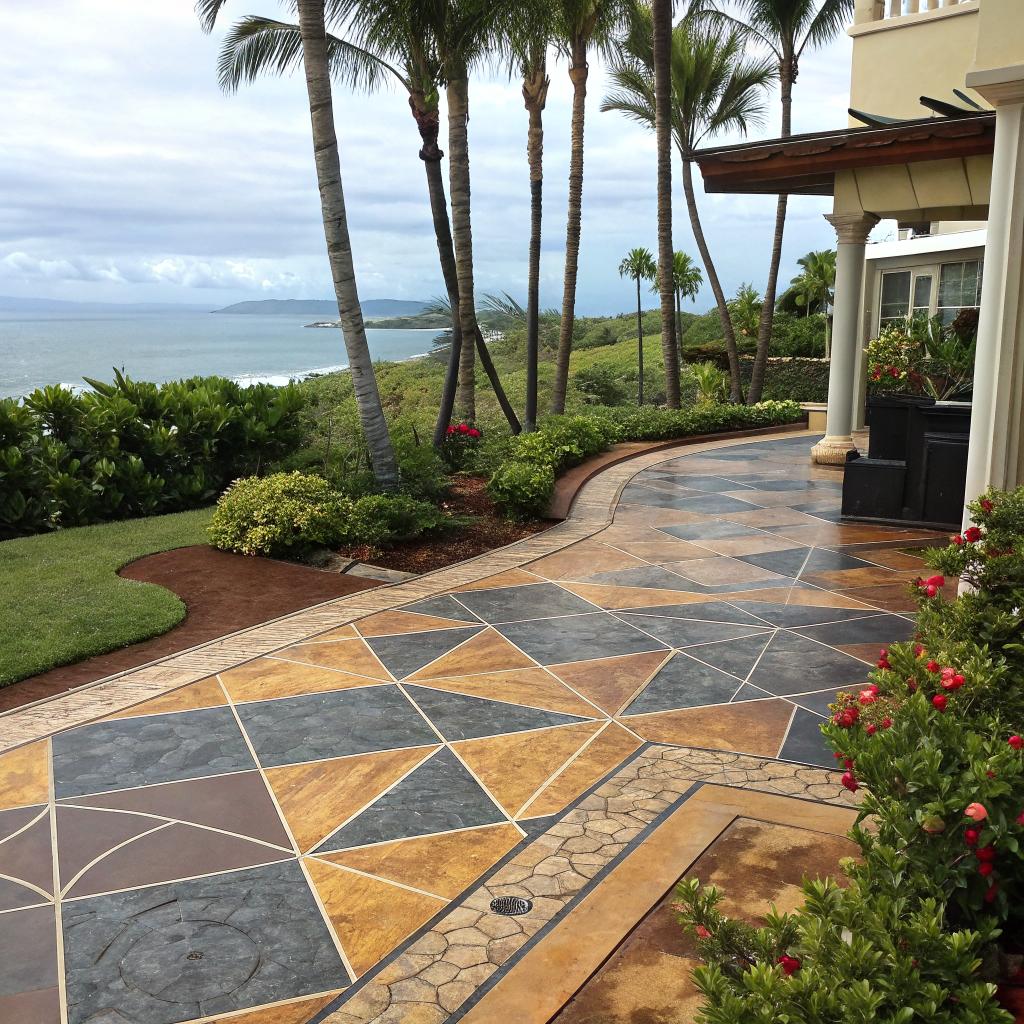
So, you are trying to find the right landscape contractors in Honolulu HI for stunning outdoor floors around your home. You should look for a local contractor with strong concrete, stone, and paver experience who treats outdoor flooring as both a design feature and a heavy-use surface, not just a decoration.
Most people in Honolulu search for someone to “do the yard” and then realize later that the patio, lanai, and walkways are the parts they use every single day. Outdoor floors take abuse from sun, rain, foot traffic, salt in the air, kids, pets, and furniture. If those surfaces are not planned and installed well, the nicest plants will not save the space. So it makes sense to start with the surface you walk on, then build the rest of the yard around it.
- Things you need to know
- Outdoor flooring is a structural element, not just a design choice.
- Honolulu’s climate changes how concrete, stone, and pavers behave.
- Drainage, slope, and soil conditions matter as much as the material you see.
- Good contractors plan traffic flow, not only square footage.
- Cheap installs often fail within a few years from cracking or sinking.
- Design and function should be planned together from day one.
- Permits and local codes can affect your options more than you expect.
If you want a starting point to check local providers, one example of landscape contractors Honolulu HI that focus on outdoor spaces can help you see what kind of work to expect.
Why outdoor floors matter more than most people think
Most homeowners talk about plants, pools, and maybe an outdoor kitchen. Outdoor floors sound boring in comparison. I get that. But think about where you actually stand, sit, and walk.
You eat on the lanai. You move from the house to the yard on paths. Kids run on the patio or a paved area. Guests see the entry walk first, not the far corner of the garden.
Outdoor flooring sets the tone for the entire yard, because it controls comfort, safety, and how you move through the space.
If the floors are uneven, slippery, or cracking, the rest of the yard instantly feels off, no matter how nice the plants look. A good Honolulu landscape contractor will often start the design from the hard surfaces, then fill in planting, lighting, and features around those paths and patios.
How Honolulu’s climate affects outdoor flooring
Honolulu is kind to people, but it is not always kind to materials. That is one of the main reasons you want a contractor who understands local conditions, not someone who just copies designs from other states.
Here are a few factors that matter:
- Sun and UV: Constant sun can fade, chalk, or weaken some finishes and sealers. Dark stone or concrete can get very hot under bare feet.
- Rain: Short but heavy showers can test drainage. If the floor does not shed water fast, you get puddles, slipperiness, or erosion under pavers.
- Salt air: If you are near the coast, salt can attack metal, rebar, and some finishes, and it slightly changes how concrete ages.
- Soil movement: Some Honolulu areas have fill or softer soils. Poor base prep can lead to sinking pavers or cracking slabs.
A local contractor who installs outdoor floors all the time tends to build in small details that out-of-town plans forget. For example, slightly rougher textures on sloped paths, more expansion joints in large slabs, different sealers, that kind of thing.
Types of outdoor flooring Honolulu contractors usually install
You do not have to know every technical detail, but you should understand the main options and how they behave in real life. That way, your talks with a contractor feel more balanced.
1. Concrete patios and walkways
Concrete is common in Honolulu for patios, driveways, and basic paths. It can look plain, but it does not have to.
Pros:
- Lower cost per square foot than many stone options.
- Can be shaped easily to fit any yard layout.
- Can be colored, stamped, or given a broom or exposed aggregate finish.
Cons:
- Can crack if the base is not prepared well or joints are planned poorly.
- Hard to change later without demolition.
- Some finishes get slippery when wet if not done correctly.
Many people ask for stamped concrete that mimics stone. That can look nice, but it needs a contractor who is careful with texture and color. A bad stamp job can look fake, or the pattern can channel water in strange ways.
If you choose concrete, pay more attention to base prep and drainage than to color. The nicest color will not hide cracks caused by poor groundwork.
2. Pavers for patios, driveways, and paths
Pavers are separate units, often concrete or clay, set on compacted base with sand joints.
Pros:
- Easy to repair a small area by lifting and relaying pieces.
- Good traction when installed with the right texture.
- Many patterns, colors, and borders so you can match your home style.
Cons:
- Usually higher labor cost than plain concrete.
- Weeds and ants can appear in joints if installed or maintained poorly.
- Can settle or shift if the base is not compacted enough.
In Honolulu, pavers often work well for driveways and patios because any small movement can be fixed without breaking a slab. But the quality of base compacting and edge restraints makes or breaks the job.
3. Natural stone decks and paths
Stone feels more “high end”, but it is also trickier. Common options include:
- Travertine
- Basalt or lava rock
- Slate
- Sandstone (less common because of porosity)
These can be set on concrete or on a prepared base, depending on thickness and traffic.
Pros:
- Unique look with natural variation.
- Can stay cooler than dark concrete if you pick the right stone and color.
- Good slip resistance if the finish is honed or textured correctly.
Cons:
- Higher material price.
- Some stones react with salt and moisture over time.
- Installation needs more skill to avoid lippage and cracking.
This is an area where a contractor’s local portfolio matters. If they only show photos of stone from other markets, I would be a bit cautious, because availability and performance in Honolulu are different from mainland projects.
4. Wood and composite decks
Decks count as outdoor flooring too, especially for raised lanais or yards with uneven grades.
Common materials:
- Pressure-treated lumber framing
- Tropical hardwoods for deck boards
- Composite deck boards for lower maintenance
The main thing here is to balance look, maintenance, and heat. Dark composite or hardwood can get hot in full Honolulu sun. If you love the look, think about shading or choosing lighter tones.
5. Gravel, stepping stones, and mixed surfaces
Not every outdoor floor has to be a full slab or solid paver field. Many Honolulu yards work well with:
- Gravel paths with stepping stones
- Concrete or stone pavers with groundcover between joints
- Gravel patios with a defined border and compacted base
These can help with drainage and cost, but they do not suit everyone. If you want to roll carts or have family members with mobility issues, loose gravel will be annoying.
How a good Honolulu contractor plans outdoor floors
Different contractors have different styles, but many follow a similar thought process when the focus is on outdoor flooring.
Step 1: Talk about how you actually use the space
A contractor who jumps straight to material choices without asking questions is skipping a step.
Good questions to talk through:
- How many people usually use the patio at the same time?
- Do you host larger parties or mostly small family meals?
- Do you have kids or older family members who need stable, non-slip surfaces?
- Where does the sun hit at different times of day?
- Do you grill, cook, or have a hot tub outside?
Your answers should shape size, layout, and material. For example, if you grill often, you want a heat-resistant surface near the grill, not synthetic turf or thin stone that can crack from heat.
Step 2: Study water flow and drainage
It sounds boring, but this is where many cheap jobs fail.
Good outdoor floors in Honolulu are designed to handle water first, people second, and looks third. When you get that order wrong, problems start.
Contractors usually check:
- Where water runs from the roof and higher ground.
- Existing low spots that already collect water.
- Soil type and how fast it drains.
- How close hard surfaces will sit to your home’s foundation.
From there, they plan slopes, drains, french drains, or dry wells if needed. You do not need to micromanage the math, but it is good to ask: “How does water move across this patio in a heavy rain?”
Step 3: Choose materials that match your maintenance style
Some people say they will seal pavers every year, clean grout, and wash decks regularly. In real life, life gets busy.
Ask yourself honestly:
- Do you want to do yearly sealing or pay for maintenance?
- Are you okay with some moss or patina, or do you want a very clean look?
- How much sweeping or blowing of leaves are you willing to do?
If you are low maintenance, simple broom-finished concrete or textured pavers might fit better than light porous stone that stains easily.
Step 4: Layout and transitions
Good contractors will think about how outdoor floors connect to:
- Interior flooring at door thresholds
- Steps and risers between levels
- Driveways and walkways
- Lawn, planting beds, and fences
You want smooth transitions without trip points. The style should also feel consistent. For example, if you have modern tile inside, a clean-lined large-format paver outside might feel more connected than irregular flagstone.
Comparing outdoor floor materials at a glance
Here is a simple table to help compare common outdoor flooring choices for Honolulu homes.
| Material | Typical Use | Cost Level | Maintenance | Notes for Honolulu |
|---|---|---|---|---|
| Broom-finished concrete | Patios, walkways, driveways | Low | Low | Good all-purpose choice, focus on joints and drainage |
| Stamped / colored concrete | Patios, pool decks | Medium | Medium | Needs good installer and sealer; watch slip resistance |
| Concrete pavers | Patios, walkways, driveways | Medium | Medium | Good for repairs; important to compact base properly |
| Natural stone | High-end patios, paths, pool decks | High | Medium | Choose stone that handles moisture and salt; watch heat and slip |
| Wood decking | Lanais, raised decks | Medium | High | Needs regular sealing or staining; can weather fast in sun |
| Composite decking | Lanais, decks | High | Low | Low maintenance but can get hot in sun; good framing is critical |
| Gravel with stepping stones | Paths, informal areas | Low to Medium | Medium | Good for drainage; not ideal for wheels or mobility challenges |
This table is not perfect, and some contractors will disagree with parts of it. But it gives you a practical overview.
What to ask a Honolulu contractor before you sign
Since this article is for people who care about renovation and flooring, here are questions you can bring to any meeting. You do not need to ask all of them, but a few can reveal a lot.
Questions about experience and process
- “Can you show me recent outdoor flooring projects in Honolulu that use the material I am considering?”
- “How do you prepare the base for patios and walkways in this area?”
- “What is your typical slab thickness, reinforcement, and joint spacing for concrete patios?”
- “For pavers, what base depth and compaction method do you use for patios versus driveways?”
- “How do you handle drainage so water does not flow toward the house or pool?”
If they give vague answers like “we do it the usual way,” that is not a great sign. You do not need a technical lecture, but they should be able to explain their approach in plain language.
Questions about durability and maintenance
- “What common problems do you see with this type of outdoor floor in Honolulu, and how do you prevent them?”
- “What kind of sealer or finish do you recommend, and how often should it be reapplied?”
- “If a section cracks or settles, how is it repaired?”
- “What is under warranty, and for how long?”
I would be wary if someone says there will be “no cracks ever” in concrete. That kind of absolute promise is rarely true over time.
Questions about design and layout
- “Can we walk the yard together and talk through where people will walk and sit?”
- “How will the floor height relate to my interior floors and door thresholds?”
- “Can you suggest textures and colors that stay cooler and less slippery in this climate?”
- “Will you coordinate with any other trades, like pool builders or carpenters, if needed?”
Contractors who care about the finished feel of the space will usually be happy to walk the site and talk about circulation and comfort, not just square footage.
Common mistakes with outdoor floors in Honolulu
It may help to see what often goes wrong, so you can avoid repeating the same patterns.
1. Oversized patios with no shade
People often pour a huge slab, thinking bigger is always better. Then they find out:
- The surface is too hot to walk on at midday.
- Furniture feels lost in the space.
- They only use a small corner of the area.
Sometimes a smaller, well-shaped patio with shade sails, a roof extension, or trees is more comfortable than a giant exposed slab.
2. Ignoring the transition from inside to outside
Raised thresholds, sudden steps, or mismatched tile and patio patterns can break the flow. If you are already renovating interior floors, tell your contractor, because matching heights can require small design changes.
3. Choosing the wrong texture near water
Smooth stone or glossy finishes around pools or in areas that stay damp can be a hazard. Test samples with wet feet or a wet hand before committing.
For pool decks and wet areas, prioritize slip resistance first, then color and pattern. A pretty surface that feels risky to walk on will not get used.
4. Forgetting about lighting
Outdoor floors look and function differently at night. Steps, edges, and changes in level should be visible after dark. Simple low-voltage step lights or path lights can make a big difference. If you are trenching for drainage or base prep, that is often the best time to run conduit for future lighting.
5. Not planning for utilities and access
Contractors sometimes pour or pave over areas where future plumbing, irrigation, or electrical lines should go. Then, when you want to add a spa, outdoor kitchen, or extra spigot, you have to cut through your new surface.
Try to talk about future plans, even if they feel far away. Running a few sleeves or conduits now can save a lot of work later.
How outdoor floors tie into the rest of your renovation
If you are already thinking about flooring inside the home, outdoor decisions can support or fight against those choices.
Visual flow from indoors to outdoors
Many modern Honolulu homes use large sliding doors or folding glass walls. In those cases, people like a smooth transition where:
- Indoor color tones blend with exterior hardscape.
- Plank or tile direction lines up with exterior paver or slab joints where possible.
- Thresholds are low so it feels like one continuous living area.
You do not need to match materials exactly. In fact, exact matching often fails because interior and exterior products age differently. But coordinated tone and scale can help.
Function: what happens to dirt and water
Outdoor floors near doors affect how much dirt, sand, and water enter the house. A textured paver or mat zone, a slight step down, or a drain strip can all help keep interior floors cleaner and drier.
If you are putting in wood or luxury vinyl just inside, talk with both your interior installer and the landscape contractor so the joint between inside and outside is detailed properly.
Resale and long-term value
There is a temptation to go for the cheapest option outside after spending money inside. That can backfire.
Buyers often react strongly to:
- Cracked or sloped patios that feel unsafe.
- Messy or patchy pavers with weeds and sinking areas.
- Steep or awkward steps at doors.
Spending a bit more to do outdoor floors correctly the first time often pays back during resale. Or, at least, you avoid the feeling that the yard “needs work,” which can drag down offers.
Working with budget limits without wrecking quality
Not everyone can redo their entire yard at once. That is normal. But a few choices can keep quality where it matters.
Prioritize structure over finishes
If you have to choose, it is usually better to:
- Invest in proper base prep, drainage, and concrete thickness.
- Accept a simpler finish (broom over stamp, for example).
You can always add outdoor rugs, furniture, or paint later. Fixing structural problems is much harder.
Phase the project logically
You can plan with your contractor to do the yard in stages:
- Phase 1: Main patio and critical walkways, with correct grading and drains.
- Phase 2: Secondary paths, small seating areas.
- Phase 3: Planting, lighting, and decorative features.
If you do this, ask them to prepare for later phases, such as stub-outs for irrigation or electrical. That keeps each later phase smoother.
Mix materials thoughtfully
One way to control cost without cheapening the look is to combine:
- Concrete for main areas.
- Paver or stone borders and accents at key points.
- Gravel and stepping stones for low-use paths.
This can give you a high-end feel at touchpoints, while staying practical overall.
Signs you have found a strong outdoor flooring contractor
You will probably meet a few different people. Some will feel better than others. Here are signs that usually point to someone who takes outdoor floors seriously.
They talk about base and drainage as much as materials
If a contractor spends time explaining how they compact the base, use geotextile where needed, plan slopes, and route water, that is a good sign. It shows they care about what happens under the surface, not just what you see.
They are honest about limits
I would trust the person who says:
“Concrete can crack, but here is how we control and minimize it, and what we do if it happens.”
more than the one who says “no cracks, guaranteed,” without any clear plan. Realistic, slightly cautious answers usually reflect real-world experience.
They show local projects you can actually visit
Photos help, but being able to see a 3 to 5 year old patio or driveway in Honolulu weather is better. If you can, notice:
- Are there trip hazards or big shifts?
- How does color and texture look after some years?
- Does water stain or pool anywhere?
If the surfaces still feel solid and practical, that tells you a lot about their work.
They ask you questions too
If the contractor listens and asks about your daily routine, your tolerance for maintenance, and your long-term plans, they are more likely to design something that fits your life, not just standard detail sheets.
Simple checklist before you approve the final design
You can use this short list as a last review before signing a contract or giving final approval on plans:
- Do I know where water will flow after a heavy Honolulu rain?
- Are the main walking paths wide enough for two people side by side?
- Are surfaces near doors and steps textured enough for wet feet?
- Do floor levels around doors and thresholds work with existing interior floors?
- Does the design allow for shade where I will actually sit?
- Have we talked about where utilities and conduit might be needed later?
- Do I understand what maintenance this material needs in the next 5 years?
If some answers are “no” or “I am not sure,” ask your contractor to walk through those points again. It is better to spend another day thinking now than regret it for years.
Quick Q&A to tie it together
Q: What is the best outdoor flooring material for Honolulu?
There is no single “best” material. For many homes, a mix works well: broom-finished or lightly textured concrete for main patios and walks, pavers or stone accents at entries, and decking where raised floors are needed. The right choice depends on your budget, sun exposure, and how you use the space.
Q: How long should a well-built patio or outdoor floor last in Honolulu?
Concrete and pavers can last 20 years or more if the base and drainage are done correctly, and if you handle normal maintenance like sealing when needed. Wood decks usually need more frequent upkeep and partial replacement over time. Cheap shortcuts can cut those lifespans dramatically, which is why base prep and proper installation matter so much.
Q: Can I redo my outdoor floors myself to save money?
If you are handy, you can handle small projects like stepping stone paths or small gravel areas. For full patios, driveways, or large deck structures, working with a contractor is usually safer and more cost-effective over the long run. The hidden parts, like compaction, rebar, and slope, are where DIY mistakes tend to show up later as cracks or sagging.
Q: Should I pick the lowest bid for my outdoor flooring?
Not automatically. A lower price that still includes solid base work, drainage, and quality materials can be fine. But if one bid is far below others, ask what they are skipping. Sometimes the “savings” come from thinner slabs, weak base, or less prep, which can cost more to fix later.
Q: How do I know I am not overbuilding?
You do not need every upgrade. Ask your contractor which details they would still do on their own home, and which ones they would skip to save cost if needed. If their explanation makes sense and they can show examples, that is usually a fair balance.
If you think about these questions now, your outdoor floors in Honolulu can support the rest of your renovation instead of fighting against it. And you will probably enjoy stepping outside a lot more, every single day.