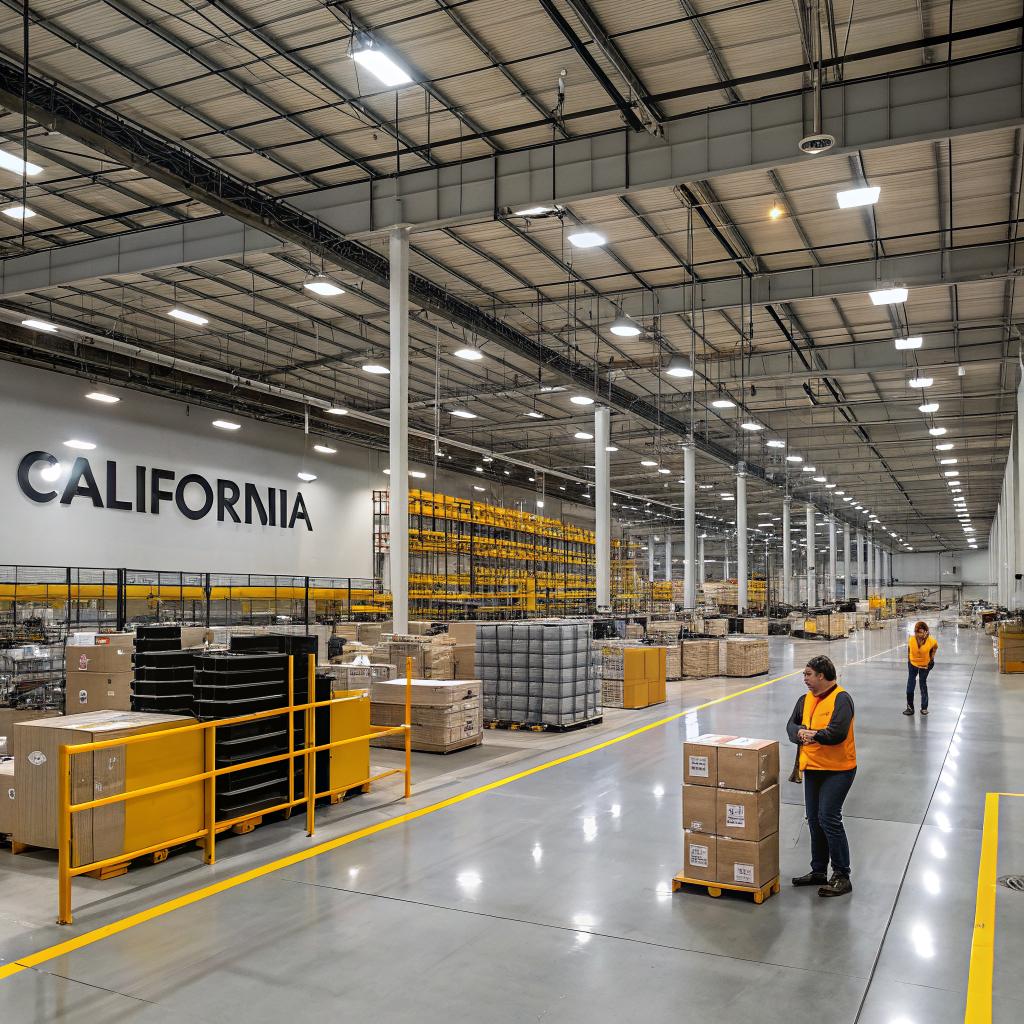
So, you are trying to figure out how California fulfillment centers really work for flooring brands, beyond the usual sales talk. The short answer is that the best centers in California quietly run your sample kits, heavy pallet shipping, white-glove delivery, and returns in a way that cuts your damage rate, shortens delivery times, and stops your team from getting buried in logistics.
The reason this matters is simple: flooring is bulky, fragile, and visual. Your customers want samples quickly, contractors hate delays, and broken boxes of planks get expensive very fast. California is a huge market and also a key gateway for imports. If you connect your flooring brand to the right California fulfillment center with the right systems and packaging habits, you can win more projects without turning your head office into a mini warehouse.
For flooring brands, the hidden secret is that fulfillment is not just shipping; it is part of your product experience and your reputation on every job site.
Here are some things you need to know before trusting your flooring inventory to a warehouse in California:
- Not every warehouse can handle heavy, long flooring cartons without high damage.
- Sample kits and display boards matter as much as full pallet orders.
- Location inside California changes transit time and shipping cost more than many brands expect.
- Good data and pictures of damage are as useful as insurance claims.
- Returns and leftover material handling can either save or waste a lot of money.
- Your ecommerce store, marketing team, and fulfillment provider need clear rules for backorders, samples, and promos.
How fulfillment connects to home renovation and flooring decisions
If you sell flooring, you already know that most homeowners and remodelers do not choose a product from a photo only. They:
- Order samples
- Visit a showroom or talk to a contractor
- Compare a few options side by side at home
- Then place a bigger order when they are sure
That journey is where fulfillment comes in. If a sample arrives chipped or late, the customer often just moves on to another brand. If a full order shows up with crushed corners or mixed dye lots, the installer loses trust in your label.
So when you think “fulfillment center,” do not picture a simple storage building. Picture a quiet extension of your showroom and website, where people:
- Pick the exact color and lot you promised
- Build kits and boards that match your catalog
- Pack cartons so they can handle rough truck routes
- Record what happened, so your team can see real data
The California angle: why this state is so central for flooring brands
California is not only a big consumer market for renovation projects; it is also a key entry point for flooring imports from Asia and beyond. Many brands use it as both a retail end market and an import hub.
Here is a simple way to think about it:
| Location | Good for | Possible downside |
|---|---|---|
| Southern California (LA / Inland Empire) | Container drayage from ports, shipping to West and Southwest, ecommerce coverage | Warehouse space costs and traffic |
| Northern California (Bay Area / Central Valley) | Shipping to Pacific Northwest and Northern CA markets | Further from LA/Long Beach port for imports |
| Out-of-state (e.g., Midwest) | Reach to East/Midwest, sometimes lower storage cost | Longer transit to West Coast renovation markets |
If a big share of your orders goes to California, Nevada, Arizona, Oregon, and Washington, it usually makes sense to stage at least some inventory in a California fulfillment center instead of shipping everything from the other side of the country.
What makes flooring different from other products in a warehouse
Flooring is not like books or clothing. A few quirks make it tricky for generic warehouses.
1. Heavy, long cartons that break easily
Even LVP or laminate cartons can be awkward for people and machines. Some issues that come up:
- Forklift drivers puncture the sides of pallets when they turn too fast.
- Long cartons flex if they are not stacked in the right pattern.
- Shrink wrap alone is often not enough to keep edges from crushing.
If your current warehouse treats flooring like general freight, you usually see:
- High damage ratio at the bottom rows of pallets
- Cartons with broken corners or open ends
- Angry installers sending you photos from job sites
Any fulfillment center that claims to be good for flooring but does not have clear pallet patterns, corner protectors, and internal rules for double-stacking is risking your product on every truck.
2. Color lots, dye lots, and shade variation
Many flooring lines have visible shade variation. Natural wood, porcelain tile, and even some vinyl. That is fine in a room, but not fine when a project gets mixed lots that do not match.
You want a fulfillment workflow where staff:
- Pick by lot or batch, not just by SKU
- Understand the difference between a sample-only lot and a sellable lot
- Can follow instructions like “do not mix lots in the same order”
This sounds basic, but in a busy building where staff deal with hundreds of SKUs, they will not do it unless the system and the training make it easy.
3. Samples, display boards, and marketing kits
This is where flooring brands sometimes lose track. Many treat samples as an afterthought and run them from the office or from a small room in the back.
For home renovation customers, your samples are the first physical contact with your brand. People remember:
- How fast it arrived
- Whether colors look like the website
- Whether the box felt organized or messy
A good California fulfillment partner for flooring will often:
- Store pre-cut planks for sample packs
- Assemble sample boxes or fan decks on demand
- Pack branded inserts, instructions, and QR codes
If you ship samples quickly and they look professional, you increase the chance that homeowners and contractors will pick your floor for the actual project, not just admire it.
How inventory strategy changes when you use a California fulfillment center
Let us talk about stock levels and product mix. Flooring brands often fall into one of two mistakes:
- They send too many SKUs to one warehouse and tie up cash.
- They keep very low stock and end up with constant backorders.
For a California warehouse that serves home renovation projects, it helps to split your inventory thinking into three buckets.
Bucket 1: Fast movers
These are colors or lines that sell predictably. For these:
- Keep deeper stock in California so you can serve the West quickly.
- Set a reorder point based on real usage, not guesswork.
- Watch seasonality: spring and early summer often spike with renovation work.
Bucket 2: Slow movers but important for your catalog
These include niche colors, specialty widths, or premium lines that sell less often but matter for your brand image.
For these, you can:
- Keep smaller quantities in California, backed up by more stock elsewhere.
- Be open about slightly longer lead times on your website or with dealers.
- Use your fulfillment data to decide whether to keep them, adjust pricing, or retire them.
Bucket 3: Samples and displays
Many brands forget that samples need their own stock strategy.
You might:
- Reserve some planks only for cutting samples, not for full orders.
- Track sample kit inventory separately from full boxes.
- Clean up outdated marketing materials so your warehouse does not ship old branding.
What flooring brands should expect day to day from a California 3PL
Let us get more practical. What does a normal week look like when your flooring lives in a third-party warehouse in California?
Receiving containers and inbound pallets
Typical steps:
- Warehouse books your inbound trucks or containers on a schedule.
- They unload, check quantities, and look for visible damage.
- They record SKU, lot numbers, and location in their system.
You should ask for:
- Photos when something looks off
- Clear rules for what counts as acceptable damage
- Lot tracking in their warehouse system, not on a separate spreadsheet only
Picking and packing orders
For flooring, this often splits into:
- Parcel-sized orders (samples, small orders, accessories)
- LTL or truckload orders (pallets of boxes)
The habits that help:
- Pre-set pallet patterns per product line
- Clear labeling on pallets for job names or dealer names
- Extra protection on corners, including corner boards or extra wrap for long hauls
If you sell online to homeowners, you also need:
- Live connection between your ecommerce platform and the warehouse system
- Stock levels that update quickly so you do not oversell
- Options for ground, freight, and liftgate shipping shown clearly at checkout
Samples and small parcels to homes
This part connects most directly with the home renovation readers of the site where your article appears.
For the end customer, small things stand out:
- How long it takes between clicking “order samples” and getting a tracking number
- Whether the shipping box is crushed or clean
- Whether samples are labeled properly, not just loose planks
In the background, your warehouse needs a distinct workflow for these. If samples go into the main picking flow with full pallet orders, they often get delayed or rushed.
Shipping speed vs damage: finding your balance
Flooring brands often face a trade-off between fast shipping and careful packing. Many warehouses are in a rush and move pallets out quickly, but then you pay later on damaged product and claims.
So what is a realistic approach?
- Set a same-day or next-day shipping rule for small orders and samples.
- Give the warehouse slightly more time for large or complex LTL orders if they need to build safer pallets.
- Ship to homeowners with services that include liftgate if the freight is heavy.
Sometimes, slightly slower but safer is better, especially for large home renovation projects where the installer has tight schedules. A one day delay that saves a rejected pallet can be a net win.
Special workflows that matter for flooring brands
Not every flooring brand needs all of these, but many will need at least a few.
1. Kitting for sample boxes and marketing sets
If you sell boxed sample sets, architect binders, or showroom kits, you need a “kitting” process. That is just a fancy way of saying the warehouse will assemble many items into one package repeatedly.
Good kitting habits:
- Standard bill of materials for each kit (which SKUs and how many pieces)
- Quality checks on labels and branding
- Pre-assembly of popular kits before big promo campaigns
This matters for home renovation too because many homeowners receive marketing packs from a designer or retailer, not directly from your brand. If those arrive clean and consistent, your brand looks serious.
2. Bundling trims, underlayment, and accessories with flooring
It is easy to forget the extras like trims, stair noses, and underlayment. Yet many complaints from installers come from missing or late accessories.
You can reduce that risk by:
- Creating “suggested accessory” rules per SKU in your ecommerce or ordering system
- Letting the warehouse pick those accessories into the same shipment automatically
- Labeling accessory boxes clearly so installers find them fast on site
3. Returns, leftovers, and restocking
Returns in flooring are messy. You get:
- Partial boxes
- Full boxes that sat in a garage
- Pallets returned from a job with some scuffs
A basic return policy like “we accept returns” is not enough. You need clear instructions for the warehouse:
- When a box can go back to stock
- When it should go to a secondary grade or clearance
- When it must be scrapped
Many brands discover a lot of “lost margin” here, because they do not track the resale of returned stock well. A better system can recover some value instead of writing off everything.
Data and reporting: not glamorous, but very useful
One of the real secrets of good fulfillment for flooring is not in how high the racks are or how shiny the forklifts look. It is in the reports.
Some data points to ask for:
- Damage by carrier and destination region
- Average days from order to ship for each order type
- Inventory turns per SKU in California
- Backorder frequency and duration
You can actually change your business with that data. For example:
- If certain products always break more on long truck routes, change the packaging or limit distance.
- If some colors sit too long, adjust marketing or inventory levels.
- If sample kits lead to full orders at a good rate, you can justify free samples or better packaging.
Many flooring brands think their problem is marketing or product, when some of their biggest wins are hiding in simple warehouse reports.
Common mistakes flooring brands make with California fulfillment
Here is where I may sound a bit blunt, but this is where brands hurt themselves.
1. Picking a warehouse only on storage cost
It is tempting to choose the cheapest storage rate per pallet. That can work if your product is simple. For flooring, this is risky.
Cheaper storage with high damage and slow turns can cost more than slightly higher storage with fewer problems.
Questions to ask yourself:
- How much did I spend on damaged product last year?
- How many orders were delayed or reshipped?
- How many upset dealers or contractors complained about freight?
If those numbers are high, storage cost is not your main problem.
2. Not updating the warehouse when your product line changes
Brands often refresh lines, change carton dimensions, or bring in heavier core materials. But they forget to tell the warehouse what changed.
This causes:
- Wrong pallet patterns for new sizes
- Old SKUs mixing with new versions on the same shelf
- Incorrect shipping weights in systems, causing freight issues
Make product changes a formal conversation with your fulfillment center, not a casual email.
3. Treating samples like an afterthought
We already covered this, but it is worth calling out again because it is tied directly to renovation decisions at the homeowner level.
If you run samples out of a box in the office, you are probably:
- Delaying orders when staff is busy
- Sending irregular or rushed packages
- Missing chances to track which samples lead to sales
A structured sample process at your California warehouse can feel boring in a spreadsheet, but it feels very real when a homeowner opens a clean box with clear labels.
How this all looks from the homeowner or contractor perspective
Let us step out of warehouse talk for a moment and think like someone planning a renovation.
A homeowner:
- Finds your brand on social media or a blog
- Orders a few samples
- Shows them to a contractor
- Commits to a full order
A contractor:
- Needs the right square footage on the right date
- Builds schedules around delivery
- Has limited room on the job site for early deliveries
Every fulfillment mistake shows up as:
- Late samples that slow the decision
- Broken cartons that delay installation
- Missing trims that force another truck roll
So, while a California warehouse can feel “far away” to the average homeowner, the quality of that warehouse is shaping their project timeline and stress level.
Questions flooring brands should ask a potential California fulfillment partner
To keep this practical, here are some questions you can actually use when you talk to a warehouse.
Questions about handling flooring itself
- What other flooring or building products do you handle now?
- Can you show pallet patterns you use for long cartons?
- Do you track lots or batches for products that need it?
- How do you handle long, heavy boxes in your racking system?
Questions about shipping and customer experience
- How fast do you pick and ship small parcel orders vs LTL?
- What carriers do you use for heavy home deliveries?
- How do you limit damage for long-distance shipments?
- Can you support branded packing slips, inserts, and labels?
Questions about data and support
- What reports will I see each week or month?
- How do I contact someone if a dealer calls with a problem?
- How often do you audit inventory accuracy?
- Can you support scheduled stock counts for my high-value lines?
If a warehouse gives vague answers or tries to brush off detailed questions, that is usually a sign to be cautious.
Bringing it back to your next renovation-season push
Many flooring brands treat fulfillment as a back-office topic until a busy season hits and problems explode. It might feel tempting to delay decisions about a California center until “later.” I think that is a mistake if:
- You see many orders going to the West Coast.
- Your team is packed handling samples and small orders in-house.
- You have recurring issues with damage or delays on long routes.
If you fix some of this before your next renovation wave, you give yourself and your customers a smoother run.
Common questions flooring brands ask about California fulfillment centers
Is it worth splitting inventory between a California warehouse and another region?
Sometimes yes, sometimes no. If you sell heavily into both coasts, it often helps to keep stock in two regions so you shorten transit times and reduce freight cost per order. If most of your sales are local to one area, splitting inventory might add complexity without real savings. The right answer comes from looking at your order history and freight bills, not just a guess.
How fast should samples ship for homeowners?
For most brands, same-day or next-day shipping on samples is a good target. People planning a renovation do not always decide in a single evening, but long delays after they click “order samples” often break their momentum. Fast samples also make your brand feel more reliable before the big purchase.
What is a good damage rate for flooring shipments?
You will almost never get to zero. Freight can be rough. But if you see frequent claims or more than a small percentage of orders with visible damage, there is probably room for better pallet patterns, better corner protection, or better carrier choices. The right partner should be open to reviewing specific cases and adjusting their process, not just filing more claims.
If you had to pick one thing to improve first in your California fulfillment setup for flooring, what would it be: safer pallet building, faster samples, or clearer data on damage and returns?