
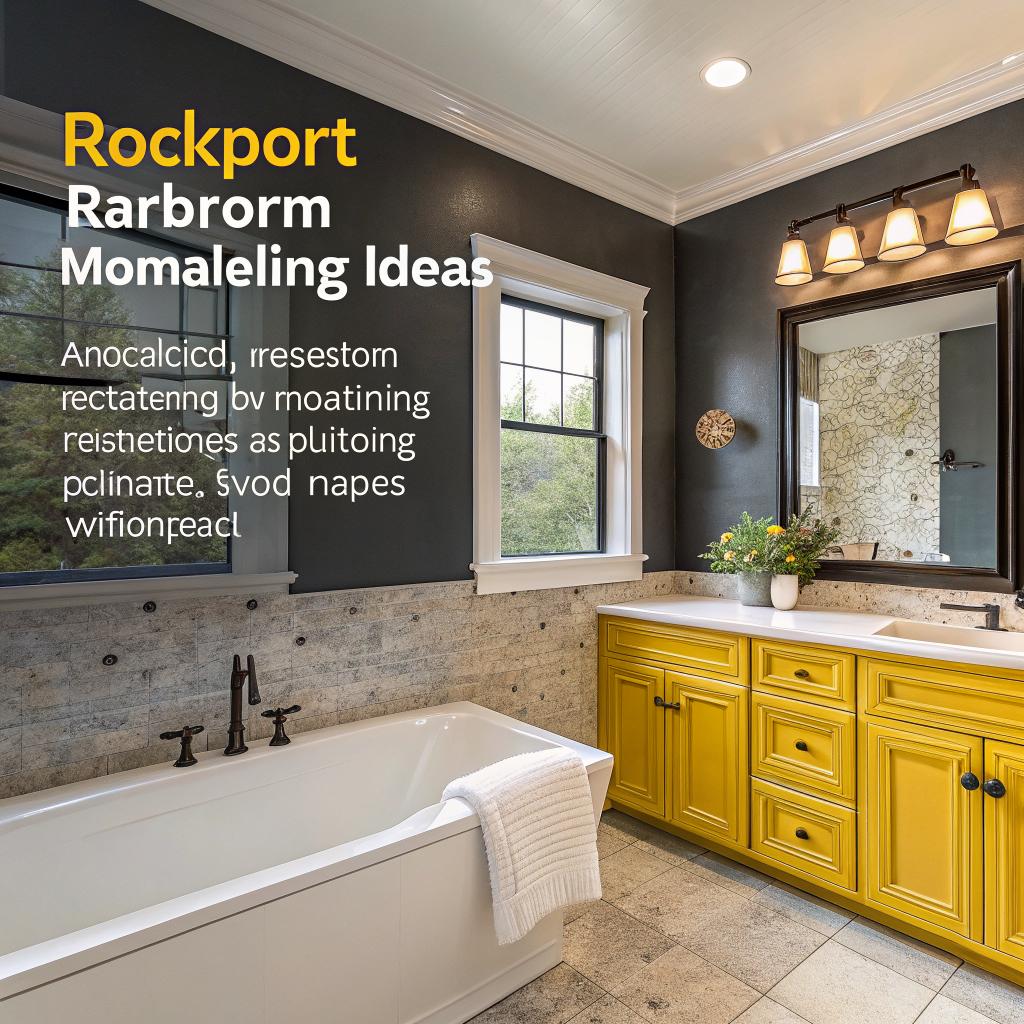
So, you are trying to find Rockport bathroom remodeling ideas that actually boost your home value, not just make the room look different. The short answer is that you raise value by updating the layout, surfaces, and fixtures in a way that feels modern, practical, and easy to maintain for the next buyer.
Most buyers focus on kitchens and bathrooms first, so money you put into a bathroom can come back pretty well when you sell, if you avoid overdoing it. You do not need a luxury spa set up. You need a clean, smart design with good storage, durable flooring, and finishes that will not scare off someone with different taste. That is where local choice matters too, because Rockport homes have their own style and climate concerns.
- Think about resale first, then your personal style.
- Focus on durable, water resistant flooring and surfaces.
- Upgrade the layout and storage, not just the colors.
- Use neutral finishes with one or two features that stand out.
- Match the remodel quality to the price range of your home.
- Plan for humidity, coastal air, and low-maintenance materials.
- Get clear on your budget and what actually affects value.
And since you are looking at Rockport in particular, it can help to talk with a local pro who sees what buyers are asking for. A good starting point for that is a company that does Rockport bathroom remodeling and knows both bathrooms and flooring across the area.
What buyers care about when they look at a bathroom
I want to start here because it shapes every choice you make.
When a buyer walks into a bathroom, they are not thinking in technical terms. They are asking, almost subconsciously:
- Is this clean and fresh?
- Does it feel current, or like a project I will have to deal with soon?
- Will this be easy to maintain?
- Is there enough storage for everyday life?
- Does the style fit the rest of the house?
If you remodel with those questions in mind, you usually end up with a bathroom that helps your home sell faster and at a better price.
If you want a bathroom that boosts value, aim for “move-in ready and easy to live with” more than “unique” or “trend of the year.”
You can still add personality, but you do it in small, swappable pieces like mirrors, paint, or decor, not in the permanent fixtures that cost thousands to change.
How much value can a bathroom remodel add in Rockport?
There is no universal number, but we can talk in ranges.
Many national reports estimate that a mid-range bathroom remodel recoups around 55% to 70% of its cost when you sell. In some coastal markets, buyers are pretty picky about condition, so a dated bathroom can also slow down a sale, which matters just as much as the numbers.
What I have seen in real examples:
- Light cosmetic bathroom update around $5,000 to $10,000 often helps the home feel “ready” for listing photos.
- Mid-level remodel around $15,000 to $30,000, with new fixtures, tile, and layout tweaks, tends to give the best mix of enjoyment and resale value.
- High-end spa remodel can help in higher priced homes, but in modest homes it can overshoot what buyers in that price range will pay.
A bathroom that matches the rest of the house in quality almost always does better than a bathroom that looks way cheaper or way fancier than everything else.
So, before you pick tile samples, ask yourself: what kind of buyer will probably buy this house next, and what do they expect? A retiree moving to Rockport, a young family, or someone looking for a coastal second home? Their expectations are not always the same.
Start with a plan, not with tile samples
It is easy to jump straight to Pinterest boards and paint colors. That is fun, but it is not where value comes from.
Think through these points first.
1. Decide the scope: refresh vs full remodel
Sometimes you do not need a full tear out. Sometimes you really do.
| Type of project | What it usually includes | When it makes sense |
|---|---|---|
| Cosmetic refresh | New paint, lighting, faucet, hardware, maybe vanity top and flooring | Fixtures are in good shape but look dated |
| Mid-range remodel | New vanity, toilet, tub or shower, tile, flooring, ventilation, minor layout tweaks | Layout is mostly ok, but everything feels worn or old |
| Full remodel | New layout, moving plumbing, expanding shower, sometimes re-framing walls | Bad layout, water damage, or you want to convert tub to walk-in shower |
If you are planning to sell within a few years, a cosmetic or mid-range remodel usually gives you a better return than a top-end full rework, unless the bathroom is truly in rough shape.
2. Set a realistic budget range
I will say this plainly: almost everyone underestimates bathroom costs at first.
You have plumbing, electrical, tile, fixtures, and, often, hidden problems like rot or old plumbing. In Rockport, moisture can be rough on older homes, so sometimes walls or subfloors surprise you.
When you plan, leave a margin. If you think you will spend $15,000, try to be mentally and financially ready for $18,000 or $20,000. Not because someone is trying to upsell you, but because small discoveries add up.
3. Respect the age and style of the house
A simple coastal cottage looks strange with a heavy, ultra-modern black tile bathroom. A newer Rockport house can handle a cleaner, more contemporary look.
You can still update heavily, just keep one eye on harmony with the rest of the house. Buyers notice when one room feels like it belongs in a different property.
Patterns and colors can change with trends, but layout, plumbing, and structure should feel like they belong to that house.
Flooring choices that add value and survive daily life
You mentioned home renovation and flooring, so let us be honest: bathroom floors can make or break the room. If the floor looks cheap or damaged, the whole space feels tired.
For a Rockport bathroom, you want flooring that is:
- Water resistant
- Non-slippery when wet
- Easy to clean
- Strong enough for coastal humidity
Popular bathroom flooring options
| Flooring type | Pros | Cons | Impact on value |
|---|---|---|---|
| Porcelain or ceramic tile | Water resistant, plenty of styles, works well with floor heat | Cold underfoot without heat, grout needs cleaning | Great for value, seen as an upgrade over vinyl |
| Luxury vinyl plank/tile (LVP/LVT) | Water resistant, warmer feel, softer underfoot, easier install | Can look cheaper if pattern or texture is low quality | Good value if chosen carefully, especially for mid-range homes |
| Natural stone (travertine, marble) | High-end look, very durable when maintained well | More porous, needs sealing, can be slippery and pricey | Can help in higher priced homes, overkill in smaller ones |
| Sheet vinyl | Budget friendly, water resistant, fewer seams | Lower perceived quality, can hurt value in higher priced homes | Works in rentals or low-budget updates, not great for long-term value |
For most Rockport bathrooms, porcelain tile or a good quality LVP is a smart pick.
If you go with tile:
- Pick a matte or textured finish to avoid slipping.
- Use a grout color that hides dirt a bit, not pure white.
- Consider larger tiles to reduce grout lines, but not so large that they look awkward in a small room.
If you lean toward LVP:
- Pick a line rated for bathrooms and wet areas.
- Avoid crazy patterns. Stick to simple wood or stone looks.
- Make sure the subfloor is flat, because LVP telegraphs bumps.
Think about how the bathroom flooring ties into the hallway or nearby rooms. That is where the flooring and general home renovation topic really connects. A consistent floor flow through the house can make the whole place feel larger and more polished.
Layout upgrades that feel small but change how the room “lives”
You do not always need to move walls to change how a bathroom works. Sometimes a few layout tweaks change everything.
1. Tub to walk-in shower conversion
This is one of the most common value-focused projects right now.
Pros:
- Walk-in showers are easier for many people to use, at any age.
- They can make a small bathroom feel larger.
- They give you a chance to use modern tile and glass.
Cons:
- If it is the only bathtub in the house, you might turn off some buyers with small kids.
- Project cost is higher than a simple tub replacement.
If your home has two bathrooms and at least one tub, converting one to a larger walk-in shower usually helps value and appeal. If you have only one bathroom and it already has a tub, think hard before you remove that tub. A deeper, nicer tub/shower combo can still feel upgraded.
2. Better storage without enlarging the room
Lack of storage is a common complaint in older Rockport homes.
Some simple, value-friendly ideas:
- Swap a pedestal sink for a vanity with drawers.
- Add a tall, shallow cabinet or linen tower where you currently have dead space.
- Build recessed shelves or niches into the shower wall.
- Use a wider medicine cabinet that looks like a mirror, not like a clunky box.
People want to put away daily items. Visible clutter makes even a nice bathroom feel cheaper.
3. Fix awkward door swings
Bath doors that hit the toilet or block the vanity feel bad, even if the finishes are new.
Possible tweaks:
- Replace a standard door with a pocket door if wall structure allows.
- Use a properly rated barn-style door outside the room where pocket is not an option.
- Reverse the swing direction if that solves collisions.
It sounds minor, but buyers notice when a small space actually “works.”
Fixtures and finishes that signal quality
Here is where a lot of the “feel” of value comes from. People might not know the brand, but they can sense the difference between a cheap plastic faucet and a solid metal one.
1. Vanity and countertop
For Rockport bathrooms, I would generally stay with simple, clean lines.
Consider:
- Wood-tone, white, or light gray vanities stay timeless longer than bold colors.
- Shaker-style fronts feel modern enough but not trendy.
- Quartz tops are popular because they are easy to clean and non-porous.
- Cultured marble or solid surface can work in mid-budget baths.
Avoid tiny pedestal sinks in main bathrooms if you can. They look nice in powder rooms, but daily life needs storage.
2. Faucets, shower sets, and hardware
You do not have to buy the most expensive brand, but avoid the absolute cheapest options.
Good rules:
- Stick with one finish throughout the room: brushed nickel, chrome, or black, not all three.
- Brushed finishes hide water spots better than polished ones.
- Check that the shower valve is pressure balanced or thermostatic. It makes the shower feel better and safer.
Matching, mid-quality fixtures in a simple finish usually look more expensive than a few random high-end pieces mixed with cheap ones.
3. Lighting that flatters the room and the person in the mirror
Old bathrooms often have a single bar light above the mirror. It works, but it can be harsh.
Some upgrades that help value and daily happiness:
- Two wall sconces at each side of the mirror, or a better quality horizontal light bar.
- Recessed light above the shower, rated for wet locations.
- Warmer bulbs, not the very stark blue-white ones, around 2700K to 3000K.
Good lighting makes the tile and flooring look better in listing photos too. That can affect how many people come see your house.
Wall surfaces, tile, and color choices
This is where personal taste tends to jump in, and where it is easy to hurt resale value without meaning to.
1. Tile style and placement
You do not need to cover every wall in tile. That can get expensive and sometimes feels cold.
Smart approaches:
- Tile inside the shower all the way to the ceiling, or at least higher than the showerhead.
- Use a practical, easy to clean tile for the main field, and maybe a small accent strip if you really want one.
- Keep accent tile moderate. One band or one niche accent is plenty.
For patterns, I would lean toward:
- Subway tile in a simple layout like stacked or brick.
- Large format stone-look tiles in neutral tones.
- Hex or small mosaic tiles on the shower floor, where more grout can improve grip.
The more extreme the pattern or color, the greater the risk that a future buyer will see it as “something I need to change.”
2. Paint colors and wall finishes
For paint, lighter shades usually help the bathroom feel bigger and cleaner. Not bright white, which can feel sterile, but soft whites, very light grays, or warm neutrals.
Tips:
- Use moisture resistant paint, especially in Rockport where humidity creeps into everything.
- Test the color in both daylight and artificial light. A gray can look purple at night in some lighting.
- Keep the ceiling simple and bright to give a bit of “height” to the room.
If you want a bit more character, you can use a slightly stronger color on one wall away from the main mirror so it does not reflect too strongly in your face.
Ventilation, moisture control, and long term value
This part is not glamorous, but it matters for value because moisture problems show up on inspections.
1. Upgrade or add a proper exhaust fan
In a coastal climate, you want steam moving out, not settling into drywall and trim.
When you upgrade:
- Pick a fan sized correctly for the room (measured in CFM).
- Vent it to the outside, not just into the attic.
- Consider a humidity-sensing fan that runs when it detects moisture.
This helps protect your new finishes and reduces the risk of mildew.
2. Use the right materials behind the scenes
Quality behind the tile matters as much as the tile itself.
Ask your contractor about:
- Cement board or approved waterproof backer around the tub and shower, not regular drywall.
- Waterproofing membranes on shower walls and floors.
- Proper slope to the shower floor toward the drain.
You might not see these details, but a home inspector or future buyer’s contractor might. A well built shower signals that the rest of the remodel is sound.
Accessibility and aging-in-place ideas that help resale
More buyers are thinking about long term comfort, especially in coastal towns where people retire or buy long-term homes.
You can add value by quietly planning for this, even if you do not need it yet.
Some ideas that do not make the bathroom look “clinical”:
- Curbless or low-threshold showers with a slight slope instead of a big step.
- Blocking in the walls behind tile for future grab bars, even if you do not install them now.
- Wider doorways when you are already reframing.
- Lever-style handles on faucets and doors instead of knobs.
These details help many people, not just older ones, and can set your home apart in the Rockport market.
How bathroom choices connect with flooring in the rest of the home
Since the audience is interested in flooring and renovation, it is worth taking a step back from the bathroom only.
A bathroom is not a separate world. Buyers walk from the entry, into the living space, down the hall, and into the bathroom. If the flooring stage feels disjointed, the home feels choppy.
Some practical ways to think about this:
- Use flooring transitions that are clean and low profile at the bathroom door.
- Keep wood tones in LVP or tile similar to main living areas if you use wood-look surfaces.
- Match baseboards and trim profiles so the bathroom feels like part of the same house.
For example, if you have warm, medium-tone LVP in the hall, choose a bathroom tile that shares some of that warmth, instead of a very cold gray. It does not have to match exactly, it just should not fight.
Common bathroom remodeling mistakes that hurt value
Sometimes avoiding mistakes helps more than chasing the latest trend.
Here are problems that often come up when people remodel for resale.
1. Over-personalizing the design
Bright patterned tiles everywhere, ultra-specific themes, or unusual fixtures might feel fun, but they limit your buyer pool.
Ask yourself: if someone with different taste walked in, would they see this bathroom as a plus or as a project?
If the answer is “project,” that probably means cost to them, which can show up as a lower offer.
2. Ignoring lighting and mirrors
People stare into the bathroom mirror daily. If the lighting is harsh or the mirror is too small or stuck at a weird height, the whole room feels off.
Spending a bit more effort on this part is usually worth it.
3. Mixing too many metals or styles
For example, chrome faucet, oil-rubbed bronze shower, black towel bars, and gold cabinet pulls. Some designers can make this work, but it is hard.
For most homeowners, one or two finishes across the room look better and more pulled together.
4. Using cheap, weak flooring
Bathrooms see spills, humidity, and a lot of stepping in and out with wet feet. Thin, low quality floors curl, peel, or stain.
Once a buyer sees one damaged area, they start wondering what else was done cheaply.
5. Forgetting storage
Nice tile and fancy fixtures do not help much if there is nowhere to put towels, toiletries, and cleaning products. People notice when they have to leave everything sitting out.
Working with local pros without losing control of the project
You do not have to hand over every decision to a contractor, but you probably also do not want to manage every detail alone.
For a Rockport bathroom remodel, local experience matters for:
- Knowing which materials hold up in the local climate.
- Understanding what buyers in the area look for.
- Handling permits and code issues with plumbing and electrical.
If you talk to contractors, bring:
- Photos of bathrooms you like, even if they are not exact matches.
- A list of “must haves” and “nice to haves.”
- Your realistic budget range.
And ask direct questions:
- What kind of waterproofing system do you use in showers?
- What brands of fixtures and flooring do you trust in this climate?
- How do you handle changes if we discover hidden damage?
A good contractor does not just say “yes” to everything. They should push back when an idea hurts function or value. That is not them being difficult, that is them protecting the project.
Practical example: turning a dated Rockport hall bath into a value booster
Let me walk through a simple scenario to make all this less abstract.
Imagine a 1980s Rockport home with:
- A narrow hall bath with a tub/shower combo
- Old square tile on the floor with stained grout
- Laminate vanity top and boxy oak cabinets
- Single mirror and bar light
- No real ventilation fan
You want to improve resale value over the next few years, but you do not want to sink luxury-level money into it.
A smart remodel plan might be:
- Keep the basic layout to avoid moving plumbing.
- Replace the tub with a new tub, adding a simple white subway tile surround to the ceiling.
- Install porcelain tile floor with a light, natural stone look.
- Add a new vanity with shaker fronts, soft-close drawers, and a quartz top.
- Engineer a larger, framed mirror or two smaller mirrors, with upgraded lighting above or at the sides.
- Install a proper ventilation fan vented to the outside.
- Paint the walls a soft, warm neutral and use matching metal fixtures throughout.
Result:
- The bathroom looks clean, current, and easy to live with.
- Buyers do not see a “project” when they open the door.
- The flooring, vanity, and fixtures all support a higher perceived value.
No wild patterns. No risky colors. Just a thoughtful update that respects the home and the area.
Questions homeowners often ask about value-focused bathroom remodeling
Q: Is it worth remodeling a bathroom if I plan to sell in 1 to 3 years?
A: In many Rockport homes, yes, if the bathroom is clearly dated or worn. You do not have to gut it, but fresh flooring, fixtures, and paint can help you attract more buyers and stronger offers. If your bathroom is already in good shape, a deep clean, fresh caulk, and small updates might be enough.
Q: What is the single best upgrade for value: tub, shower, vanity, or flooring?
A: If I had to pick one area that buyers notice the most, it tends to be the shower or tub area. A clean, modern shower or tub surround signals that the bathroom has truly been updated, not just “dressed up.” Flooring is a close second, because damaged or dated floors drag down the whole look.
Q: Should I follow the latest design trends to impress buyers?
A: I would be careful with that. Trends move fast. You can borrow small elements, like a certain tile pattern or cabinet color, but keep the main pieces neutral and calm. Think of trends as accents, not the foundation.
Q: Do I have to match the bathroom style to my kitchen?
A: They do not have to match perfectly, but they should feel like they live in the same home. If your kitchen is very traditional and your bathroom is ultra-modern, the jump can feel strange. Repeating similar cabinet styles, colors, or hardware finishes can help tie things together.
Q: How do I know when to stop upgrading so I do not overspend for my neighborhood?
A: Look at other homes for sale around you, especially those that sold quickly. Pay attention to their bathrooms. If none of them have stone walls and heated floors, then adding those in your home might not pay off. Aim for being “one of the nicer” bathrooms in your price range, not the most expensive bathroom on the block.
What part of your Rockport bathroom feels most out of date right now: the floor, the shower, or the storage?