
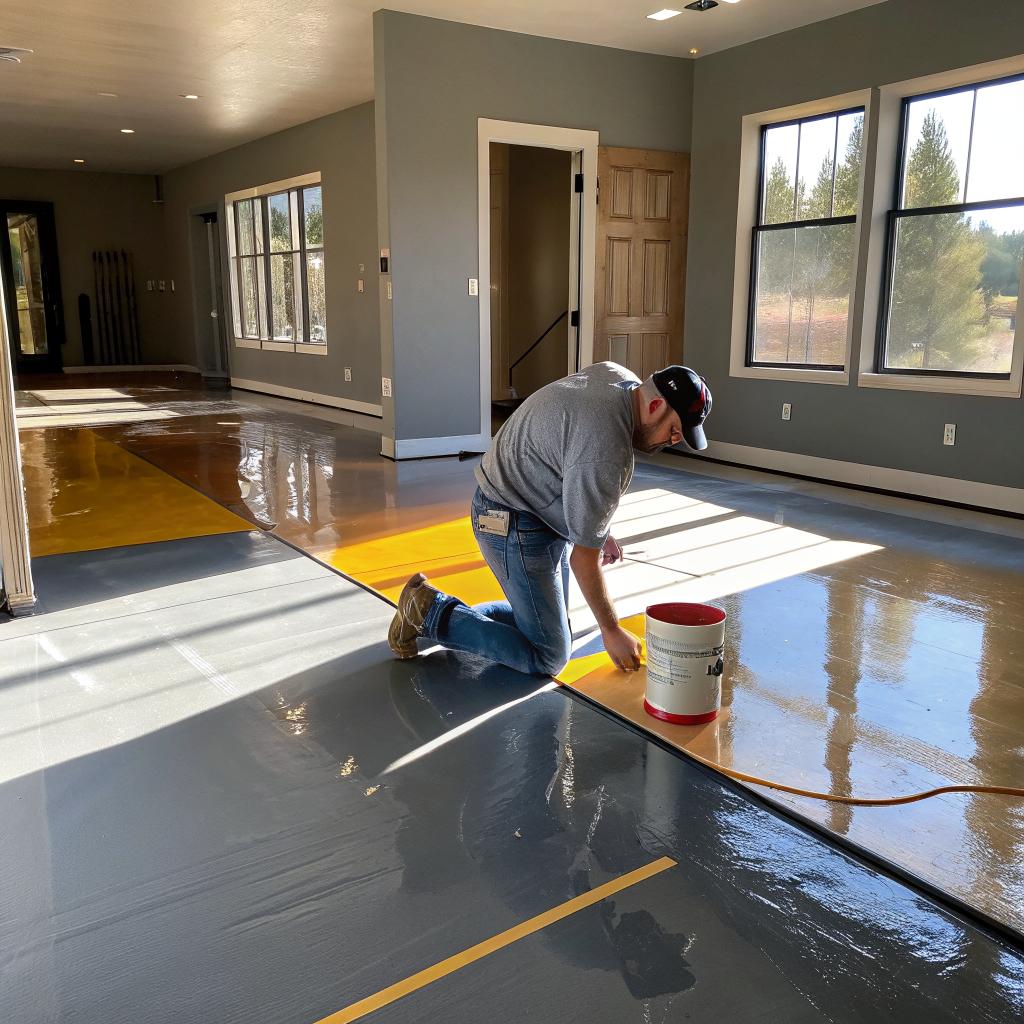
So, you are trying to figure out how a residential painter in Denver can actually elevate your floors, not just your walls. The short answer is that a good residential painter Denver can resurface, coat, stain, or refinish many types of floors so they look better, last longer, and are easier to clean.
Floor work from a painter is not the same as what a flooring installer does. You are not ripping everything out and starting over. You are working with what you have and upgrading the surface. That might mean painting a tired concrete basement, staining hardwood that looks dull, or putting a coating on a garage floor so it no longer turns white and dusty every time you sweep. It is a different kind of project, but it can still change how your home feels under your feet.
- Floor-friendly coatings and stains are often handled by painters, not just flooring companies.
- A painter can save you from full replacement if your floors are structurally fine but ugly.
- Prep work is everything: cleaning, sanding, patching, and priming often take longer than painting.
- The right coating can resist scratches, water, and hot tire pickup from cars.
- Bad prep or the wrong product can peel or yellow and cost more to fix later.
- Not every painter is strong at floor work, so you need to ask very specific questions.
How painters fit into flooring projects
When people think about painters, they think about walls, trim, and maybe cabinets. Floors sit in a strange middle space. Are they for flooring contractors, or are they for painters? The honest answer is: it depends on what you want to change.
If you are changing material, like going from carpet to hardwood or tile, that is flooring contractor territory. If you are changing the surface of what is already there, a painter can often handle it.
A painter is a good fit when your floor is structurally sound, but you want a new color, sheen, or protective layer.
This includes things like:
- Concrete floors in basements, garages, laundry rooms, or workshops
- Previously painted or stained concrete patios
- Hardwood floors that need staining and clear coating
- Stairs that need paint or stain on treads and risers
- Older wood floors where you want a painted pattern instead of natural wood
In a city with a lot of older homes, like many Denver neighborhoods, there are plenty of these floors hiding under rugs or old vinyl. A painter with floor experience can bring them back to life without tearing them out.
What a residential painter can do for different floor types
Not all floors want the same treatment. Some want stain, some want paint, some want a clear coat, and some want to be left alone. This is where you need someone who knows products, not just colors.
Concrete floors: basements, garages, and more
Concrete gets ignored a lot. It is strong, but it can look dusty, stained, or just cold. A painter who understands concrete can pull a surprising amount of style out of a slab.
Typical options include:
- Concrete floor paint (good for lighter traffic areas)
- Epoxy or polyaspartic coatings (stronger protection for garages and shops)
- Stained or tinted sealers for a more natural, mottled look
Each one has its own prep steps. For example, an epoxy system for a garage might involve:
- Degreasing oil spots
- Etching or grinding the surface to open up the pores
- Repairing cracks and small pits
- Applying a primer, then the epoxy, then a clear top coat
That might sound like a lot, and yes, it can take more than one day. But if you have ever walked on a nice coated garage floor, you know it feels cleaner and brighter. It also keeps your concrete from soaking up road salts and melted snow from Denver winters.
For concrete, the main goal is to create a bond between coating and slab. If that bond is weak, no fancy product or color will save it.
Hardwood floors: stain and clear coat
Some painters handle hardwood floors, some do not. This is where you need to ask questions. Floor sanding and staining is closer to a specialty craft. But a skilled residential painter who regularly works on interiors might offer:
- Light sanding and buffing for a refresh
- Staining to change or deepen the color
- Applying polyurethane or water-based clear finishes
- Painting or staining stair treads and risers
Here is the big thing with hardwood: dust and timing. Sanding creates dust, and clear coats need clean air and time to cure. Planning is everything here.
| Option | Look | Pros | Cons |
|---|---|---|---|
| Oil-based polyurethane | Warmer, slight amber tone | Very durable, familiar look | Longer drying time, stronger odor, can yellow over time |
| Water-based polyurethane | Clearer, keeps wood closer to natural color | Faster drying, lower odor | Can show scratches more on dark stains if not applied well |
| Hardwax oils | More natural, matte | Easier spot repairs, softer look | More upkeep, not every painter uses these |
I have seen people rush this step and walk on the floors too soon. You can literally see footprints frozen into the finish. That is the sort of thing a careful painter will warn you about in advance.
Painted wood floors
Painting wood floors is a bit controversial. Some people love the charm of a painted floor in an attic, porch, or older bedroom. Others think it ruins the wood forever. The truth sits somewhere in the middle.
Paint can hide patched boards, old stains, or mismatched wood. It can also create patterns, like stripes or checkerboard designs, that you cannot easily do with stain. But it requires:
- A very clean, dull surface so the paint sticks
- A good bonding primer designed for floors
- Durable porch and floor paints or urethane-fortified products
If you want a quick change and do not mind touch-ups down the road, this can be a fun choice. A careful painter will help you set expectations. Paint on floors will not be perfect forever, especially in high traffic areas.
Stairs and landings
Stairs take a ton of abuse. Shoes, pets, kids, and moving furniture grind sand and dirt into every tread. Many people ignore stairs because they are a pain to work on. A painter who is patient with detail work can give you a big upgrade here.
Common options:
- Painted risers with stained treads
- Fully painted stairs with a strong floor paint
- Clear coated hardwood treads with a satin or semi-gloss finish
There is also the workflow side. You cannot shut off your stairs for three days in most homes. So planning the timing, alternating steps, or doing one side at a time can be part of the conversation.
Ask how the painter plans to handle traffic during the job. A good plan for walking paths can matter more to you than the exact brand of finish.
Why painters can be a smart choice for floor upgrades
You might be thinking: why not just call a flooring company every time? That is a fair question. There are a few reasons a residential painter can make more sense for certain floor projects.
They are used to surface prep
Most painters live in the world of prep. Scraping, sanding, caulking, patching, cleaning. Floors are just another surface that needs that mindset. For coatings and paints, this is often more helpful than someone who mainly installs new materials and rarely works with coatings.
They can coordinate walls, trim, and floors
If you are updating more than one thing, it sometimes helps to have one person thinking about color and sheen as a whole. For example:
- Doing basement walls, ceiling, and concrete floor together
- Refreshing a staircase, rails, and wall color at the same time
- Painting a garage interior plus coating the garage floor
When one crew handles all of that, you cut down on miscommunication. You also avoid one trade blaming the other if there is dust or overspray.
They often manage small jobs better
Flooring contractors sometimes focus on larger replacements. If you only want your garage floor coated, or one small basement room painted, a painter can be more open to that scale of work. This is not always true, but you see it a lot.
Key prep steps a painter should follow for floors
If you only remember one thing from this section, let it be this: almost every floor failure comes from bad prep, not bad paint. So if a painter seems casual about prep, that is a red flag.
1. Inspection and testing
A good painter looks before they promise. That means:
- Checking for moisture issues in concrete (dark spots, efflorescence, musty smell)
- Looking for loose boards or large gaps in wood floors
- Seeing what products are already on the floor
Sometimes they might even do a tape test on an old coating to see how well it sticks. It is a simple thing, but it tells you a lot.
2. Cleaning
Floors collect everything: oils, dust, cleaners, wax, and sometimes things you cannot even name. If stuff is on the floor, it is between your coating and the surface. That is a problem.
Cleaning usually involves:
- Vacuuming and sweeping thoroughly
- Using degreasers on spots with oil or tire marks
- Rinsing properly so no soap film remains
On wood, you never want to soak the boards. Too much water can raise the grain or cause cupping. So a painter needs to be careful with how they clean hardwood.
3. Mechanical prep
This is the unglamorous step that often decides if the job holds up.
- Concrete: grinding, sanding, or etching to open the surface
- Wood: sanding, scraping loose finish, filling nail holes
If a painter talks about putting a coating straight on a smooth, sealed concrete floor with no prep, that is not a good sign. Coatings need a profile to bite into.
4. Priming or first coat
On many floors, the first coat does more than add color. It helps bonding. It might be:
- A bonding primer that sticks to older coatings
- A moisture-tolerant primer for basement slabs
- A sealer to lock in wood tannins before stain or finish
This is where product choice matters a lot. Ask what they plan to use and why. If the answer is just “this is what we always do” without any reason tied to your surface, that should bother you a little.
5. Top coats and cure time
Even the best product needs time. Different coatings have different “dry to touch” and “ready for light use” windows. And then a longer cure time before heavy traffic or rugs.
| Floor type | Typical walk-on time | Full cure estimate |
|---|---|---|
| Concrete with epoxy | 24 hours for light traffic | 5 to 7 days before parking vehicles |
| Hardwood with water-based poly | 24 hours with socks only | 7 days before rugs or heavy furniture |
| Painted wood floors | 24 hours for careful use | 7 to 14 days for full hardness |
Realistically, people often walk on floors sooner than recommended. A careful painter will at least warn you what might happen if you rush, like scuffs, dents, or imprints from furniture pads.
Common problems when floors are painted or coated badly
This part might sound negative, but it is helpful to know what to avoid. Many floor problems show up fast and are hard to ignore.
Peeling or lifting
This happens when the coating did not bond well to the surface. Reasons include:
- Oil, grease, or sealer left on concrete
- Wax or cleaning residue left on wood
- Applying over a surface that was too smooth
Once it starts peeling, it usually keeps going. Fixing it often means grinding or sanding everything off and starting again.
Hot tire pickup on garage floors
You might see tire-shaped marks where the coating has lifted. That is often from:
- Using regular wall paint or porch paint in a garage
- Putting a coating on without proper etching or grinding
- Driving on it before full cure
Good industrial-grade coatings cost more, but they resist this problem better. A painter should talk openly about what the product is rated for.
Yellowing and discoloration
Some clear coats, especially older oil-based ones, tend to yellow with age. On light floors or in sunny rooms, you can really see it. Also, some epoxies meant for interiors can amber in strong sunlight.
If you care about color staying true, ask about UV stability. It is a simple question that can save a lot of frustration later.
Slippery surfaces
High gloss looks nice in photos but can be slick in real life, especially if the floor gets wet. A painter with floor experience might suggest:
- Satin or matte finishes in busy areas
- Adding a fine grit to coatings in garages or entryways
This is one of those tradeoffs where looks and safety pull in different directions. You have to decide which matters more in each room.
Questions to ask a residential painter about floor work
This is where you can separate “we will try anything” from “we actually do this a lot.” You do not need to be an expert. You just need a few clear questions.
- What kind of floor projects do you do most often?
- Have you done floors like mine before? Can you describe one recent job?
- What products do you recommend for this surface, and why those?
- How will you handle surface prep? Will you be grinding, sanding, or just cleaning?
- How long before we can walk on the floor? Move furniture? Put rugs down?
- What is the realistic life of this coating before it needs touch-ups?
- How do you control dust so it does not get into the finish?
If the answers sound vague or rushed, that is a sign to keep looking. A painter who has done this a lot will usually have specific stories and simple explanations, not just product names.
Cost and value: when does painting beat replacing?
Floor projects sit on a spectrum of cost and disruption. Painting or coating is rarely the cheapest possible thing if you do it right, but it is often cheaper than full replacement.
| Type of upgrade | Typical disruption | When it makes sense |
|---|---|---|
| Concrete floor coating | 1 to 3 days out of use | Garage, basement, shop where slab is sound but unattractive |
| Hardwood sand & finish | Several days, limited access | Wood is worn or scratched but not structurally damaged |
| Painted wood floors | 1 to 2 days, plus cure time | Secondary spaces, old floors with stains or patches |
| Full flooring replacement | Several days, more dust and noise | Subfloor issues, water damage, or you want a new material |
Sometimes people rush to replacement because it feels more permanent. But if the base floor is solid, a painter can stretch the life of what you already have. That can free up budget for other projects: maybe new lighting, better trim, or upgraded countertops.
How floor work connects with the rest of your renovation
Since you are on a site about home renovation and flooring, it is worth zooming out for a minute. Floors do not exist by themselves. They work with walls, trim, lighting, and furniture.
Color and light
A darker floor can make walls feel lighter, and the opposite is also true. In a room with low ceilings, you might want:
- Mid-tone or lighter floors
- Walls in a light, soft color
- Trim that does not jump too far from the wall color
In a basement, a coated concrete floor in a light gray can reflect more light than bare concrete. That alone can move a space from “storage” to “usable room” in your head.
Texture and maintenance
Glossy surfaces show dust and footsteps more. Matte surfaces hide more but can hold dirt. There is no perfect finish. You have to match finish to how you live.
If you have pets and kids, a satin or matte floor finish can be kinder. On a garage floor, a slight texture in the coating can make it easier to walk on when it is wet or snowy.
Phasing projects
If you have a longer renovation list, you might wonder where floor painting fits. A simple order that works a lot of the time is:
- Do rough work first: electrical, plumbing, framing if needed
- Finish drywall and sanding
- Paint ceilings and walls
- Do floor coatings or finishes
- Touch up walls and trim at the end
This avoids dropping tools on finished floors or grinding dust getting into fresh finishes. A painter who understands floors will often push for this sequence or some version of it.
Where painters shine and where you should bring in others
I do not think painters are the answer to every floor problem. They fit best in certain bands of work.
Good fits for a residential painter:
- Concrete floors that need coatings or paint
- Garages, basements, laundry rooms
- Stairs and landings with paint or stain work
- Hardwood that needs surface refinishing, when they are experienced in that area
Better fits for other trades:
- Floors with structural problems or major water damage
- Subfloor repairs and heavy leveling work
- Installing new hardwood, tile, or luxury vinyl
A good painter will usually be honest about this. If they try to take on everything, including work they clearly do not do often, that is where I would hesitate.
Final thoughts, with a practical angle
If you are thinking about giving your floors a new look without tearing everything out, a residential painter in Denver can be a very practical partner. They bring a focus on prep, coatings, and finishes that sits right at the edge between painting and flooring.
Just do not treat floors like walls. They take more abuse, need stronger products, and punish shortcuts more quickly. Ask direct questions, insist on clear prep steps, and take cure times seriously. Those three things alone can make the difference between a floor that looks good for one season and one that holds up for years.
Common questions about painters and floor upgrades
Can a painter really handle my garage floor, or do I need a separate company?
If your concrete is in decent shape, many residential painters who offer floor coatings can handle garages. The key is whether they grind or etch the surface and use coatings meant for vehicle traffic, not just regular paint. Ask for at least one recent garage project they have done.
Is painting wood floors a bad idea?
How long will a coated concrete floor last?
Light use areas like basements can stay in good shape for many years with a quality coating and proper prep. Garages with cars, road salts, and heavy tools are tougher. A well done system can still last several years, but you might see wear sooner where the tires sit and turn.
Will floor work from a painter add value to my home?
It can. Clean, well finished floors help buyers feel like the home is cared for, even if they do not analyze it. A coated garage, a bright basement, and clean stairs are small things that support the bigger picture of a maintained house. They may not be the main reason someone buys, but they rarely hurt.
What is the easiest floor upgrade to live through?
Smaller concrete coating jobs and light refreshes on hardwood are usually easier than full sanding or major replacement. You still need to move things and give the surface time to cure, but the work itself tends to be faster and less invasive than tearing out floors.