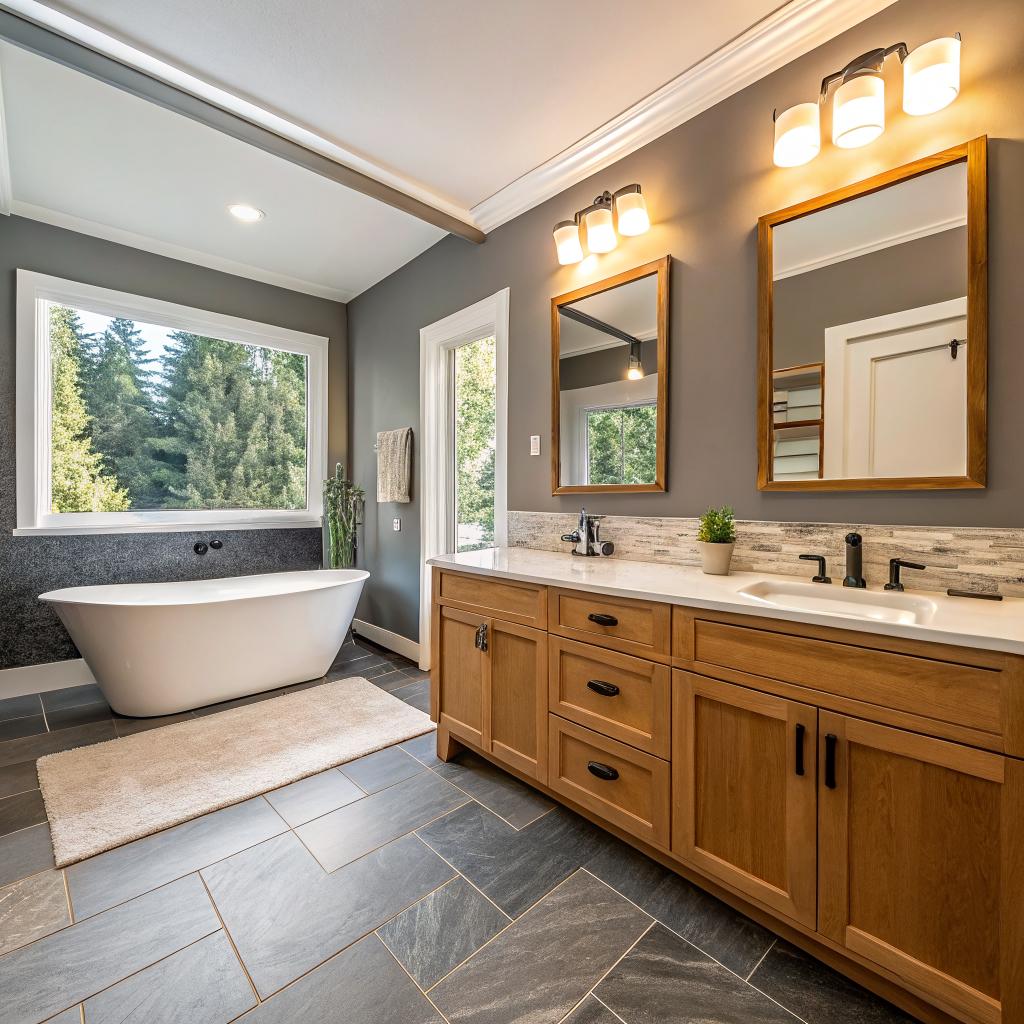
So, you are searching for bathroom remodel Bellevue WA ideas for dream floors. The short answer is that the best bathroom floors in Bellevue tend to be porcelain or ceramic tile, luxury vinyl, or natural stone, with heated floors and good waterproofing under everything.
You are dealing with moisture, cold winters, and probably a long-term investment in your home, so the floor you choose needs to look good, feel good, and survive real daily use. The good news is, once you understand how different materials behave in a Pacific Northwest bathroom, it is much easier to narrow things down and talk clearly with a contractor or flooring store.
- Things you need to know:
- Porcelain and ceramic tile are still the most common picks for bathroom floors in Bellevue.
- Luxury vinyl tile or plank is a strong option if you want warmth, softness, and lower cost.
- Natural stone looks great but needs more maintenance and a careful installer.
- Heated floors can change how the whole bathroom feels, especially on cold mornings.
- Waterproofing under the floor is just as important as the surface you see.
- Slip resistance and texture matter a lot, especially in homes with kids or older adults.
- Good installation and planning usually matter more than the exact product name on the box.
If you are planning a full bathroom remodel Bellevue WA, the floor ties in with your shower, vanity, lighting, and even storage. So I will focus on floors, but I will keep the bigger remodel picture in mind too.
How to think about bathroom floors in Bellevue, not just what to pick
When you look at flooring samples, it is easy to focus on color and pattern. But before you fall in love with a tile, step back and ask a few questions.
If you only remember one thing, remember this: the right bathroom floor is not just about looks, it is about how it feels, how it cleans, and how it handles water year after year.
Here are a few things to think through before you choose any product.
1. How wet is your bathroom, really?
Some bathrooms barely see any water outside the shower. Others have kids who somehow splash water on the ceiling. Try to be honest about your own space.
Ask yourself:
- Do you have a walk in shower with a curtain or a glass door?
- Does water tend to splash out around the tub?
- Do you have good ventilation, or do you see condensation on the mirror for a long time after a shower?
- Is there anyone in the house who is rough on finishes, like teenagers or small kids?
If your bathroom is very wet, you want:
- Excellent waterproofing under the tile or other floor.
- Flooring that does not swell with water exposure.
- Good grout or seams that will not open up quickly.
Tile, stone, and higher quality luxury vinyl all handle splashes well when installed correctly. Real hardwood or cheap laminate usually struggles in this type of space.
2. Comfort and warmth in a Pacific Northwest climate
Bellevue winters are not brutal, but tile on concrete can still feel cold under bare feet. Some people do not mind. Many people do.
Think through:
- Are you open to radiant floor heating?
- Do you prefer stepping out of the shower on a softer floor?
- Do you run the bathroom fan or heater often?
If you hate cold floors, you have two paths:
- Install heated floors under tile or stone.
- Choose a naturally warmer material like luxury vinyl plank, with a good underlayment.
You can also mix and match, for example tile in the main area with a teak mat in front of the shower, but that has limits. If the floor itself feels wrong, it will bother you every day.
3. Maintenance, cleaning, and your habits
People often say they are fine with extra maintenance to get a certain look. Then real life happens.
Be honest about:
- How often you clean floors now.
- Whether grout lines bother you when they get dingy.
- If you are willing to reseal stone every year or two.
Porcelain tile with a good grout sealer is usually easy to live with. Stone can be more work. Sheet vinyl and luxury vinyl usually clean up fast, but some cheap versions can show scratches.
If you know you dislike fussy cleaning, lean toward low maintenance floors and smaller grout lines, even if one fancy tile looks amazing on Instagram.
The main bathroom flooring options in Bellevue, compared
To make this less abstract, here is a simple comparison table. Prices are ballpark only and can shift with brand, pattern, and installer.
| Floor type | Typical installed cost (per sq ft) | Water resistance | Comfort underfoot | Maintenance level | Good for Bellevue bathrooms? |
|---|---|---|---|---|---|
| Porcelain tile | $12 – $25+ | Excellent | Cool, hard, great with radiant heat | Low to moderate (grout care) | Yes, very common choice |
| Ceramic tile | $10 – $20+ | Very good | Cool, hard | Low to moderate | Yes, good mid range pick |
| Natural stone (marble, slate, etc.) | $18 – $40+ | Good, varies by stone | Cool, solid | Higher, needs sealing | Yes, but best for careful owners |
| Luxury vinyl tile/plank (LVT/LVP) | $8 – $18+ | Very good | Warmer, slightly softer | Low | Yes, especially family homes |
| Sheet vinyl | $6 – $14+ | Very good | Warm, softer | Low | Yes, smaller baths or budget driven |
| Engineered wood | $14 – $25+ | Fair | Warm, natural | Moderate to high | Risky, usually not worth it |
Prices above include material and typical labor ranges, not luxury brands or structural work.
Porcelain and ceramic tile ideas for Bellevue bathrooms
Tile is still the default for many remodels in this area. It feels permanent and can handle moisture well if installed correctly.
Porcelain tile: the workhorse for dream floors
Porcelain is dense and less porous than regular ceramic. That means better water tolerance and usually better durability.
Why porcelain often makes sense in Bellevue bathrooms:
- Handles moisture and temperature swings well.
- Huge range of styles: stone look, wood look, concrete look.
- Combines well with in floor heating systems.
- Stands up to kids, pets, and heavy use.
Some ideas that tend to look good and not age quickly:
- 12 x 24 inch stone look porcelain in light gray with a matte finish.
- Herringbone layout with wood look porcelain, but in a calm tone, not too red or orange.
- Large format tiles with a subtle concrete look if you like a more modern bath.
Think about grout color too. Many people pick grout that is too light. In practice, a mid tone grout hides daily dust and small stains better than bright white.
Ceramic tile: similar look, often lower cost
Ceramic tile is less dense than porcelain, but still fine for most bathrooms if installed with good waterproofing.
You might pick ceramic tile if:
- You are working with a tighter budget.
- You find a wall and floor combo that only comes in ceramic.
- You prefer a slightly softer surface underfoot.
If the bathroom is small and not exposed to heavy water around the toilet or tub edges, ceramic floor tile with a proper backer board and waterproofing membrane can last a long time.
Slip resistance and texture
A bathroom floor that looks nice but is slippery when wet is not a good trade.
Look for:
- Matte or honed surfaces instead of highly polished finishes.
- Tiles rated for “floor” use, not just wall use.
- Smaller tiles in very wet zones, like in a curbless shower, since more grout joints can improve traction.
If you are aging in place or have parents visiting often, this detail matters even more.
If safety is a priority, pick a floor tile with some texture and pair it with a soft bath mat, rather than chasing a glossy magazine look that fights you in daily life.
Natural stone in Bellevue bathrooms: beautiful, but be realistic
Stone floors can look amazing. Marble, slate, travertine, quartzite, each has a different personality. The problem is, stone is less forgiving.
Pros of stone in a Bellevue bathroom:
- Real depth and variation that printed patterns cannot fully match.
- Helps resale in higher end homes when installed well.
- Works beautifully with underfloor heat.
Cons:
- Needs periodic sealing and more careful cleaning.
- Some stones, like marble, etch and stain more quickly.
- Material and install costs are higher.
Good fits for stone floors:
- Homes where owners already care for stone in other rooms.
- Primary suites where kids are less likely to drag toys across the floor.
- Bathrooms where you want a single continuous look from floor into the shower.
If you love the look of stone but worry about maintenance, a good stone look porcelain tile can be a nice middle path.
Luxury vinyl floors: practical “dream” for many Bellevue families
Not every dream floor needs to be stone or tile. For many families in Bellevue, the dream is a bathroom that feels warm, soft enough, and easy to maintain.
Luxury vinyl plank (LVP) and luxury vinyl tile (LVT) have improved a lot.
Why they work well in bathrooms:
- Most products are fully waterproof at the surface.
- They feel warmer than tile when you step on them.
- They handle impact better, so dropped items are less likely to crack the floor.
- You can sometimes run the same flooring into the hallway for a continuous look.
Things to watch:
- Avoid the very cheapest vinyl; it can look fake and wear faster.
- Make sure seams are tight around tubs, showers, and toilets.
- Ask about how the product reacts to high humidity and if the subfloor needs special prep.
A realistic wood look vinyl in a muted tone can make a bathroom feel warmer and calmer, especially if your walls and vanity are on the cooler side.
Heated bathroom floors in Bellevue
Radiant floor heating is one of those upgrades that you might think is a luxury, until the first January morning you walk on warm tile. It changes how you feel about stepping out of the shower.
You have two main types:
- Electric radiant heat mats or cables.
- Hydronic (water based) systems, more common in full home builds or major renovations.
For a typical Bellevue bathroom remodel, electric systems are more common. They go under tile, stone, or sometimes other floors depending on the product.
Basic things to know:
- You will have a thermostat, often programmable, to set times and temperatures.
- They can be more efficient than blasting baseboard heat, especially in a small space.
- They slightly raise the floor height, which the installer must plan around at doors and transitions.
If your budget allows, pairing porcelain tile with radiant heat is one of the most comfortable combinations you can pick.
Waterproofing under the floor: what you do not see, but really should care about
Many Seattle area homes, including parts of Bellevue, have issues with moisture and hidden leaks. The top surface of your floor matters, but the layers under it matter just as much.
Think of it as a simple system:
- Subfloor (plywood or concrete).
- Underlayment (cement board, foam board, or membrane system).
- Waterproofing layer (membrane, coatings, or specialty underlayment).
- Tile or other finish floor.
Good questions to ask your contractor or installer:
- What underlayment do you plan to use for the floor and shower?
- How will you waterproof around the tub, toilet, and any curbless shower area?
- How are transitions to nearby rooms handled so spills do not run under other floors?
A strong bathroom floor in Bellevue is not just a pretty surface, it is a small waterproofing system built from the subfloor up. If this part is rushed, you can end up paying twice.
If you are hiring a local remodeler, make sure they can explain their waterproofing plan in plain language. If they make it sound vague or too complicated to describe, that is a warning sign.
Design ideas: tying floor, shower, and vanity together
Once you cover the practical side, you can come back to style. There is no single perfect “Bellevue look,” but there are patterns that tend to work well and age gracefully.
Calm neutral floors with bolder walls or vanity
One safe approach is to keep the floor neutral and let other elements stand out.
Examples:
- Light gray porcelain floor tile, white walls, and a navy or forest green vanity.
- Warm beige stone look tile paired with a simple wood vanity and black hardware.
- Soft greige luxury vinyl plank with a white vanity and one accent wall in a soft blue.
A neutral floor helps if you think you might change paint colors or vanity style later.
Continuous floor into the shower
Many modern bathrooms use the same general flooring across the whole room, with a shift in tile size or pattern in the shower area for grip.
You might:
- Use 12 x 24 tiles in the main bath area, then smaller mosaic versions of the same tile on the shower floor.
- Run a wood look porcelain into a curbless shower, but switch to a smaller format for traction.
This can make a small bathroom feel larger and more open.
Contrast between floor and vanity
You can also use floor color to frame the vanity.
Some quick pairings:
- Dark slate look tile with a white or light oak vanity.
- Light marble look tile with a walnut or darker stained vanity.
- Medium neutral floor with a black vanity and light countertop.
Too much contrast can feel busy, so it helps to test samples together in natural light, if you can.
Practical layout tips that affect your floor choice
The floor is not just about material. The layout of the room changes how the floor looks and how it is installed.
Tile size vs bathroom size
People often think large tiles will always make a small room look bigger. Sometimes that is true, but not always.
Things to think about:
- In a very narrow bathroom, huge tiles may need many cuts, leading to small slivers at the walls.
- Medium size tiles, like 12 x 24, often balance scale and ease of install.
- Smaller mosaic tiles work well for slopes and curves in showers.
Ask your installer how many grout lines and cuts they expect. If the layout looks awkward on paper, it probably will in real life.
Toilet and vanity placement
If you are moving fixtures, the subfloor may need repair where old plumbing was. That is another reason to plan floors and layouts together.
Some practical points:
- Try to keep a clear “path” of floor from the door into the room.
- Think about what you see first when you open the door. Is it a nice stretch of floor or the side of the toilet?
- Decide if you want the same floor to run under the vanity or stop at the toe kick.
Raised or furniture style vanities look better when the floor continues under them. Stock vanities that sit flat can go either way, depending on your installer.
Budgeting and trade offs: where to spend, where to save
Not every project has an endless budget, and that is fine. It helps to decide early where to spend more and where to be practical.
Places where spending more often makes sense:
- Subfloor repair and leveling, so tiles or planks sit flat.
- Quality waterproofing and underlayment.
- Heating cables or mats if they fit your lifestyle.
Areas where you can sometimes save:
- Mid range porcelain instead of premium marble.
- Simpler layouts instead of complex patterns that add labor cost.
- Standard tile sizes that are easier to cut and install.
Think about cost over five to ten years, not just the quote in front of you. A slightly more expensive floor that does not need fixing is often cheaper long term than a cut corner that fails.
Working with local remodelers and flooring pros
If you live in Bellevue, you likely have access to both big box stores and smaller local tile shops or remodelers. Both have their place.
A few tips when you talk with pros:
- Bring photos of bathrooms you like, even if they are not perfect matches.
- Ask to see samples in both natural and indoor light if possible.
- Request references or photos of similar bathrooms they have done in the region.
- Ask plainly about how they handle moisture, ventilation, and waterproofing in Bellevue homes.
A good contractor should be able to walk you through material choices, explain trade offs, and not push you into the most expensive option just because it looks fancy.
Common mistakes in bathroom floor remodels, and how to avoid them
You mentioned wanting “dream floors,” but dreams can go sideways if you fall into certain traps.
Some frequent mistakes:
- Picking a glossy, slippery tile purely for its showroom look.
- Ignoring leveling issues, leading to lippage (uneven tile edges) or gaps.
- Skipping radiant heat when you know you really dislike cold floors.
- Choosing grout that is too light, which makes every bit of dirt stand out.
- Using products not intended for wet spaces, like standard hardwood or low end laminate.
How to avoid these:
- Ask if the tile is rated for floor and wet area use.
- Have the installer check for high or low spots in the subfloor before starting.
- Spend time standing on sample pieces barefoot if you can, not just looking at them.
- Ask to see photos of the same grout color used in other bathrooms.
You are not wrong to focus on style, but a bathroom floor lives a tough life. Balancing looks with basic performance will save you a lot of frustration.
Questions people often ask about Bellevue bathroom floors
Q: What is the single best floor material for a bathroom remodel in Bellevue WA?
A: There is no one perfect choice, but if I had to pick a balanced answer, I would say a quality porcelain tile with a matte finish, set over a proper waterproofing system, often with electric radiant heat. It hits durability, water tolerance, and looks, without being too fragile or hard to clean.
Q: Can I use the same flooring in my bathroom and the hallway just outside it?
A: Yes, many Bellevue homeowners do this, especially with luxury vinyl plank or certain large format porcelain tiles. The key is to think about moisture near the tub or shower and to plan transitions at the doorway so water does not run under other floors. Tile in the bath and matching or related vinyl or wood look floors in the hall can also work well.
Q: How long should a good bathroom floor last before I need to replace it?
A: If the structure and waterproofing are solid, porcelain or ceramic floors can last decades. Luxury vinyl might be more in the 10 to 20 year range, depending on product quality and use. Natural stone can last a very long time, but only if you stay on top of care. The first things to fail are usually grout and caulk lines, not the main material itself, so watching and maintaining those areas helps extend the life of the whole floor.
What part of your bathroom floor are you most unsure about right now: the material, the color, or how it will feel under your feet every morning?