
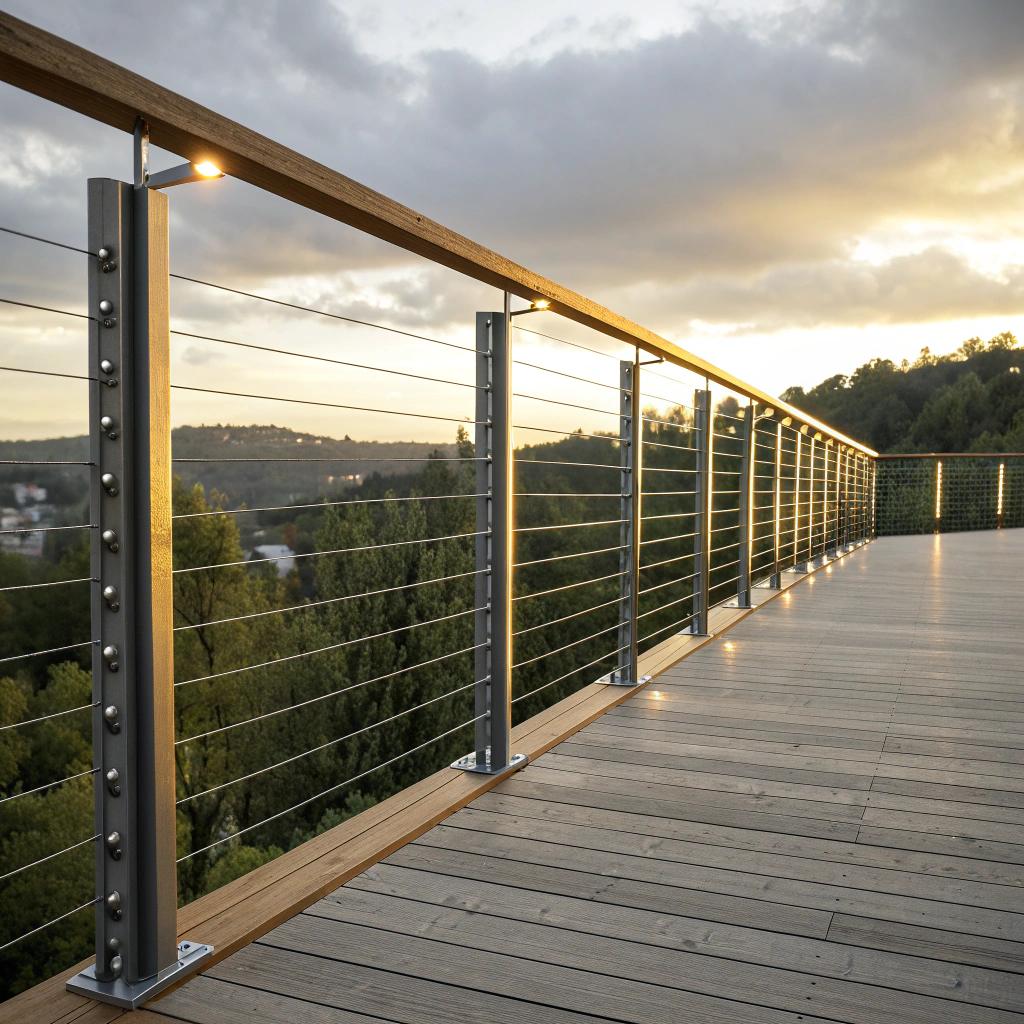
So, you are trying to figure out how to use wire deck railing in Madison homes in a way that actually looks stunning and still makes sense for your space and your budget. The short answer is: choose a simple, well-designed cable or wire system, pair it with the right posts and top rail, and plan it together with your deck flooring and layout from the start.
Wire railing looks clean, opens up views of your yard or the lake, and works well with both modern and traditional homes in the Madison area. It does need thoughtful planning though: structure, building codes, winter conditions, and how it interacts with your deck boards and stairs all matter more than most people expect.
- Think ahead about structure and building codes in Madison and Dane County.
- Match the wire railing style to your deck flooring material and color.
- Plan sturdy posts and a solid top rail so the cables stay tight.
- Choose stainless hardware that will handle Wisconsin winters.
- Decide early whether you want a DIY-friendly kit or a custom build.
- Keep maintenance in mind: cable tension, cleaning, and small touchups.
- Make sure kids, pets, and privacy needs are part of your design choices.
If that is all you needed, you can stop there. But if you want something that really fits your house, reads nicely with your floors, and does not create headaches later, it is worth walking through the details.
Why wire deck railing works so well in Madison
Wire railing has a simple idea: thin horizontal or vertical cables run between sturdy posts, with a wood, composite, or metal top rail. The posts and top rail do most of the structural work, and the cables give you safety and a clean, open view.
In a place like Madison, this look pairs well with a lot of different homes. Older bungalows near the university, newer homes around Sun Prairie, lakefront places on Mendota or Monona, and suburban homes in Fitchburg often share one thing: people want to see their yard, not stare at bulky railing.
Wire railing is usually less about style trends and more about sightlines: you want the deck to feel open, not boxed in.
A few reasons it fits so nicely here:
- You get more daylight on the deck during short winter days.
- Snow-covered yards, trees, and lakes still feel visible from inside.
- It works with both natural wood decks and composite boards.
- It can look modern without making a traditional house feel odd.
I have also seen people underestimate wind and snow loads in this area. Wire railing holds up well when built correctly, but only if you do not cut corners on structure.
How wire railing ties in with your deck flooring
If you are on a home renovation or flooring site, you probably care about how surfaces look together. Wire railing can either elevate your deck flooring or clash with it.
Match or contrast: choosing colors and materials
You rarely want everything to match exactly. That often looks flat. Instead, think in terms of subtle contrast.
Here is a simple way to think about it:
| Deck flooring | Post material | Top rail idea | Wire style |
|---|---|---|---|
| Natural cedar or redwood | Painted black metal | Wide stained wood cap | Brushed stainless cable |
| Gray composite boards | Powder-coated gray metal | Composite top to match boards | Stainless cable or dark-coated cable |
| Dark brown composite or stained wood | Dark bronze or black metal | Warm wood top rail | Standard stainless cable |
| Light tan or blonde wood | White metal or painted wood | Natural wood or white top rail | Stainless cable, slightly understated hardware |
If your interior flooring is already updated, try to echo some of those tones outside. For example:
- Oak or maple floors inside: lighter wood top rail outside keeps a visual flow.
- Dark LVP or engineered wood: a dark rail cap with black posts can look intentional, not random.
- Large gray tile inside: gray composite decking and a slim cable rail can feel like a natural extension.
Think of your deck as another “room” that just happens to be outside; the railing and flooring should feel like they belong in the same house as your interior finishes.
Surface texture matters more than people expect
It is not only about color. Texture changes the mood a lot.
You might pair:
- Smooth composite decking with slimmer, square metal posts and tight, straight cable lines.
- Rougher, brushed wood decking with chunkier posts and a wider wood cap for a more relaxed look.
If your interior floors are very smooth and glossy, you may want a slightly more textured deck surface so it is not all one-note. The railing then becomes the visual bridge between the two.
Basic types of wire deck railing
People say “wire railing” but there are a few different setups. Some are better for DIY, some for complex layouts like multi-level decks or stairs.
Horizontal cable railing
This is what most people picture. Cables run side to side between posts.
Pros:
- Clean, simple lines.
- Views stay open, especially across yards or toward water.
- Works well with wide stairs and long runs.
Cons:
- Kids can treat it like a ladder if the spacing and design are not thought out.
- Building inspectors can be picky about post spacing and strength.
- Every cable needs proper tension, or it will sag over time.
Vertical cable railing
Less common, but it is gaining ground. Cables run from top to bottom.
Pros:
- Harder for kids to climb.
- Some people feel it fits better on more traditional or historic homes.
- The vertical lines can work nicely with interior stair railings.
Cons:
- Slightly more complex hardware setups.
- May cost more, depending on system.
Hybrid systems
You also see mixed setups:
- Wire on the main runs, glass or balusters where you want more wind protection.
- Wire on the deck, but a different style railing inside on the stairs, with a shared top rail color.
These mixed approaches can sound messy, but sometimes they work well. For example, if you have a walkout basement and a main floor deck, you might use cable on the upper deck and a simpler metal railing at ground level to keep costs balanced.
Key structural decisions you cannot skip
This is where many homeowners get frustrated: the photos online look simple, but the real work is inside the posts, framing, and connections.
If the posts and framing are not solid, cable tension will slowly pull things out of alignment and you will never stop adjusting it.
Post spacing and stiffness
Cable railing almost always needs closer post spacing than a traditional wood rail with balusters. In many setups:
- Posts every 4 feet is comfortable.
- Some systems stretch to 6 feet, but only with very stiff posts and rails.
Corner posts are especially important. The cables turn and pull in two directions, which can twist weaker posts over time. A good builder will:
- Use heavier posts at corners.
- Add internal bracing or blocking at the deck framing where posts connect.
- Respect the local codes for load, not cut them close.
If you are working with an existing deck, you might need to reinforce framing where posts will stand. That can be an extra step, but it is better than watching your railing lean after a few winters.
Top rail choices
The top rail does two big jobs:
- It adds stiffness so posts do not move as much.
- It is what you see and touch all the time, so it defines the style.
Common top rail materials:
| Material | Pros | Cons |
|---|---|---|
| Wood | Warm feel, easy to replace or refinish, comfortable on hands | Needs upkeep; stain or paint ages under sun and snow |
| Composite | Low maintenance, color-stable, pairs with composite decks | Can feel bulkier, needs solid support beneath |
| Metal (steel or aluminum) | Very strong in thin sizes, stable, good for modern look | Colder to the touch, can show fingerprints or smudges more |
For Madison winters, many people like wood on top of metal posts. It feels less cold and is easier to sand and refinish after a rough season if needed.
Weather, snow, and Madison building codes
Wire railing in a warm, dry climate is one thing. On a deck that lives through freezing rain, snow loads, and plenty of freeze-thaw cycles, it is different.
Material choices for Wisconsin weather
You want materials that handle moisture, temperature swings, and ice.
Some practical choices:
- 316-grade stainless steel for cables and fittings when possible, especially near lakes.
- Powder-coated aluminum or steel posts to resist rust.
- Proper separation between different metals so you do not get corrosion at contact points.
Snow piling against the lower cables is normal. The structure should be able to handle that without sagging. That means no shortcuts on:
- Post size and wall thickness.
- How posts are bolted to framing or concrete.
- Blocking and lateral bracing in the deck frame.
Code basics for cable railing
I cannot quote every Madison or Dane County rule here, and they change from time to time, but there are some general expectations:
- Guardrails are usually required at 30 inches or more above grade.
- Railing height is often around 36 inches on decks and 42 inches in some areas or multi-family settings.
- A 4 inch sphere should not be able to pass through any opening.
With cable, inspectors might use the “4 inch sphere” rule with some extra caution. Cables must be tight enough that you cannot push them apart to create a larger gap.
If your builder shrugs and says “It is fine, inspectors do not look closely at that,” I would question that. Cable tension and spacing are not small details.
How wire railing interacts with your stairs
Deck stairs are where design, flooring, and safety meet in a very visible way. If you do the main deck with cable and then throw a random stair railing on it, the whole thing can feel unfinished.
Keeping the stair line clean
On stairs, you usually:
- Follow the angle of the stairs with the cables.
- Use special stair fittings where cables meet angled posts.
- Keep the top rail at a comfortable grasp height along all treads.
Stairs are also where many people slip in winter. So think about:
- Non-slip tread material or grip strips.
- Good lighting at the stair area.
- A handrail shape that is easy to grab, not too wide or too flat.
If your indoor stairs already have a certain rail style, echoing the color or shape outside makes both spaces feel connected. Maybe your interior rail is black metal with a wood cap. Do the same outdoors, but with cable infill instead of spindles.
Wire railing and different deck flooring options
Let us connect railing choices directly to typical deck surfaces, since many readers here care a lot about flooring details.
Pressure-treated lumber decks
These are common for budget builds. The greenish tint fades to gray if you do not stain it.
How wire railing fits:
- Black metal posts with stainless cables tend to look best.
- A stained wood top rail can distract from less attractive deck boards.
- You can update the railing first, then replace deck boards later to match.
If you plan to upgrade to composite decking in a few years, pick a neutral post and cable color now so it works with both.
Cedar, redwood, or higher-end wood decks
These are already nicer underfoot. They feel more like good interior wood floors.
Wire railing here can be very simple:
- Clean stainless cables.
- Square black or dark bronze posts.
- Top rail that matches or complements your deck stain color.
The main risk is overcomplicating things. If your boards have rich grain and color, you usually do not want ornate post caps or fancy hardware showing everywhere. Let the wood and the clean cable lines speak for themselves.
Composite or PVC decking
Composite decks are popular in the Madison area because of low maintenance. They also pair well with modern cable railing.
Some tips:
- Use hidden fasteners for decking if possible, so you get a clean surface that matches the clean cable lines.
- Consider a picture-frame border around the deck perimeter, aligning the railing posts with that frame for a more deliberate look.
- Match or coordinate the top rail with your composite color to avoid a patchwork feeling.
Because composites can get warm under sun, especially darker colors, many people like a lighter top rail to reduce that heat on hands.
Cost, tradeoffs, and where people over- or under-spend
Wire railing is usually more expensive than basic wood balusters. No way around that. But it can also make a modest deck feel more like a finished outdoor room, closer to what you see in higher-end remodels.
Where cost comes from
You are paying for:
- Quality stainless cable and fittings.
- Stronger posts and framing to handle cable tension.
- Labor to measure, drill, and tension each run.
- Any finish work, like trim pieces, stair angle fittings, and caps.
Many people try to save by choosing cheaper cable hardware, then regret it when things start to rust or loosen. On the other hand, overbuilt custom metal everywhere might not be needed for a small, simple deck.
Deciding what matters most to you
Ask yourself a few honest questions:
- Is the deck a main outdoor living area, or just a small step-down platform?
- Do you plan to stay in the home long term, or sell in a few years?
- Is your priority low visual bulk and good views, or tighter privacy and a more enclosed feel?
For a long-term home where you care about resale and enjoyment, wire rail paired with solid decking often feels like money that comes back in quality of life. For a small rental property, it might be overkill.
Maintenance: what you actually have to do over time
Many people think cable railing is maintenance-free. It is not. But it is usually manageable.
Realistic upkeep tasks
Some things to expect:
- Once in a while, check cable tension and tighten a bit if needed.
- Look for any rust stains near fittings and clean them with a stainless cleaner if they show up.
- Wash the railing with mild soap and water to clear pollen and road dust.
- Refinish wood top rails every few years if they are stained or painted.
On the plus side, you are not repainting dozens of spindles. The smooth cables and posts are quicker to wipe down than more detailed rail designs.
Safety, kids, and pets
This is where people sometimes worry about cable railing, and honestly, that is fair.
Kids climbing and gaps
The concern is that horizontal cables look like a ladder. Some inspectors are more relaxed about it, some are not.
You can reduce risk by:
- Keeping cable spacing tight so feet cannot find good footholds.
- Using a slightly taller rail height where allowed.
- Choosing vertical cable systems or mixed designs in kid-focused areas.
No railing system is perfect if kids are determined climbers, but good design can make it less inviting to climb.
Pets and small objects
Dogs usually have no problem with cable railing. Cats enjoy the view, sometimes too much. Small dogs or cats are rarely able to slip through if the cable spacing meets the 4 inch rule.
One small thing people forget: toys, balls, and planters can roll or bump against the lower cables. Keeping at least one low rail or trim piece just above deck level can help stop things from slipping under.
Line of sight from inside the house
Since this is going on a home renovation and flooring site, it is worth thinking about what you see from inside.
When you stand inside by your patio door:
- Where does your eye go? The deck boards, the rail, or the yard?
- Does the railing cut across your view, or mostly disappear?
- Do the color and style of the railing tie in with interior trim and floor colors?
If you have darker interior floors and white trim, for example, a black cable rail outside can create a strong but clean frame for the view, and it will often feel more intentional than a half-matching wood rail.
Some people even line up their interior floorboards with exterior deck boards at the threshold so the space feels larger. Cable railing helps reinforce that effect because it does not add a visual wall.
Common mistakes people make with wire deck railing
It helps to know what goes wrong, so you can avoid it.
Overcomplicating the layout
Too many corners, short sections, and odd angles create more terminations, more hardware, and more chances for something to look off.
If possible:
- Keep cable runs as straight as the deck layout allows.
- Combine small sections if you can reframe the deck slightly.
- Use clean 90-degree or simple angles, not lots of tiny jogs.
Ignoring how furniture will sit
You might build a beautiful railing, then realize your table blocks the best view or the stairs land where you wanted seating.
Think about:
- Where your main seating area will be.
- Which direction chairs will face most often.
- Where people walk from the house door to the yard.
Matching railing post placement to those patterns, and to your deck board layout, makes the space feel more deliberate and easier to use.
Planning your project: a simple way to start
If you are still trying to picture what works for your home, it can help to walk through a simple checklist.
Step 1: Stand where you use the view most
From your kitchen, living room, or dining area, look out toward the deck.
Ask yourself:
- What do I want to see more of? Trees, lake, yard, sky?
- What do I want to hide? Neighbors, utility boxes, street?
Wire railing is good for opening the view. If you need privacy, you may mix in privacy screens or plantings in targeted spots.
Step 2: Think about how the deck connects to your floors
Look at your interior flooring color and style:
- Light wood: aim for lighter rail caps, simple posts.
- Dark wood or tile: darker rail and posts can frame the outside without feeling heavy.
- Patterned floors: keep deck boards and rail simple so nothing clashes.
You do not need a “perfect” match. You just want the outdoor surfaces to feel like they could be part of the same design family as your interior floors.
Step 3: Decide your maintenance tolerance
Some people like to refinish wood every few years. Others never want to sand anything again.
Be honest:
- If you hate maintenance: composite decking, powder-coated posts, and cable rail with minimal wood are your friends.
- If you like the feel of real wood and do not mind upkeep: wood top rail and deck boards can look warmer with cable infill.
Simple Q & A to wrap it up
Q: Is wire deck railing safe for homes with kids in Madison?
A: It can be, if it is designed with the right spacing, height, and structure. Horizontal cables can tempt climbers, so you may prefer vertical setups or tighter spacing, and you need proper tensioning. Local codes and a cautious builder help keep things on the safe side.
Q: Will wire railing rust or stain in Wisconsin weather?
A: Good quality stainless cable and hardware paired with coated posts holds up quite well, even through snow and freeze-thaw cycles. Lower-grade metal or mixed metals in contact can cause rust spots, so material choice and installation details really matter.
Q: Does wire railing work with older, more traditional Madison homes?
A: Yes, but you probably want to keep posts and top rails in line with the house style. For example, wood top rails with simple, darker posts and slim cables can look calm and respectful of an older home, not overly modern.
Q: Can I install wire deck railing myself, or should I hire a pro?
A: If you are handy, patient, and comfortable with precise measurements, small DIY systems on simple decks are doable. For multi-level decks, long spans, or when you are already investing in new decking or structural changes, a pro often saves time, avoids code issues, and gets the tension and layout right the first time.