
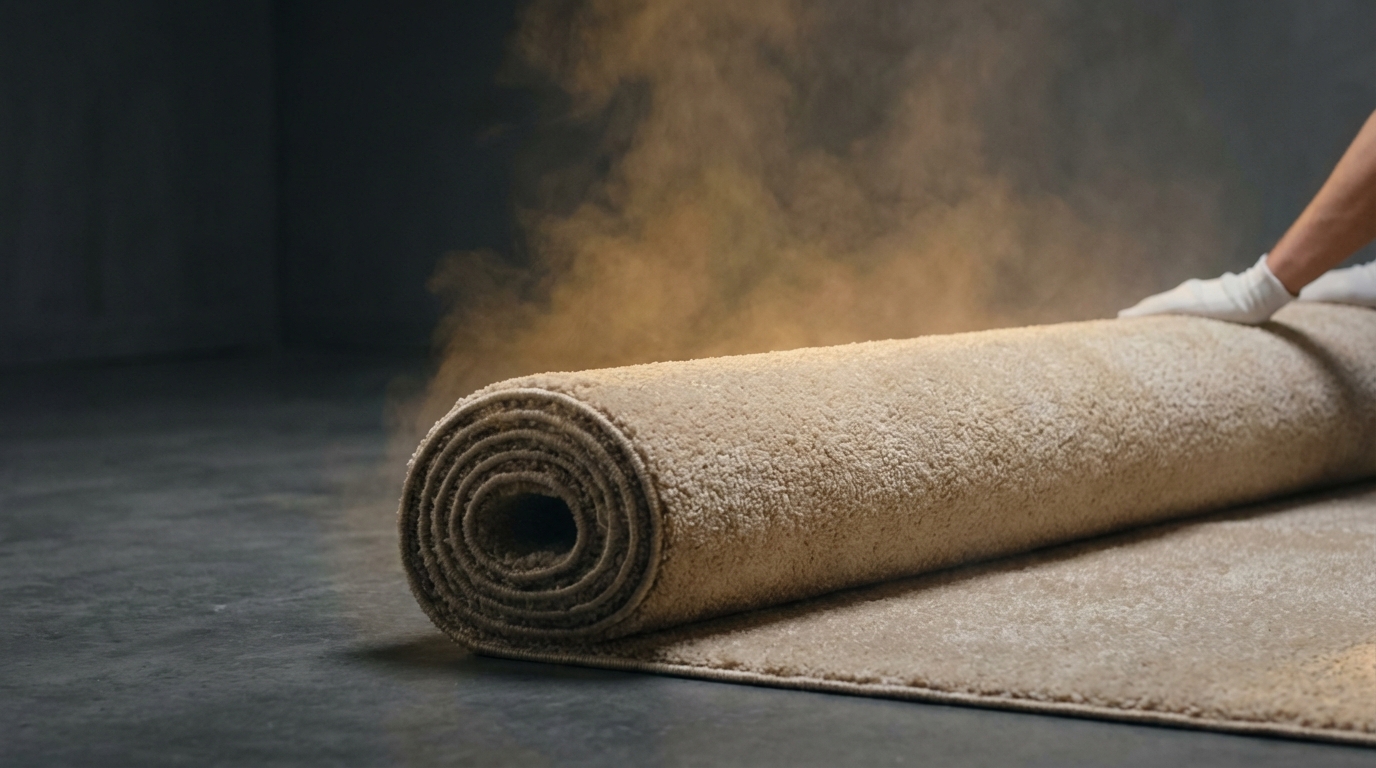
So, you are wondering if that “new carpet smell” in your house or office might be toxic because of VOCs in the material and glue.
Yes, that new carpet smell comes from VOCs, and some of those chemicals can be harmful, especially in rooms with poor ventilation or for sensitive people.
You are not wrong to be concerned. That strong smell is chemistry in the air, not just a fresh-home vibe. New synthetic carpet, padding, and adhesives can give off a mix of chemicals that affect indoor air quality, your head, your lungs, and sometimes your long‑term health if exposure is high and frequent.
Things you need to know:
- New carpet smell is caused by VOCs (volatile organic compounds) off-gassing from fibers, backing, and glue.
- Not every VOC is equally toxic, but some are known irritants and some are linked to serious health effects.
- Most off-gassing is strongest in the first few days and weeks, then drops over time.
- Good ventilation and smart product choices reduce your exposure a lot.
- Labels like “low-VOC” or Green Label Plus help, but they are not perfect shields.
- Children, pregnant people, older adults, and people with asthma or allergies are more affected.
- You can test and improve indoor air quality with simple, practical steps.
Let us walk through what VOCs are, what that smell really means, and how you can keep your space safer without panicking or tearing up your floors.
What are VOCs, in plain language?
VOCs stands for “volatile organic compounds.”
That sounds complicated, but you experience VOCs every day:
– Paint smell
– New car smell
– Strong cleaning products
– Nail polish or remover
– Scented candles or air fresheners
– New furniture or mattresses
All of these release chemicals into the air at room temperature. “Volatile” means they evaporate easily. “Organic” here just means they contain carbon, not that they are healthy or eco‑friendly.
When you put in new carpet, you add several VOC sources at once:
- The carpet fibers and backing
- The adhesives used to glue it down
- The padding underneath
- Any stain guards or treatments
Those VOCs move into the air and you breathe them in. That is off‑gassing.
> Think of VOCs as invisible fumes from man‑made materials that do not want to stay locked inside the product. They want to escape into your indoor air.
Common VOCs linked to carpets
Carpet and installation products can emit many chemicals. Some that often come up:
- Styrene: Used in rubber and plastics, can irritate eyes and throat.
- 4‑phenylcyclohexene (4‑PCH): Was a big concern with some older carpets, linked to that strong new carpet smell.
- Toluene, xylene: Solvents in adhesives and backing.
- Formaldehyde: Used in some resins and backing materials, a known carcinogen at higher levels.
- Acetone: Found in some adhesives and finishes.
You will not always see these names on a label, which is part of the problem. You often just smell something strong and wonder if it is safe.
> The issue is not just “chemicals” in general. The issue is which chemicals, at what levels, for how long, in what room, for which people.
Is the new carpet smell actually toxic?
So, you are asking: “Is my nose warning me about danger, or is this just a harmless new product smell?”
The honest answer:
– That smell comes from real chemicals. Some are irritants, some have known long‑term risks at higher exposures.
– For many healthy adults in a well‑ventilated room, short‑term exposure is unlikely to cause severe harm.
– For sensitive people or in small, closed rooms, it can trigger headaches, breathing issues, or worse.
Short‑term effects you might notice
Short‑term symptoms from VOC exposure can include:
- Headaches
- Dizziness or lightheaded feeling
- Eye, nose, or throat irritation
- Coughing or wheezing
- Nausea
- Fatigue
A study by the U.S. EPA and other groups has found that indoor air often has VOC levels 2 to 5 times higher than outdoor air, and can be more than 10 times higher right after new materials are installed.
> If you walk into a freshly carpeted room and your eyes water or your head hurts within minutes, that is real feedback from your body, not imagination.
Long‑term concerns
Long‑term VOC exposure at higher levels has been linked in various studies to:
- Asthma or asthma‑like symptoms
- Chronic respiratory issues
- Increased sensitivity to chemicals
- Higher cancer risk for some VOCs like formaldehyde and benzene
To be clear, one carpet job in your house does not automatically equal a serious disease later. Health risk depends on:
- How much VOC is emitted
- How long you are exposed
- Room size and ventilation
- Your age and health
Still, VOCs are a known indoor air problem. Carpets are one source among many, and you have more control than you think.
Why new carpet is a strong VOC source
Let us break down where the fumes come from.
1. Carpet fibers and backing
Most wall‑to‑wall carpets use:
- Synthetic fibers like nylon, polyester, or polypropylene
- Backing made from latex, PVC, or other plastics
- Bindings and resins to hold the structure together
During manufacturing, the carpet is treated, heat set, and sometimes coated with stain resist or anti‑static finishes. Leftover solvents and small molecules escape after installation.
In older carpets, 4‑PCH was a main contributor to that signature new carpet odor. Many manufacturers have reduced or removed it, but similar VOCs can still be present.
2. Carpet padding
Carpet padding can be made from:
- Rebonded foam (often recycled foam pieces)
- Urethane foam (prime foam)
- Rubber padding
- Natural options like felt or wool
Foam products can emit VOCs from the foam itself, flame retardants, or adhesives that bind the layers. Rebond foam from mixed sources can be harder to predict.
3. Adhesives and seam sealers
This is a big one.
The glues and seam sealers used during installation can emit a strong solvent smell. These products often include:
- Acrylate or latex polymers dissolved in solvents
- Glycol ethers
- Toluene, xylene, or similar solvents (varies by product and region)
These adhesives often off‑gas heavily during the first 24 to 72 hours.
> Many people blame the carpet itself, when the strongest fumes during day one or two actually come from the adhesive on the floor.
4. Stain protection and treatments
Some carpets are treated with:
- Stain repellents (previously PFAS types, now often lower‑fluorine or alternative chemistries)
- Anti‑microbial treatments
- Anti‑static agents
These can contribute to indoor chemicals, even if they are not always the main VOC source. Some do not off‑gas much but can still enter house dust.
How long does the new carpet smell last?
There is a pattern to VOC off‑gassing from carpet:
– Strongest in the first 24 to 72 hours
– Noticeable for several days to a few weeks
– Lower but still present for months in some cases
The speed depends on:
- Ventilation and fresh air exchange
- Room temperature and humidity
- The specific products used
- How much carpet area you installed
If windows stay closed and there is no active ventilation, VOCs stay trapped and stay stronger longer.
> A well‑ventilated home can cut VOC levels from new carpet by more than half within the first few days, while a closed room can trap that same load of chemicals for weeks.
Who is most at risk from VOCs in carpet?
Not everyone reacts the same way. Some people walk into a new carpeted office and feel fine. Others get a headache or chest tightness within minutes.
Groups that need more caution:
- Children: They breathe more air per body weight, play close to the floor, and spend more time indoors.
- Pregnant people: Exposure to certain VOCs during pregnancy can be a concern for fetal development.
- People with asthma, COPD, or allergies: Their airways are more reactive.
- Older adults: Often more vulnerable to respiratory irritants.
- People with chemical sensitivity: Even low levels can trigger strong symptoms.
If anyone in your home or office sits in one of these groups, you want to be more careful with material choices and ventilation.
> For a crawling baby, the carpet is not just “flooring.” It is literally their world for a big chunk of the day.
How to tell if your carpet VOCs are a problem
You cannot see VOCs, and you rarely have a full list on a label. You still have some practical ways to judge risk.
1. Your own symptoms
This is basic, but effective.
Ask yourself:
- Do I get a headache after 15 to 30 minutes in the room?
- Do my eyes sting or water?
- Do I start coughing or does my throat feel scratchy?
- Does my asthma flare more in that room?
If these improve when you open windows or leave the space, VOCs are a good suspect.
2. The “sniff test”
Not scientific, but useful:
- Walk into the room after being away for several hours.
- Notice how strong the smell is when you first enter.
If it is strong enough that you feel like you are walking into a “wall” of odor, ventilation and source control need work.
3. Low‑cost VOC sensors
There are consumer‑grade devices that measure “TVOC” or total VOC levels in the air. They do not tell you each chemical, but they give a number.
– Some show colored bars (green / yellow / red).
– Others show micrograms per cubic meter (µg/m³) or parts per billion (ppb).
They are not lab‑grade, but they help you:
- Compare before and after installation
- See how ventilation or an air purifier changes the numbers
> If you see VOC readings spike right after your carpet goes in, then slowly go down over days as you ventilate, your nose was right. That was off‑gassing.
4. Professional indoor air testing
For serious cases, especially in offices, schools, or if health issues are strong, you can hire a specialist.
They can:
- Collect air samples in specialized bags or cartridges
- Send them to a lab to analyze specific VOCs
- Compare results to guidelines from groups like WHO or national health agencies
This is more expensive, but helpful when you need documentation or are considering removing materials.
How to choose lower‑VOC carpets and materials
You cannot avoid all VOCs, but you can reduce your exposure a lot at buying time.
Look for credible certifications
Some independent programs test carpets for emissions. Examples:
| Certification | What it covers | Good for |
|---|---|---|
| CRI Green Label / Green Label Plus | Tests carpets, pads, and adhesives for VOC emissions | Basic low‑emission assurance for many brands |
| GREENGUARD / GREENGUARD Gold | Limits VOC emissions from building products and furnishings | More protective levels, often used in schools and healthcare |
| Low‑VOC adhesives labels | Adhesives with lower solvent content, often water‑based | Reduced off‑gassing during installation |
Ask the salesperson directly:
– “Is this carpet Green Label Plus or GREENGUARD Gold certified?”
– “Do you have low‑VOC adhesives compatible with this product?”
> If a retailer cannot answer basic VOC questions, consider calling the manufacturer or choosing another product line.
Consider material type
Each flooring type has pros and cons. Here is a simple comparison focused on VOCs:
| Material | Typical VOC concern | Notes |
|---|---|---|
| Synthetic carpet (nylon, polyester) | Moderate VOCs from backing, treatments, adhesives | Choose certified low‑emission lines and low‑VOC glue |
| Natural fiber carpet (wool, sisal) | Lower VOCs from fibers, but backing/adhesives still matter | Check backing and glue, not just fiber type |
| Luxury vinyl plank (LVP) | Plasticizers and VOCs from vinyl, adhesives | Select low‑VOC, phthalate‑free products |
| Engineered wood or laminate | Formaldehyde and other VOCs from resins | Look for low‑formaldehyde and good certifications |
| Solid wood with low‑VOC finish | Usually lower VOC once cured | Installation finishes and adhesives still count |
Do not assume “natural” always means “no VOCs.” Backing, adhesives, and finishes still matter.
Watch for “stain resistant” claims
If you can, choose carpets without heavy stain guard treatments, or those that clearly state:
– PFAS‑free
– Fluorine‑free stain protection
You can often manage stains by:
- Choosing darker or speckled colors that hide marks
- Using removable rugs in high‑risk areas
- Cleaning spills quickly
What to do before and during installation
You can cut your VOC exposure significantly by planning the installation well.
1. Ask for low‑VOC adhesives and pads
When you speak to installers:
- Ask them to use a low‑VOC or “no added solvent” adhesive.
- Ask about pad material and VOC certifications, not just thickness.
You may pay a bit more, but this is one of the strongest moves you can make.
> If the installer insists “we always use this glue, it is fine,” push back politely or call another installer who is familiar with low‑VOC products.
2. Air out the carpet before it goes in
If possible:
- Ask the retailer to unroll the carpet in a warehouse for a day or two.
- Or unroll it in a garage or sheltered outdoor area at your place for 24 to 48 hours.
This “pre‑off‑gassing” step can reduce that first wave of fumes in your living room.
3. Plan for an empty house or office
Try to schedule installation when:
- No one needs to sleep in the rooms for at least 48 to 72 hours.
This is especially helpful for bedrooms, nurseries, and home offices where you spend long, continuous time.
4. Crank up ventilation during and after installation
During and right after installation:
- Open as many windows as you can.
- Run fans to move air out through windows or doors.
- If you have an HVAC system with fresh air intake, run it on high.
You want a strong flow of air across the carpet and out of the building, not just circulation inside the same room.
> Think of the first 2 to 3 days as a “VOC flush.” Your priority is to get as much of those fumes outside as fast as possible.
How to cut VOCs from carpet you already have
Let us say the carpet is already in and the smell is bothering you. You still have options.
1. Ventilate aggressively
The most direct step:
- Open windows on opposite sides of the home to create cross‑breeze.
- Run fan(s) in or near windows to blow indoor air outside.
- Do this several hours a day for the first week if you can.
More air exchange equals faster VOC removal.
2. Increase temperature for short periods
VOCs evaporate more at higher temperatures. You can:
- Raise the room temperature a few degrees for several hours.
- Ventilate heavily at the same time.
Do not overdo it or create a sauna. Just a bit warmer, with moving air, to pull more VOCs out.
3. Use an air purifier with the right filter
For VOCs, you want:
- A HEPA filter (for particles, not VOCs, but still helpful)
- Plus a thick activated carbon filter or similar media for gases
Look for:
– A unit sized for your room area
– A carbon filter with real weight (VOC filters that are too thin get saturated fast)
Position the purifier:
- In the newly carpeted room
- On a higher fan speed during the first weeks
> HEPA catches dust, pollen, and particles from the carpet. Carbon captures some of the gases. You need both for a real effect.
4. Control dust on the carpet
Some chemicals move not just in the air but also in dust. You can:
- Vacuum with a sealed HEPA vacuum at least once or twice a week.
- Empty or change bags outside the living space.
- Use a vacuum with a brush roll that suits your carpet type.
This keeps particles and chemical‑coated dust from floating into your breathing zone.
5. Limit other VOC sources at the same time
If your new carpet just went in, do not add extra VOC load in the same period:
- Delay painting, if possible.
- Avoid heavy use of air fresheners and scented candles.
- Use low‑VOC cleaners instead of strong solvents.
You want to keep the total VOC level as low as you can while the carpet is off‑gassing most.
6. If symptoms are strong, consider partial removal
In rare cases where:
– Symptoms are severe or constant
– Ventilation and purification do not help enough
You might talk with a professional about:
- Removing carpet from bedrooms while keeping it in less used areas
- Switching to a different flooring in problem rooms
That is a big step, and you want to base it on real health needs, not just worry. Consultation with a doctor and possibly an indoor air specialist makes sense here.
> When health and comfort are clearly affected, your floor becomes a health decision, not just a decorating decision.
How office and commercial carpets fit into this
This is not only a home topic. Office buildings, schools, and clinics install a lot of broadloom and carpet tiles.
Risks in commercial spaces
In larger buildings you can see:
- Big carpeted surfaces off‑gassing at once
- Central HVAC that moves VOCs through multiple rooms
- People spending 8+ hours a day in that air
If you manage a workspace, watch for:
- Increased complaints of headaches or irritation after upgrades
- Strong odors that linger for weeks
- Asthma or allergy flare‑ups in some employees
Better practices for commercial carpet jobs
Smart moves:
- Plan installations for evenings or weekends, with building empty.
- Keep maximum ventilation for days before people return.
- Pick carpet tiles and adhesives with strong low‑emission certifications.
- Test air quality in sensitive areas like meeting rooms and daycare areas.
> If you are in charge of an office, VOC choices show up in HR complaints. Fewer headaches and fewer respiratory complaints are real business outcomes from better indoor air.
How VOCs from carpet interact with other tech in your home
This fits into a bigger conversation about smart homes and indoor air quality.
Sensors and smart monitoring
Today you can combine:
- Smart VOC sensors
- Smart thermostats
- Smart air purifiers
- Connected HVAC controls
Use them together so that:
– When VOC levels rise, your system automatically increases ventilation or purifier fan speed.
– You get alerts on your phone when air quality drops.
For example:
> A small Wi‑Fi VOC sensor near your newly carpeted room could trigger an automation: “If VOC above X, turn on window fan and set purifier to high.” That is not science fiction. That is available gear right now.
Energy vs air quality
People often keep windows closed to save on heating or cooling costs. That traps VOCs.
Tech can help you balance:
- Use heat recovery ventilators (HRVs) or energy recovery ventilators (ERVs) to bring in fresh air with less energy loss.
- Use occupancy sensors so heavy ventilation runs when no one is there, then tapers to a quieter mode.
This way, you are not stuck between two extremes: “stuffy but energy efficient” versus “fresh air but high bills.”
Myths and mistakes about VOCs and carpets
Let us clear up a few common beliefs.
“If it passes building codes, it must be safe.”
Building codes often focus on flammability and structural safety, not VOC emissions. Passing code does not equal “no health impact for sensitive people.”
“If I cannot smell it, there is no problem.”
Smell helps, but:
- Some VOCs have little odor at levels where they still matter.
- Your nose adjusts to smells after a while.
You can have measurable VOCs even when the odor is faint or gone.
“One air freshener will fix it.”
Air fresheners usually add VOCs, they do not remove them. They mask the odor with more chemicals.
If you want to cut VOCs, you need:
- Source control (better products)
- Ventilation
- Adsorption (like carbon filters)
Not more fragrance.
“Natural carpet is always harmless.”
Wool or natural fiber can be lower in some VOCs, but:
- Backing may still use synthetic latex or other binders.
- Adhesives can still emit VOCs.
- Mothproofing or other treatments can introduce chemicals.
You still want certifications and clear information about adhesives and finishes.
Simple step‑by‑step plan if you are worried about your carpet
Let me give you a practical checklist you can follow today.
If you have not installed carpet yet
- Decide which rooms truly need wall‑to‑wall carpet and which do not.
- For rooms that will be carpeted, pick products with Green Label Plus or GREENGUARD Gold.
- Ask the retailer to confirm low‑VOC adhesives and pads in writing.
- Schedule installation when you can leave windows open and keep people out for 48 to 72 hours.
- Arrange pre‑off‑gassing (warehouse or garage) if possible.
- Plan to ventilate aggressively and, if possible, run an air purifier with carbon filter in those rooms.
If the carpet is already installed
- Do a “sniff test” and notice any symptoms when you are in the room.
- Open windows and run fans several hours a day for at least a week.
- Use an air purifier with a good carbon filter in the room.
- Vacuum regularly with a HEPA vacuum to remove dust and fibers.
- Reduce other VOC sources (strong cleaners, fragrances, new paint) during this period.
- If symptoms are strong or persistent, talk to a doctor and consider indoor air testing.
> You do not need perfect information to take good action. Simple steps like more fresh air, better materials, and better filtration already move you in a safer direction.
A practical tip you can start with today: if your space has that lingering new carpet smell, pick one room, open windows on two sides, place a fan in one window blowing out, and let it run for at least an hour. Then walk back in and notice how your body feels. That simple comparison will tell you a lot about how much those VOCs were affecting you.